08 Wales prepares to resurrect the reputation of Dylan Thomas

Wales prepares to resurrect the reputation of Dylan Thomas

Wales plans to use the centenary of his birth to fight for Dylan Thomas’s proper place in the pantheon of poets

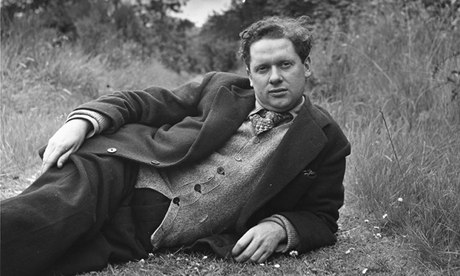
The poet, an ‘unlikely icon’ relaxes outdoors in 1946. I

The poet, an ‘unlikely icon’, relaxes outdoors in 1946. Photograph: Francis Reiss/Getty Images

The little park where he played as a boy in Swansea has had a facelift, and a bronze statue is to be erected outside his childhood home. Manuscripts and rare photographs have been borrowed from an archive in New York, and his quotations have been liberally applied to council vehicles. Wales is preparing to embrace once again Dylan Thomas, its errant son, 100 years after his birth. Next year the poet who was too “English for the Welsh and too Welsh for the English” is finally to receive the full accolades many feel he has long deserved.

Announcing that £750,000 would be made available for the “DT100” festival, the Welsh government hopes the centenary will boost tourism, but first minister Carwyn Jones said the festival would also be used to raise the status of Thomas, and Welsh tourism minister Edwina Hart called for “resurrecting” a passion for the poet.

There are strong feelings that Wales, and the rest of the UK, have neglected Thomas, allowing his work to be overshadowed by a conception of the man as a drunkard, scrounger and womaniser. His admirers want to use the occasion to debunk the myths and rediscover the poet who in his lifetime was dubbed “Britain’s finest” – the poet who worked so hard that there are as many as 200 versions of the same poem, and whose reading tours were gruelling.

Dylan The original Observer reviewof The Palm-wine Drinkard by Dylan Thomas. Photograph: theguardian.comThomas made an unlikely hero – a short, curly-haired, tubby man, usually in a borrowed suit, with a cigarette permanently cushioned on a fat bottom lip. But he is the man who inspired John Lennon to write songs, put the Dylan into Bob, took the girlfriend of Augustus John to bed (and had him pay for the hotel room), hung out with Salvador Dalí, was feted by Charlie Chaplin and photographed for Vogue by Lee Miller. He is even credited with opening the west’s literary doors to black African literature by promoting, in this very newspaper, Nigerian Amos Tutuola’s novel The Palm-Wine Drinkard, and with starting the spoken voice LP. Thomas was one of the first to recognise the huge cultural potential of radio and TV.

Yet he is not on academic curriculums, and even Welsh schools are only now being encouraged to examine his work. There has never been a complete works, and academia has snubbed him. Dr John Goodby, of Swansea University, said Thomas has been “airbrushed” out: “Thomas fell from grace. There was a whole slew of books in the 70s … and then nothing. It was as if in Wales there was this inwards, more nationalistic, discourse, which Thomas didn’t fit. He didn’t write in Welsh, for a start.”

Although some later works, such as Fern Hill and his play Under Milk Wood, remain popular, it is the kind of popularity that makes academics suspicious and his reputation has declined, said Goodby. He said that Thomas fell between the cracks because he was hard to pigeonhole and his work had such an embarrassing richness when plainer, anecdotal poetry was being critically acclaimed.

Goodby said Thomas would never have been able to write anything if he’d been as drunk as people said. He represented a spirit of freedom. “But things are getting better,” he concluded. “Swansea was in denial of him for a long time but now they see he could be a moneyspinner and do for Wales what James Joyce has done for Dublin.”

In Thomas’s day middle-class parents discouraged their children from speaking Welsh for fear it would stunt their career prospects. His schoolteacher father even sent him to elocution classes. He himself didn’t want his poetry to be “regionalised”, although his love of Wales is undeniable.

“He echoes what a lot of us feel: sometimes you love to hate Wales,” said eminent Welsh poet Menna Elfyn. “I once wrote a poem in the shape of a boomerang because that’s how I felt about Wales – ultimately you are pulled back to your roots in a search for a quiet spot.”

Elfyn was speaking while with a visiting group of poets from Trinity University College, drinking tea and listening to recorded readings from that long-dead voice in the Boathouse, the last home of Thomas, where he lived with his wife Caitlin and their three children, much of the time in abject poverty, in the seaside village of Laugharne, Carmarthenshire, the setting for Under Milk Wood.

Have the poets forgotten Dylan? “Well, here we are,” Elfyn said. “But Dylan’s problem was always that thing that he was too English for the Welsh and too Welsh for the English. I think he must have spoken or understood more Welsh than he let on, but in those days it was frowned upon. He has had a hard time; Britain never appreciated him the way America did. The myths don’t help. They said he was boastful but he often read other poets’ work at readings – that shows humility.”

Laugharne – “timeless, beautiful, barmy”– is much as it must have been 60 years ago this month when Thomas last left it, catching a bus on his long journey out of Wales and across the Atlantic for New York. He died there in November 1953, aged 39, in what for years was represented as an alcohol-induced death. Typically, the myth was begun by Thomas. Returning from the pub to the Chelsea Hotel, he boasted: “I drank 18 whiskies”. In fact, he probably had four. When Dr Milton Feltenstein, a “needle-happy quack”, according to Goodby, came to the hotel in a smog-ridden New York to treat Thomas, who was complaining of chest and breathing problems, he decided the poet had alcoholic delirium and injected him with morphine. That act would have brought a manslaughter charge these days. It depressed the poet’s breathing, sending him into a coma. He died four days later: a rock star end for the rock stars’ poet.

The grave of Dylan Thomas, shared now with Caitlin, has a simple white wooden cross, incongruous in the gothic churchyard of St Martin’s in Laugharne. Along with the Boathouse, it gets around 15,000 visitors a year, which is nothing compared to the hordes who visit the homes of the Brontës, Kipling or Dickens. But next year could change all that. Swansea, that “ugly, lovely town” which had so much of its beauty and history bombed out during the war, has ambitions for DT100 to help it towards winning the 2017 UK City of Culture title. There are already leaflets for Dylan Thomas trails, including Laugharne, and more and more events are being added to the 2014 calendar.

Jo Furber is Swansea council’s literature officer, based at the elegant Dylan Thomas Centre, an arts centre with an exhibition devoted to the poet. “We have so many people coming in to learn more about him. They sometimes don’t arrive as an admirer but leave as one. He has probably suffered because he is difficult to categorise, both in his life and his poetry. He was a man who didn’t go to university yet was incredibly well-read. He loved the classics, but was happy to read detective stories in the bath, eating jelly babies.”

She is applying for funding to put the centre on the literary heritage map. “We’d love to expand. What we’d love the most is to find some moving footage of him; there has to be some out there somewhere. Perhaps the centenary will bring that out of an attic somewhere.”

A POET’S PROFILE

Dylan Thomas loved pub culture but would often pretend to be drunker than he was to keep up appearances.

Do Not Go Gentle Into That Good Night was written for his father, DJ Thomas, a school teacher.

Florrie Thomas, the poet’s mother, lost her husband, daughter Nancy and Dylan within 11 months of each other.

Two US presidents, Jimmy Carter and Bill Clinton, are diehard Thomas fans.

Fern Hill, his poem about childhood, is named after his aunt’s Carmarthenshire farm. Prince Charles has recorded it for this year’s National Poetry Day.

Thomas’s wife Caitlin, pictured above, a dancer and muse of painter Augustus John, was the real bohemian of the two.

On four New York tours he spoke at 60 venues and despite heavy drinking never missed an appearance.

08 Docomo unveils instant translator glasses in Japan


Docomo unveils instant translator glasses in Japan

Summary: In an answer to Google Glass, the telco is developing augmented reality glasses enabled with character recognition technology to translate signs and menus, expected to be ready in time for the 2020 Tokyo Olympics.

Ryan Huang

By | October 1, 2013 — 10:20 GMT (03:20 PDT)

Japanese telco NTT Docomo has unveiled augmented reality glasses that translates a menu in real time, that’s set to be ready in time for the 2020 Tokyo Olympics.

docomo
An NTT Docomo engineer demonstrating the glasses. (credit: AFP)

The device overlays the wearer’s first language on to unfamiliar text, instantly translating them, according to AFP on Tuesday.  The glasses were introduced at the Combined Exhibition of Advanced Technologies (CEATEC) fair in Japan.

translate
A Japanese menu being translated into English via the glasses. (credit: AFP)

“Character recognition technology enables instant language translation for users travelling abroad and reading restaurant menus and other documents,” said Docomo in the report. This will be especially helpful for travelers as foreign language menus are not commonly found in non-tourist areas in Japan.

The glasses can also turn any flat surface into a touchscreen. A finger ring relays positioning information to the device, allowing wearers to “touch” tags or perform an Internet search–a concept similar to that seen in movies such as Minority Report.

Another application involves facial recognition where the user can look up somone’s identity, and other details such as job titles, from his or her smartphone directory.

Docomo’s unveiling of the device comes more than half a year after the introduction of Google Glass by the Internet giant amid intensifying interest in wearable technology. Google Glass currently translates via voice, but has yet to marry Google Translate to its device.

Topics: Emerging Tech, Hardware, Telcos, Japan

About

Loves caption contests and leisurely strolls along supermarket aisles. Ryan has covered finance, politics, tech and sports for TV, radio and print. He is also co-author of best seller “Profit from the Panic”.

Kick off your day with ZDNet’s daily email newsletter. It’s the freshest tech news and opinion, served hot. Get it.

08 The 100 best novels: an introduction

Posted by

Sunday 22 September 2013 08.00 BST The Observer

The 100 best novels: an introduction

Robert McCrum introduces our definitive list of the greatest novels written in English, a 100-week project that begins with John Bunyan’s The Pilgrim’s Progress

100 best novels

‘A classic is a book that has never finished what it wants to say,’ said Italo Calvino, Photograph: Alamy

If lists are a guilty pleasure, then book lists are a sinful addiction. That’s an observation for which the Observer can adduce empirical evidence.

Ten years ago, on 12 October 2003, in a headline-grabbing stunt, writing as literary editor, I compiled (with a lot of help from colleagues) a list, provocatively entitled “The 100 Greatest Novels of All Time“.

Say what you like about lists, but this one rapidly developed a life of its own, like a sci-fi alien. Once the initial furore – why no Updike? How on earth could we exclude PG Wodehouse? – had died down, the creature we had created continued to circulate in cyberspace, sponsoring a rare mixture of rage and delight, apparently without rhyme or reason. Every now and again, some particular group would tangle with the Observer list. And it would drive them mad (in good and bad ways) all over again. For reasons I have yet to fathom, it excited special notice in Australia.

It was not all browbeating and brickbats. There have been some lovely creative dividends. Last year, the Antwerp artist Tom Haentjens came up with an idea that promises to give the list a whole new lease of life – an artistic reinterpretation of all 100 book covers, curated by Haentjens himself.

As well as puzzling over the strange appeal of the list throughout this past decade, I have had a sneaking worry that, drawn at random, from many different literatures, our selection was too spontaneous and too wide-ranging. Was there not a case for a more considered compilation? What, for example, would a list of the 100 classic British and American novels look like?

Today, we begin to provide the answer. What’s more, we will show our reasoning in a series of short essays, a kind of footnote to each choice. Without any reference to the 2003 list, for the next 100 weeks the Observer, in collaboration with the Guardian, and supported by Waterstones, will publish a serial account of the classic English and American novel, from A to Z, and from the late 17th century to the present day.

We start with The Pilgrim’s Progress of 1678. This, for the Oxford Companion to English Literature, is “a seminal text in the development of the realistic novel”, a book that inspired Dickens, Thackeray, Trollope and Mark Twain. Exactly where we shall end is anyone’s guess, but one possible cut-off is the year 2000, when JM Coetzee won the Booker prize for the second time with Disgrace.

The list we have in mind is a work-in-progress. It will be shaped by the narrative suggested by the historical sequence of Anglo-American fiction. In all other respects, we have few restrictions. Yes, we focus on America and the English-speaking world (Australia, South Africa, Canada, etc), and we exclude the translations that were such a feature of the 2003 list. In all other respects, we have attempted to choose the classics that Observer readers would most want to investigate for themselves.

So: what is a classic? There are many duelling definitions. TS Eliot, Ezra Pound, Italo Calvino and Sainte-Beuve have all written at length on the classic. Calvino’s definition – “a classic is a book that has never finished what it wants to say” – is probably the sweetest, followed by Pound’s identification of “a certain eternal and irresponsible freshness”. One necessary, but not sufficient, characteristic of a classic is that it should remain in print.

After that, the issue quickly starts to become subjective. Classics, for some, are books we know we should have read, but have not. For others, classics are simply the book we have read obsessively, many times over, and can quote from. The ordinary reader instinctively knows what he or she believes to be a classic. There is, as we know only too well, no accounting for taste.

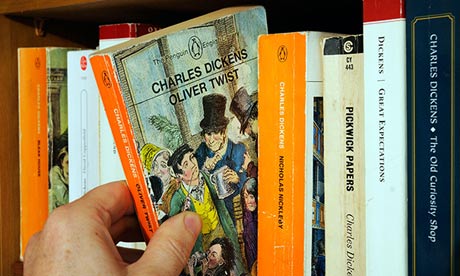
Speaking of taste, we have chosen, where possible, the title most central to the author’s voice and vision, which is not necessarily the most famous. Jane Austen is a case in point. Pride and Prejudice is much-loved. Northanger Abbey is highly entertaining. But we have chosen Emma. Discuss. With Dickens, the choice gets even harder. You will have to wait until week 14 to read about our Dickens selection.

Inevitably, this list reflects educational, national and social influences. Some Scottish readers may say that we have not given enough space to the great northern tradition.Irish readers will argue about Flann O’Brien (aka Myles na gCopaleen). In or out? Wait and see. Further afield, in the English-speaking world,some Australian readers may feel short-changed. All we can say in response is that this list was compiled for a British newspaper, based in London, in 2013.

Anyway, like all lists, ours is intended to sponsor discussion. We kick off with John Bunyan. Let the debate begin.

Guardian book club

Get the Guardian book club email

Hosted by John Mullan, be the first to find out about forthcoming events and featured authors.

Sign up for the Guardian book club email

08 La cultura de la trampa

EL ACENTO

La cultura de la trampa

Las universidades españolas adoptan medidas que penalizan conductas deshonestas como copiar en un examen o plagiar

SOLEDAD CALÉS

La búsqueda de la excelencia en la enseñanza está reñida con el trapicheo y la trampa; por eso muchas universidades están adoptando códigos éticos y normas internas que penalizan las conductas deshonestas. Junto a la matrícula, los alumnos de la Universidad Pública de Navarra, por ejemplo, tienen que firmar ahora una declaración en la  que se comprometen a no utilizar métodos fraudulentos. A no copiar, vamos. Es un propósito tan loable como necesario, pero no va a resultar fácil erradicar viejas prácticas de falsificar exámenes o currículo y plagiar contenidos.

En realidad, estas conductas no son exclusivas de los alumnos (algunos profesores también plagian), ni del mundo universitario (la Guardia Urbana de Barcelona tuvo que repetir en julio una prueba de acceso al cuerpo) y tampoco son muy diferentes de las que se ven en otros ámbitos, como las que afloran en los casos de corrupción que llegan a los juzgados. Todas encuentran un buen caldo de cultivo en cierta cultura de la trampa que viene de lejos. De la ficción a la realidad, del Lazarillo de Tormes al gran Dioni, los pícaros han gozado en nuestra cultura de gran tolerancia y hasta de simpatía popular: en un país de miserias, sus trapicheos eran interpretados como una forma ingeniosa de buscarse la vida.

Pero, contra lo que pudiera parecer, la trampa académica es también frecuente en otras culturas en teoría mucho menos permisivas. En poco tiempo, nada menos que un presidente, el de Hungría, y dos ministros alemanes, el de Defensa y la de Educación, además de un presidente del Bundestag, han dimitido tras saberse que habían plagiado en sus tesis doctorales.

Copiar y plagiar tampoco parece ser un recurso exclusivo de la mediocridad. La muy excelente —y elitista— Universidad de Harvard expulsó en marzo pasado a 60 alumnos por copiar en un examen; una mancha que la universidad trató de ocultar y que llevó a su dirección a espiar los correos de algunos decanos para averiguar quién había filtrado tan nociva noticia.

Nadie parece, pues, libre de pecado. La diferencia está en la respuesta. Mientras en unos lugares se expulsa y se dimite, en otros predomina aún la tolerancia. Sean, pues, bienvenidos estos intentos de cambio.

08 Defendernos del control digital

Defendernos del control digital

Hace falta una nueva ética para esta era. Necesitamos Snowdens y Mannings en China, en Rusia, en todas partes, para combatir la disminución gradual de lo que Kant llamó “el uso público de la razón”

RAQUEL MARIN

Todos recordamos el rostro sonriente y esperanzado de Obama en su primera campaña: “¡Yes, we can!” Sí, podíamos dejar atrás el cinismo de la era de Bush y ofrecer justicia y bienestar al pueblo estadounidense. Ahora que vemos que Estados Unidos mantiene sus actividades clandestinas y amplia su red de espionaje, incluso vigilando a sus aliados, imaginamos a los manifestantes que increpan al presidente: “¿Cómo puede utilizar aviones no tripulados para matar? ¿Cómo puede espiar incluso a nuestros aliados?”, mientras Obama murmura, con una sonrisa malvada: “Yes we can”.

Pero es un error personalizar. La amenaza contra la libertad revelada por las denuncias está arraigada en el sistema. No solo hay que defender a Edward Snowden porque haya irritado y avergonzado a los servicios secretos estadounidenses; los actos denunciados los cometen, en la medida de sus posibilidades tecnológicas, todas las grandes (y no tan grandes) potencias: China, Rusia, Alemania, Israel.

Sus revelaciones han dado fundamento a nuestras sospechas de que nos vigilan y controlan, y tienen alcance mundial, mucho más allá de las típicas críticas a Estados Unidos. En realidad, Snowden no ha dicho (y Manning tampoco) nada que no supusiéramos ya. Pero una cosa es saberlo en general y otra tener datos concretos.

En 1843, el joven Karl Marx afirmó que el antiguo régimen alemán “imagina que cree en sí mismo, y exige que el mundo imagine lo mismo”. En esas circunstancias, la capacidad de avergonzar a los poderosos es un arma. Como dice él a continuación: “La presión debe aumentarse con la conciencia de la presión, la vergüenza debe ser más vergonzosa haciéndola pública”.

Muchas de las leyes que constituyen el régimen de secretos de Estado son, a su vez, secretas

Esta es exactamente nuestra situación: nos enfrentamos al desvergonzado cinismo de los representantes del orden mundial, que imaginan que creen en sus ideas de democracia, derechos humanos, etcétera. Tras las revelaciones de WikiLeaks, la vergüenza —la suya, y la nuestra por tolerar ese poder— es mayor porque se hace pública. Lo que debería avergonzarnos es la reducción gradual en el mundo del margen para lo que Kant llamaba el “uso público de la razón”.

En su clásico texto ¿Qué es la Ilustración?, Kant compara el uso “público” y “privado” de la razón. “Privado” es el orden comunitario e institucional en el que vivimos (Estado, nación…) y “público” es el ejercicio universal de la razón: “El uso público de nuestra razón debe ser siempre libre, y es lo único que puede llevar la ilustración a los hombres. El uso privado de nuestra razón, en cambio, puede restringirse sin impedir gravemente el progreso de la ilustración. Por uso público de la razón interpreto el uso que hace una persona, por ejemplo, un sabio ante el público que le escucha. Uso privado es el que puede hacer una persona en un cargo de la administración”.

Se ve la discrepancia de Kant con nuestro sentido común liberal: el ámbito del Estado es “privado”, limitado por intereses particulares, mientras que un individuo que reflexiona sobre cuestiones generales hace un uso “público” de la razón. Esta distinción kantiana tiene especial relevancia ahora que Internet y los demás nuevos medios se debaten entre su “uso público” libre y su creciente control “privado”. Con la informática en nube, nos proporcionan los programas y la información a la carta, y los usuarios acceden a herramientas y aplicaciones en la red a través de los navegadores.

Pero este mundo nuevo y maravilloso no es más que una cara de la moneda. Los usuarios acceden a programas y archivos que se guardan en remotas salas de ordenadores de clima controlado; o, como dice un texto publicitario: “Se extraen detalles a los usuarios, que ya no necesitan conocer ni controlar la infraestructura tecnológica ‘en la nube’ de la que dependen”.

He aquí dos palabras clave: extracción y control. Para administrar una nube es preciso un sistema de vigilancia que controle su funcionamiento, y que, por definición, está oculto a los usuarios. Cuanto más personalizado está el smartphone que tengo en la mano, cuanto más fácil y “transparente” es su funcionamiento, más depende de un trabajo que están haciendo otros, en un vasto circuito de máquinas que coordinan las experiencias de usuarios. Cuanto más espontánea y transparente es nuestra experiencia, más regulada está por la red invisible que controlan organismos públicos y grandes empresas con sus secretos intereses.

Es necesaria una nueva red mundial que proteja a quienes denuncian y difunda su mensaje

Si emprendemos el camino de los secretos de Estado, tarde o temprano llegamos al fatídico punto en el que las normas legales que dictan lo que es secreto son también secretas. Kant formuló el axioma clásico de la ley pública: “Son injustas todas las acciones relativas al derecho de otros hombres cuando sus principios no puedan ser públicos”. Una ley secreta, desconocida para sus sujetos, legitima el despotismo arbitrario de quienes la ejercen, como dice un informe reciente sobre China: “En China es secreto incluso qué es secreto”. Los molestos intelectuales que informan sobre la opresión política, las catástrofes ambientales y la pobreza rural acaban condenados a años de cárcel por violar secretos de Estado, pero muchas de las leyes y normas que constituyen el régimen de secretos de Estado son secretas, por lo que es difícil saber cómo y cuándo se están infringiendo.

Si el control absoluto de nuestras vidas es tan peligroso no es porque perdamos nuestra privacidad, porque el Gran Hermano conozca nuestros más íntimos secretos. Ningún servicio del Estado puede tener tanto control, no porque no sepan lo suficiente, sino porque saben demasiado. El volumen de datos es inmenso, y, a pesar de los complejos programas que detectan mensajes sospechosos, los ordenadores son demasiado estúpidos para interpretar y evaluar correctamente esos miles de millones de datos, con errores ridículos e inevitables como calificar a inocentes de posibles terroristas, que hacen todavía más peligroso el control estatal de las comunicaciones. Sin saber por qué, sin hacer nada ilegal, pueden considerarnos posibles terroristas. Recuerden la legendaria respuesta del director de un periódico de Hearst al empresario cuando este le preguntó por qué no quería irse de vacaciones: “Tengo miedo de irme y que se produzca el caos y todo se desmorone, pero tengo aún más miedo de descubrir que, aunque me vaya, las cosas seguirán como siempre y se demuestre que no soy necesario”. Algo similar ocurre con el control estatal de nuestras comunicaciones: debemos tener miedo de no poseer secretos, de que los servicios secretos del Estado lo sepan todo, pero debemos tener aún más miedo de que no sean capaces de hacerlo.

Por eso es fundamental que haya denuncias, para mantener viva la “razón pública”. Assange, Manning, Snowden son nuestros nuevos héroes, ejemplos de la nueva ética propia de nuestra era de control digital. No son meros soplones que denuncian las prácticas ilegales de empresas privadas a las autoridades públicas; denuncian a esas autoridades públicas y su “uso privado de la razón”.

Necesitamos Mannings y Snowdens en China, en Rusia, en todas partes. Hay Estados mucho más represores que Estados Unidos: imaginen qué le habría pasado a Manning en un tribunal ruso o chino (seguramente, nada de juicio público). Eso no quiere decir que Estados Unidos sea blando, pero no trata a los presos con la brutalidad de esas dos potencias, puesto que, con su superioridad tecnológica, no lo necesita (aunque está más que dispuesto a usarla cuando hace falta). En realidad, es más peligroso que China, porque sus medidas de control no lo parecen, mientras que la brutalidad china es fácil de ver.

Es decir, no basta con enfrentar a un Estado con otro (como hizo Snowden con Rusia y Estados Unidos); necesitamos una nueva red internacional que proteja a los que denuncian y ayude a la difusión de su mensaje. Son nuestros héroes porque demuestran que, si los poderosos pueden, nosotros también.

Slavoj Zizek es filósofo esloveno
Traducción de María Luisa Rodríguez Tapia

08 Did Shakespeare sell women short?

Did Shakespeare sell women short?

The RSC is turning to Jacobean drama in search of better roles for women. So does the Shakespearean tradition hold actresses back?

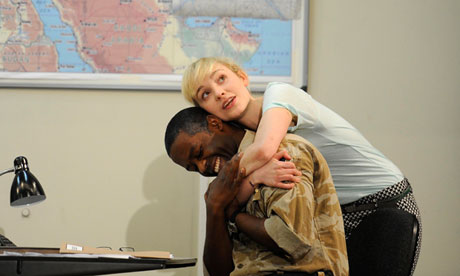
UK - William Shakespeare's Othello directed by Nicholas Hytner at the National Theatre in London.

Olivia Vinall as Desdemona with Adrian Lester as Othello. Photograph: Robbie Jack for the Observer

A leading lady seeking the challenge of a truly great stage role – the equivalent of Lear or Hamlet – often has to reach back into the ancient world, perhaps for Medea or Antigone, or to go to Scandinavia for Ibsen’s Nora or Hedda Gabler. To remedy this failing in British theatrical tradition, the Royal Shakespeare Company has announced that it is reviving three major female roles from Jacobean drama. The plays, The Roaring Girl by Thomas Middleton and Thomas Dekker, the anonymous Arden of Faversham from 1592 and The White Devil by John Webster, will be produced partly as a “provocation”, according to deputy artistic director Erica Whyman. She does not aim, she said, to solve the issue of gender inequality on the stage, but she is “intent on asking some questions”.

Whyman argues that the time is right to look at these rarely performed works because gender power today is in flux, as it was when they were written. But her bold foray into the Jacobean raises a question that sounds almost heretical, especially coming from the RSC in Stratford-upon-Avon: did Shakespeare short-change women?

The lack of classic roles for women in English-language theatre is widely acknowledged, but could it possibly be the Bard’s fault? Brigid Larmour, award-winning artistic director of Watford Palace Theatre, suspects the great playwright is guilty as charged.

“The impact of Shakespeare is still inspiring, of course, but it can also be limiting,” she said. “There are huge characters, such as Cleopatra or Beatrice, that we reference all the time in the rehearsal room. But the problem is that we have kept the same gender balance in today’s theatre because of the success and genius of his plays. It created a blueprint that means playwrights do not notice when they have written something for nine men and one woman.”

Larmour, who has worked to create an even proportion of female and male parts in her Ideal World season at Watford, understands Whyman’s concern. “At Stratford the other day I heard actresses talking about how few roles for older women there still are. And these are the actresses who have learned their craft and can really deliver.”

Shakespeare, despite his confident genius, was unaware of the influence his dramatis personæ would have down the ages. And the question of his original gender bias is further complicated by the fact that in his day all parts were played by men.

One actress who has gone on the record about her disappointment in Shakespeare’s legacy for women is Janet Suzman. She complains: “There are no soliloquies of any note, although Cleopatra comes nearest, achieving a Lear-like clarity about her place in the world after the death of Antony. And none of them earns the lengthy scholarly analysis accorded the eponymous heroes of the canon.”

Suzman regards Cleopatra, the second-biggest of Shakespeare’s female roles, as “the chiefest among his female creations”, while Volumnia, Coriolanus’s persuasive mother, also gets a vote. Lady Macbeth, Hamlet’s mother Gertrude and lost love Ophelia she dismisses for “fizzling out”.

Conventionally, among the most coveted female roles in Shakespeare are the cross-dressing duo of Rosalind in As You Like It and Viola in Twelfth Night. Rosalind, with 685 lines, is Shakespeare’s biggest female role, while Viola, despite the warm appeal of her character, comes in tenth. The spiky Beatrice in Much Ado About Nothing also packs a big dramatic punch with relatively few lines. But throughout the works the power of a role cannot be measured in lines alone. Lady Macbeth, who drives the plot by calling on her murderous husband to “screw his courage to the sticking place”, has fewer than half his lines. Similarly, the voice of Othello‘s Desdemona, the lyric, gentle centre of the play, is dwarfed by her jealous groom’s 880 lines.

Heroines such as Portia in The Merchant of Venice and Isabella in Measure for Measure carry both the weight of their legal arguments, as well as the play’s moral argument, although men get much more airtime. Other roles, such as the wild Katherina in Taming of the Shrew or the passionate teenage Juliet, might come close to seeming mere objects of dispute, if deft characterisation had not ensured that they burn bright.

For 400 years even Shakespeare’s minor female roles have been desired by great actresses. Titania, the fairy queen of A Midsummer Night’s Dream, has only 141 lines to speak but in 2010 was played for the second time to acclaim by Judi Dench, though the part is usually doubled up with that of Hippolyta to give it bulk.

Young girls in Shakespeare are full of innocence, yet they are also repositories of wisdom. Among this line-up, with under 200 lines apiece, appear Hamlet‘s Ophelia, Lear‘s Cordelia and The Tempest‘s untouched Miranda, the only female character in her play.

“I always find it an annoying misinterpretation when these small, key roles are played at a high emotional pitch,” said Whyman. “Ophelia is often portrayed as if she is a mess. Why don’t directors think she means what she is saying? She has seen everything, more than anyone else, and yet there is nothing she can do. She is profound and political, as Miranda is at the top of The Tempest.”

While there are some larger neglected parts, such as Imogen in Cymbeline, many memorable female characters in Shakespeare might be described as truth-speaking old dames. The three witches are a clear example, but the nurse in Romeo and Juliet, Mistress Quickly in Henry IV part I, Paulina in The Winter’s Tale and Emilia in Othello are all also strong in this field.

So can it be fair to say there are no Shakespearean roles with real heft for women? Suzman has no doubt: “There is simply no spiritual, intellectual or metaphysical equivalent to Lear, the Richards, the Henrys, nor the twin peaks of Othello and his demonic tempter, Iago – and certainly no woman baddies of that order. No crazed Timons or Tituses, nor anything like the Everest of Hamlet, towering above them all.”

Larmour agrees, adding that there are still few of the “arduous, testing parts like Lear or Hamlet” in the wider repertoire. “Charlotte Keatley [author of the award-winning My Mother Said I Never Should] is writing the role of Émilie du Châtelet, the mathematician, for us and that will really put the actor through their paces. Otherwise, we tend to go to Ibsen, or to America, or over to Ireland for Shaw or O’Casey.”

In Shakespeare’s time, gender politics was a perilous subject, with Elizabeth I’s power waning at the end of her reign. Women were forbidden to appear on stage and this may well have dampened Shakespeare’s enthusiasm for female roles. Larmour suggests that had this dramatic genius been born later, British theatre would be different now. “If Shakespeare had been writing during the freer Restoration era, we would have far more women’s parts.”

Whyman at the RSC also believes politics were critical. “The confidence of the Elizabethan age had faded a bit when Shakespeare was in his prime. People were anxious about the succession and about the idea that it might not be a man again,” she said. “So although things had fundamentally changed, they swung back. We see that kind of shape-shifting today, where identities and roles are not fixed.”

In the past directors have tackled the lack of weighty women’s roles in Shakespeare with gender-blind casting. Larmour would like to see more of this. “When it comes to colour-blind casting, there is still a long way to go, but there has been some progress. With gender-blind casting we have not got any further at all. If anything we have gone back.” She applauded last winter’s all-female production of Julius Caesar at the Donmar Warehouse. “It was great, but that kind of casting was fairly standard in the 1980s.”

Given the historical context, Whyman is happy to let Shakespeare off the hook: “While we can say he didn’t write as many parts for women of the kind where you travel with them on a long journey, I do think he thought of them as people, just like his other characters. The range of women Shakespeare writes is, I think, second to none.”

Whether or not the Bard qualifies as a feminist, for Whyman the astonishing achievement is that all his female characters remain so distinct.

08 Open thread: have you ever lied about reading a book?

Open thread: have you ever lied about reading a book?

A new survey reveals the top 10 books people claim to have read but haven’t. Be it War and Peace or Infinite Jest, share your uncracked spines here.

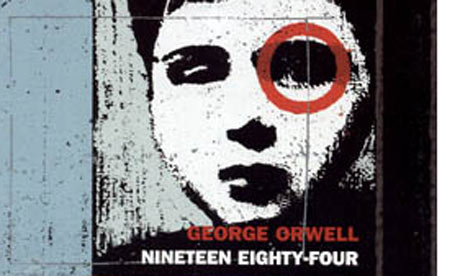
George Orwell's 1984
Big Brother knows you gave up on page 17… Nineteen Eighty-Four is the most fibbed-about book. Photograph: Public Domain

A recent survey of 2,000 people suggests that the majority of people pretend to have read classic books in order to appear more intelligent, with more than half of those polled displaying unread books on their shelves and 3% slipping a highbrow cover on books they’d rather not be seen reading in public.

The books most likely to be lied about are, naturally, the books most often filmed, talked about and studied in school (some of the respondents must have been lying since GCSE onwards). Are any of them in your pretend-I’ve-read/never-finished pile, or do you save your literary fibbing for Finnegans Wake and Infinite Jest? Share your guilty secrets below.

The top 10 books people claim to read but haven’t

1 1984 by George Orwell (26%)

2 War and Peace by Leo Tolstoy (19%)

3 Great Expectations by Charles Dickens (18%)

4 The Catcher in the Rye by JD Salinger (15%)

5 A Passage to India by EM Forster (12%)

6 Lord of the Rings by JRR Tolkien (11%)

7 To Kill A Mocking Bird by Harper Lee (10%)

8 Crime and Punishment by Fyodor Dostoevsky (8%)

9 Pride and Prejudice by Jane Austen (8%)

10 Jane Eyre by Charlotte Bronte (5%)

08 Poet Seamus Heaney dies aged 74

30 August 2013 Last updated at 20:47 GMT

Share this page

Poet Seamus Heaney dies aged 74

Nick Higham looks back at the life of Seamus Heaney

Seamus Heaney, acclaimed by many as the best Irish poet since WB Yeats, has died aged 74.

Heaney was awarded the Nobel Prize for Literature in 1995 “for works of lyrical beauty and ethical depth, which exalt everyday miracles and the living past”.

Over his long career he was awarded numerous prizes and received many honours for his work.

He recently suffered from ill health.

His 2010 poetry collection The Human Chain was written after he suffered a stroke and the central poem, Miracle, was directly inspired by his illness.

File photo dated 1/5/1970 of Irish poet, playwright and Nobel prize winner Seamus Heaney
Heaney in 1970, two years before he gave up full-time academic work to become a freelance writer and poet

Recalling how he had been lifted up and down the stairs to his bedroom, the poet eulogised the biblical characters who carried a paralysed man to Jesus to be healed.

“Their shoulders numb, the ache and stoop deep locked / In their backs, the stretcher handles / Slippery with sweat. And no let up.”

‘Profound sorrow'”The death has taken place of Seamus Heaney,” said a short statement issued by his family on Friday.

“The poet and Nobel laureate died in hospital in Dublin this morning after a short illness. The family has requested privacy at this time.”

Heaney’s publisher, Faber, said: “We cannot adequately express our profound sorrow at the loss of one of the world’s greatest writers. His impact on literary culture is immeasurable.

“As his publisher we could not have been prouder to publish his work over nearly 50 years. He was nothing short of an inspiration to the company, and his friendship over many years is a great loss.”

Andrew Motion, former Poet Laureate and a friend of Heaney, told The Telegraph that Heaney was “a great poet, a wonderful writer about poetry, and a person of truly exceptional grace and intelligence.”

The Pulitzer Prize-winning Irish poet Paul Muldoon told BBC Radio 3: “One of his great gifts was to allow people in who were not necessarily that interested in poetry… and I think that’s one of the reasons why he occupies such an extraordinary place in people’s hearts.”

Heaney was born in April 1939, the eldest of nine children, on a farm near Toomebridge in County Londonderry, Northern Ireland, but as a child moved to the village of Bellaghy.

He was educated at St Columb’s College, Derry, a Catholic boarding school, and later at Queen’s University Belfast, before training as a teacher. He settled in Dublin, with periods of teaching in the US.

Heaney was an honorary fellow at Trinity College Dublin and, last year, was bestowed with the Seamus Heaney Professorship in Irish Writing at the university, which he described as a great honour.

Continue reading the main story

Poet Simon Armitage pays tribute

I’ll remember him both as a poet and a person – an incredibly generous and open man. He was a great ambassador for poetry and I think that’s recognised almost worldwide. People only had good things to say about his courtesy and his integrity.

He was the poet I encountered at school and he made me think it was possible for anybody who showed an interest in poetry to write it.

What made him so successful and so affirmed as a poet was the way he managed to straddle the intellectual rigors of poetry and the academic elements that come with that, with a lightness of touch that meant even people who weren’t that interested in the art form would respond to his work. They’re so deft and subtle and I suppose that was his ear for language.

I remember once being in a pub with him in Shropshire – he was a superstar in the world of literature but in that pub he was like a guy from the village. He just sat there in the corner chatting way.

His first book, Death of a Naturalist, published in 1966, reflected his rural upbringing, but as Ireland’s troubles increased his work took a more political turn.

In 2011, Heaney donated a collection of his literary papers to the National Library of Ireland.

It included manuscripts of his poetry, a comprehensive and vast collection of loose-leaf, typescript and manuscript worksheets and bound notebooks.

The collection spanned Heaney’s literary career, from the publication of Death of a Naturalist (1966), to volumes such as Wintering Out (1972) and North (1975), right through to Station Island (1984), Seeing Things (1991) and his most recent publications, District and Circle (2006) and Human Chain (2010).

The latter won the prestigious £10,000 Forward Prize in 2010.

Heaney described the collection, his 12th, as his most personally revealing collection of poems.

He had been nominated for the Forward Prize three times before, but this was his first win. Judge and author Ruth Padel described Heaney’s volume as “painful, honest, and delicately weighted”.

Over the course of his career, Heaney also won the TS Eliot Prize, and was made Honorary Fellow of the Royal Society of Literature.

He was also the professor of poetry at Oxford University between 1989 and 1994.

In an interview with the Today programme’s James Naughtie in early 2013, Heaney remembered how he felt when he first discovered poetry.

“It was the voltage of the language, it was entrancing,” he said.

“I think the first little jolt I got was reading Gerard Manley Hopkins – I liked other poems… but Hopkins was kind of electric for me – he changed the rules with speech and the whole intensity of the language was there and so on.”

Irish President Michael D Higgins said Heaney’s contribution “to the republics of letters, conscience, and humanity was immense”.

Northern Irish poet Michael Longley said: “I feel like I’ve lost a brother and there are tens of thousands of people today who will be feeling personally bereaved because he had a great presence.

“Just as his presence filled a room, his marvellous poems filled the hearts of generations of readers.”

Australian author Kathy Lette posted on Twitter: “RIP Seamus Heaney. I once introduced him to my son as the world’s greatest poet. My son frowned. ‘No, that would be Bob Dylan.’ Seamus roared.”

Queen’s University Belfast also paid tribute to its former student, staff member and honorary graduate, calling him a “true friend of the university”.

“Generous with his scholarship and his time, his warmth, humour and brilliance will be sorely missed,” professor James McElnay, acting president and vice-chancellor, said.

“His contribution to the world of literature has introduced millions of people around the globe to the enjoyment of poetry and enhanced it for many more.”

Mr Heaney is survived by his wife, Maire, and three children Christopher, Michael and Catherine Ann.

A funeral mass for the poet will take place on Monday at the Church of the Sacred Heart in Donnybrook, Dublin.

This will be followed by interment in Bellaghy.

More on This Story

Related Stories

The BBC is not responsible for the content of external Internet sites


Seamus Heaney: Poetry was entrancing

http://www.bbc.co.uk/news/entertainment-arts-21242731

Writers Seamus Heaney and Simon Armitage have been speaking to the BBC about their love of poetry.

In an interview with the Today programme’s James Naughtie, Seamus Heaney remembered how he felt when he first discovered poetry.

“It was the voltage of the language, it was entrancing,” he said.

Author Simon Armitage added: “I knew I wanted to exist in a world of poetry, but I didn’t want to write it [to begin with], I just wanted to read it.

“All I knew was that it felt like a marginal activity, and that it was the place I felt I could be strong and happy, in those margins.”

With regard to teaching poetry in schools, Armitage said: “Learning poetry is a good idea as long as it doesn’t turn into elocution lessons. It’s about giving students poems which excite them, and don’t embarrass or humiliate them because they can’t find a way into the language.”

07 Seamus Heaney’s books were events in our lives by Colm Tóibín

http://www.todostuslibros.com/libros/campo-abierto-opened-country_978-84-7522-566-1
Aquí encontrarás la traducción de Jenaro Talens y mía como homenaje al gran poeta irlandés.


Seamus Heaney’s books were events in our lives

In a time of burnings and bombings Heaney used poetry to offer an alternative world; he gave example by his seriousness, his honesty, his thoughtfulness, his generosity

'Privately, he was almost shy, always thoughtful' … Seamus Heaney in 2010.
‘Privately, he was almost shy, always thoughtful’ … Seamus Heaney in 2010. Photograph: Geray Sweeney/Corbis

Two years ago I invited Seamus Heaney to read at the Kilkenny arts festival in Ireland. The venue was St Canice’s Cathedral, one of the most beautiful churches in Ireland. It was here almost 40 years earlier that, as a young poet, he had met Robert Lowell, who had become a friend and a mentor. Heaney admired Lowell’s utter dedication to his craft, his ability to change, his absolute belief in the importance of poetry. When I suggested that Dennis O’Driscoll, who had done a book of interviews with Heaney, should introduce him on stage, Seamus said he would like that, but he would prefer it if Dennis would read as well. Dennis, he said, had done enough introducing; since he was also a poet, he should get equal billing. It was typical of Seamus’s generosity.

That evening, I suggested to him that he should do no signing of books after the reading, but go and have a drink with the theatre director Peter Brook, who was in Kilkenny and wanted to meet him. As we left by a side door and walked away from the church, he sighed and said that all his life after readings when everyone else was free to walk out into the world, he would spent an hour or more signing books and meeting people. He was the most tactful and careful and scrupulous of men. He used a deep-rooted conscientiousness in his work, but it also came across every time you met him. He had a way of holding back, watching every word, weighing the moment. In his public readings he had a real command; privately, he was almost shy, always thoughtful.

That summer’s evening, I sensed that he was enjoying a sort of freedom which was apparent in his work after the volume Seeing Things in 1991. He played a seriousness and a responsibility against an urge to loosen his tone without slackening the care he took with every phrase; he felt easier about celebrating things, allowing the miraculous into his work and a sort of lightness into his cadences. At first he felt guilty about not staying behind to sign books and satisfy other people’s needs, but then he smiled and walked with a casual stride, seeming to enjoy the dwindling summer light, the freedom, the prospect of good company.

ITV ARCHIVEHeaney in 1970. Photograph: Rex/ITVHe remained a northerner in the south of Ireland. Even though he lived in Wicklow and Dublin for 40 years, he was a citizen of south Derry and then of the world of poetry. What happened in the north weighed on him. In a time of burnings and bombings he used poetry to offer an alternative world; he gave example by his seriousness, his honesty, the tact in his phrasing, the care with language, the thoughtfulness, the scrupulousness.

He carried his fame lightly, easily. He preferred shadow to light; he preferred the half-said, careful, ambiguous remark to the big statement; he liked the slow smile rather than the easy laugh. He enjoyed company, but I always felt he had one eye on the door, and would be happy when the night was over and he could go home.

For his readers, his books were events in our lives, monuments. All of us remember reading the poems in North, say, for the first time in 1975, or reading the Glanmore sonnets which appeared in his book Field Work in 1979. He was not merely a central figure in the literary life of Ireland, but in its emotional life, in its dream life, in its real life. In his last book, Human Chain, published in 2010, he wrote about growing older and weaker with a shivering honesty and grace. It is hard to come to terms now with the idea that there will be no more such books.

07 Seamus Heaney obituary by Neil Corcoran

Seamus Heaney obituary

Irish poet and Nobel laureate whose lines of love and loss took inspiration from his childhood in Derry

Seamus Heaney at home in Dublin in 2007. Photograph: Eamonn McCabe for the Guardian

In 2009, as part of the extensive celebrations in Ireland for his 70th birthday, RTÉ broadcast a documentary about Seamus Heaney. Towards its close, Heaney, who has died aged 74, was asked whether anything in his work seemed appropriate to him as an epitaph. He demurred at first but, when gently prodded, quoted what he had translated from Oedipus at Colonus by Sophocles when his friend the great Polish poet Czesław Miłosz died in 2004. Telling the story of the old king who dies and vanishes into the earth, the play’s Messenger says, in Heaney’s version: “Wherever that man went, he went gratefully.” That, said Heaney, would do for him too.

The gratitude is not so much, surely, for the leaving of life, but for the work well done. Heaney suffered a stroke in 2006 and his volume Human Chain (2010) is painfully shadowed by ageing and mortality. But it is also deeply informed by a spirit of resilience and acceptance and, in the extraordinary love poem Chanson d’Aventure, which describes his ambulance drive to hospital with his wife, Marie, by the sense of renewal and new reward, even at a late stage, in human relationships.

Mortality and domestic relations, affection and obligation, had preoccupied Heaney throughout his work, and were frequently sounded together. One of his most popular poems, Mid-Term Break, from his collection Death of a Naturalist (1966), handles the death of his younger brother Christopher in a road accident in 1953, when Heaney was still a schoolboy; that loss is returned to again in the superb late poem The Blackbird of Glanmore, in District and Circle (2006), which is also concerned with intimations of the poet’s own mortality.

The deaths of many in the Troubles feature in numerous Heaney poems, notably in North (1975), where, in the now famous sequence of “bog poems”, they are brought into alignment with the iron-age bodies recovered from the bogs of Jutland, which Heaney had encountered in PV Glob’s book The Bog People. In the collections Field Work (1979) and Station Island (1984), Heaney encounters ghosts. With these poems, and others, he became one of the great modern elegists.

But Heaney was also an excellent poet of familial love and, notably, of enduring married love. There are numerous poems of filial affection, for both mother and father, and wonderful poems for his children and, latterly, his granddaughter. One of his finest poems, Sunlight, in North, was written for his aunt Mary, who was partly responsible for his upbringing. Chanson d’Aventure marked a late stage in the marital relationship he had vividly portrayed for years after his marriage to Marie Devlin in 1965: from the difficulties evoked in Summer Home (in Wintering Out, 1972), a poem of regret and self-recrimination, through the stabilities, accommodations, supportiveness, sources of strength and erotic tenderness and arousal recorded in such poems as The Skunk and An Afterwards in Field Work (1979), and The Underground and La Toilette in Station Island.

Especially in its bleak treatment of the Troubles, Heaney’s poetry is full of broken things, but it is also a poetry of the continuities that sustain us against mortality. His resourceful, disciplined equilibrium finds one of its best expressions at the end of A Kite for Michael and Christopher, in Station Island, when the poet-father hands the emblematic kite on to his sons:

Before the kite plunges down into the wood
and this line goes useless
take in your two hands, boys, and feel
the strumming, rooted, long-tailed pull of grief.
You were born fit for it.
Stand in here in front of me
and take the strain.

The way his work faces the worst but steadies itself against it, too, must be the greatest single reason for Heaney’s huge readership. He presumably had his popularity in mind when he called himself, in Station Island, a “poet, lucky poet”.

The eldest of nine children of Margaret (née McCann) and Patrick Heaney, a Catholic farmer and cattle dealer, he was born at Mossbawn farm near the village of Castledawson in County Derry. Seamus was an early beneficiary of the 1947 Northern Ireland Education Act, attending St Columb’s college in Derry, where his contemporaries included the politician John Hume and the critic and academic Seamus Deane. He studied English language and literature at Queen’s University Belfast, graduating with a first-class degree in 1961. He taught for a brief period in Belfast and joined the writers’ workshop known as the Group initiated by the poet and critic Philip Hobsbaum, who taught at Queen’s. After Hobsbaum left the university, Heaney was appointed to a lectureship in English in 1966 and he became chairman of the Group, whose other members included Michael Longley and Bernard MacLaverty. An important impetus to the burgeoning of poetry in the north, it would eventually also include the poets Paul Muldoon, Medbh McGuckian and Ciaran Carson.

In 1964 Karl Miller published three of Heaney’s poems in the New Statesman, where they were noticed by the Northern Irish-born Charles Monteith, one of the directors of the publishers Faber and Faber. When he received Monteith’s letter soliciting a manuscript, it was, Heaney said, “like getting a letter from God the Father”. Two years later, Faber published Death of a Naturalist. It received exceptional acclaim, and Heaney almost immediately became a poet keenly watched, followed and imitated. By then, he had married Devlin, with whom he would have three children, Michael, Christopher and Catherine Ann.

Heaney took part in some of the first protest marches following the RUC assault on the civil rights march in Derry on 5 October 1968, and he contributed articles on the issue to the Listener.

The Heaneys spent an important year in the US, at the University of California at Berkeley, in 1970-71, and Heaney got to know the contemporary poetry of America’s west coast. On their return, he resigned from his post at Queen’s, became a freelance writer and moved with his family to the Republic of Ireland. They lived in a rented cottage in a relatively remote, beautiful part of County Wicklow, on what had once been a vast estate owned by the family of the playwright and poet JM Synge. The Glanmore cottage was to prove, both at that time and later, after the Heaneys bought it in 1988, not just a bolthole from a busy Dublin life – it had no telephone – but also a source of poetic power. It was the secluded site of a great deal of often nocturnal and, he once told me, almost trancelike, poetic composition. Glanmore Sonnets and Glanmore Revisited are the most obvious products of that place and state, and appropriate testimony to it.

Reading this on mobile? Click here to view video

Inevitably, the move south by a significant Irish Catholic writer from the north was read as having emblematic import; and in Exposure, which appears at the end of North, Heaney figures himself as “a wood-kerne / Escaped from the massacre”. He spent several years hosting a books programme on Irish radio and in 1975 took up teaching again, this time at Carysfort College, a Catholic teacher-training college in Dublin. Heaney bought a house in the city – “by a famous strand,” he says in a poem: that is, Sandymount, along which Stephen Dedalus walks in an early episode of James Joyce’s Ulysses.

In 1980 Heaney published Preoccupations, the first of several collections of critical essays. His literary criticism came to assume great authority. Heaney wrote in richly rewarding ways about Wordsworth, Yeats, Dante, Patrick Kavanagh, John Clare, Sylvia Plath and Elizabeth Bishop.

Developing an international reputation, notably in America, Heaney initiated a long relationship with Harvard University, where he had a visiting professorship in 1979. He held the Boylston chair of rhetoric and oratory there (1985-97), teaching one semester a year, and he then continued the contact in a less formal capacity. He was professor of poetry at Oxford from 1989 to 1994 and the resulting lectures were collected as The Redress of Poetry in 1995. In that year he won the Nobel prize in literature. During his Nobel lecture, he dwelt at some length on the politics of Northern Ireland, condemning both “the atrocious nature of the IRA’s campaign of bombings and killings” and “the ruthlessness of the British army on occasions like Bloody Sunday in Derry in 1972″. Heaney’s other accolades over the years included the TS Eliot, Forward, David Cohen and (twice) Whitbread prizes. In 1996 he was made a commandeur de l’Ordre des Arts et des Lettres. In 2004 Queen’s University opened its Seamus Heaney Centre for Poetry.

There is no doubt Heaney took great delight in his success. He was an adept, even charismatic, performer before an audience – as a reader of his own poems in academic auditoriums, as a public lecturer, and as a radio and television broadcaster; and he certainly understood, from very early on, the mechanisms involved in the creation and maintenance of a successful public reputation. In a sometimes envious literary world this led to some cavilling, notably upon the 2008 publication of Stepping Stones in which Heaney, already a much-interviewed poet, discussed his life and career with his friend and fellow poet Dennis O’Driscoll.

The book was clearly intended as the alternative to an autobiography, and if Heaney’s way with his readership was absolutely not Samuel Beckett’s or even Heaney’s friend Brian Friel‘s ways of withdrawal and silence, the book is, in the event, an exercise not in egotism or hubris but in self-questioning, self-definition, self-analysis, self-evaluation and, only finally, self-justification. As such, it suggests Heaney’s conception of his role as a writer always included a strong element of the pedagogic. What he commended in the poet Marina Tsvetaeva – “the good force of creative mind at work in the light of conscience” – can be commended in him too.

When he wrote about Yeats in an early essay – one of many in which Heaney returns to the work of his great Irish poetic forebear – he used the word “exemplary” of that poet’s demeanour at a particular point in his life, and Heaney’s own life had the character of an experiment that was also available for scrutiny. For all the “luck” of the career, it was a life lived with a strong awareness of social and cultural responsibility. If the even-handedness of some of his explicit political remarks could seem almost diplomatic at times (politicians, including Bill Clinton, have been fond of quoting him), he was also, when the occasion demanded, a forceful articulator of an Irish political conscience before a primarily English audience. This was notably the case at a prizegiving in 1988, at which he chastised the English press for their reporting of Northern Ireland, and in the last of his Oxford lectures, Frontiers of Writing, in which he analysed his perturbed feelings when he stayed in a Tory cabinet minister’s room in an Oxford college at the time of the IRA hunger strikes in 1981.

Heaney’s major public commitment in Ireland was to the Field Day Theatre Company, of which, along with Friel and Stephen Rea, he became a director. Formed initially to stage contemporary plays outside the commercial theatre, Field Day developed, through various publications, into a controversial agency of agitation in Irish cultural politics. In 1983 it published Heaney’s Sweeney Astray, a translation from the medieval Irish tale Buile Suibhne, and in 1990 it staged The Cure at Troy, his version of Philoctetes by Sophocles. Both make clear, if coded, reference to contemporary Irish political life. Heaney published a further dramatic translation, of Sophocles’s Antigone, as The Burial at Thebes, in 2004, and it premiered at Dublin’s Abbey theatre that year.

Translation was a major element of his later work: notably his outstandingly successful version, published in 1999, of the long Anglo-Saxon poem Beowulf, and his version of a Horatian ode, Anything Can Happen, which commemorated the events of 9/11.

Given his eminence, Heaney was exceptionally approachable: gregarious, generous, courteous and convivial. He was a formidably, spontaneously eloquent man gifted with a wonderful verbal memory: he once recited the whole of one of Philip Larkin’s less well-known poems to me, and another time several prose paragraphs from the philosopher EM Cioran. Nevertheless, his social manner was entirely relaxed and relaxing. He was a benignly mischievous raconteur and took great delight in telling, and hearing, jokes. He was very funny indeed, and to spend any time at all in his company was to laugh a great deal.

One of my happiest memories is of stopping off at a cinema in the Dublin suburb of Tallaght on the way to Wicklow with him to catch an afternoon showing of Robert Zemeckis’s 2007 animated movie of Beowulf, which boldly attempts to sex up the text on which it is somewhat loosely based. The only other audience members were, weirdly, a party of ribald boy scouts. The various incongruities were striking, and hilarious.

Where he encountered envies, resentments and hostilities, Heaney appeared to handle them with equanimity and aplomb, even if the eventual dissolution of some old allegiances clearly caused distress. He was, though, a man of whom it could be said, as Yeats wanted it said of him, “his glory was he had such friends”. These included international literary greats, such as Miłosz, Bishop, Ted Hughes, Robert Lowell, Joseph Brodsky and Derek Walcott, but Heaney also had a great deal of time for younger writers, whom he encouraged and quietly promoted.

For all the strength of personality manifest in Heaney’s life, it is of course to the poetry that we will return. This is always, as it were, a life altogether elsewhere; and the elsewhere in Heaney is characteristically the life of memory, and specifically the memory of his childhood place, the townlands of his origins whose Irish names – Anahorish, Broagh, Toome, Mossbawn, Bellaghy – are now such an indelible part of English-language poetry, as are their accents, rhythms and people. There is a real sense in which his poetry is permanent homesickness, as the place is returned to again and again, but always with a difference, until its topography becomes the register of an immensely complex psychological, emotional, cultural and political terrain; until the place has become, in fact, in the title of one of Heaney’s collections of lectures, the “place of writing”.

Crucial to the worldview of that place of origin was an earlier phase of Irish Catholicism, and although the religion itself had for Heaney long given way to the secularism characteristic of his literary generation, his categories of discrimination in writing as well as in ethics – almost, you might say, his categories of consciousness itself – continued always to carry a distinctively Catholic inflection. For all his later secularism, Heaney’s imagination continued also to be suffused by images of an afterlife. This is figured most powerfully in his later work by allusions to and evocations of Virgil, and especially of the descent into the underworld in Book VI of the Aeneid, part of which Heaney translated in Seeing Things (1991), and which is conjured, absorbed and refracted in the sequence Route 110 in Human Chain.

In such places, the Aeneid seems to constitute a kind of displaced Catholicism, supplying a supportive mythology for a poet whose secularism continued to require such a thing. In the sequence Squarings, in Seeing Things, however, he finds an image all his own for an afterlife that is the almost miraculously continued life of a County Derry landscape:

At any rate, when light breaks over me
The way it did on the road beyond Coleraine
Where wind got saltier, the sky more hurried
And silver lamé shivered on the Bann
Out in mid-channel between the painted poles
That day I’ll be in step with what escaped me.

He is survived by Marie, Christopher, Michael and Catherine Ann, and his grandchildren.

• Seamus Justin Heaney, poet, born 13 April 1939; died 30 August 2013

07 Seamus Heaney’s death ‘leaves breach in language itself’

Seamus Heaney’s death ‘leaves breach in language itself’

Tributes flow in from fellow writers after poet who won Nobel prize for literature dies in Dublin aged 74

Seamus Heaney
Seamus Heaney was ‘the poet we all measured ourselves against’, said Britain’s poet laureate, Carol Ann Duffy. Photograph: Murdo Macleod

He was a snowy-haired, craggy mountain of a man; a man who radiated granite integrity and deep kindness. He was a poet, among the greatest of our era, and the first of his nation to win the Nobel prize since Yeats.

Seamus Heaney, who has died in hospital in Dublin, aged 74, leaves family, friends and readers in Ireland and beyond “feeling personally bereaved”, in the words of his longtime friend, the poet Michael Longley. “Just as his presence filled a room, his marvellous poems filled the hearts of generations of readers.”

Carol Ann Duffy, Britain’s poet laureate, said that for his “brothers and sisters in poetry … he came to be the poet we all measured ourselves against and he demonstrated the true vocational nature of his art for every moment of his life. He is irreplaceable.” For poet Don Paterson, “the death of this beloved man seems to have left a breach in the language itself”.

Heaney, who won the Nobel prize for literature in 1995, an experience he likened to “being caught up in a mostly benign avalanche”, was born shortly before the start of the second world war into a farming family in Castledawson, County Derry.

His first collection of poetry, Death of a Naturalist, was published in 1966; numerous others followed, including North (1975), the Haw Lantern (1987) and his 12th and final collection, Human Chain (2010). He was marinated in the language and landscape of his native Derry, as well as in the poetry of the Anglo-Saxons, the Greeks and the Romans: his translation of Beowulf (2000) was especially highly acclaimed.

The defining fact of his poetry has been the complexities, tragedies and traumas of 20th-century Irish history. An Ulster-born Catholic who in the 1970s moved south to Wicklow and later Dublin (and who also spent many years teaching at Harvard), he resisted attempts to co-opt him, preferring to “tell all the truth but tell it slant”, to borrow a line from Emily Dickinson.

His Nobel address manifested the poet’s struggle in the face of intractable, bloody history. What “always will be to poetry’s credit”, he wrote, is “the power to persuade that vulnerable part of our consciousness of its rightness in spite of the evidence of wrongness all around it”.

The poet Paul Muldoon, as a 16-year-old, was encouraged in his writing by the 28-year-old Heaney, and later went on to study with him at Queen’s University, Belfast. He said: “He managed in ways that are more or less unheard of to be a poet and a public figure, but one who was never involved in propaganda. He always tried to be true to whatever the moment might be. It was in many ways a difficult role: people looked to him almost as one might to the Delphic Oracle.”

Frank McGuinness, the Irish playwright, said: “During the darkest days of the Northern Ireland conflict he was our conscience: a conscience that was accurate and precise in how it articulated what was happening.

“His poems are a brilliant record of what Ireland went through, and to produce it he must have gone through many trials. He carried enormous burdens for us and he helped us. He was a great ally for the light … he was the greatest Irishman of my generation: he had no rivals.”

Politicians from both sides of the border praised the poet. Michael D Higgins, the president of the Irish Republic, said: “The presence of Seamus was a warm one, full of humour, care and courtesy – a courtesy that enabled him to carry with such wry Northern Irish dignity so many well-deserved honours from all over the world.” The taioseach, Enda Kenny, said that his death “brings great sorrow to Ireland, to language and to literature”.

Heaney was a strong supporter of the peace process in Northern Ireland, memorably paying tribute to the architects of the Good Friday agreement, the then leaders of nationalism and unionism John Hume (whom he dubbed “the hedgehog”) and David Trimble (“the fox”).

The leader of the Ulster Unionist party, Mike Nesbitt, recalled: “Bill Clinton chose Heaney’s great phrase about when ‘hope and history rhyme’ from The Cure at Troy [the poet’s translation of Sophocles’ play Philoctetes] in his speech in Londonderry in 1995.”

Clinton said: “Both his stunning work and his life were a gift to the world. His mind, heart, and his uniquely Irish gift for language made him our finest poet of the rhythms of ordinary lives and a powerful voice for peace. And he was a good and true friend.”

Fellow writers paid tribute to the poet’s sheer human warmth. “Seamus never had a sour moment, neither in person nor on paper,” said the playwright Tom Stoppard. “You couldn’t help loving him any more than you could help reading on from the first line.”

Younger writers bore witness to his generosity. Gerald Dawe, poet and professor of literature at Trinity College Dublin, said he was “like an older brother who encouraged you to do the best you could do”. Matthew Hollis, a poet and Heaney’s editor at the publisher Faber, recalled being encouraged by Heaney when he sent him poems as a young man.

He called him “a man of hearthside, personal kindness. Within the poetry world he was a father figure: the head of our poetry household … Above all he was a great friend to poetry; showing countless readers what was possible in language, encouraging us to dig a little deeper, to break the skin of our consciousness and our articulacy.” The poet Lavinia Greenlaw added: “To receive his warmth and encouragement was like receiving something from the sun.”

In his first collection, Death of a Naturalist, Heaney included a poem called Digging – a manifesto, of sorts, for the poet who was also the scion of farmers. “I’ve no spade to follow men like them,” he wrote. But the poem goes on, with the kind of dogged ferocity that all great writers share: “Between my finger and my thumb/ The squat pen rests./ I’ll dig with it.”

Seamus Heaney – a life in pictures

The death of the Nobel laureate Seamus Heaney at the age of 74 marks the end of a career which began with his collection Death of a Naturalist in 1966. Here we celebrate his life with a selection of images from an old school photograph to recent appearance at the Edinburgh international book festival
News: Seamus Heaney dies aged 74

http://www.theguardian.com/books/gallery/2013/aug/30/seamus-heaney-life-pictures-poetry

07 Muere el poeta y premio Nobel irlandés Seamus Heaney

http://www.todostuslibros.com/libros/campo-abierto-opened-country_978-84-7522-566-1
Aquí encontrarás la traducción de Jenaro Talens y mía como homenaje al gran poeta irlandés.
adiós al poeta de lo lírico y lo cívico

Muere el poeta y premio Nobel irlandés Seamus Heaney a los 74 años

El Premio Nobel de Literatura ha sido aclamado como el poeta irlandés más destacado desde William Yeats

“Todo mi trabajo es un pulso entre lo lírico y lo cívico”, dijo en varias ocasiones el poeta y dramaturgo

Seamus Heaney, en la Residencia de Estudiantes de Madrid. / Bernardo Pérez

“Lentamente / los muertos avanzan / hacia el futuro”.

Pero Seamus Heaney ya hacía realidad su propio verso antes de morir ayer a los 74 años, tras una breve enfermedad. Poeta, dramaturgo, crítico literario y premio Nobel de Literatura de 1995, era considerado el poeta irlandés más destacado desde William Yeats, un elogio incomparable al pertenecer a un país con una tradición de memorables escritores.

Bibliografía en español

Norte  (Ediciones Hiperion 1992)

De la emoción a las palabras: ensayos literarios (Anagrama 1996)

El nivel (Trilce Ediciones 2000)

Luz eléctrica (Visor Libros 2003)

Campo abierto. Antología poética (Visor Libros 2005), Aquí encontrarás esta traducción.

Al buen entendedor. Ensayos escogidos (Fondo de Cultura Económica de España 2006)

Distrito y circular (Visor Libros 2007)

Cadena Humana (Visor Libros 2011)

 Sepelio en Tebas (Vaso Roto 2012)

“Todo mi trabajo es un pulso entre lo lírico y lo cívico”, eran las palabras con las cuales le gustaba definirse a este escritor nacido el 13 de abril de 1939 en el Condado de Derry (Irlanda del Norte). Y sí, tenía razón, lo lírico y lo cívico conviven en su creación literaria de manera intelectual, emocional y pictórica. Verso y prosa marcadas por los años infantiles, la violencia de protestantes y católicos del Ulster e influida por la búsqueda de la propia historia de su país. Tres vías de un mismo destino que se encuentran felices en el niño que fue, el que vio lo que vio y el que soñó lo que soñó, con el adulto que evoca alegrías impregnadas de dolor y de tragedia.

Heaney convierte en literatura su compromiso con los ideales infantiles y los ideales de la vida, de la convivencia y la comprensión, en cuya ruta aparece inevitablemente la política, unas veces de manera más directa y otras menos. En 1972 se fue a vivir a Dublín como una muestra de su compromiso nacionalista y reflejada en poemarios como Norte.

Es el creador de “una obra literaria de belleza lírica y profundidad ética, que exalta los milagros de cada día y el pasado vivido”, proclamó la Academia sueca al concederle el Nobel.

Leerlo es reconocer pasados propios y recuerdos soñados, y, también, recorrer con sus palabras la historia de Irlanda del Norte en su serenidad y en sus diversas zozobras. De familia católica, Heaney vivió entre el mundo de su padre, con su granja y todo, y el de su madre con sus raíces industriales, y lo que conlleva la estela de la revolución proletaria.

Mundos reales y sensoriales unidos por su lenguaje sigiloso y preciso, “dueño de una maestría en la que resalta su aparente simpleza para describir las situaciones con las que te va metiendo en un ambiente sin que te des cuenta”, destaca Chus Visor, uno de sus editores en España.

“La primera captación en serio que tuve de las cosas

fue cuando aprendí el arte de pedalear

(con la mano) una bici, colocada al revés

e impulsé la rueda trasera preternaturalmente ligero.

Yo amaba la desaparición de los rayos

el modo como el hueco entre el eje y la llanta

susurraba transparente…”.

Memoria y futuro vívido en estos versos iniciales del poema Ruedas dentro de ruedas que reflejan su espíritu nostálgico de gran luminosidad. Su poesía, dice el poeta Martín López Vega, “es un pequeño huerto donde se cultiva la humanidad, donde se la mima para evitar las pestes. Es un manual sobre cómo conservar el entusiasmo de la infancia. Es magia: si traduce a Beowulf sus palabras suenan como espadas y si habla de una mujer que canta en el poema hay un camino que también canta. Es el recuerdo de que la poesía construye el mundo en que vivimos y el modo en que lo habitamos”.

Si Heaney publicó su primer poemario en 1963, Muerte de un naturalista, y firmó diversas obras teatrales, como The Cure at Troy (1990) y The Burial at Thebes (2004), es en 1983 cuando hace su entrada grupal en la poesía inglesa contemporánea al ser el principal reclamo de una antología presentada por los poetas Andrew Motion y Blake Morrison. Fue catedrático en las universidades de Harvard y Oxford.

Seamus Heaney siempre buscó un retrato fiel de lo que quería contar, transmitir, compartir. Cuando un día de 2003, en una entrevista a este diario se le preguntó si su poesía se estaba haciendo más intelectual con el tiempo fue luminoso: “¡Más literaria! Pero siempre trato de manejar eso, de hacer algo más directo. El camino es difícil, porque escribir tiene una parte inconsciente y otra muy consciente, publicar y ser criticado. El poeta es una criatura inventada que firma con tu nombre. Y al tiempo, escribir supone olvidarse de uno mismo, y hay tantas maneras de olvidarse como de estar presente. Sospecho que no hay remedio para eso, ni solución. La poesía es una mezcla de accidentes, gracia y trampas. Hay que trampear para buscar la inocencia; si no, solo te dedicas a ser tú mismo”.

07 El riesgo para la libertad by Ulrich Beck

LA CUARTA PÁGINA

El riesgo para la libertad

Cuando el Estado democrático, con la colaboración de las grandes corporaciones digitales, espía de forma global para optimizar su seguridad ante cualquier amenaza, ¿quién defenderá los derechos individuales?

EULOGIA MERLE

El escándalo de la red de escuchas Prisma ha abierto un nuevo capítulo en la sociedad del riesgo mundial. En los decenios pasados hemos conocido una serie de riesgos globales: el cambio climático, el riesgo nuclear, el financiero, el terrorismo… y ahora el riesgo digital global que amenaza a la libertad. Todos estos riesgos (con excepción del terrorismo) en cierto modo forman parte del desarrollo tecnológico, pero también cristalizaban temores que se habían expresado durante la fase de modernización de estas nuevas tecnologías. Sin embargo, ahora se produce un acontecimiento en el que un riesgo se constituye de golpe en un problema mundial, como ocurre en la amenaza para la libertad que han puesto en evidencia las revelaciones de Edward Snowden. Estamos ante una lógica del riesgo completamente distinta.

En el caso del riesgo nuclear, los accidentes de Chernóbil y de Fukushima han suscitado un debate público. En el caso del riesgo para la libertad, por el contrario, lo decisivo no fue el caso catastrófico, puesto que aquí la catástrofe sería la hegemonía del control impuesta en el nivel global, es decir: en realidad, la desaparición del riesgo tal como lo entiende la hegemonía informativa impuesta. Dicho de otro modo: la catástrofe habría ocurrido, pero nadie se habría dado cuenta. Eso supone una completa inversión de la situación, que puede verse de otro modo: al principio, todos los riesgos globales compartían varias características. Todos revelaban en las experiencias cotidianas la interdependencia global. Todos son, en un sentido especial, globales, esto es: no se basan en accidentes espacial, temporal y socialmente delimitados, sino en catástrofes que carecen de límites en cualquiera de estas dimensiones. Y todos son efectos colaterales de los éxitos de la modernización, que, a su vez, ponen retrospectivamente en cuestión las instituciones de modernización existentes. En el caso del riesgo para la libertad, lo que se pone en tela de juicio son las posibilidades de control de los propios Estados nacionales democráticos; en los demás casos, los cálculos de probabilidad, la protección de las compañías de seguros, etcétera.

También tenemos que vérnoslas con una inflación de las catástrofes que se ciernen sobre nosotros, en la que cada nueva catástrofe amenaza con degradar a la siguiente: el riesgo financiero eclipsa el riesgo climático. El riesgo del terrorismo eclipsa los riesgos digitales para la libertad. Esto último es, por lo demás, uno de los obstáculos centrales que impiden reconocer públicamente y convertir en objeto de acción pública ese riesgo para la libertad.

La generación de Facebook sacrifica parte de su libertad individual y de su esfera privada

Es verdad que ese reconocimiento se está produciendo ahora, pero aún es muy frágil. Si se busca un actor poderoso que tenga auténtico interés en que se tome conciencia pública de ese riesgo y, por consiguiente, mueva a adoptar acciones políticas, lo primero que nos viene a la cabeza es el Estado democrático. Pero eso sería poner el lobo a guardar las ovejas. Es precisamente el Estado, en cooperación con las grandes corporaciones digitales, el que ha levantado ese poder hegemónico para optimizar su interés esencial, que es la seguridad nacional e internacional. Pero esto podría suponer un paso histórico que nos apartara del pluralismo de los Estados nacionales en dirección a un Estado digital mundial libre de cualquier control.

El segundo actor que podría movilizarse es el propio ciudadano. Al fin y al cabo, los usuarios de los nuevos medios de comunicación digital se han convertido en una especie de cyborgs. Utilizan esos medios como órganos sensoriales, forman parte de su forma de actuar en el mundo. La generación de Facebook vive en esos medios y sacrifica al hacerlo gran parte de su libertad individual y de su esfera privada.

¿Qué instancias de control quedarían? En Alemania, por ejemplo, la Constitución. Su artículo 10 consagra la inviolabilidad del correo y las telecomunicaciones en una frase que se lee como si procediera de un mundo perdido. En Europa tenemos órganos de control ejemplares, toda una serie de instituciones que intentan imponer los derechos fundamentales contra estos poderes superiores, entre las que se cuentan el Tribunal Europeo de Justicia, las agencias de protección de los datos personales o los Parlamentos. Pero todas estas instituciones, y esa es la paradoja, fracasan precisamente cuando funcionan. Porque los medios que tienen a su disposición están limitados a los Estados nacionales, mientras que aquí nos enfrentamos a procesos globales. Lo mismo puede aplicarse a los demás riesgos globales; las respuestas nacionales y los instrumentos institucionales de los que disponemos no son acordes a los riesgos de la sociedad del riesgo mundial.

Suena muy pesimista. Pese a ello, hay que ir un paso más allá y plantearse si nosotros, como científicos sociales, hombres corrientes y usuarios de estos instrumentos de información digital, ya nos hemos dotado de conceptos adecuados para describir cuán profunda y fundamentalmente se han transformado la sociedad y la política. Creo que carecemos aún de categorías, mapas y brújula para este Nuevo Mundo.

Hoy se conocen todas las preferencias y debilidades: todos nos volvemos de cristal, transparentes

Pongamos un ejemplo, para ilustrar el riesgo que amenaza a la libertad. Hablamos sin cesar de que está surgiendo un nuevo imperio digital. Pero ninguno de los imperios históricos que conocemos tiene los rasgos que caracterizan al actual imperio digital. Este imperio se basa en señas de identidad de la modernidad que no hemos pensado a fondo. No se basa en el poder militar, ni posee la capacidad para una integración político-cultural a distancia. Pero sí dispone de posibilidades de control de una amplitud y profundidad capaz de evidenciar todas las preferencias y debilidades individuales: todos nos volvemos de cristal, transparentes. Y a esto se añade además una ambivalencia esencial: disponemos de inmensas posibilidades de control, pero al mismo tiempo estos controles digitales son de una vulnerabilidad inimaginable. Ningún poder militar ni revolución amenazan al imperio del control, sino un único y valeroso individuo: Snowden, un treintañero experto en seguridad, es capaz de hacer que se tambalee, y además lo logra volviendo al propio sistema de información contra sí mismo. Es decir, en este sistema aparentemente hiperperfecto de control, existe una posibilidad de resistencia del individuo que jamás hubo en ningún otro imperio. El ciudadano corriente dispone, en contraste con Snowden, de un conocimiento mucho más limitado de la estructura y el poder de ese supuesto imperio. Pero eso no se aplica a la generación joven, que como un Cristóbal Colón irrumpe en ese Nuevo Mundo y hace de las redes sociales una prolongación de su propio cuerpo comunicativo.

Y aquí se evidencia una consecuencia esencial. El riesgo de una vulneración de los derechos a la libertad se valora de forma diferente a la vulneración de derechos relativos a la salud, como la que se deriva del cambio climático. La vulneración de la libertad no duele, no se nota, no se experimenta como una enfermedad, una inundación o una carencia de oportunidades laborales. La libertad muere sin que las personas sean heridas físicamente. En todos los sistemas políticos, la promesa de seguridad constituye el verdadero meollo del poder del Estado y de la legitimación del Estado, mientras que la libertad siempre es o parece ser un valor de segundo rango.

¿Qué se puede hacer? Yo propongo que formulemos algo así como un humanismo digital. Debemos convertir el derecho fundamental a la protección de los datos y a la libertad digital en un derecho humano global e intentar hacer valer este derecho al igual que el resto de los derechos humanos, en contra de las resistencias. De lo que se carece es de una instancia internacional capaz de imponer estas reivindicaciones. En ese aspecto, el riesgo para la libertad no se distingue del riesgo que supone el cambio climático. No hay ningún actor en el plano internacional capaz de afrontarlos. Pero la inquietud es internacional; el riesgo global tiene una capacidad de movilización enorme. Se trataría de aunar y encauzar políticamente esa inquietud que en grados diversos corre a través de los movimientos sociales y partidos políticos de distintos países. Precisamos una invención transnacional de la política y la democracia que posibilite revivir y hacer valer los derechos democráticos fundamentales en contra del dominio de esos monopolios del control completamente emancipados.

Ulrich Beck es profesor en la London School of Economics y en la Universidad de Harvard.
Traducción de Jesús Alborés Rey.

07 So the innocent have nothing to fear?

So the innocent have nothing to fear? After David Miranda we now know where this leads

The destructive power of state snooping is on display for all to see. The press must not yield to this intimidation

Eye graffiti

‘But it remains worrying that many otherwise liberal-minded Britons seem reluctant to take seriously the abuses revealed in the nature and growth of state surveillance.’ Photograph: Yannis Behrakis/Reuters

You’ve had your fun: now we want the stuff back. With these words the British government embarked on the most bizarre act of state censorship of the internet age. In a Guardian basement, officials from GCHQ gazed with satisfaction on a pile of mangled hard drives like so many book burners sent by the Spanish Inquisition. They were unmoved by the fact that copies of the drives were lodged round the globe. They wanted their symbolic auto-da-fe. Had the Guardian refused this ritual they said they would have obtained a search and destroy order from a compliant British court.

Two great forces are now in fierce but unresolved contention. The material revealed by Edward Snowden through the Guardian and the Washington Post is of a wholly different order from WikiLeaks and other recent whistle-blowing incidents. It indicates not just that the modern state is gathering, storing and processing for its own ends electronic communication from around the world; far more serious, it reveals that this power has so corrupted those wielding it as to put them beyond effective democratic control. It was not the scope of NSA surveillance that led to Snowden’s defection. It was hearing his boss lie to Congress about it for hours on end.

Last week in Washington, Congressional investigators discovered that the America’s foreign intelligence surveillance court, a body set up specifically to oversee the NSA, had itself been defied by the agency “thousands of times”. It was victim to “a culture of misinformation” as orders to destroy intercepts, emails and files were simply disregarded; an intelligence community that seems neither intelligent nor a community commanding a global empire that could suborn the world’s largest corporations, draw up targets for drone assassination, blackmail US Muslims into becoming spies and haul passengers off planes.

Yet like all empires, this one has bred its own antibodies. The American (or Anglo-American?) surveillance industry has grown so big by exploiting laws to combat terrorism that it is as impossible to manage internally as it is to control externally. It cannot sustain its own security. Some two million people were reported to have had access to the WikiLeaks material disseminated by Bradley Manning from his Baghdad cell. Snowden himself was a mere employee of a subcontractor to the NSA, yet had full access to its data. The thousands, millions, billions of messages now being devoured daily by US data storage centres may be beyond the dreams of Space Odyssey’s HAL 9000. But even HAL proved vulnerable to human morality. Manning and Snowden cannot have been the only US officials to have pondered blowing a whistle on data abuse. There must be hundreds more waiting in the wings – and always will be.

There is clearly a case for prior censorship of some matters of national security. A state secret once revealed cannot be later rectified by a mere denial. Yet the parliamentary and legal institutions for deciding these secrets are plainly no longer fit for purpose. They are treated by the services they supposedly supervise with falsehoods and contempt. In America, the constitution protects the press from pre-publication censorship, leaving those who reveal state secrets to the mercy of the courts and the judgment of public debate – hence the Putinesque treatment of Manning and Snowden. But at least Congress has put the US director of national intelligence, James Clapper, under severe pressure. Even President Barack Obama has welcomed the debate and accepted that the Patriot Act may need revision.

In Britain, there has been no such response. GCHQ could boast to its American counterpart of its “light oversight regime compared to the US”. Parliamentary and legal control is a charade, a patsy of the secrecy lobby. The press, normally robust in its treatment of politicians, seems cowed by a regime of informal notification of “defence sensitivity”. This D-Notice system used to be confined to cases where the police felt lives to be at risk in current operations. In the case of Snowden the D-Notice has been used to warn editors off publishing material potentially embarrassing to politicians and the security services under the spurious claim that it “might give comfort to terrorists”.

Most of the British press (though not the BBC, to its credit) has clearly felt inhibited. As with the “deterrent” smashing of Guardian hard drives and the harassing of David Miranda at Heathrow, a regime of prior restraint has been instigated in Britain whose apparent purpose seems to be simply to show off the security services as macho to their American friends.

Those who question the primacy of the “mainstream” media in the digital age should note that it has been two traditional newspapers, in London and Washington, that have researched, co-ordinated and edited the Snowden revelations. They have even held back material that the NSA and GCHQ had proved unable to protect. No blog, Twitter or Facebook campaign has the resources or the clout to confront the power of the state.

There is no conceivable way copies of the Snowden revelations seized this week at Heathrow could aid terrorism or “threaten the security of the British state” – as charged today by Mark Pritchard, an MP on the parliamentary committee on national security strategy. When the supposed monitors of the secret services merely parrot their jargon against press freedom, we should know this regime is not up to its job.

The war between state power and those holding it to account needs constant refreshment. As Snowden shows, the whistleblowers and hacktivists can win the occasional skirmish. But it remains worrying that many otherwise liberal-minded Britons seem reluctant to take seriously the abuses revealed in the nature and growth of state surveillance. The arrogance of this abuse is now widespread. The same police force that harassed Miranda for nine hours at Heathrow is the one recently revealed as using surveillance to blackmail Lawrence family supporters and draw up lists of trouble-makers to hand over to private contractors. We can see where this leads.

I hesitate to draw parallels with history, but I wonder how those now running the surveillance state – and their appeasers – would have behaved under the totalitarian regimes of the 20th century. We hear today so many phrases we have heard before. The innocent have nothing to fear. Our critics merely comfort the enemy. You cannot be too safe. Loyalty is all. As one official said in wielding his legal stick over the Guardian: “You have had your debate. There’s no need to write any more.”

Yes, there bloody well is.

07 David Cameron met Stephen Fry to discuss Russian gay rights row

David Cameron met Stephen Fry to discuss Russian gay rights row

Meeting of prime minister and comedian at East End pub was brokered by Evgeny Lebedev

Stephen Fry

Stephen Fry at a protest in London over gay rights in Russia. Photograph: Anthony Devlin/PA

David Cameron secretly met the comedian Stephen Fry in an East End pub to discuss Russia‘s anti-gay rights laws, as the prime minister faced new calls to raise the issue with Vladimir Putin at the G20 summit.

The highly unusual meeting was brokered by Evgeny Lebedev, son of the billionaire Russian Alexander Lebedev, owner of the Independent, after Fry publicly called for a boycott of the Winter Olympics in Sochi next year.

Cameron is under pressure from activists including Fry to condemn new laws in Russia that impose heavy fines on anyone disseminating information about homosexuality to under 18s.

The issue has been in the spotlight as Moscow is hosting the world athletics championships, where there have been protests by sportsmen and women.

Fry, who has more than six million followers on Twitter, is an influential voice in the campaign to boycott the Sochi Games, comparing the situation to the decision to hold the 1936 Olympics in Nazi Germany.

After Fry called for “an absolute ban on the Russian Winter Olympics”, Cameron tweeted a reply saying that attending the event was a better way of challenging prejudice.

It is understood the two men met on Monday night, two days after the Twitter exchange, for drinks at the Grapes pub in Limehouse. The pub is jointly owned by Lebedev and the actor Ian McKellen.

Fry has maintained his silence on Twitter about the meeting, but sources said it was a friendly conversation rather than official talks. A spokesman for Lebedev said the matter was private.

Fry has previously said he “instinctively dislikes” the Conservatives but admires Cameron’s achievement in legalising gay marriage.

On Sunday campaigners said Cameron had still not made it clear what he would do about Russia’s stance on gay rights, despite winning positive publicity for his meeting with Fry.

Peter Tatchell, the veteran human rights and LGBT campaigner, said: “It’s great that David Cameron met Stephen Fry but what’s the actual outcome of this meeting? David Cameron said he wouldn’t support a boycott of Sochi Winter Olympics but he hasn’t said what he’ll do himself.”

Tatchell, whose presence at Downing Street functions has been repeatedly vetoed in recent years, said a coalition of gay rights groups would hold a protest outside Downing Street in early September as part of a new campaign called Love Russia, Hate Homophobia.

“It will be just before the G20 summit hosted by President Putin,” Tatchell told the Guardian. “The main message of this is directed at David Cameron. We want him to give an undertaking that he will raise the issue at the G20 summit and to publicly appeal to President Putin to repeal the anti-gay laws. Our hope is that the London protest on 3 September will turn into a global protest.”

Russia has reacted defensively to the public pressure over its new laws, with its sports minister, Vitaly Mutko, claiming on Sunday that it was an “invented problem” whipped up by western media.

07 La tragedia española… ¿De Shakespeare?

La tragedia española… ¿De Shakespeare?

Un experto afirma que el Bardo modificó una obra ambientada en Castilla de Thomas Kyd.

Dos eruditos españoles responsables de una edición crítica del texto matizan este hallazgo.

William Shakespeare en el único retrato fiable que se conserva.

Una ese perdida en palabras como darkness (oscuridad) y spotless (inmaculado). Poner “luego” donde debía poner “que”. Y oes donde no venían a cuento. A William Shakespeare se le caza por sus erratas. Al menos eso opina Douglas Bruster, investigador y profesor de la Universidad de Austin, que afirma haber probado que el escritor corrigió y añadió texto a la obra La tragedia española, de Thomas Kyd.

El maremoto en las tranquilas aguas del mundo shakespeariano se desató a raíz de un artículo en The New York Times. La clave parece estar en cinco modificaciones realizadas en el texto de Kyd, 325 líneas añadidas en 1602, una década después de la primera versión de la obra. “No ha sobrevivido ninguna versión manuscrita” afirma por teléfono Bruster, que publicó originalmente un artículo de cuatro páginas con su estudio en una web de la Universidad de Oxford dedicada a ediciones anotadas de autores clásicos. “Sin embargo, una lectura detallada atendiendo a los errores del texto y la forma de deletrear determinadas palabras coinciden absolutamente con la escritura de Shakespeare”. Bruster se apoya también en los ensayos ya publicados sobre el mismo drama por Brian Vickers y Hugh Craig, que emplearon otra técnica para llegar a la misma conclusión: el análisis computacional para comparar estas alteraciones de la creación de Kyd con la obra de Shakespeare.

Aunque hasta el poeta Samuel Coleridge ya dijo en 1833 que los retoques sonaban a Shakespeare, desde España, escenario de la trama, se recomienda prudencia para valorar este análisis. Clara Calvo y Jesús Tronch, responsables de la edición crítica de cabecera —según afirma el propio Bruster— de La tragedia española, tienen cautelas si se les pide una afirmación tajante sobre si es efectivamente de Shakespeare. Y tal vez no pueda hacerse nunca.

“Será más una cuestión de fe, de que uno quiera pensar que estos añadidos son de Shakespeare o no”, afirma Tronch, profesor de la Universidad de Valencia que ha dedicado junto con Calvo casi una década a esta edición comentada que publica en inglés la prestigiosa editorial Bloomsbury Arden Shakespeare. “Aún no he analizado en profundidad el artículo de Bruster, aunque ya lo he leído. Sus argumentos tienen solidez y se suman a los de Craig y Vickers por otra vía de investigación. Pero se basan en una obra manuscrita sobre Tomás Moro atribuida a Shakespeare por tres de cada cinco expertos en el autor. Así que será imposible tener una conclusión definitiva y aceptada por todos”.

Ambos eruditos coinciden con la opinión de Tiffany Stern, profesora de Oxford y consejera editorial de Arden Shakespeare, que en declaraciones a The New York Times afirmó que esta fiebre mediática por encontrar nuevos textos de Shakespeare responde más a intereses editoriales que al estudio en sí. A renglón seguido, la docente alabó el rigor de la argumentación de Bruster.

La trama de La tragedia española es salvaje. Hierónimo, un corregidor del imperio español, ve cómo su hijo, Horacio, es asesinado por el vástago del rey, Lorenzo, por ser el favorito de Andrea, la mujer que ama el sucesor del trono. Traicionado por el Gobierno al que sirve, Hierónimo decide emprender una brutal venganza contra toda la cúpula del poder. “La elección de España, hoy en día, no parece tener mayor importancia”, indica Jesús Tronch. “Sin embargo, si se lee pensando en la época, hay que tener en cuenta que España era una gran superpotencia. Para entendernos con una comparación algo burda, sería como si un autor actual escribe una novela en la que un funcionario de la Casa Blanca asesina al presidente”.

El profesor Douglas Bruster explica su supuesto hallazgo en ‘La tragedia española’.

Además, el experto afirma que hay otra peculiaridad muy notable en La tragedia española. Lo típico en el teatro de la época era que tras toda la masacre final apareciera un nuevo rey. Así la monarquía no se sentía amenazada. Pero en la obra de Thomas Kyd no hay sustitutos. España y Portugal quedan descabezadas, sin descendientes ni candidatos para sentarse en el trono. Este subversivo final se matiza en parte, según indica el profesor valenciano, porque La tragedia española se abre y se cierra con dos demiurgos sobrenaturales, la Venganza y un espectro que le pide justicia, responsables de mover los hilos de los asuntos mortales, como en la tragedia clásica griega.

Esta no es la única peculiaridad de la pieza de Thomas Kyd. Con solo una obra conservada y un par de traducciones —aunque se cree que este dramaturgo escribió más piezas—, los estudiosos del periodo coinciden en que sienta las bases del teatro isabelino al acercar las intervenciones de los personajes, especialmente en los soliloquios, a sus emociones. Además, según explica Tronch, empleó recursos metateatrales que luego usarían autores como Shakespeare. En la resolución de la trama, cuando Hierónimo logra su venganza, el corregidor les plantea a sus víctimas interpretar una, en apariencia, inocente representación teatral en la que los asesinaría como parte de la ficción. Pero al representarla los mata realmente.

Portada de una edición de 1615 de ‘The Spanish Tragedie’.

Clara Calvo, catedrática de la Universidad de Murcia responsable junto a Tronch de la edición crítica de La tragedia española, añade que muchos expertos sospechan que Kyd podía haber escrito una versión perdida de Hamlet anterior a la de Shakespeare, aunque aún no hay ninguna prueba sólida que respalde esta suposición.

Las razones para que el texto se cambiara pueden obedecer, según indica Clara Calvo, a una estrategia comercial. La tragedia española había sido “un blockbuster de la época”, en su primera versión de 1592. Dos compañías rivales, The Chamberlain’s Men, donde trabajaba William Shakespeare, y The Admiral’s Men, del empresario Philip Henslowe, se hicieron con el texto. Ambas contaban con los dos actores más famosos de la época, que interpretaron el papel principal. “Esta situación era poco usual, porque la mayoría de los derechos de las obras pertenecían a una sola compañía”, asevera Calvo. “Es posible que estos cambios fueran fruto del intento de ofrecer algo distinto a la competencia”.

En la cuarta de las modificaciones, la más larga, Hierónimo se encuentra y habla con el espectro de un padre al que también le han asesinado a su hijo. Y sea de Shakespeare o no, los tres eruditos coinciden en una cosa: quien la reescribió, mejoró la obra.


http://cultura.elpais.com/cultura/2013/08/14/actualidad/1376503979_485549.html

07 Salman Rushdie: living in hiding felt like comedy routine at times

Salman Rushdie: living in hiding felt like comedy routine at times

Speaking at Edinburgh international book festival, author gives insight into years he was forced to live under police protection

Sir Salman Rushdie

Sir Salman Rushdie at the Edinburgh international book festival. Photograph: Jeremy Sutton-Hibbert/Getty Images

Nine years living in hiding after a fatwa was issued against him may not sound like a particularly merry experience, but Sir Salman Rushdie has said his period in police protection felt at times like “a comedy routine”.

On leaving a dinner at the London home of fellow novelist Hanif Kureishi, he recalled that “one of the police officers left his gun behind. And for Hanif of course this was like a transcendent moment of joy. He ran out into the street, holding the gun by the barrel, shouting, ‘Here, you forgot your shooter!'”

On another occasion, Rushdie said, a trip to rural Ayrshire led to strife between the English and the Scottish special branch about who should take charge, resolved by officers from both squads turning up.

“We were in this rural cottage in remote Ayrshire and there was this arsenal of armoured Jaguars parked outside. The hard thing was not concealing me, it was concealing them … there was this police convention going on.”

The author was speaking about his third-person-narrated memoir, Joseph Anton (his pseudonym under the fatwa, after the first names of Conrad and Chekhov), at the Edinburgh international book festival.

He had no premonition of the storm that would greet the publication of The Satanic Verses, he said, when Ayatollah Khomeini issued a fatwa of death against him in 1989 – an event that led to the killing of one of Rushdie’s translators, the serious injury of another, and bombings of bookshops.

“International terrorism levelled against translators, publishers and writers wasn’t something that we knew about. People who were conservative Muslim believers had not liked any of my books, so I expected them not to like it and my view was, ‘So what?’ In general if you don’t want to read a book then don’t: that’s why there are all these books in bookstores for you to chose from. If you start reading a book and you don’t like it you always have the option of shutting it. At this point it loses its capacity to offend you.”

He added: “I do think one of the characteristics of our age is the growth of this culture of offendedness. It’s got something to do with the rise of identity politics, where you are invited to define your identity quite narrowly … What’s happened in this age is we are asked to define ourselves by hate.”

The writer turned too to less solemn subjects. Aside from reminiscing about an incident in which he had seen the late novelist William Styron’s testicles under a loose-fitting pair of shorts (“obviously it was his preferred form of dress”), he also recalled dining with the great American writer Thomas Pynchon. The latter’s decades-long avoidance of public appearances and interviews, and his refusal to be filmed or photographed, has given him a reputation for almost mythic mysteriousness.

“Thomas Pynchon looks exactly like Thomas Pynchon should look,” said Rushdie. “He is tall, he wears lumberjack shirts and blue jeans. He has Albert Einstein white hair and Bugs Bunny front teeth.”

The evening “started a little stiltedly”, he added, “and then he relaxed and became very chatty and there was a moment when it was 3am and my eyes were dropping when he said, ‘I guess you guys are getting a little tired, huh?’ And I was thinking, ‘Yes! But it’s Thomas Pynchon, so wake up!’ And when this long, affable evening came to an end I thought now we are sort of friends, and every so often we will see each other. And he never called again, from that day to this.”

Before the publication of his acclaimed novel Midnight’s Children, Rushdie worked as an advertising copywriter. “I invented this campaign for Aero chocolate bars,” he recalled.

“With bubble words: adorabubble, irresistibubble, delectabubble. Bus signs that said transportabubble. Shop signs that said availabubble. Trade ads that said profitabubble. I invented it because the guy I was working with had a stammer. We were sitting in a room trying to think of an idea and said, ‘It’s fucking impossibubble.’ It was my one genuine lightbulb moment.”

07 An Open Letter to David Cameron and the IOC

STEPHEN FRY

An Open Letter to David Cameron and the IOC

By Stephen Fry
August 7th, 2013

Dear Prime Minister, M Rogge, Lord Coe and Members of the International Olympic Committee,

I write in the earnest hope that all those with a love of sport and the Olympic spirit will consider the stain on the Five Rings that occurred when the 1936 Berlin Olympics proceeded under the exultant aegis of a tyrant who had passed into law, two years earlier, an act which singled out for special persecution a minority whose only crime was the accident of their birth. In his case he banned Jews from academic tenure or public office, he made sure that the police turned a blind eye to any beatings, thefts or humiliations afflicted on them, he burned and banned books written by them. He claimed they “polluted” the purity and tradition of what it was to be German, that they were a threat to the state, to the children and the future of the Reich. He blamed them simultaneously for the mutually exclusive crimes of Communism and for the controlling of international capital and banks. He blamed them for ruining the culture with their liberalism and difference. The Olympic movement at that time paid precisely no attention to this evil and proceeded with the notorious Berlin Olympiad, which provided a stage for a gleeful Führer and only increased his status at home and abroad. It gave him confidence. All historians are agreed on that. What he did with that confidence we all know.

Putin is eerily repeating this insane crime, only this time against LGBT Russians. Beatings, murders and humiliations are ignored by the police. Any defence or sane discussion of homosexuality is against the law. Any statement, for example, that Tchaikovsky was gay and that his art and life reflects this sexuality and are an inspiration to other gay artists would be punishable by imprisonment. It is simply not enough to say that gay Olympians may or may not be safe in their village. The IOC absolutely must take a firm stance on behalf of the shared humanity it is supposed to represent against the barbaric, fascist law that Putin has pushed through the Duma. Let us not forget that Olympic events used not only to be athletic, they used to include cultural competitions. Let us realise that in fact, sport is cultural. It does not exist in a bubble outside society or politics. The idea that sport and politics don’t connect is worse than disingenuous, worse than stupid. It is wickedly, wilfully wrong. Everyone knows politics interconnects with everything for “politics” is simply the Greek for “to do with the people”.

An absolute ban on the Russian Winter Olympics of 2014 on Sochi is simply essential. Stage them elsewhere in Utah, Lillyhammer, anywhere you like. At all costs Putin cannot be seen to have the approval of the civilised world.

He is making scapegoats of gay people, just as Hitler did Jews. He cannot be allowed to get away with it. I know whereof I speak. I have visited Russia, stood up to the political deputy who introduced the first of these laws, in his city of St Petersburg. I looked into the face of the man and, on camera, tried to reason with him, counter him, make him understand what he was doing. All I saw reflected back at me was what Hannah Arendt called, so memorably, “the banality of evil.” A stupid man, but like so many tyrants, one with an instinct of how to exploit a disaffected people by finding scapegoats. Putin may not be quite as oafish and stupid as Deputy Milonov but his instincts are the same. He may claim that the “values” of Russia are not the “values” of the West, but this is absolutely in opposition to Peter the Great’s philosophy, and against the hopes of millions of Russians, those not in the grip of that toxic mix of shaven headed thuggery and bigoted religion, those who are agonised by the rolling back of democracy and the formation of a new autocracy in the motherland that has suffered so much (and whose music, literature and drama, incidentally I love so passionately).

I am gay. I am a Jew. My mother lost over a dozen of her family to Hitler’s anti-Semitism. Every time in Russia (and it is constantly) a gay teenager is forced into suicide, a lesbian “correctively” raped, gay men and women beaten to death by neo-Nazi thugs while the Russian police stand idly by, the world is diminished and I for one, weep anew at seeing history repeat itself.

“All that is needed for evil to triumph is for good men to do nothing,” so wrote Edmund Burke. Are you, the men and women of the IOC going to be those “good” who allow evil to triumph?

The Summer Olympics of 2012 were one of the most glorious moments of my life and the life of my country. For there to be a Russian Winter Olympics would stain the movement forever and wipe away any of that glory. The Five Rings would finally be forever smeared, besmirched and ruined in the eyes of the civilised world.

I am begging you to resist the pressures of pragmatism, of money, of the oily cowardice of diplomats and to stand up resolutely and proudly for humanity the world over, as your movement is pledged to do. Wave your Olympic flag with pride as we gay men and women wave our Rainbow flag with pride. Be brave enough to live up to the oaths and protocols of your movement, which I remind you of verbatim below.

Rule 4 Cooperate with the competent public or private organisations and authorities in the endeavour to place sport at the service of humanity and thereby to promote peace

Rule 6: Act against any form of discrimination affecting the Olympic Movement

Rule 15 Encourage and support initiatives blending sport with culture and education

I especially appeal to you, Prime Minister, a man for whom I have the utmost respect. As the leader of a party I have for almost all of my life opposed and instinctively disliked, you showed a determined, passionate and clearly honest commitment to LGBT rights and helped push gay marriage through both houses of our parliament in the teeth of vehement opposition from so many of your own side. For that I will always admire you, whatever other differences may lie between us. In the end I believe you know when a thing is wrong or right. Please act on that instinct now.

Yours in desperate hope for humanity

Stephen Fry

– See more at: http://www.stephenfry.com/2013/08/07/an-open-letter-to-david-cameron-and-the-ioc/single-page/#sthash.w1xhLfM7.dpuf

07 Dostoievski y los ‘lobos solitarios’

TRIBUNA

Dostoievski y los ‘lobos solitarios’

Los fundamentalistas criados en Occidente comparten rasgos de la sociedad zarista

La guerra contra el terror desencadenada por Bush a raíz del brutal atentado de Al Qaeda contra las Torres Gemelas no ha resuelto el problema de seguridad en las sociedades democráticas de Occidente y lo ha agravado en el mundo araboislámico que se extiende del Índico al Atlántico. La intervención militar estadounidense en Afganistán, avalada por la comunidad internacional, y en Irak, basada en mentiras y pruebas falsas, con un coste de vidas civiles muy superior al de las causadas en la Gran Manzana, ha dado como resultado la creación de dos Estados fallidos, envueltos en sangrientas rivalidades tribales y sectarias, mientras que el número de países que sirven de santuario a los combatientes de la yihad abarca hoy tanto a Pakistán y Yemen, como a Somalia y El Sáhara.

Paralelamente, las frustradas juventudes árabes hallan un punto de referencia en la defensa del pueblo sirio, alzado contra el déspota que se sirve de toda clase de armas letales contra su propia población. Allí también el yihadismo encuentra su caldo de cultivo y musulmanes criados en Europa y Norteamérica acuden a defender una causa justa para radicalizarse en contacto con los integrantes de Al Qaeda y asumir su mesianismo suicida. Como declaraba un brigadista voluntario al corresponsal de Le Monde: “mis amigos y yo hemos venido a Damasco para morir. Tras madura reflexión hemos llegado a la conclusión de que hay que luchar aquí y de que no veremos el final de la guerra. Y, como mártires, iremos directamente al paraíso”.

Los atentados perpetrados en los últimos meses (Toulouse, Boston, una barriada conflictiva de Londres…) no responden a dicho esquema: no son obra de grupos más o menos coordinados con la internacional yihadista que patrocinó Bin Laden, sino individuos aislados, los llamados lobos solitarios, difícilmente detectables por los servicios secretos especializados en la lucha antiterrorista. Ya sean chechenos, nigerianos o magrebíes, presentan un perfil identitario que no cuadra en los arquetipos habituales del extremismo suicida. No hay voluntad de inmolación en nombre de la causa y se trata de jóvenes aparentemente adaptados a los modos de vida del país en que residen: visten chándal y calzan zapatillas deportivas, salen con chicas, son forofos del Tottenham o del Paris Saint-Germain, frecuentan los bares, se toman unas cervezas con sus amigos. Familiares, vecinos y conocidos expresan su estupor: dicen que eran absolutamente normales y parecían bien integrados. Nadie se explica el súbito cambio: su conversión al islamismo radical y el paso a un tipo de acción tanto más absurdo cuanto no se produce en un contexto de violencia, que explicaría su extravío. Los autores del atentado de Boston no lo cometieron en Rusia para vengarse del aplastamiento sañudo de la rebelión chechena y de la tiranía del actual virrey de Putin, Ramzan Kadírov, sino en el país que había acogido a su familia, y nada tiene que ver con el conflicto del Cáucaso.

Esta forma de lumpen terrorismo ya la describió el gran escritor ruso

Lo mismo puede decirse del asesinato del soldado inglés Lee Rigdy por dos nigerianos de origen cristiano convertidos al islam o de la sangrienta correría de Mohamed Merah en Toulouse y Montauban. Único denominador común: todos habían comenzado a visitar asiduamente mezquitas conocidas por sus prédicas salafista y a visionar vídeos sobre Afganistán y Siria en los que se ensalza el martirio y la guerra santa.

Editorialistas, politólogos y psiquiatras discuten y se esfuerzan en explicarnos esta nueva forma de lumpen terrorismo o terrorismo de individuos aislados invocando el consabido lavado de cerebro de sus autores por las arengas de imanes extremistas. Interpretación válida pero insuficiente en la medida en que no penetra en las interioridades de quienes, como en la sociedad rusa del siglo XIX, se sienten imantados y repelidos a un tiempo por los modos de vida de Occidente, como expuso Dostoievski de forma magistral. Los personajes de sus novelas son, en efecto, seres apasionados que oscilan entre la tradicional creencia religiosa y el nihilismo, pecan contra la doctrina inculcada en su infancia, juran enmendarse, recaen y se proclaman dispuestos a morir por la fe. Libro tras libro les vemos atravesar todo tipo de dudas y contradicciones y, tras amoldarse a las normas de la sociedad zarista, achacan todos los males de esta al influjo maligno de la cultura europea, para arrojarse a continuación, escribe el gran novelista, “en brazos del suelo natal, de la tierra nativa, y como niños asustados por fantasmas, se refugian en el seno amortecido de su madre para dormir en paz y huir de las visiones que les atormentan”.

La mala conciencia de haber escapado de una suerte mísera, ayer de la servidumbre cruel de los mújics, hoy de la de sus hermanos sirios o afganos, les impulsa a atribuir la culpa de las desdichas de los suyos a la sociedad en la que se han instalado. Su existencia a salvo de aquellas se convierte en una autoacusación. Las imágenes colgadas en la Red con los atropellos del Ejército estadounidense en Irak o Afganistán, la exaltación del martirio, la estampa gloriosa de los combatientes con un Kalásnikov al hombro hacen el resto. A falta de una inmolación en Damasco o Alepo, el remedio casero. Su novato pero fervoroso salafismo se convierte en una chapucera aunque mortífera simulación de la yihad.

Como observa Dostoievski en Los hermanos Karamazov, “estos jóvenes no comprenden que a menudo es bien fácil sacrificar la vida mientras que consagrar, por ejemplo, cinco o seis años de su juventud al estudio de la ciencia es algo superior a sus fuerzas”. Así era en la Rusia zarista y lo es hoy con un puñado de inmigrantes de origen musulmán instalados en Europa o Norteamérica, cuyo delito es vivir cómodamente en un universo que identifican febrilmente con el mal. Para entender el porqué de los lobos solitarios nada mejor que asomarse a las páginas de La casa de los muertos, Crimen y castigo o Los endemoniados. ¿Sería mucho pedir a nuestros expertos en la lucha contra el terrorismo que dedicasen unas horas a su provechosa lectura?

Juan Goytisolo es escritor.

07 Can We Trust Monsanto with Our Food?

Monsanto protest

About 200 people joined the “March Against Monsanto” in Boulder, Colorado, one of 450 marches in 55 countries on 5/25/13. The worldwide actions were to protest Monsanto’s production and use of GMO’s, pesticides and herbicides used in farming, and genetically engineered seeds. Image: Flickr/Chris Goodwin

Advertisement

SA Forum is an invited essay from experts on topical issues in science and technology.

The World Food Prize laureates for 2013 were announced in June. They are Marc van Montagu, Mary-Dell Chilton and Rob Fraley. These scientists played seminal roles, together with the late Jeff Schell, in developing modern plant molecular modification techniques. Fraley is chief technology officer of Monsanto. Chilton is a Distinguished Science Fellow at Syngenta. Montagu founded Plant Genetic Systems (now part of Bayer CropScience) and CropDesign (today owned by BASF).

Scratch the blogosphere and you’ll be dumbfounded by this award. GMOs (genetically modified organisms) produced by big ag-biotech companies are responsible for farmer suicides in India. Monsanto sues farmers who didn’t plant biotech seeds, but had a bit of pollen blown into their fields. U.S. wheat farmers are facing bankruptcy because GM wheat was discovered growing in Oregon. A quick search on YouTube turns up these top hits: “Seeds of death: unveiling the lies of GMOs,” “Horrific new studies in GMOs, you’re eating this stuff!!” and “They are killing us—GMO foods.”

Humans began genetically modifying plants to provide food more than 10,000 years ago. For the past hundred years or so plant breeders have used radiation and chemicals to speed up the production of genetic changes. This was a genetic shotgun, producing lots of bad changes and a very, very occasional good one. That’s the best we could do until the three laureates (and their colleagues) developed molecular techniques for plant genetic modification. We can now use these methods to make precise improvements by adding just a gene (or two or a few) that codes for proteins whose function we know with precision. Yet plants modified by these techniques, the best and safest we’ve ever invented, are the only ones we now call GM. Almost everyone believes we’ve never fiddled with plant genes before, as if beefsteak tomatoes, elephant garlic and corn were somehow products of unfettered nature.

The anti-GM storm gathered in the mid-80s and swept around the world. Most early alarms about new technologies fade away as research accumulates without turning up evidence of deleterious effects. This should be happening now because scientists have amassed more than three decades of research on GM biosafety, none of which has surfaced credible evidence that modifying plants by molecular techniques is dangerous. Instead, the anti-GM storm has intensified. Scientists have done their best to explain things, but they’re rather staid folk for the most part, constitutionally addicted to facts and figures and not terribly good at crafting emotionally gripping narratives. This puts them at a disadvantage. One scare story based on a bogus study suggesting a bad effect of eating GMOs readily trumps myriad studies that show that GM foods are just like non-GM foods.

What are the facts? Monsanto and the other big ag-biotech companies have developed reliable, biologically insect-resistant and herbicide-tolerant commodity crops that benefit people, farmers and the environment, and are nutritionally identical to their non-GM counterparts.

GM insect-resistant crops contain a gene that codes for a bacterial protein that’s toxic to an insect pest, but not animals or people. Insecticides are toxic chemicals that kill insects indiscriminately, both harmful and beneficial. They’re also poisonous to other animals—people included. Insect-resistant crops have reduced insecticide use. Biological solutions for insect pest problems were Rachel Carson’s dream.

Insect-resistant GM corn also decreases human and animal exposure to mycotoxins, highly toxic and carcinogenic compounds made by fungi. The fungi that produce mycotoxins follow insects into plants; insect-resistant plants have no insect holes for fungi to enter and therefore no mycotoxins.

Monsanto developed GM crops that tolerate a nontoxic herbicide called glyphosate, aka Roundup. Herbicide-tolerant crops have made a major contribution to decreasing topsoil loss by facilitating no-till farming. This farming method reduces CO2 emissions from plowing and improves soil quality.

Farmers don’t have to buy Monsanto seed, nor is anyone preventing them from saving and replanting any seed they want, except for patented seed they’ve signed an agreement not to save and plant. Farmers buy seeds from Monsanto and other ag-biotech companies because their costs decrease and their profits increase. If they didn’t, farmers wouldn’t buy them again.

If the popular mythology about farmer suicides, tumors and toxicity had an ounce of truth to it, these companies would long since have gone out of business. Instead, they’re taking more market share every year. There’s a mismatch between mythology and reality. Maybe it’s worth remembering that technology vilification is about as old as technology itself. What’s new is electronic gossip and the proliferation of organizations that peddle such gossip for a living.