07 Twitter under fire after bank note campaigner is target of rape threats

Twitter under fire after bank note campaigner is target of rape threats

Pressure grows on the social media site as users ask: why should ‘trolls’ be allowed to tweet what they like?

Caroline Criado-Perez (right) with, from left, Mary Macleod MP, Mark Carney and Stella Creasy MP.

Caroline Criado-Perez (right) with, from left, Mary Macleod MP, Governor of the Bank of England Mark Carney and Stella Creasy MP. Photograph: Pool/Getty Images

Twitter is facing a barrage of criticism after a journalist and feminist blogger who campaigned for Jane Austen to become the new face of the £10 note was subjected to a series of rape threats.

Caroline Criado-Perez, a freelance journalist who co-founded thewomensroom.org.uk and the Week Woman blog, and fellow campaigners were delighted last week when the Bank of England confirmed that the Pride and Prejudice author would replace Charles Darwin on the notes, probably in 2017.

But Criado-Perez quickly found herself subjected to a sustained campaign of abuse on Twitter, of the type that MPs say should become a criminal matter.

Writing in the Observer, Labour MP Stella Creasy condemned the threats and called for action from both Twitter and its users to push back against online aggression towards women.

“This is about more than making Twitter somewhere fun for everyone to enjoy,” she said. “If we want a world where everyone can live hassle-free, then everyday expressions of inequalities need to be confronted – not least as they help ease the big inequalities.”

Fellow Labour MP Steve Rotheram tweeted that “hopefully those responsible will be receiving a knock on the door from their local constabulary”.

By Saturday afternoon more than 9,000 people had signed an online petitioncalling on Twitter to add an abuse button for those threatened with sexual violence and to make the site responsible for any criminal threats posted on it.

The petition claims: “During a 12-hour period, Caroline Criado-Perez was targeted repeatedly with rape threats. Caroline attempted to stir a response from Twitter’s Mark S Luckie. His response was to lock down his account.”

Many who have signed the petition have questioned why the online community appears to be subject to different laws from the real one. “This is criminal behaviour in the real world; why should people get away with it on Twitter?” one supporter wrote.

Another added: “Rape threats are a criminal offence in real life. They should not be allowed in cyberspace.”

A number of high-profile names have lent their support. The writer Caitlin Moran tweeted: “For those who say, ‘why complain – just block?’ – on a big troll day, it can be 50 violent/rape messages an hour. Exhausting and upsetting.”

The comedian Dara Ó Briain warned that Twitter faced an exodus of users if such messages continued to be disseminated. He tweeted: “If the ladies leave twitter because of all the dumb, rapey 14-year-old boys, then I’m outta here people. Like most grownup men too, I’d say.”

Criado-Perez said she had been overwhelmed by support: “Lots of people are saying how inspired they feel by my stance on this.”

She said it was important to confront those who used rape threats. “We need to get rid of the idea that you don’t feed the trolls. Someone issuing rape threats wants women to shut up and get off Twitter … We can’t let them win.”

Significantly, it appears that Criado-Perez was the victim of a sustained and co-ordinated attack. Initially, she was the subject of several offensive tweets, but these died away after about a day. She was then subjected to hundreds of tweets, which suggests that she was targeted by a group of Twitter users.

Criado-Perez believes the affair has highlighted Twitter’s inability to respond to such attacks. “If you get an abusive message, you can fill in an online form and make a complaint,” she said. “But if you’re subject to hundreds of tweets it’s not practical … Twitter does not understand the nature of abuse online.”

Twitter UK general manager Tony Wang said the company takes online abuse seriously. He tweeted: “We encourage users to report an account for violation of the Twitter rules by using one of our report form. Also, we’re testing ways to simplify reporting, eg within a tweet by using the “Report Tweet” button in our iPhone app and on mobile web. We will suspend accounts that, once reported to us, are found to be in breach of our rules.”

THE SUPPORTERS

suzy corrigan ‏@suzycorrigan

Attention all bitter, inadequate, jealous men: mess with my sister @CCriadoPerez and you mess with me and all the other #twittersisters.

ZAmmi ‏@ZAmmi

@CCriadoPerez No one deserves rape threats. Full stop. There is no but.

Chris Williams ‏@jellychrissy

Lots of women uniting to fight the misogyny & threats aimed at @CCriadoPerez How can anyone have a problem with that? Petty & disappointing

Tara Moss ‏@Tara_Moss

@CCriadoPerez Remaining silent about abuse never changed anything. From the bottom of my heart, THANK YOU for #shoutingback

Jay ‏@comebackbright

You pieces of dirt threatening @CCriadoPerez & any woman who dares think or challenge your dominance. Do you realise how tiny&weak you seem?

John Coventry ‏@JohnnyCov

Over 1,000 supporting calls for twitter abuse button after @CCriadoPerez 12 hour grief-athon yesterday. That’s v quick, petition fans.

Anna H. ‏@drlangtry_girl

Men of Twitter: if any of you wanted to have a #notinmyname moment over misogynistic Twitter abuse, look at @CCriadoPerez mentions & report.

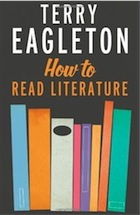
07 How to Read Literature by Terry Eagleton – review

How to Read Literature by Terry Eagleton – review

A shrewd and amiable stroll through the canon ends up championing some odd virtues

No one cares whether you like the characters or not … Terry Eagleton.

‘Dostoevsky is better than Grisham in the sense that Tiger Woods is a better golfer than Lady Gaga’ … Terry Eagleton. Photograph: Christopher Thomond

Terry Eagleton was once the bad boy of English studies. His seminal textbook Literary Theory introduced generations of students to what their tutors feared was the mind-rotting influence of the continent. But his new book is a more traditional affair. Aimed at “readers and students”, it is a personable stroll through a predictable canon: Charlotte Brontë, Forster, Keats, Milton, Hardy et al – plus JK Rowling, perhaps thrown in so as not to appear snobbish. The avuncular prof cautions his audience not to read in certain ways (no one cares whether you like the characters or not), and aims to show, through close reading of selected passages of poetry and prose, how to appreciate the best of what’s been thought and said.

  1. How to Read Literature
  2. by Terry Eagleton

As is generally the case with the later Eagleton, the book is often funny, and it is trying hard to be funny slightly more often than that. The best jokes are also critical observations, eg that Shakespeare’s Othello “is a man who seems curiously aware that he is speaking Shakespearean blank verse”. Running throughout is a bracing critique of modernity: Eagleton attributes most faulty assumptions about what literature should do and how we should read it – for example, “the doctrine of literature as self-expression”, which he dismantles with delicious sarcasm – to the unexamined nostrums of what he calls, variously, “individualist society”, “modern individualism” or “a robustly individualist social order”.

Eagleton has many interesting things to say – as it were, in passing – about Conrad, Milton and so on, in a series of thematic chapters that focus in turn on “Openings”, “Character”, “Narrative”, “Interpretation” and “Value”. There are some longueurs, as when he devotes four pages to an elaborate reading of the nursery rhyme “Baa Baa Black Sheep” in order to show why such an interpretation is under-justified by the text, but overall it’s an amiable affair. Charming, too, to find that Eagleton is a kind of happy existentialist who finds support for such an attitude in modernist (and proto-postmodernist) literature. “Works of fiction like Tristram Shandy, Heart of Darkness, Ulysses and Mrs Dalloway,” he remarks with cheering optimism, “can serve to free us from seeing human life as goal-driven, logically unfolding and rigorously coherent. As such, they can help us to enjoy it more.”

The book’s knottiest chapter is the last, on “Value”, in which Eagleton considers various criteria for what literary value might be and gleefully demolishes them all. Must good literature be groundbreakingly original? In that case, Eagleton points out, “we would be forced to deny the value of a great many literary works, from ancient pastoral and medieval mystery plays to sonnets and folk ballads”. Should literature speak to our everyday concerns? Balls to that: “If we are inspired only by literature that reflects our own interests, all reading becomes a form of narcissism. The point of turning to Rabelais or Aristophanes is as much to get outside our own heads as to delve more deeply into them.”

Nor, Eagleton demonstrates incisively, can we demand profundity (“There can be a superb art of the surface”) or coherence (“many an effective postmodern or avant-garde work is centreless and eclectic”), or richness of narrative (see Waiting for Godot). Nonetheless, he insists, there are criteria for determining literary value. The criteria are “public”, and embedded in the set of “social practices” known as “literary criticism“. It is thanks to the existence of such criteria that he is confident in pronouncing: “Dostoevsky is better than [John] Grisham in the sense that Tiger Woods is a better golfer than Lady Gaga.”

It is only when Eagleton wields his own positive criteria that things go awry: they seem to spring, unargued-for, from the same Romantic-influenced, individualist modernity about which he is elsewhere so sardonic. One signal virtue, it suddenly turns out, is spontaneity. Eagleton berates a passage from John Updike because “There is nothing spontaneous about it,” and laments of an extract from William Faulkner that it has “an air of spontaneity about it which is almost entirely fabricated”.

One wonders how Eagleton imagines that any paragraph composed by a serious writer could show a spontaneity that was unfabricated. Fabrication is the name of the game. All airs of spontaneity, as well as any other literary effects, have to be carefully fabricated by their authors. Truly “spontaneous” writing must be that to which the author has given no thought at all, and so which is certain to be rubbish: the kind of stuff, perhaps, that writing gurus instruct their students to perpetrate for 10 minutes first thing in the morning to clear the mental pipes, but which is hardly meant for public consumption. All writing is a machine for the delivery of a time-delayed and space-shifted performance. The more spontaneous has been the machine’s assembly, the less reliable will be its functioning. One should trust “spontaneous” writing just as much as a spontaneously knocked-together motorcycle.

Things don’t improve much when Eagleton, discussing Evelyn Waugh, praises the “honesty” of his prose. What does this mean, in the context of people who are making things up? And one might very well share Eagleton’s judgment that Waugh is better than John Updike (as I do) without for a moment supposing (as Eagleton seems to imply) that Waugh is somehow any less concerned with choosing just the right words and arranging them in just the right order.

A literary-criticism virgin would be well served by this book’s account of what good criticism is not, and perhaps inspired by many of its tartly illuminating aperçus on canonical dead authors. It would be a shame, though, if readers felt subsequently encouraged to judge writing according to its perceived qualities of “honesty” and “spontaneity”. Yet some such quibbles are probably inevitable with any general positive account of the virtues of literature. All good writing is fundamentally mysterious, even though its plumbing lies in plain view. Flann O’Brien, to the opening of whose The Third Policeman Eagleton devotes some admiring sentences, can make you burst out laughing with the right word in the right place, but it’s difficult to explain exactly why. Perhaps the most you can do is to point it out and invite others to laugh with you.

• Steven Poole’s You Aren’t What You Eat is published by Union Books.

07 Six feminist alternatives to Jane Austen for a Bank of England note

Six feminist alternatives to Jane Austen for a Bank of England note

The choice of the author to represent women on the £10 note is a safe and bland option, compared to Boudicca or Mary Seacole

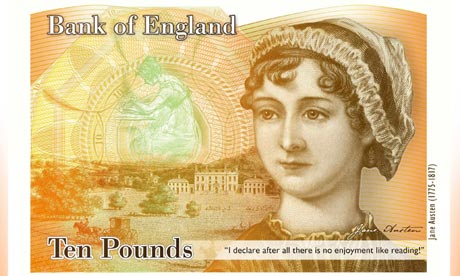
British £10 banknote showing Jane Austen

An illustration of the new British £10 banknote featuring the author Jane Austen and a quote from her novel Pride and Prejudice. Photograph: Reuters

Jane Austen as a choice of woman to be on the £10 bank note would be fine, if we were in the 18th century. I can’t help but feel she is the safe, bland, acceptable, middle-class choice. Austen is the woman men don’t mind giving us as a representation because she is no threat to the prevailing order whatsoever.

Women do anger. Yes, I know, not that surprising to us, but something that is hardly acknowledged in public life. I’m not talking “passive aggressive drawing-room polite snide à la Austen”, but rage and revenge. Here is my list of women fit to represent this:

1. Boudicca (AD 60/61)

The Angry Woman; Queen of the Iceni. When Boudicca herself was beaten, and her sisters and other Iceni women were raped and beaten by the Romans, this woman did not stay home and cower. She got on her horse and led an army of fighters to get their own back.

2. Mary Wollstonecraft (1759-1797)

She wrote, among other things, A Vindication of the Rights of Woman (1792): a highly intelligent, yet clear and sustained, argument for why women needed equal educational opportunities. She didn’t just take on any old Tom, Dick, or Harry in arguing this – but the beloved Edmund Burke. She also gave us Frankenstein. OK, the creator of Frankenstein – Mary Shelley Wollstonecraft.

3. Mary Seacole (1805-1881)

The woman Michael Gove wanted to shove off our national syllabus. The Jamaican nurse, of Scottish and Creole descent, who risked her own life and health in going to the Crimean battleground to care for the injured, was voted the greatest black Briton in 2004.

4. Marie Stopes (1880-1958)

Born of a feminist mother, who was the first woman in Scotland to get a university certificate (she should have got a degree but they refused – degrees were only for men), Stopes represents the coupling of academic rigour and political engagement in order to emancipate women from slavery and empower them with autonomy over their reproductive organs. What’s less well known is that Stopes also played a key role in an attempt to stop education authorities from sacking women teachers.

5. Aphra Behn (1640-1689)

The first woman to earn her living by her pen. And, it could be argued, beat Daniel Defoe by about 30 years as creator of the modern novel, by writing Oroonoko, a poignant anti-slavery novel. And she was also a valuable spy for the English court.

6. Emily or Charlotte Brontë (mid-1800s)

I’ve always believed that there are two types of woman – those who root for Austen, and those who prefer their fiction wild, angry and passionate, as written by the Brontës.

Do you agree with Jane Austen as the choice of our token woman, or do you feel it’s too safe – as safe and bland a choice as women are likely to ever be given? Who would you choose, and why?


Why that Jane Austen quotation on the new £10 note is a major blunder

Duplicated many million times on the new £10 banknote will be a line in praise of reading – it’s a shame it was uttered by an Austen character who had no genuine interest in reading at all

British £10 banknote showing Jane Austen View larger picture

An illustration of the new British £10 banknote featuring the author Jane Austen and a quote from her novel Pride and Prejudice. Photograph: Reuters

Has the Bank of England governor actually read Pride and Prejudice? As Mark Carney posed in front of an enlarged mock-up of the design for the new £10 note, he spoke of Austen’s greatness and indicated that there would be due attention to diversity in the choice of future bank-note characters. It was a small PR triumph for the new man at the top.

Yet surely there has been a blunder. The new note displays an image of Austen based on the only certain surviving portrait of her, a drawing by her sister Cassandra. Fine. It also blazons forth some of the great writer’s immortal words. You can imagine being the Bank of England employee given the task of finding the telling Austen quotation. Something about reading, perhaps? A quick text search in Pride and Prejudice turns up just the thing: “I declare after all there is no enjoyment like reading!”

The trouble is that these words are spoken by one of Austen’s most deceitful characters, a woman who has no interest in books at all: Caroline Bingley. She is sidling up to Mr Darcy, whom she would like to hook as a husband, and pretending that she shares his interests. He is reading a book, so she sits next to him and pretends to read one too. She is, Austen writes, “as much engaged in watching Mr Darcy’s progress through his book, as in reading her own” and “perpetually either making some inquiry, or looking at his page”. He will not be distracted, so “exhausted by the attempt to be amused with her own book, which she had only chosen because it was the second volume of his”, she gives a great yawn and says the words that will appear on the bank note.

She is interested in books in one way. She and her brother are nouveaux riches, who have inherited their wealth from a father who was “in trade”. Now they have a big rented house – but no books to put in it. You can display your status with an impressive library (Mr Darcy has one), so she is keen that her brother procure some volumes as soon as possible. “When I have a house of my own, I shall be miserable if I have not an excellent library.” But she won’t be reading any of its contents.

Duplicated many million times on the banknote will be a line in praise of reading that, comically, could only be used by someone who didn’t mean a word of it. Time for a campaign to use a different quotation?

Posted by

Thursday 25 July 2013 11.30 BST The Guardian

  • Print this

07 How the Brain Benefits From Being Bilingual

Science & Space

How the Brain Benefits From Being Bilingual

By July 18, 20137 Comments


Never mind how well spoken you might be now, you will never again be as adept with languages as the day you were born. Indeed, the youngest person in any room is almost always the best linguist there too. There are 6,800 languages in the world, and since you can’t know where you’ll be born, you have to pop from the womb to be able to speak any one of them. That talent fades fast — as early as 9 months after birth, some of our language synapses start getting pruned away. But well into your grammar school years, your ability to learn a second — or third or fourth — language is still remarkable.

That, it turns out, is very good for the brain. New studies are showing that a multilingual brain is nimbler, quicker, better able to deal with ambiguities, resolve conflicts and even resist Alzheimer’s disease and other forms of dementia longer. All of this is prompting public schools to implement language-immersion programs for kids as young as kindergarteners, as I report in the new issue of TIME; nowhere is that more evident than in Utah, where 20% of all public schools offer K-12 dual-language instruction, with students taking half their classes every day in English and half in either Spanish, French, Mandarin or Portuguese. To date, representatives from 22 other states have come to Utah to learn more about the program.

The kids in bilingual classes in Utah and elsewhere aren’t thinking much about the nature of their brains when they go to school each morning; they’re only aware of the rich and lyrical experience of living and learning bilingually. But scientists — particularly neurologists, psychologists and educational specialists — are watching closely. In a polyglot world, a largely monoglot nation like the U.S. is at last moving to catch up — and not a moment too soon.


07 Martin Amis on why he regrets that 500k advance

Martin Amis on why he regrets that 500k advance for The Information, ‘foolish’ feuds – and his surname

In a Radio 4 interview, the author talks about the ‘burden’ of the Amis franchise and tells why he sometimes wishes he had opted for a quieter life

martin amis

Martin Amis wishes now that his life had not been so full of controversy. Photograph: Katherine Rose the Observer

In a New Statesman competition in the early 1970s asking for the unlikeliest authors of previously published books, the winner was My Struggle by Martin Amis. The gilded youth, son of Kingsley, published The Rachel Papers at the age of 23, rapidly followed by Dead Babies and Success, before becoming literary editor of the magazine that dared to mock him. The son of the famous father had, said the cynics, enjoyed a rocket-propelled path to literary glory.

But 40 years on from his first novel, Amis suggests his resonant name damaged his career, and wishes he had put “greater distance” between himself and his father. “It’s become something of a burden,” he tells John Wilson in a wide-ranging interview to be broadcast on 20 July on Radio 4. “The Amis franchise is starting to get people down. Subliminally they think I was born in 1922 and wrote Lucky Jim when I was six. Life would have been simpler without him.”

Amis, who will be 64 next month, has had an increasingly fractious relationship with critics since the mid-90s, when his insistence on a £500,000 advance for his novel The Information led to a parting of the ways with his publisher Jonathan Cape, his agent Pat Kavanagh (ditched in favour of so-called “super-agent” Andrew Wylie), and her husband Julian Barnes, a longstanding friend of Amis. Suddenly Amis, rather than his work, was the story, and that is very dangerous for a writer. The public may read about you, but will they still want to read you?

He now regrets not accepting Cape’s original offer of £300,000. “The person who wants a quiet life, which is 90% of me, should have taken the Cape offer, and that would have been the end of it. These things stay with you. For years it was the number one thing people asked about, and it was not my finest hour.” But he resents the accusation that he wanted the money for expensive cosmetic dentistry. “They [his detractors] talked about it as if it was a boob job, a procedure of choice, but I had absolutely no choice about it.”

Amis says the death of his father in 1995 and his divorce from Antonia Phillips at around the same time – another drain on his finances – clouded his judgment, and that he was shocked to receive the letter from Barnes terminating their friendship. “It was naive of me not to anticipate it,” he says. He and Barnes patched up their differences a decade later.

In recent years, Amis has become more celebrated for his interventions in public life than for his novels. He knows this, too, is dangerous for the writer – he likes to quote Gore Vidal’s observation that fiction is written with the right hand, essays with the left – but is unable to resist the temptation. In the wake of 9/11, he told a journalist he was tempted to say all Muslims should suffer until they got their house in order. The qualification in his statement was quickly lost and he was consumed by controversy, with the literary critic Terry Eagleton eagerly leading the assault.

“It was a foolish and mischievous thing to say and I regret saying it,” Amis tells Wilson. “The journalist who extracted those lines from me had just flown out from London to New York and was not allowed to take a book on the flight. No one was allowed to take a book. That seemed to me a terrible symbolic defeat. What a triumph for ignorance, stupidity, blinkerdom. It was a spasm on my part.”

He has no such regrets over his statement in 2010 that the “silver tsunami” of elderly people needing healthcare threatened to overwhelm society and emasculate the young.

“It’s going to be the biggest demographic change in the history of the world. The subterranean dialogue in government throughout the west is how are we going to pay for the old? And the only way to do it is to tax the young. I was in fact paraphrasing a paragraph from my novel The Pregnant Widow, which is why it comes out satirically [he talked of “euthanasia booths”]. But I don’t regret saying it. I don’t want my children to spend their lives slaving to maintain an elderly population.”

In the interview Amis describes the murder of his cousin Lucy Partington by Fred and Rosemary West, and the difficulties of writing about it in his memoir Experience, published in 2000.

“It was a great challenge to even assimilate it, it was so dreadful. One of the awful things was that people would say ‘How did she fall in with the Fred West crowd?’, and she couldn’t have been less [likely to]. My sister who, alas, has been long dead, might have ended up in there, as my mother often said, but not Lucy, who was very religious, unawakened, very serious, a good poet. The idea of that sweet, introverted girl realising what she’d done [when she accepted a lift from the Wests]. Her blood must have turned gangrenous.”

Amis says writing the memoir helped him come to terms with his cousin’s death – her fate was revealed more than 20 years after she had disappeared – and helped her brother David, too, but he still feels uneasy about it. “I did get permission from my aunt [Lucy’s mother], but I don’t feel entirely that I should have written about it. It was a great trauma for my imagination.”

The interview with Martin Amis will be broadcast on Meeting Myself Coming Back on Radio 4 at 8pm on 20 July

07 JK Rowling publishes crime novel under false name

JK Rowling publishes crime novel under false name

The Cuckoo’s Calling was released in April using pseudonym Robert Galbraith

JK Rowling

JK Rowling, whose secret novel The Cuckoo’s Calling is said to have sold 1,500 copies in hardback. Photograph: Ian West/PA

The Harry Potter author JK Rowling has secretly written a crime novel under a false name.

The Sunday Times reported the writer won plaudits for The Cuckoo’s Calling, about a war veteran turned private investigator called Cormoran Strike.

Rowling used the name Robert Galbraith for the book, which was published in April, and was only rumbled after the newspaper investigated how a first-time novelist could produce such an assured debut work.

She said: “I had hoped to keep this secret a little longer because being Robert Galbraith has been such a liberating experience.

“It has been wonderful to publish without hype or expectation, and pure pleasure to get feedback under a different name.”

According to the Sunday Times, The Cuckoo’s Calling has sold 1,500 copies in hardback so far.

The book was published by Sphere, part of Little, Brown, which published her last novel, The Casual Vacancy.

Posted by

Friday 24 February 2012 11.08 GMT guardian.co.uk

JK Rowling’s new book: clues suggest a turn to crime fiction

There’s no official word on what her new book will be about, but all the evidence points to a crime story

JK Rowling

JK Rowling … getting involved in crime? Photograph: Joshua Lott/Reuters

Suspicions that JK Rowling was working on a crime novel have been around for years, though nobody could ever make it stick. Some suggested she could be writing a political fairytale for children or an encyclopaedia of the Potter universe. But yesterday’s (detail-free) announcement about her new book for adults gives a vital clue that she’s been writing a crime novel. It has the fingerprints all over it of the hugely respected editor David Shelley, a man who counts Dennis Lehane, Val McDermid, Carl Hiaasen and Mark Billingham amongst his authors and who comes from a background steeped in crime and thriller writing. And now he’s going to be editing Rowling’s new book.

I met Shelley five years ago when I was writing a profile of him for the Bookseller. He’d already made quite a mark on publishing: he was publishing director of Allison & Busby at just 23. An independent press strong in crime and thriller writing, Shelley dragged A&B back into profit, introducing a line of library hardback crime novels and eventually catching the eye of Little, Brown, which he joined as editorial director for crime and thrillers.

Today, he’s publisher. He’s created a host of thriller bestsellers: Panic by Jeff Abbott, The Shakespeare Secret by JL Carrell, The Brutal Art by Jesse Kellerman. He’s taken over editing major brand-name (crime) authors including Billingham, Nelson DeMille and Duncan Falconer. He’s poached some of the biggest names in the genre from rival publishers – McDermid, Lehane, Hiaasen.

Winning Rowling for Little, Brown, though, is his greatest coup yet. All we know at the moment about the new book is that it’s “very different to Harry”, as Rowling tweeted this morning. (This “cover” on her agent’s website gives even less away). Knowing her fondness for crime writing (Dorothy L Sayers is “queen of the genre”, she’s said in the past), and taking Shelley’s background into account, I’m going to stick my neck out and say it’s a mystery. Not a slasher thriller sort of a book, more a Poirot-esque detective story.

The crime world is all aflutter at the prospect, in any event. “Wouldn’t it be funny if JK Rowling‘s first novel for adults turned out to be a crime story set in Edinburgh? My word yes,” tweeted Ian Rankin. “Might explain why she left the neighbourhood (me, McCall Smith, Atkinson near-neighbours) and moved across town … She’s certainly a fan of the traditional whodunit.”

“Nice to see that JK Rowling has such good taste in editors. I guess I’m willing to share David Shelley… Do you think her choice of Mr David means she’s writing a thriller/crime novel?” wondered McDermid, adding: “If Mr David inspires JKR the way he does me, we’re in for something rather tasty.”

Shelley won’t tell me any more, so I guess for now we’ll have to wait and see. But I bet you a Harry Potter proof that I’m right. And if I’m wrong, I will, erm, eat my sorting hat.

07 Homenaje a nuestro GRAN MAESTRO Cándido Pérez Gállego. RIP

Además de leer su fascinante contribución en:

http://www.uv.es/~fores/AcosoTextual/candido2001.html

Acoso Textual:Literatura como Filosofía

Cándido Pérez Gállego


También podréis leer los maravillosos artículos que el Profesor Pérez Gállego publicó en El País.

http://elpais.com/autor/candido_perez_gallego/a/

Martes, 9 de Julio 2013

Artículos escritos por: Más temas »

Candido Pérez Gallego

23/01/1982 Edición Impresa

Virginia Woolf cumple cien años

07 Doug Engelbart obituary: Silicon Valley visionary who invented the computer mouse

Doug Engelbart obituary

Silicon Valley visionary who invented the computer mouse

Douglas Engelbart

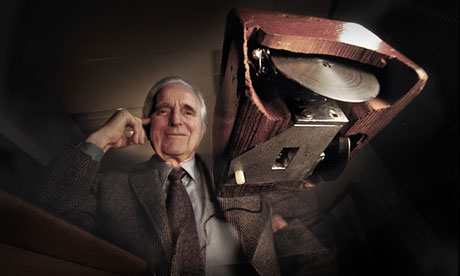
Doug Engelbart with his his first prototype mouse, in San Francisco, 2004. Photograph: Zuma/Rex

Doug Engelbart, who has died aged 88, will be remembered as the man who in 1963 invented the computer mouse, but that was incidental to his vision of computers augmenting the human intellect and increasing our “collective IQ”. While he became a much-loved and oft-lauded Silicon Valley celebrity, his most visionary ideas were neglected and went unfunded.

Nonetheless, Engelbart had a massive impact on the world of computing via what became known as “the mother of all demos“, which he gave at a computer conference in San Francisco in 1968. The computer scientist Alan Kay, a co-founder of Xerox PARC, said later: “The demo was one of the greatest experiences of my life. To me, it was Moses opening the Red Sea … It reset the whole conception of what was reasonable to think about in personal computing.” It was a huge leap forward compared with operating computers using punch cards and it inspired a generation. Engelbart’s ideas were at the root of what we do online today.

The demo involved Engelbart sitting at a computer keyboard operating a mouse, with the interactive action projected on a big screen. It demonstrated a stream of original ideas, including the mouse, multiple windows, hypertext, outline processing and shared-screen teleconferencing. All of these arrived on affordable personal computers roughly two decades later, following the invention of the microprocessor.

They were only possible in 1968 because of a massive effort by the 12-strong team from Engelbart’s Augmentation Research Centre, backed by research funds from the Defense Advanced Research Projects Agency (Darpa, part of the US defence department) and the resources of the Stanford Research Institute (SRI). Who but Engelbart would have been crazy enough to devote all this remote and extremely expensive computer power to – as his demo showed – a single user manipulating his shopping list?

Engelbart was the middle of three children of Carl and Gladys Engelbart. He was born in Portland, Oregon, grew up during the Great Depression on a small farmstead nearby, and went to Oregon State University to study electrical engineering. The second world war interrupted his studies, and he spent two years in the navy, including a year as a radar technician in the Philippines. After completing his degree in 1948, he moved to San Francisco to work at the NACA Ames laboratory, the forerunner of Nasa.

As an electrical engineer with a good job and (in 1951) a fiancee, he could have settled down for life, but he wanted to do something that would make a difference: to improve the world. In part, he was inspired by a famous 1945 article by Vannevar Bush in the Atlantic magazine, As We May Think. This described an imaginary information desk called the Memex, which was based mainly on microfilmed documents. Engelbart had a vision of radar-type screens being used to organise and share information, so he went to the University of California at Berkeley to do a PhD.

In 1957, he got lucky in getting a research position at SRI, and in 1962 published his seminal work, Augmenting Human Intellect: A Conceptual Framework, produced for the US Air Force. This led to the setting up of his Augmentation Research Centre (ARC) research lab, which developed the NLS (oN-Line System) used in the 1968 demo. The ARPAnet was developed partly to support NLS, and ARC was the second node on what became the internet.

The rapid increases in computer power and communication networks in the 1970s, and the arrival of personal computers, might have sealed the victory of Engelbart’s crazy ideas for augmenting the human intellect, but it had the opposite effect. His collaborative ideas were based on centralised computing and time-sharing, but these were the enemies of the countercultural revolution in personal computing. Engelbart’s vision effectively came to a premature end.

In 1977, SRI sold NLS – and moved Engelbart and his ARC – to Tymshare Inc, which sold it as an office automation product called Augment. Some researchers moved to Xerox PARC, where the modern mouse-and-windows-based personal computer was developed, and some remained at SRI. The research team had been broken up and the new target was commercialisation. Engelbart stayed on after Tymshare was taken over by the aircraft manufacturer McDonnell Douglas in 1984, before finally leaving in 1989.

After that, Engelbart set up the tiny Bootstrap Institute with his daughter Christine, which survives as the Doug Engelbart Institute, providing a useful history of his life and times. From 1992 to 2007, Engelbart was given an office at Logitech’s headquarters, before finally returning to SRI some 30 years after he had left it.

Engelbart was given the Turing award by the Association of Computing Machinery and the $500,000 MIT-Lemelson prize in 1997; and the von Neumann award from the Institute of Electrical and Electronics Engineers in 1998, among other honours. He was awarded the US national medal of technology and inducted into the National Inventors Hall of Fame in 2000.

Engelbart’s first wife, Ballard, died in 1997. He is survived by his second wife, Karen; four children, Gerda, Christina, Diana and Norman; and nine grandchildren.

• Douglas Carl Engelbart, computer scientist, born 30 January 1925; died 2 July 2013

07 The Ocean at the End of the Lane by Neil Gaiman – review

The Ocean at the End of the Lane by Neil Gaiman – review

A terrifying shift in the nature of things lies at the heart of Neil Gaiman’s rich new novel

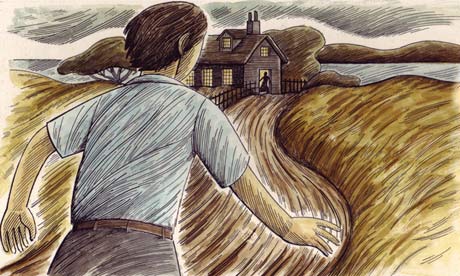
Illustration of person running towards frightening house

Illustration by Clifford Harper/agraphia.co.uk

On the cover of Neil Gaiman‘s extraordinary tale, Coraline, is a quotation from Terry Pratchett, saying that the story has “the delicate horror of the finest fairytales”. Gaiman is a master of fear, and he understands the nature of fairytales, the relation between the writer, the reader and the character in the tale. The Ocean at the End of the Lane, like Coraline and like The Graveyard Book, has a young central character – a resourceful and determined child – who finds his world transfigured by terror and strangeness. Coraline goes through a door into a house in every way replicating her own, inhabited by a copy of her mother with black button eyes. Bod (full name Nobody Owens) is brought up by ghosts in a graveyard after the murder of his parents and sister. The narrator of The Ocean at the End of the Lane starts his story with that feared disaster of childhood, the seventh birthday party to which no one came.

  1. The Ocean at the End of the Lane
  2. by Neil Gaiman
  1. Tell us what you think: Star-rate and review this book

His parents have a lodger, an opal miner, who accidentally kills a kitten, and subsequently kills himself in the family car. This event, still in the everyday world, is the beginning of a terrifying shift in the nature of things. One of the terrors of childhood is the realisation that parents are not necessarily strong or understanding. One of the pleasures of my own childhood reading was the resourcefulness of children left to fend for themselves – and the knowledge that the shape of the story meant that they would do so.

There are three women living in a house at the end of a lane – Old Mrs Hempstock, Ginnie Hempstock, and Lettie, who owns an ocean which appears to be a duckpond, “dark water spotted with duckweed and lily pads”. A dead fish, which turns out to have swallowed a Victorian sixpence, leads to an encounter with something alien, powerful, dangerous, though not entirely malign. It manages to get into the boy’s house, where only he knows that it is not what it seems and that it means to take over.

The boy moves into a world of primeval danger, helped, when he can escape to them, by the Hempstock women, who are also not what they seem. His family’s complete unawareness of any threat is part of the terror. Gaiman has an epigraph from Maurice Sendak: “I remember my own childhood vividly … I knew terrible things. But I knew I mustn’t let adults know I knew. It would scare them.”

Towards the end of this tale the storyteller enters the pond which is an ocean and has an odd experience of space and time – trying to get one’s mind around scientific images of space and time, light and black holes, the Big Bang and its consequences is enough to shake our sense that “everyday reality” is particularly real – and says, “I saw the world I had walked since my birth, and I understood how fragile it was, that the reality I knew was a thin layer of icing on a great dark birthday cake writhing with grubs and nightmares and hunger.”

I was somewhat surprised to see that The Ocean at the End of the Lane has been discussed as a book for adults which children can also read. When I thought about it, I realised that I am an adult reading self, and also a child reader, and that it was my childhood self who settled into this story. I am an adult who reads “children’s” books avidly – as long as they have no designs on me, do not manoeuvre me or preach.

Gaiman’s long novel American Gods is a wild fantasy for adults who remember being child readers. The Ocean at the End of the Lane arouses, and satisfies, the expectations of the skilled reader of fairytales, and stories which draw on fairytales. Fairytales, of course, were not invented for children, and deal ferociously with the grim and the bad and the dangerous. But they promise a kind of resolution, and Gaiman keeps this promise.

There is a peculiar pleasure about reading as an adult what gripped the child’s imagination. I wonder now what I imagined about the world of The Three Musketeers, or Walter Scott’s medieval tales, or The Scarlet Pimpernel, which I inhabited passionately at the age of the seven-year-old in this story. I’m not even sure that I then knew France wasn’t England. The narrator of The Ocean at the End of the Lane is an adult, now placed outside the fierce world of the drama of the book. The child I was would have seen him as wispy, grey, diminished. He stands in Wordsworth’s “light of common day”, and sometimes revisits and remembers the ocean. I can see the world from his point of view now. But it isn’t more “real” than the bright terror and danger of his childhood.

• AS Byatt’s Ragnarok: The End of the Gods is published by Canongate.

07 ‘Spain’s rote learning system needs scrapping’

Opinion

'Spain's rote learning system needs scrapping'

William Chislett’s latest book “Spain: What Everyone Needs to Know” will be released in August.

‘Spain’s rote learning system needs scrapping’

Published: 23 May 2013 17:49 GMT+02:00 | Print version
Updated: 23 May 2013 17:49 GMT+02:00

This week The Local speaks to renowned Spain expert and former Times and Financial Times correspondent William Chislett about the real story behind youth unemployment figures, why labour reforms aren’t having an impact and why Spain’s recession could last another ten years.

How did you end up living and working in Spain?

I first came here in 1974, actually for reasons of love, not journalism. My girlfriend, now wife, was teaching English here in Madrid.

We were planning on going back to Oxford where we’re both originally from. But Franco died in 1975, one thing led to another and at the tender age of 24 I found myself covering the Spanish transition for The Times until 1978 along with another correspondent.

When Murdoch bought The Times, my friends said: “Get out! this is a sinking ship!” I was soon poached by the Financial Times and worked as their correspondent in Mexico and parts of the Spanish Caribbean for six years.

I then went back to head office in London in 1984, was very bored and after 18 months, we came back to Madrid.

We felt happy here and wanted our kids to be bilingual.

I became self-employed and wrote a series of books on Latin American countries for Euromoney.

My bread and butter job, which I’ve had for all these years, is a translating contract I have with Santander bank.

I’m also one of the founding members of Elcano Royal Institute; they’ve published three books of mine on Spain.

Tell us a bit about your new book Spain: What Everyone Needs to Know.

I’ve looked to provide readers with the political and historical context for understanding Spain’s current state of affairs.

The legacy of the early Muslim presence, the influx of immigrants, the separatist Basque region, the creation of the welfare state, the causes of the banking crisis…A wide sweep overall to help understand Spain’s place in the world today.

What do you think is the real story behind youth unemployment in Spain? Why are the figures so different?

I recently wrote an article for El País on the matter called: “The enigma of the magnitude of youth unemployment”.  I received a flood of comments from readers who disagreed with my view that the figures for joblessness among young Spaniards were far lower than the 57 percent that’s usually cited.

I made a technical mistake, but there is reason for confusion when you consider that the EU’s barometer Eurostat has two ways of calculating the figures.

There’s the rate, or tasa in Spanish, which takes into account people in the 16 to 24 age group that are employed or are actively seeking work. That’s what gives the 57 percent youth unemployment rate which is so widely publicized.

And then there’s the unemployment ratio, which includes all young people in Spain, studying or working, and offers a much smaller 22 percent.

What I was trying to point out in my article, even if the real figures still remain unclear, was that it wasn’t really fair to measure youth labour force when most 16 to 24 year olds in Spain are still studying.

Where do you stand on the idea that Spanish people lack entrepreneurial spirit?

There are plenty of successful niche elements that Spanish entrepreneurs and businesses are handling well.

In 2012, 130,000 Spanish companies were exporting abroad. It’s these exports that are keeping the Spanish economy afloat now that domestic business is down.

Can you give us an overview of Spain’s current labour reforms? Are these helping to get people back to work?

Labour reforms are having no real impact on unemployment or the economy and most Spaniards acknowledge this.

Back in 1984 when the Socialists were in power they introduced labour reforms and tried to create more temporary jobs to try to address the unemployment issue.

But all this did was create a dual job market for Spaniards: those with indefinite contracts and those with temporary ones who were excluded from any form of stable employment.

However liberal labour reforms are they’ll never address the real problem – the lack of diversity in Spain’s economy and the need for change in the country’s educational system.

It’ll take at least a decade before we see Spain recover, and that’s only if they change the model.

What changes should Spain’s educational system undergo?

Well for starters they have to try to encourage kids to stay on in school.

It’s far too easy to have to repeat a school year, and back when construction jobs were readily available, youngsters saw the chance to make money as far more tempting than continuing with their studies.

If the school dropout rate has fallen in recent years it’s only because the construction industry no longer acts as a magnet for these youths.

University degrees take far too long to complete as well. While students across Europe have a degree under their belts at 21, Spaniards continue studying until they’re in their mid-twenties.

The rote learning system has to be scrapped as well. The government can’t talk about having a knowledge-based economy if the educational system is outdated and not teaching young people to reason rather than to just learn everything off by heart.

Alex Dunham (alex.dunham@thelocal.com)

07 State schools failing to cultivate brightest pupils, says Ofsted chief

State schools failing to cultivate brightest pupils, says Ofsted chief

Sir Michael Wilshaw launches new report card to show parents how their children are performing compared with their peers nationally

School pupils

Sir Michael Wilshaw, the chief inspector of schools, said: ‘Across the country we know that too many of our most able children are underperforming in state comprehensive schools.’ Photograph: Chris Radburn/PA

Sir Michael Wilshaw, the chief inspector of schools, has said that the failure by state schools to nurture their brightest pupils is “an issue of national concern”, after an investigation found two-thirds of the most advanced pupils entering secondary education do not achieve top GCSE results.

Ofsted proposes that maintained schools and academies devote more energy cultivating their brightest pupils, and that all pupils be given a new form of report card that tells parents how their children are performing in comparison with their peers nationally.

“Across the country we know that too many of our most able children are underperforming in state comprehensive schools. The national picture tells a discouraging story,” Wilshaw said at the launch of the report on Wednesday.

“Almost two-thirds of pupils who achieved a level five or above in both English and maths at the end of primary school did not get an A or A* grade in these subjects at GCSE in non-selective schools last year. That translates into more than 65,000 students in 2012. This is an important statistic because the top GCSE grades are a key predictor of success at A-level and progress to the most prestigious universities.”

The research came after a series of visits by Ofsted to 41 non-selective state schools throughout England, and the results of more than 2,000 lesson observations by its inspectors to see how the brightest pupils were dealt with in classrooms.

“Shockingly, some of the schools we visited had not even identified who their most able pupils were. This is completely unacceptable,” Wilshaw said. “Many students simply became used to performing at a lower level than they were capable of and this was too readily accepted by teachers.”

By way of comparison, 59% of selective state school – grammar school – students who attained level five in both English and maths at the end of their primary school education went on to achieve an A or A* in those subjects at GCSE level in 2012. The figure for students from non-selective schools was 35%. Comparisons with independent schools are not available.

The Ofsted findings were endorsed by the Department for Education. “Sir Michael is right. Secondary schools must ensure all their pupils – including their brightest – fulfil their potential. That’s why we are introducing a more demanding and rigorous curriculum, toughening up GCSEs and getting universities involved in A-levels,” a DfE spokesman said.

The findings matched earlier research by the Sutton Trust charity that many state schools in England were failing to advance their pupils towards the most selective universities. Its chairman, Sir Peter Lampl, called the Ofsted report “a wake-up call to ministers”.

“Schools must improve their provision, as Ofsted recommends. But the government should play its part too by providing funding to trial the most effective ways to enable our brightest young people to fulfil their potential.,” Lampl said.

Part of the problem, according to Wilshaw, is that state school pupils were not imbuded with “the confidence and sense of entitlement that their counterparts in the independent sector can so often have”.

Russell Hobby, general secretary of the National Association of Head Teachers, welcomed the report but said that “the government’s league table culture deserves a measure of the blame”.

“For too long, schools have been forced into the middle ground, to get students over thresholds at the expense of both the most and least able,” Hobby said.

07 George Orwell back in fashion as Prism stokes paranoia about Big Brother

The Guardian home

George Orwell back in fashion as Prism stokes paranoia about Big Brother

Nineteen Eighty-Four depicts a society in which liberty was impossible – so how should we respond to this new threat?

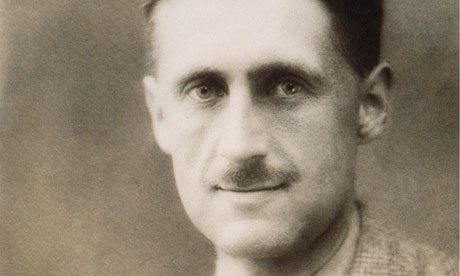
George Orwell

More relevant than ever … George Orwell, who saw the writer as a free individual striving for objective truth. Photograph: Rex Features

The NSA Prism surveillance scandal has been good news for George Orwell, and in particular for his dystopian novel Nineteen Eighty-Four, which was originally published in 1949. Sales of the centennial edition have risen by more than 7,000% on Amazon.com . Having been languishing at 13,074 in the list, it is now up to 193 and rising.

  1. 1984 Nineteen Eighty-Four
  2. by George Orwell
  1. Tell us what you think: Star-rate and review this book

It may not rival Caroline Barnett’s Willing to Walk on Water: Step Out in Faith and Let God Work Miracles through Your Life, which has miraculously surged from 144th to first in the past 24 hours with a 267,000% rise, but clearly many people are finding parallels between the US government’s willingness to snoop on Joe Public’s emails and phone calls and Orwell’s vision of a future in which Big Brother is everywhere.

“Orwellian” is the word on everyone’s lips. “The question is, what do freedom and liberty mean in the United States of America?” Senator Bernie Sanders asked in a TV interview this week. “What does our constitution mean? What kind of country do we want to be? Kids will grow up knowing that every damn thing that they do is going to be recorded somewhere in a file, and I think that will have a very Orwellian and inhibiting impact on our lives.”

Not, it must be said, that Orwell really needs the publicity. Like Big Brother, he is always with us. DJ Taylor, who in 2003 wrote a biography of Orwell and for the past five years has been chairman of the Orwell Trust, makes a startling claim for the writer: “If you had to write down the names of the three writers in English who had had the greatest effect in communicating to the general public what books and literature were about,” he says, “they would be Shakespeare, Dickens and Orwell.”

The US has always been keen on Orwell: liberals warmed to him because of his warnings against the power of the state, conservatives because his books gave them a stick with which to beat communism. His influence has also been felt outside the English-speaking world. Editions of Ninety Eighty-Four and Animal Farm, published in 1945, circulated in the Soviet Union; he was – and indeed still is – revered in Poland, where his satires were widely read under communist rule; and Taylor believes he is being read in China today. Orwell has something to say to everyone who is suffering under autocracy.

However, readers who pick up Nineteen Eighty-Four because of the current worries over the Prism programme would be wrong just to see it as a novel about the dangers of overweening technology. The all-seeing telescreen in the corner of the room is an important device for allowing the state to exercise control, but Orwell’s real concern is about far more insidious threats to liberty. The Big Brother state aims at nothing less than the control of language and thought. According to the slogans repeated by the Ministry of Truth, “War is Peace, Freedom is Slavery, Ignorance is Strength.” Deprive people of the words with which to resist, and you will crush resistance.

In Nineteen Eighty-Four, Winston Smith’s defining act of rebellion is to keep a diary, to attempt to record his thoughts and feelings accurately – not easy when the expressions you need have been obliterated or perverted. The greatest inhibition, to use Senator Sanders’s word, is mental rather than physical.

The idea that governments could control people’s minds terrified Orwell. Taylor argues that Nineteen Eighty-Four was born of paranoia – a paranoia that was apparent from the beginning of Orwell’s writing career in the early 1930s. He lionised the writer as a free individual striving for objective truth, beholden to no special interests, yet everywhere he saw that freedom being circumscribed.

Orwell encapsulated those fears in his 1946 essay “The Prevention of Literature”. “In our age,” he wrote, “the idea of intellectual liberty is under attack from two directions. On the one side are its theoretical enemies, the apologists of totalitarianism, and on the other its immediate, practical enemies, monopoly and bureaucracy … Everything conspires to turn the writer, and every other kind of artist as well, into a minor official, working on themes handed to him from above and never telling what seems to him the whole truth.”

It is Orwell’s paranoia that gives his writing its power and urgency, and which has kept it alive. . What we might learn from a broader understanding of that much-used (and sometimes abused) term “Orwellian” is that he would fear not only the technology of surveillance but our response to it. Are we willing to question its use? Will we demand greater oversight of the work of the security agencies? Will we hold our government to account? As long as there is a Winston Smith struggling to keep his diary, Big Brother has not won.

07 How Tom Sharpe earned his seat at high table of campus fiction

How Tom Sharpe earned his seat at high table of campus fiction

After the news of Tom Sharpe’s death at the age of 85, Charles Nevin looks at the past, and future, of campus fiction

British writer Tom Sharpe

Tom Sharpe: ‘the master of situations that couldn’t possibly get any more embarrassing, sensitive or tricky, but did’. Photograph: Julian Martin/EPA

Scabrous, savage, scatological, writer of high force and low farce, creator and inflator of wayward condoms and threatening sex dolls: Tom Sharpe was the master of situations that couldn’t possibly get any more embarrassing, sensitive or tricky, but did. Sharpe was never one for holding back, as his first novel, Riotous Assembly, featuring, among much else, apartheid, an elephant gun, murder, incompetent policemen and interracial lesbianism, triumphantly demonstrated.

But he will, I suspect, mostly be remembered for his rompingly entertaining tales of weak and well-intentioned innocents caught between the established order, empty innovation, venal ambition and unselfconscious egotism, placed in their ideal setting: a college campus. Henry Wilt at the Fenland College of Arts and Technology; Lionel Zipster at Porterhouse College, Cambridge: good weeds in a naughty world.

It was Sharpe’s debt to Kingsley Amis’s Lucky Jim and coincidence with the similarly staged novels of Malcolm Bradbury and David Lodge that earned him a place with them at the high table of a school that was becoming known as “campus fiction” and has continued ever since.

Lately, though, there has been an increasingly eager inclination in Britain to write it off, aided by the age of its most readily identifiable works, Sharpe’s among them, and a lack of interest among younger people in them. Certainly, Sharpe’s later work in other settings didn’t attract quite the same approval or interest (although they still sell and, like the Wilt series and Porterhouse Blue, will doubtless be given a melancholy fillip by his death).

There is, as ever, some dispute about the definition of the category and nominees: Sharpe’s stuff is considered by some a bit too Carry On Up the Campus. That, however, might also be said of the carryings on of the two Oxford students in The Miller’s Tale. Whatever, Lodge, now 78, is generous: “There’s a broad farcical element in his work, but it has a family resemblance to novels set in universities dealing with the relationship between staff and students.”

Lodge excludes fiction set predominantly among students, such as Beerbohm’s delightful Zuleika Dobson and Evelyn Waugh’s various skewering visits to academe. For Lodge, campus fiction began here with Lucky Jim and a little earlier in the United States (hence the then American term, campus) with Mary McCarthy’s The Groves of Academe. “It emerged after the second world war as the universities expanded and university life became a more and more common experience, and more and more writers used it as their day job and drew on their working milieu.”

Here, he says, Bradbury and he expanded and developed the genre “to deal with politics and the sexual revolution and their effect on the academic world”, delighting in “the disparity between the ideals of the university – the pursuit of truth and beauty – and the natural failings of human beings.

“Malcolm Bradbury and I were both career academics for most of our lives. We took our jobs very seriously, writing serious literary criticism, but at the same time seeing the funny side of the institution and writing satirical novels about it.”

The period – the 1960s and 70s – when he, Bradbury and Sharpe were writing their campus fiction was crucial. It was when the university was still becoming universal, when polys were beginning to become universities, and lecturers had beards, safari jackets and challenging mores, all a most exciting novelty and indulgent luxury for a first generation of students, whose children would come to view the experience as commonplace.

“It was an extremely interesting time to be a university teacher,” says Lodge. “Then everything changed. Universities became more and more dominated by a management culture which became less and less tolerant of eccentric behaviour. It became puritanical in a way. I was quite relieved to leave the university [Lodge retired from teaching at Birmingham University in 1987] … My impression is that now it’s not so much fun.”

And so the view that the British campus novel is an antique piece, of a particular pointed time as quaint as Harold Wilson, Blue Streak, white hot technology and the moral compass that steered Howard Kirk, Bradbury’s sociology lecturer, through the arms and affections of anyone foolish enough to be impressed by his Groucho Marxism. The History Man is history, man. The satire has been overtaken by reality, and the reality has moved on.

This is Howard Jacobson, author of the blissfully funny Coming From Behind (1983): “Interesting, though, where the campus novel has gone. Maybe it was always an essentially innocent form – affectionate, for all the comedy, about universities and academics. Maybe they needed to be eccentric, bumbling, culturally old-fashioned and over-motivated by good intentions.

“Now academies are corporations and academics executives, without much of a sense of the ridiculous themselves, and not susceptible to magnanimous comedy. A campus novel today – that took in the sanctimonious politics of university teachers, the ideologies (English departments, and English departments often at the heart of campus novel crippled by theory), the ruthless media ambitions, etc – would have to be a savage satire. And we aren’t in savage satire mood. It’s possible we aren’t in comedy mood at all in literature … and that too could be a drip-down effect from solemn university culture.”

The American experience, though, has been different. Into the 1990s and on, writers of the calibre of Roth, Russo, Auster, Franzen and Wolfe have followed the lead of Bellow and DeLillo. Professor Jeffrey J Williams of Carnegie Mellon University, who last month delivered a paper at the University of Ghent on the academic novel, traces its journey from niche to mainstream, perhaps best evidenced by Jonathan Franzen’s The Corrections, quoting Elaine Showalter: “With The Corrections, the university fully merges with the rest of society … In Franzen’s world, academia is only one of many quirky institutions, comparable to Wall Street, haute cuisine, medicine, big business, cruise liners, or families.”

Here, we wait for the campus novel’s renaissance, looking to the great expansion in university creative writing courses for the new twist on the genre Lodge believes is demanded.

Nicholas Royle, who teaches creative writing at Manchester Metropolitan University, has had his First Novel hailed as perhaps the first of a new wave. It features a creative writing teacher, aptly plays with novel form, and treats more darkly than Sharpe.

Royle says teaching other people to write creatively all day is not that conducive to writing creatively at night, but predicts the books are coming: “A great many practising writers are working as lecturers in creative writing and if they all follow their own advice to write what you know then they’re all going to be writing campus novels.”

However there is disappointing news for anyone hoping that Martin Amis may follow his father and lead the revival. He was quoted as making interested noises before his spell teaching at Manchester University, but writes now: “Tell Charles Nevin that Manchester, like all big-city universities, doesn’t really have a campus (so no campus novel).”

07 Fallece el escritor inglés Tom Sharpe, a los 85 años

Los amigos de Tom Sharpe despiden los restos del escritor en Palafrugell

  • El funeral se ha oficiado por el rito anglicano
  • El Ayuntamiento estudia un homenaje
  • Las cenizas se esparcirán entre España e Inglaterra
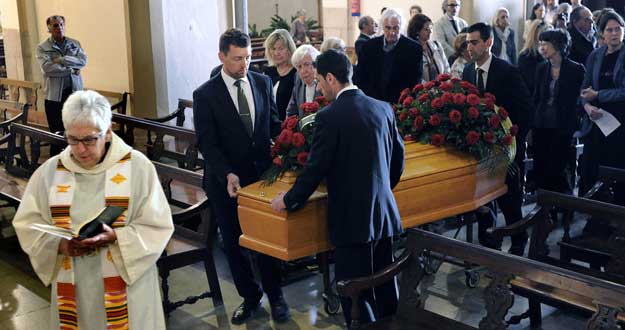
Ampliar fotoFUNERAL DEL ESCRITOR BRITÁNICO TOM SHARPEPalafrugell ha acogido el funeral del escritor Tom Sharpe, fallecido el pasado jueves en su domicilio del núcleo de Llafranc.EFE/Robin Townsend
Enviar

Agencias – PALAFRUGELL 09.06.2013 – 13:29hUnas 150 personas entre familia, amigos y fieles lectores han despedido en la iglesia de Sant Martí, de Palafrugell (Girona), al escritor británico Tom Sharpe, autor de la hilarante saga de Wilt y fallecido el pasado jueves en su domicilio de esta localidad catalana.

El funeral, que ha comenzado a las 10,30 horas y ha durado unos 45 minutos, ha tenido lugar por el rito anglicano, oficiado por una pastora del pueblo vecino de Madremanya.

Los cantos y lecturas de salmos han dado paso a la intervención de varios amigos de Tom Sharpe, entre ellos la doctora que le atendió durante sus años en España, Montserrat Verdaguer, quien ha explicado que llegó a pensar que el conocido escritor era “inmortal, aunque desgraciadamente se trató de un error, pero no demasiado”.

“No podremos disfrutar de tu compañía, pero estarás siempre en mi corazón y en mi cabeza”, ha dicho Verdaguer, quien se ha expresado en inglés y en catalán.

El funeral de Tom Sharpe ha tenido incluso algún momento para el humor, un género que él cultivó con fruición y que le encumbró con la novela ‘Wilt’, cuando su amigo Piers Brendan ha recordado algunos pasajes de su vida juntos.

La viuda de Sharpe, Nancy Sharpe, ha pronunciado unas breves palabras del místico Julian of Norwich y la familia ha recibido el pésame de los asistentes al funeral, la mayoría de origen británico, aunque también había vecinos del fallecido y admiradores de su obra.

El alcalde de Palafrugell, Juli Fernández, por su parte, ha calificado la ceremonia de hoy de “emotiva y especial”, al tiempo que ha recordado que ha sido una oportunidad para mostrar su reconocimiento a “un escritor de reconocido prestigio”.

“El (Sharpe) llevaba unos veinte años con nosotros”, ha recordado Fernández, quien ha elogiado, además de la figura literaria, su “defensa de los derechos humanos hasta el punto de que se volcó en favor de la sanidad pública” española.

El alcalde de Palafrugell y primer secretario del PSC en Girona ha informado que estudia con la familia de Tom Sharpe la realización de un acto de homenaje al escritor.

El cuerpo de Sharpe será incinerado y las cenizas se repartirán entre Llafranc, la zona de playa de Palafrugell en la que el escritor residió en sus últimos años de vida, y las localidades inglesas de Cambridge y North Sunderland.

07 Jane Austen, adelantada a su tiempo

Jane Austen, adelantada a su tiempo

La escritora chilena Marcela Serrano anima a que lean ‘Orgullo y Prejuicio’


Portada de Orgullo y prejuicio, de Jane Austen

Las letras siempre han rodeadao la vida de la escritora Marcela Serrano (Santiago de Chile, 1951), autora de obras como El albergue de las mujeres tristes o  Dulce enemiga mía, que contiene 20 relatos, esta última publicada este año por Alfaguara. Es hija del ensayista Horacio Serrano y de la escritora Elisa Pérez Walker, que firmaba con el seudónimo literario Elisa Serrana.

Marcela Serrano reconoce que el libro que más le ha marcado a lo largo de su vida es Orgullo y Prejuicio, de Jane Austen, novelista británica que vivió entre los siglos XVIII y XIX  y que fue capaz de dotar de ironía y comicidad a sus novelas.”Ella le mostró al mundo que podía existir una mirada y una escritura alternativa a la del canon establecido. No tenía educación ni “permiso” para hacerlo, fue altamente denostada por sus contemporáneos (y por los que le siguieron) y sin embargo continuó, con enorme sentido del humor y poder de observación, e instaló una forma nueva de narrar que no hace más que crecer con el tiempo”. Esta obra fue adaptada al cine en 2004 por Gurinder Chadha.

La escritora chilena Marcela Serrano / Manolo S. Urbano

07 Nine inspiring lessons the suffragettes can teach feminists today

Nine inspiring lessons the suffragettes can teach feminists today

A century after the death of Emily Davison at the Epsom Derby, the movement that gave votes to women still has much to teach those continuing to fight for equality

Emmeline Pankhurst, the English suffragette celebrating with Christabel Pankhurst and others after b

Emmeline Pankhurstcelebrating with Christabel Pankhurst and others after being released from prison. Photograph: Hulton Getty

On 4 June 1913, Emily Wilding Davison travelled to Epsom Downs to watch the Derby, carrying two suffrage flags – one rolled tight in her hand, the other wrapped around her body, hidden beneath her coat. She waited at Tattenham Corner as the horses streamed past, then squeezed through the railings and made an apparent grab for the reins of the king’s horse, Anmer. In the Manchester Guardian the next day, an eyewitness reported: “The horse fell on the woman and kicked out furiously”. News footage shows racegoers surging on to the track to find out what had happened.

Davison suffered a fractured skull and internal bleeding, and as hate mail against her poured in to the hospital, she remained unconscious. She died four days later. Thousands of suffragettes turned out on the London streets dressed in white, bearing laurel wreaths for her funeral. They marched four abreast behind purple banners, urging them all to fight on.

There has always been speculation about Davison’s intentions. The return train ticket she was carrying, for instance, offered as evidence that she didn’t mean to die. But there’s no doubt she was prepared to make dangerous sacrifices for women’s rights. As Fran Abrams writes in her book Freedom’s Cause, Davison had been imprisoned repeatedly for her suffrage work, had gone on hunger strike and been force fed numerous times.

In 1912, when she and a large number of other suffragettes were imprisoned in Holloway, there was what Davison referred to as a siege – the doors of women’s cells were broken down by guards – and she determined that one big tragedy might save her sisters. Davison threw herself over a balcony, was caught by some netting, then immediately tried again, launching herself down an iron staircase. This led to two cracked vertebrae, and a thwack to the head, but the authorities were unmoved. She and the other women continued to be force-fed, regularly and brutally.

In a movement defined by acts of daring, Davison’s bravery was extraordinary. A hundred years later, votes for women are long since won in most countries – though not all – and the feminist revolution continues. Campaigners worldwide fight for equal political representation, an end to women’s poverty, freedom from sexual violence, control over our own bodies, and – ultimately – for that most basic, yet radical, demand: for women to be treated as human beings. A century after Davison’s funeral programme declared “She died for women,” what can today’s feminists learn from the suffragettes?

Emily Davison is fatally injured as she tries to stop the King's horse on Derby Day'Emily Davison is fatally injured as she tries to stop the King’s horse on Derby Day. Photograph: Getty Images

Find your voice, and use it

The dearth of women in public life today is often attributed to a lack of confidence, and the suffragettes sometimes struggled with this too. Margaret Wynne Nevinson, an avid campaigner, once wrote she felt a “dizzy sickness of terror” the first time she stood up to speak publicly, outside a gasworks in south London in 1906. There were shouts of derision as hundreds of men crowded around her, and she almost succumbed to stage fright before hearing a voice whisper: “Go it, old gal, you’re doing fine, give it ’em.”

This echoes the recollections of Kitty Marion, an actor as well as a suffragette. The first time she sold the Votes for Women newspaper in Piccadilly Circus, Marion wrote, “I felt as if every eye that looked at me was a dagger piercing me through and I wished the ground would open up and swallow me. However, that feeling wore off and I developed into quite a champion.”

Sweetness is overrated

Women were bound by feminine ideals at the start of the last century – expected to be submissive, nurturing, self-effacing – and we still are today. The suffragettes weren’t having it. As Emmeline Pankhurst, leader of the militant suffragettes, once said, “We threw away all our conventional notions of what was ‘ladylike’ and ‘good form’, and we applied to our methods the one test question: will it help?”

This was echoed by Fred Pethick-Lawrence, who fought strongly for women’s votes alongside his wife – who was also called Emmeline. In his 1911 book, Women’s Fight for the Vote, he offered a rallying cry. “Nothing has done more to retard the progress of the human race than the exaltation of submission into a high and noble virtue,” he wrote. “It may often be expedient to submit; it may even sometimes be morally right to do so in order to avoid a greater evil; but submission is not inherently beautiful – it is generally cowardly and frequently morally wrong.”

Take strength from the haters

Anyone who writes about feminism online knows there can be a nasty response, and the suffragettes received hate mail too. In Joyce Marlow’s essential anthology, Votes for Women, from which many of these recollections are taken, she includes a letter sent to Hugh Franklin, a male suffrage activist, which has a strikingly familiar tone. “We would give you and old Mother Pankhurst (the fossil-worm) Five Years Penal Servitude and then burn you both together. YOU ARE A DIRTY TYKE AND DANGEROUS MADMAN.” (All emphases the writer’s own.)

But it wasn’t just hate mail they had to contend with. Rats would be let loose into suffrage meetings, while rotten eggs and fish were pelted at the women. Nevinson once wrote that they kept their eyesight largely as a result of the huge hats that were then fashionable, the wide brims saving them “from hard missiles and the cayenne pepper blown at us from bellows”.

Their detractors were often very powerful. Winston Churchill described the militant movement as a “copious fountain of mendacity”, while Arthur Conan Doyle opted for “female hooligans”. The only useful response was to take strength from the insults. The current deputy editor of the New Statesman, Helen Lewis, has written that today “the comments on any article about feminism justify feminism”, which mirrors Rebecca West’s reflections on events of a century ago. “The real force that made the suffrage movement was the quality of the opposition,” wrote West. “Women, listening to anti-suffrage speeches, for the first time knew what many men really thought of them.”

Accept that those haters will include other women

In a male-dominated society, women are often brought up to identify with men, to see men’s views and rights as paramount, and so it’s not surprising that many women oppose their own liberation. In the suffrage era the most prominent was Queen Victoria, who once wrote a letter stating she was “anxious to enlist everyone who can speak or write to join in checking this mad wicked folly of ‘Woman’s Rights’, with all its attendant horrors, on which [my] poor sex is bent”.

There were a number of thriving anti-suffrage groups, including the National League for Opposing Women’s Suffrage, run by one Mrs Frederic Harrison, who stated: “Women have to destroy a women’s movement.” It rarely feels right to celebrate female failure, but in Harrison’s case let’s make an exception.

Fortune favours the brave

After a meeting of 30,000 suffragettes in 1906, Emmeline Pethick-Lawrence said she had “never met anyone so fearless as were these young girls. I never saw a suffragette, under menace of violence, otherwise than cool and collected.”

Such bravery was necessary, as the women often faced serious violence. On 18 November 1910, for instance, a date which became known as Black Friday, Emmeline Pankhurst led 300 women to the House of Commons in a peaceful protest. There, they were met by police, and reported being beaten and sexually assaulted. One woman, quoted in Marlow’s anthology, said: “Constables and plain-clothes men who were in the crowd passed their arms round me from the back and clutched hold of my breasts in as public a manner as possible, and men in the crowd followed their example … My skirt was lifted up as high as possible, and the constable attempted to lift me off the ground by raising his knee. This he could not do, so he threw me into the crowd and incited the men to treat me as he wished.” She later had to seek medical attention for the bruising on her chest.

Over the course of the militant campaign, around 1,000 suffragettes were imprisoned in the UK, and many went on hunger strike and had to contend with the torturous process of force feeding. In 1913, the Cat and Mouse Act was brought in, a cruel law which meant suffragettes could hunger strike to the point of emaciation, be let out of prison to recover, recalled to serve a little more of their sentence, on and on, until the term was served.
The suffragettes kept going, despite the opposition and immediate consequences. Abrams describes a London action in the early 1910s when, “on two separate days, at a preordained time and with no warning, hundreds of smartly dressed women from Oxford Street to Whitehall, all along Piccadilly and Bond Street, produced hammers … and laid waste to hundreds of square feet of shop frontage.” Emmeline Pankhurst was one of 220 protesters arrested. Modern feminists might balk at some of the suffragettes’ more destructive actions, but their audacity is inspiring.

Christabel Pankhurst at Trafalgar Square, 1908.Christabel Pankhurst at Trafalgar Square, 1908. Photograph: Mary Evans Picture Library

Publicity is power

The suffragettes were a creative whirlwind, constantly devising new ways to catch the attention of politicians and the public. On one occasion, two women posted themselves as human letters to Downing Street; on another, suffragettes boarded a boat, and sailed towards the terrace of parliament, where 800 people had gathered for tea. Once in clear view, they unveiled two banners, the first with details of their upcoming demonstration, the second stating: “Cabinet ministers especially invited.”

A report in the Daily Express, in 1909, told of the young suffragette Miss Muriel Matters, who “sailed aloft from Hendon in the diminutive basket of a cigar-shaped dirigible balloon, for the very latest thing in suffragist dashes to Westminster”. Matters dropped leaflets as she flew, finally returning to earth near Croydon, helped “by a friendly though rather startled farmer”.

The suffragettes staged a census boycott in 1911, during which women stayed out all night, on the basis: “If women don’t count, neither shall they be counted.” Some took to Wimbledon Common in horse-drawn caravans, others spent the night rollerskating around the Aldwych Rinkeries – the venue was kept open especially – and Davison hid herself in a broom cupboard in the House of Commons, with a small picnic of lime juice and meat lozenges. (Many years later, Tony Benn secretly put up a plaque in this cupboard, in tribute to Davison’s extraordinary contribution to democracy.)

If you’re trying to create a popular movement, you obviously need to be popular, and the suffragettes were: an estimated half a million people attended their Hyde Park demonstration in 1908. It was the publicity campaigns and the strength of the central message that brought them there, as well as the fact that being a suffragette must have looked exciting, a revolutionary approach to female life. There’s often tension today between those who deliver feminism with humour and those who prefer unfiltered anger – the suffragettes showed that both are necessary.

Strength through solidarity

There were often major splits in the suffrage movement but there was also enough solidarity to keep the mission afloat. One strong example arose in 1906, when Millicent Garrett Fawcett, the leader of the non-militant side of the movement, wrote to the Times in support of the militants. “I take this opportunity of saying that in my opinion,” she wrote, “far from having injured the movement, they have done more during the last 12 months to bring it within the realms of practical politics than we have been able to accomplish in the same number of years.” It was a generous statement from the woman whose conscientious campaigning, over the course of many years, is often credited with being the essential force in the fight for the vote.

Many of the suffragettes also recognised that women could be oppressed by factors beyond their sex, and went to great lengths to support their sisters. For instance, when Lady Constance Lytton was imprisoned in 1909, and quickly released, she was determined to expose the fact that working class suffragettes had faced much more brutal treatment than her. She therefore disguised herself as Jane Warton, a seamstress, travelled to Liverpool and staged a protest; she was imprisoned and force fed eight times, proving her point. This experience did her health no favours, and she went on to suffer a heart attack in 1910 and a series of strokes, but wasn’t deterred. Lytton’s dedication was such that she once carved a large “V” for “votes” into her own breast, and she continued to campaign for the suffrage cause until her death in 1923.

Never give up

Many feminsts today complain of burnout and fatigue over problems that seem to stretch ahead intractably. The suffragettes must have felt the same at times. Histories often focus on the last 20 years or so of the struggle, but women fought for the vote for more than a century, with Mary Wollstonecraft helping to kick off the campaign in 1792, in Vindication of the Rights of Woman, with a reference to the need for women’s political representation. Forty years later, in 1832, the first petition for the women’s vote was presented to the Commons, and over the course of the next century campaigners kept up the pressure – reinventing and re-energising their fight, and passing the baton from woman to woman. They were finally granted the vote on the same terms as men in 1928.

Accept victory – nothing else

There are often arguments today about who should represent feminism, but the suffrage fight suggests we need the whole spectrum: the rabble-rousers, theorists, dogged campaigners, sympathetic politicians, those whose wit draws women to the cause, those whose anger keeps them motivated, and those who quietly, conscientiously chip away at issues that make others give up in despair. We need those who refuse to see any conceivable option but victory. Women like the one who wrote to the Daily Telegraph in 1913. “Sir, Everyone seems to agree upon the necessity of putting a stop to Suffragist outrages; but no one seems certain how to do so. There are two, and only two, ways in which this can be done. Both will be effectual. 1. Kill every woman in the United Kingdom. 2. Give women the vote. Yours truly, Bertha Brewster.”


07 La madre de la literatura

LA CUARTA PÁGINA

La madre de la literatura

La literatura europea moderna nace a finales del renacimiento y su impulso decisivo es la Biblia en sus traducciones a lenguas vernáculas. En España no hemos tenido un texto bíblico como modelo literario

Archivado en:

EDUARDO ESTRADA

Hablamos como podemos y sobre todo como nos enseñan en casa, si acaso tenemos casa. El aprendizaje suele ser suelto y zoológico, pura imitación. Otra cosa es lo que escribimos. La lengua de la literatura apenas tiene relación con la lengua que se habla, es el resultado de una técnica esforzada y compleja, así que no parece raro que vaya desapareciendo, sustituida por una prosa que se arrastra por la tierra como las lombrices, pero con menos gracia. Escribir literariamente es una tarea extenuante y hermosa. Los literatos actuales tienden, razonablemente, a una escritura masificada.
Suele decirse que la moderna literatura europea nace a finales del renacimiento y su impulso decisivo es la Biblia en sus traducciones a lenguas vernáculas. Adaptar el gran estilo bíblico a una expresión comprensible en lengua llana fue una tarea monumental. Ahora que por fin se está traduciendo al castellano la versión de los Setenta, la célebre Septuaginta de Alejandría, podemos dedicar diez minutos a pensar en este particular: que en España, a diferencia de Inglaterra, Alemania o algunos lugares de Italia, no hemos tenido un texto bíblico como modelo literario.

El primero que concibió el alcance inmenso que podía tener una traducción de la Biblia al idioma común y corriente fue, famosamente, Lutero. En 1522 aparece un modo de escribir que rápidamente se convertiría en lo propiamente literario del ámbito germánico. Lutero estuvo atento al habla de la calle e incluso se dice que iba por los mercados anotando expresiones como un profesor Higgins teutón. Lo cierto es que el idioma alemán no existía, sino un sinfín de dialectos muchas veces incomprensibles los unos para los otros. En este sentido puede decirse que Lutero inventa el alemán literario al ingeniar una síntesis de gran belleza. Su influencia sobre Herder, Lessing, Goethe o Nietzsche, proclamada por ellos mismos, llega hasta las jeremiadas bíblicas de Bernhard.

Lo mismo sucede con la Biblia en tierras inglesas y aún con mayor fuerza. La primera traducción de intensa influencia es la de Tyndale, comenzada, por emulación, a partir de la edición de Lutero. Sólo pudo acabar el Nuevo Testamento y parte del Antiguo, pero sus discípulos la completaron y está en la base de la llamada Biblia de Ginebra editada en 1560. Era la primera en usar el texto hebreo en lugar del griego, pero el lenguaje mismo, el lenguaje literario de la Biblia de Ginebra, contiene un ochenta por ciento de Tyndale según Harold Bloom.

La Biblia de Ginebra tuvo una gran difusión y es la que leyeron Shakespeare, Milton, Spenser o Donne, pero era de ideología puritana de manera que el rey Jacobo I encargó una nueva versión para uso de la Iglesia de Inglaterra. Es la célebre King James, que se completa en 1611. Esta será la Biblia común de ingleses y americanos, una obra maestra traducida del texto hebreo (el Antiguo Testamento) y del griego (el Nuevo). Escritores como Melville o Faulkner serían inconcebibles de no contar con esta fuente siempre conspicua. Autores de muy distinta musicalidad, como Dickens, Joyce o Jane Austen, son también hijos de tan asombrosa obra de arte literario.

El Quijote cumple con las condiciones de fundación literaria en lenguas vernáculas europeas

En España, como es nuestro frecuente destino, eso no fue posible porque la prohibición de leer la Biblia se prolongó hasta el siglo XIX. Y aún podríamos añadir que ni siquiera en el siglo XX es una lectura literaria común, excepto entre los mejores, como Juan Benet y Sánchez Ferlosio, lectores admirados de la Biblia del Oso, nuestra traducción renacentista. El siglo XXI ya no necesitará que nadie la lea. Hemos llegado a otro mundo y no está en éste.

La historia de la Biblia del Oso y de su autor, Casiodoro de Reina, es una novela fascinante. Sorprende que no haya dado pie a una serie televisiva en los periodos medianamente liberales que hemos tenido en ese ente. Casiodoro de Reina era un monje del monasterio de San Isidoro, próximo al centro urbano de Sevilla, en donde burbujeaba la Reforma luterana con auténtico vigor. En consecuencia, él y otros doce monjes se vieron obligados a huir en 1557 al saber que la Inquisición se estaba interesando seriamente en sus ideas y trabajos. Bien hicieron, porque de los cien que no pudieron escapar cuarenta murieron en la hoguera.

Se instaló primero en Ginebra, pero la intransigencia calvinista le hastiaba y las ejecuciones le repugnaban. Se exilió, entonces, a Londres donde llegó a ser nombrado pastor con parroquia y pensión. Sin embargo, las relaciones diplomáticas con España habían dado un siniestro poder a los espías de la Inquisición, así que hubo de huir nuevamente en 1563. Su efigie había sido quemada en Sevilla un año antes y su cabeza tenía precio. Buscó entonces refugio en Fráncfort, donde vivía su suegro. El resto de sus días los pasará en constante trasiego entre esta ciudad, Basilea y Estrasburgo.

La Biblia del Oso, así llamada por la ilustración de portada, un oso en trance de arañar con sus garras un panal, aparece en 1569 y es una de las más bellas y perfectas del conjunto europeo. Tiene la peculiaridad de que, aun siendo obra de un creyente protestante, contiene el entero canon católico. Su nombre es la transcripción icónica del impresor, Samuel Biener (Apiarius), y juega con el oso de Berna y las abejas del apellido. Cipriano de Valera, otro de los monjes que huyó de Sevilla junto a Reina, editó en 1602 una segunda edición con algunas alteraciones y esa es la biblia de los protestantes hispanos así como la de los literatos de arte mayor.

Puede decirse que Lutero inventa el alemán literario al ingeniar una síntesis de gran belleza

Al igual que los casos alemán, italiano o inglés, la escritura de Reina es un fabuloso ejemplo de la lengua común castellana de su siglo, empleada con suma elegancia literaria. Si la King James suele compararse con Shakespeare (aparece cuando se estrena The Tempest), Reina puede hacerlo con Cervantes cuyo Quijote data de 1605. Así lo juzga Menéndez Pelayo: “(Casiodoro de Reina es) el escritor a quien debió nuestro idioma igual servicio que el italiano a Diodati”. La frase (citada por González Ruiz en su inencontrable edición de 1987) parece un sacacorchos, pero se entiende: Reina inventa el castellano literario de la calle, por así decirlo, como Giovanni Diodati inventó el italiano en su traducción de 1607, obra maestra de la lengua de su país.

No obstante, la frase de Menéndez Pelayo es extraordinaria porque, habiendo podido ejercer la influencia que las traducciones bíblicas tuvieron en Inglaterra o Alemania, en España esto no fue posible. Muy poca gente leyó la traducción de Reina en nuestro país. Podía costarle la vida. Todavía en 1835, cuando George Borrow recorre España intentando vender biblias protestantes, su vida pende de un hilo. Hay que leer sus aventuras en La Biblia en España (hay una muy notable traducción de Manuel Azaña), para darse cuenta de lo que debió de soportar. Casi hemos de ponernos en Unamuno para divisar la influencia de la Biblia del Oso en algún escritor de altura.

Pero entonces, si no se produjo un efecto similar al del resto de Europa, una lectura doméstica del texto que originara un estilo literario, ¿cómo explicarse la aparición en España de una literatura en lengua vulgar, pero de gran elevación estilística? Comprendo que cometo una imprudencia al dar mi opinión de un modo tan abrupto, pero tengo para mí que el Quijote de Cervantes, cuya primera parte se edita en 1605 y la segunda en 1615, cumple exactamente con las condiciones exigidas en ese momento de fundación literaria en lenguas vernáculas europeas. Sus trescientas citas de las Sagradas Escrituras confirman un extenso conocimiento del texto bíblico, aunque no se ha podido establecer qué traducción llegó a sus manos.

Puede sonar como una frivolidad de aficionado, pero ¿no podría ser el Quijote nuestra particular Biblia y de ahí su enorme éxito, no sólo en España sino también en Inglaterra y Alemania? Una Biblia laica, sin subida nobleza, pero mucha sagacidad, sin grandeza quizás, pero con cálida fraternidad, sin heroísmo, pero con esa simpatía que se da en los países pobres hacia los pequeños, los desvalidos, los chiflados. Una Biblia aún más popular que la elegante traducción de Casiodoro de Reina para un público algo más bajo, más vulgar que el lector protestante norteño. Un libro que expresa igual o mayor desengaño que el que pueda leerse en el Eclesiastés, igual o mayor fervor amoroso que en el Cantar de los Cantares. Una Biblia descreída e irónica. Una Biblia para un país sin Biblia.

Félix de Azúa es escritor.

07 Granta ‘Best of Young British Novelists’ events in London and abroad

View this email in your browser

British Council Series at the Telegraph Hay Festival 23 May – 2 June

We’re proud to present a special series of four British fiction events at the original Hay Festival as part of our global partnership.

Event 40: Saturday 25 May 2013, 1pm on the Wales Stage
Will Self talks to the writer and journalist Sarfraz Manzoor, about his Booker-shortlisted novel, Umbrella, films of his work and the opportunities presented by the digital form.

Event 145: Monday 27 May 2013, 1pm in Google’s Big Tent
Howard Jacobson presents his latest novel, Zoo Time, a book about love – love of women, love of literature, love of laughter in conversation with Hay Festival Director, Peter Florence.

Event 314: Friday 31 May 2013, 11.30am on the Wales Stage
The third event in our series features Sebastian Faulks crossing continents and time by way of discussing his latest novel with the Telegraph’s Literary editor, Gaby Wood.

Event 380: Saturday 1 June 2013, 4pm on the Wales Stage
Our final event sees Rose Tremain bringing back her hero Merivel to talk about her latest work with literary journalist and academic John Mullan.

We’re also very pleased to welcome Perihan Mağden to the UK for Hay, following her appearance at the 2013 Turkey Market Focus at the London Book Fair:
The Future of the Free Press with Carl Bernstein, Jaime Abello, William Sieghart, and Perihan Mağden.
Perihan Mağden in conversation with Alejandro Zambra and Daniel Hahn.

Follow events at @bcliterature, @hayfestival and #hay13

Hay Festival: the British Council Series
Hay Festival: see the full programme
Hay Festival: Read more about the featured writers in our writers’ directory
Partner: Hay Festival

Granta ‘Best of Young British Novelists’ events in London and abroad

Last month, Granta Magazine announced its once-a-decade selection of the twenty best British novelists aged under forty at a packed reception at the British Council headquarters in London. Granta and the British Council continue to collaborate on an international showcase, bringing Britain’s best young fiction writers to new audiences worldwide. Since the launch, the twenty writers have embarked on a series of international events.

In May, Evie Wyld visited Hanoi, Vietnam to speak about her writing and being part of the Granta list, while Joanna Kavenna and Louis de Bernieres appeared at the Hong Kong Book Fair.

The series of events continues through the summer, including Jenni Fagan, Ross Raisin and Kamila Shamsie at the York Festival of Ideas on June 15; Sunjeev Sahota at the new British Council library in Chandighar in July; and a visit to Moscow from Evie Wyld and David Mitchell in September. For updates, keep an eye on the British Council Literature site.

If you’re in London, you can catch Adam Thirlwell, Sarah Hall and Adam Foulds at the London Literature Festival on Sunday 26 May for What is There Left to Write About?

Edinburgh World Writers’ Conference: from St Malo to Lisbon

The Edinburgh World Writers’ Conference is the result of a programming partnership between the Edinburgh International Book Festival and the British Council. In August 2012, fifty renowned writers from twenty-five countries met to explore five key themes in literary life, spanning politics, style, national literature, censorship, and the future of the novel.

Since then, the Edinburgh International Book Festival and the British Council have opened the conference up to a worldwide discussion through a series of fourteen international gatherings. In the last few months the EWWC has visited India, Turkey, Brussels, Trinidad and Tobago, and St Malo.

This weekend the conference touches down in Lisbon.

Watch live online and join the debate:
25 May 4pm: Should Literature be Political?
Portuguese author José Rodrigues dos Santos – joined by Rute Pinheiro Coelho – will present the debate on ‘Should Literature be Political?’

25 May 6.30pm: The Future of the Novel
The second theme, ‘The Future of the Novel’, will be presented by Scottish writer Denise Mina, who is joined by Mathias Enard, Rosa Liksom, Dulce Maria Cardoso and João Tordo .

Follow the debate on twitter @edwritersconf and #worldwritersconf

EWWC: Blog: “A National Literature”, Trinidad and Tobago
EWWC: Blog: “Every Book is Poilitical”, Lisbon
EWWC: Past Keynote speeches
EWWC: Participants
EWWC: About the Conference

07 inventing abstraction – again.

http://www.moma.org/interactives/exhibitions/2012/inventingabstraction/
Three Windows by Robert Delaunay (The Museum of Modern Art)

Inventing Abstraction: 1910-1925: Q2 Music & The Museum of Modern Art

Q2 Music is curating a dynamic, innovative sound chamber for the Museum of Modern Art’s multidisciplinary exhibition examining the rise of abstract art, Inventing Abstraction: 1910-1925.

The standalone, enclosed room, titled Reinventing Music: 1910-1925 envelopes visitors in the breathtakingly new music composed during those watershed years, with works by Stravinsky, Varèse, Schoenberg, Ives, Webern and Debussy; and serves as counterpoint to MoMA’s sweeping survey of the development of abstraction, running from December 23, 2012–April 15, 2013.

PARALLEL PROGRAMMING

• Live from MoMA: Q2 Music brings listeners Consonant Abstraction: Claude Debussy and Steve Reich (Feb. 26) and Dissonant Abstraction: Arnold Schoenberg and Morton Feldman (Mar. 4) — two shows curated and hosted by David Lang, performed by alumni musicians of the Bang on a Can Summer Festival at Mass MoCA. The first concert, streamed live on Q2 Music, includes a conversation with Steve Reich.

• David Lang on the Radio: In February, award-winning composer David Lang offers Q2 Music listeners two one-hour shows that delve into the musical innovations of 1910-1925 and their visceral repercussions in today’s new music.

• Expanded Playlist: For the duration of the exhibition, stream an extensive, on-demand playlist of music from 1910-1925 that explores the ground-breaking voices of these pivotal years, and read accompanying in-depth liner notes from resident blogger, David Patrick Stearns.

Listen: Debussy, Reich and Lang at MoMA

Tuesday, February 26, 2013

Q2 Music recently presented a live webcast of the sold-out show, “Consonant Abstraction: Claude Debussy and Steve Reich,” from the Museum of Modern Art.

Recently in Inventing Abstraction: 1910-1925

David Lang Hosts ‘The Dissonant Show’

Thursday, March 07, 2013

Composer David Lang hosts a two-part series that explores how the breakthroughs of musical abstraction in the years 1910 to 1925 have found renewed voice in the music of today. Music of Julia Wolfe, Arnold Schoenberg and Glenn Branca.

ListenAdd Comment

07 Star Trek, Sheffield and why we are all international citizens now

Posted by Keith Burnett

Tuesday 14 May 2013 12.22 BST Guardian Professional


Star Trek, Sheffield and why we are all international citizens now

The modern university is an experimental country, says Keith Burnett, with a range of home communities across the world

USS Enterprise from the TV series Star Trek

Academia without borders: hopelessly optimistic? Photograph: Ronald Grant Archive

As part of our learning and teaching strategy, the University of Sheffield has outlined a list of attributes and qualities we see in our graduates. These include being “an active citizen who respects diversity” and an educated person who is “culturally agile and able to work in multinational settings”.

It’s our conviction that being part of an international community is itself an education, and that when students make the most of opportunities to learn from those who are different to themselves, they gain insights they would not experience in any other way. Diversity is an asset and we cite the number of countries on campus – more than 130 at the last count – as a source of pride.

Yet, it’s easy to forget that this pride in our international community is not universal. As the recent local elections and tabloid headlines show, a tide is turning in British public opinion. In articles about schools and higher education, there are concerns about local resources and the impact of diversity on the host community. Our own experience of the great benefits brought by colleagues and students from around the world is absent from this discourse, and the foreigner is all too easily seen as alien.

These thoughts played on my mind when I joined my son last week on a trip to watch the new Star Trek movie. I enjoyed the film but it also awakened in me a sense of nostalgia for an ideal which feels under threat.

To my generation, Star Trek’s famous crew represented something new. Its fantastic plots and stories of undiscovered planets held the promise of a future in which national boundaries had been eroded and become long lost cultural absurdities. Watching it now, it’s easy to underestimate how radical it was then. The images of interracial connection were stunningly important in 1968, and the makers of the TV series knew they were making a popular fable with political implications.

As I left the cinema, memories of my own encounters with internationalism came flooding back. I was in London for an admissions interview at Queen Mary College on the same day as a House of Commons debate about membership of the European Union, and I was moved by the thought that we were making a step towards forming an international community with global governance.

I also remember giving a speech at a European research collaboration meeting, which seemed to both surprise and delight the scientists there. I talked about the role of science in building a new international community of academics whose home was not only their own nation state, but Europe and indeed the world. What physicist could forget the burst of pride and delight last year when the Organisation Européenne pour la Recherche Nucléaire (CERN) discovered the Higgs Boson.

The young optimist who hoped for an academia without borders is still there within me – still hoping, but feeling more threatened. And I am perturbed by the apparent growth of the view that people in the UK are essentially different from everyone else and need to keep ourselves that way.

It is no good responding to people’s genuine concerns with accusations of bigotry alone. Politicians of all parties are afraid of losing voters. Yet we need to be very sure about the visions we do have and whether they really are places of safety, or simply of hiding. The role of a university is to acknowledge people’s concerns and difficulties – and to work on solutions to these – but also to be a place of diversity, openness, inclusion and welcome.

As a university, we are an experimental country, one with citizens of every nation on a mission to make a difference for all our home communities wherever they may be. In this sense, ours is a moral voyage with an emphasis on innovation and putting knowledge to service. If it isn’t, we will fall far short of what we can be. We will also fail to answer questions from students and society about what universities are for at a time of change and limited resource.

As the country’s media debated immigration, our students put on an international cultural event in Sheffield City Hall, with proceeds raised enriching local charities. As the tabloids focused on fears of a Romanian crime wave in inner-city London, our Romanian Society took the award for performance of the night for its joyful mixture of irony, energy and fun. The event was hosted by international student officer Fadi Dakkak, who is leading our campaign to ensure that all students – from the UK or overseas – feel the benefits of being part of aninternational community.

Some of the leaders of the future are with us at Sheffield now, and our task is to make the very most of them being among us. As our union president Abdi Aziz-Suleiman puts it: “We are all international … there isn’t a story of a student in the 21st century that doesn’t have an international element to it, and the richer stories are those with all the more international elements to them.”

Professor Sir Keith Burnett is vice-chancellor of Sheffield University – follow it on Twitter @SheffieldUni