07 El 68% de los españoles que ‘bajan’ libros de Internet no paga por ello

El 68% de los españoles que ‘bajan’ libros de Internet no paga por ello

El 63% dice leer al menos una vez al trimestre, muy por debajo de la media europea del 70%

También aumenta la lectura en medios digitales

Los datos proceden del Barómetro de hábitos de lectura y compra de libros de 2012

Una usuaria con un lector electrónico. / JOAN SÁNCHEZ

Solo el 32% de los españoles que descargan libros de Internet paga por ello. O, visto desde el otro lado, el 68% se baja los textos gratis de la Red.  Así lo sostiene el Barómetro de hábitos de lectura y compra de libros en España 2012, divulgado hoy por la Federación de Gremios de Editores de España. “Se ha quebrado la dinámica en una parte de la cadena del consumo cultural”, ha denunciado en la presentación el presidente de la entidad, Javier Cortés.

“Lo grave es que queda clara la ineficiencia del modelo oficial contra la piratería”, ha añadido Cortés. Según calcula la industria editorial, el dinero que se deja de ingresar debido a las descargas no autorizadas asciende a 70 millones de euros anuales, un 13% de los beneficios totales del sector, de 2.900 millones: “Es de lo más problemático, especialmente para los creadores y los pequeños autores que no podrían vivir sin una remuneración justa por su obra”.

Entre tramas policiales y fantasías sexuales anda el juego de los lectores españoles que sí pagan sus textos. Y no con un libro sino con tres del mismo autor y tema: Millenium y 50 Sombras de Grey. Las dos trilogías de Stieg Larson (editorial Destino) y E. L. James (Grijalbo) son las más leídas y compradas por los españoles, respectivamente, según el barómetro. Un estudio que señala que la lectura de libros ha aumentado al 63% de los españoles (1,6% más que en 2011), aunque la media europea es del 70%.

Esas son las preferencias literarias de un público cuyos índices de lectura general aumenta: el 92% (1,6% más que en 2011) dice leer, al menos una vez al trimestre, en algún medio, llámese libros, periódicos, revistas, cómics o en webs, blogs, foros en Internet y demás medios del ciberespacio. Y el 58% ya lo hace en soporte digital, con un aumento del 5,5% respecto a 2011.

Lo que más dicen leer los españoles son periódicos (79,4%); le siguen los libros (63%), luego revistas (47,6%), después webs, blogs y demás espacios de Internet (46,9%) y finalmente cómics (13,2%). La lectura aumenta en todos estos medios pero especialmente en lo que tiene que ver con el ciberespacio donde ha crecido un 4,5%, respecto a 2010, cuando era del 42,4%. En esta línea de tecnologías emergentes hay que destacar que el número de lectores de ebooks llega ya al 11,7% entre los mayores de 14 años.

La encuesta, que se realizó por teléfono a 6.700 personas mayores de 14 años, indica que en el apartado de libros el 59,1% dice leer en su tiempo libre y el 47,2% lo hace con una frecuencia semanal o diaria. Todas las cifras en sus diferentes categorías aumentan y lo único estable, pero también en ascenso, es el perfil del lector español: “Es una mujer con estudios universitarios, joven y urbana que prefiere la novela, lee en castellano y lo hace por entretenimiento”.

En cuanto a los españoles que no leen, los motivos que argumentan son principalmente la falta de tiempo (48,8%) y porque no les gusta o no le interesa (29,9%).

07 Plagiarism Accusations: Merkel’s Education Minister Has Ph.D. Title Revoked

Plagiarism Accusations: Merkel’s Education Minister Has Ph.D. Title Revoked

By Jörg Diehl and Oliver Trenkamp in Düsseldorf and Berlin

Education Minister Annette Schavan may be forced to resign from Chancellor Angela Merkel's cabinet.Zoom

dapd

Education Minister Annette Schavan may be forced to resign from Chancellor Angela Merkel’s cabinet.

German Education Minister Annette Schavan has long been dogged by accusations that she had plagiarized parts of her Ph.D. thesis. Now, the University of Düsseldorf has revoked her degree. She may be forced to resign from Chancellor Angela Merkel’s cabinet.

It was shortly after 8:15 p.m. on Tuesday evening when Bruno Bleckmann, a professor of ancient history at the University of Düsseldorf, stepped in front of the waiting journalists. He quickly strode up to the microphone to deliver his statement. A faculty board, Bleckmann said, had arrived at the decision to declare German Education Minister Annette Schavan’s Ph.D. thesis “invalid and to revoke her doctor title.”

Based on an internal university analysis of Schavan’s doctoral thesis, which she submitted in 1980, and on her own statement regarding her work, the committee voted 12 to 2 to invalidate her academic title, Bleckmann said. There was one abstention. “As a doctoral candidate, she systematically and deliberately presented intellectual efforts throughout her entire dissertation that were not her own,” Bleckmann said. Large sections of the work, he continued, had been taken from elsewhere without adequate attribution. As such, she was guilty of “intentional deception through plagiarism.”The announcement is the worst possible outcome for Schavan. The very suspicion that she had plagiarized parts of her dissertation had “hit her hard,” as she said last year. Allegations that parts of her dissertation were not consistent with academic standards were first raised last spring and were hardened in October when a blogger released detailed findings of citation shortcomings he had found in the education minister’s dissertation. She has consistently denied the charges, admitting merely to “oversights.” Immediately after Bleckmann finished delivering his statement, Schavan’s lawyer released a statement indicating that the minister planned to file a legal challenge to the revocation of her dissertation at a Düsseldorf court. “There was no cheating involved,” the statement read.

But a significant majority of the university committee disagree. Bleckmann said that the board did not believe it was necessary to commission an external evaluation of Schavan’s dissertation, as the minister and her supporters had repeatedly demanded.

‘Accepted Guidelines’

Bleckmann also rejected Schavan’s argument that conventions regarding citations were different at the time when she wrote her dissertation. He said that the board’s decision was not a “projection of today’s standards back in time.” He pointed out that even at the time there were “accepted guidelines” that explained how to correctly cite passages taken from secondary sources. One version of those guidelines had even been published by her Ph.D. advisor, it was recently revealed.

Bleckmann noted that the board, in deciding how to penalize the errors committed by Schavan, considered the fact that, were the doctor title revoked, the minister would be left without a degree. But, he added, “the degree and the extent of the sections determined to have been plagiarized” in addition to the “public interest in the protection and fidelity” of the process of earning academic degrees were also significant criteria.

Schavan’s lawyers argue that the entire process was “error ridden” and “materially illegal.” They claim that the extent of the erroneously cited passages does not justify the revocation of the minister’s doctor title.Schavan is now faced with the prospect of losing her position on Chancellor Angela Merkel’s cabinet. It wouldn’t be the first time that a German cabinet minister was forced to resign after losing a doctor title. Defense Minister Karl-Theodor zu Guttenberg stepped down in the spring of 2011 after it was determined that he had plagiarized large sections of his Ph.D. thesis. Already, demands have been made for Schavan to resign from her party by the Greens, the Left Party and the Pirate Party.

Schavan herself learned of the university’s decision thousands of kilometers away in Pretoria. Political talks in South Africa had long been planned and she elected to make the trip despite the impending decision from University of Düsseldorf. The statement from her lawyers had clearly been prepared before she left. The message is clear: Schavan intends to continue fighting to hold on to her degree.

07 Una mujer de 68 años es apaleada en otro asalto en el Empordà

OLEADA DE ROBOS CON VIOLENCIA

Una mujer de 68 años es apaleada en otro asalto en el Empordà

Un encapuchado consiguió entrar en el chalet, ató a la mujer de 70 años que vive sola y le propinó varios golpes

Los ‘mossos’ extreman la vigilancia por la oleada de robos en masías aisladas

Girona 1 FEB 2013 – 01:16 CET

07 As Jane Austen’s novel turns 200

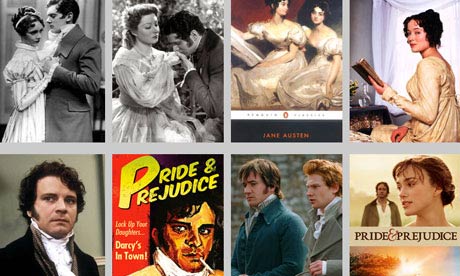
Pride and Prejudice: A Jane Austen interactive

To coincide with the 200th birthday of what is often voted Britain’s favourite book, leading writers including PD James and Sebastian Faulks give an alternative reading of its characters. Click on the pictures to get better acquainted

http://www.guardian.co.uk/books/interactive/2013/jan/26/pride-and-prejudice-jane-austen-interactive?intcmp=239


Jane Austen’s Pride and Prejudice at 200: looking afresh at a classic

Mr Bennet’s a bully, Elizabeth can’t stand women and Mr Darcy needs therapy. On the 200th anniversary of Austen’s novel, writers from PD James to Sebastian Faulks offer new readings

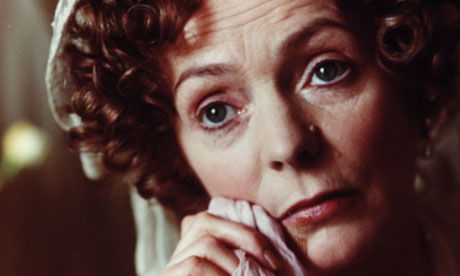
Bharat Tandon on Mrs Bennet

Alison Steadman as Mrs Bennet in the 1995 BBC adaptation

‘A woman of mean understanding, little information, and uncertain temper’ … Alison Steadman as Mrs Bennet in the 1995 BBC adaptation.

Photograph: BBC

El secreto de Jane Austen

Hace dos siglos, tal día como hoy, aparecía ‘Orgullo y prejuicio’, de Jane Austen, una de las obras esenciales de la literatura universal

La escritora británica Jane Austen (1777-1817) / EL PAÍS

La sabiduría es mejor que el ingenio y, a la larga, sin duda, tendrá la risa de su lado.
Jane Austen

Hay escritores que nos gustan, escritores a los que admiramos y escritores a los que quisimos desde el primer párrafo del primer libro suyo que nos tuvo entre sus manos. Escritores entrañables cuyas historias se vuelven parte de las nuestras. Jane Austen (1775-1817) es una de ellos. No solo es admirable o fascina, sino que sus novelas son un legado esencial que cuanto más pronto se entrega con más alegría se contagia.

No mucho antes de que la querida Jane se volviera una celebridad del siglo veinte, yo le regalé a mi hija, de trece años, la novela que a partir de entonces es la llave de nuestras mejores conversaciones. Porque desde los noviazgos hasta los acantilados encuentran cobijo en la sencillez y la inteligencia de lo que narra.

Hay, tras la voz que escribe Orgullo y Prejuicio, una mujer sabia que, a los veinte años, discierne como si llevara cincuenta reflexionando sobre los vicios y virtudes de los seres humanos. En medio de una vida tranquila, dentro de una familia armoniosa y de costumbres sencillas, Jane escribió, para leerles a sus hermanos, historias que resultan emocionantes porque tras el cuento de quién se casa con quien, ella entrega la fuerza de una narradora capaz de desentrañar los entresijos de un mundo mucho más complejo que el regido por las formas y las apariencias de su tiempo. ¿Cómo no leerla con humildad y sin prejuicios, con asombro y devoción?

Primera página de la edición de ‘Orgullo y prejuicio’, de Jane Austen, del 28 de enero de 1813. / EL PAÍS

No digo nada nuevo al afirmar que, mientras Jane escribía, el mundo de las mujeres terminaba en la puerta de sus casas. Por inteligentes que fueran: la mamá de Jane era una mujer ilustrada, que al tiempo en que cuidaba una casa con siete hijos y varios alumnos de su marido, alcanzó a tener tiempo para escribir algo de poesía. Cierto que Jane tuvo a su alcance los libros de la biblioteca de su padre y que pudo leer desde niña con placer y alegría, pero no hubo en ella ni el remoto sueño de convertirse en alguien cuya primera y explícita profesión fuera escribir. Menos aún imaginar el reconocimiento y la exaltación de su trabajo.

Hace tiempo intenté, como cualquier lector incauto, indagar qué amores, qué precisa memoria había urgido a Jane a escribir. Leí lo que pude sobre su vida en Pemberly, el cariño de su padre, el gusto por sus hermanos, su intensa amistad con Cassandra, su hermana. Leí de su gusto en el campo y su reticencia en Bath, leí sus cartas, su fervor y quise relacionar las nimiedades que se saben y lo mucho que se ignora con los libros de la distinguida y encantadora miss Austen. Como si alguien que se dedica a escribir no debiera saber que la realidad es una anécdota más entre las muchas que imagina un escritor. Así las cosas, conseguí estar segura de que Elizabeth Bennet, el personaje esencial de Orgullo y prejuicio, fue una mujer audaz que lo sigue siendo, como fueron y siguen siendo: su mamá un soliloquio en voz alta, sus hermanas menores unas frívolas, su papá un lector escéptico, su hermana mayor una suave y hermosa criatura. Pero que no es de la biografía de Jane, sino de su talento, su sentido del humor, su mirada y su imaginación, que salieron estos personajes.

Pionera sonriente, Jane hizo su camino sin aspavientos, pero no creo que ignorando la fuerza de su literatura. Jamás escribió nada en que hablara de sí misma como la creadora de algo excepcional, pero tiene que haber sabido que su prosa encantaba y era de una elegancia y de una sonoridad nada usual. No creo que imaginara cuánto íbamos a quererla doscientos años después, ni de qué modo sus libros iban a entrar por nuestras casas en todos los idiomas y por todos los medios, haciéndonos saber que la incertidumbre y la honradez, la fuerza de las convicciones y la generosidad, siguen siendo actuales.

Los ojos de Jane Austen eran premonitorios. Alguien creería que estoy loca si digo que fue una feminista, pero la verdad es que ninguna de sus heroínas tuvo a bien suicidarse para salir de un entuerto, mejor lo desafiaban como ahora se supone que debe hacerse

Vivir en un pequeño pueblo, la patria y el destino de Jane Austen, nos sucede a todos. Cualquier mundo es un pañuelo y en cualquier lugar la gente va haciendo la vida diaria mientras elige o abandona. Como en los libros de Jane Austen. Por eso fascina el irónico deseo de lo ideal que hay en sus historias. Por eso es posible imaginar que se parecen a las nuestras.

Gente que tiembla con los preparativos de una fiesta, que ve los viajes como expediciones y los noviazgos como una duda entre dos templos, habrá en todos los tiempos. Personajes como esos que creían en que la confusión tiene remedio y por su causa eran capaces de meterse en lo inaudito, sigue habiendo. Sobre todo, gente con ojos capaces de imaginar el destino como algo en lo que uno puede incidir, es tan crucial ahora como fue entonces.

Los ojos de Jane Austen eran premonitorios. Alguien creería que estoy loca si digo que fue una feminista, pero la verdad es que ninguna de sus heroínas tuvo a bien suicidarse para salir de un entuerto, mejor lo desafiaban como ahora se supone que debe hacerse. Y se hacían dueñas de sus vidas por obra y gracia de su santa voluntad. Como la propia Jane. Sola, mejor que mal acompañada. O como Elizabeth Bennet, excepcional y drástica, sencilla y elocuente.

Escribir es un juego de precario equilibrio entre el valor y la soberbia. También entre sus opuestos: el miedo y la humildad. A veces ninguno alcanza para contarlo todo. Ahí mismo está el secreto de la señorita Austen. Y su enseñanza: en ese equilibrio.

De tal secreto da fe Orgullo y prejuicio, la bendita novela que ahora cumple doscientos años, tan radiante y sabia como nunca.

07 What would George Orwell have made of the world in 2013?

The Guardian home

What would George Orwell have made of the world in 2013?

If he were alive today, would he be writing about call centres and Occupy? Or would he have become a rightwing food writer? It’s not as crazy as it sounds

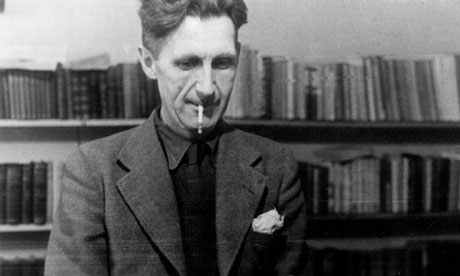
George Orwell at his typewriter.

George Orwell at his typewriter. Photograph: Mondadori via Getty Images

What if George Orwell hadn’t died of tuberculosis in 1950? What if, instead of expiring aged 46 in University College hospital, he had climbed from his sick-bed, taken the fishing rod a friend had brought him for his convalescence and checked out? What if today he was alive and well (perhaps after a period in cryogenic storage – the details aren’t important now)? What would he think of 2013? What, if anything, would he be writing about?

In many respects Orwell is ubiquitous and more relevant than ever. His once-visionary keywords have grotesque afterlives: Big Brother is a TV franchise to make celebrities of nobodies and Room 101 a light-entertainment show on BBC2 currently hosted by Frank Skinner for celebrities to witter about stuff that gets their goat. Meanwhile, Orwellian is the second-most-overused literary-generated adjective (after Kafkaesque). And now St Vince of Cable has been busted down from visionary analyst of recession to turncoat enabler of George Osborne’s austerity measures. Orwell is the go-to thinker to account for our present woes – even though he is 63 years dead. Which, in the Newspeak of 1984, is doubleplusgood.

As we celebrate the first Orwell Day this week, it’s irresistible to play the game of “what if”? If Orwell was fighting in a war akin to the Spanish civil war in 2012, where would he be – Syria? Would he write Homage to Aleppo, perhaps? Or would he have written Homage to Zuccotti Park or Tottenham? If he was writing Down and Out in Paris and London today would it be very different – and, if so, how? If he took a journey to Wigan pier in 2013, what would he find that would resemble the original trip and what would be different? Would there still be a full chamber pot under his hosts’ breakfast table? Let’s hope not.

Would he be working in a call centre rather than going down a mine? Would he feel as patriotic as he did in some of his essays? Would the man born Eric Arthur Blair have spent much of the past decade tilting at the man born Anthony Charles Lynton Blair? The answers to the last three questions are, you’d hope: yes, probably not, and oh, please God, yes.

“It’s almost impossible to imagine,” says Orwell’s biographer, the novelist and critic DJ Taylor. “One of his closest friends, the novelist Anthony Powell, suggested in his journals that Orwell’s politics would have drifted rightwards. He would have been anti-CND, in favour of the Falklands war, disapproved of the miners’ strikes. Powell was a high Tory right winger, but he was very close to Orwell and so those possibilities of what he would have been like had he lived on shouldn’t be dismissed.”

Adam Stock, an Orwell scholar at Newcastle University who did his PhD on mid-20th-century dystopian fiction and political thought, says: “If he were alive today, then Orwell would surely be writing about many of the sorts of areas you identify, bringing to light inequalities, injustices and arguing for what he termed ‘democratic socialism’, and I would like to think – though this may be projection on my part – that at this moment he would be writing specifically in defence of the welfare state.”

You’d hope. But Stock reckons that in 2013 Orwell would also be writing about the politics of food. “Orwell’s novels are marked by their rich detailing of taste, touch and especially smell. Tinned and processed food is a recurring image in his fiction, and it often represents a smoothing out of difference and individuality, a process which mirrors political attempts to make people conform to certain ideological visions of the world in the 1930s and 1940s,” says Stock.

Indeed, during last week’s horsemeat scandal, Stock says a passage from Orwell’s 1939 novel Coming Up for Air came to mind. The character George Bowling bites into a frankfurter he has bought in an milk bar decorated in chrome and mirrors: “The thing burst in my mouth like a rotten pear. A sort of horrible soft stuff was oozing all over my tongue. But the taste! For a moment I just couldn’t believe it. Then I rolled my tongue round it again and had another try. It was fish! A sausage, a thing calling itself a frankfurter, filled with fish! I got up and walked straight out without touching my coffee. God knows what that might have tasted of.”

What’s the present-day significance of that? “The point, I think, is that appearances mask quite different realities in the milk-bar modernity of mirrors in which the character is sitting, trapped between endless reflections,” says Stock. “Orwell had an abiding interest in the countryside, rural life and growing his own food. One thing I suspect he would be campaigning vociferously about in our time is issues surrounding big agribusiness and the provenance of our food, the biological commons, and particularly the patenting of GM crops.”

Cartoonist Ralph Steadman, too, reckons Orwell would be writing about food. “I was re-reading Down and Out in Paris and London recently,” says Steadman who is responsible for a marvellously scabrous illustrated edition of Animal Farm. “I think if he were to be down and out today he could survive on the bins behind the superstores. He wouldn’t have to go hungry because there’s so much free stuff that they throw away – perfectly good food. If he was writing that book today, he’d probably express himself in gratitude for that.”
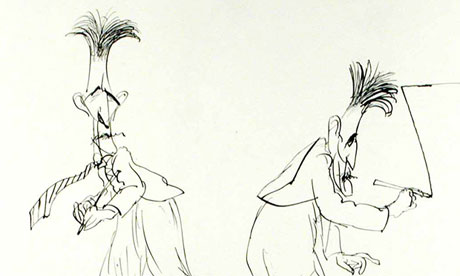
George ORWELL SketchesSketches of George Orwell by Ralph Steadman.Later, Steadman emails over one of his illustrations of Orwell. Steadman has put the writer in his own Room 101, his own private hell: a cage full of rats is wrapped around his neck. Perhaps that’s what all these “what ifs” amount to – a lot of savage bites on a dead man’s posthumous reputation.

The problem in deciding what Orwell would write about in 2013 is that Orwell the man was incessantly, in 21st century newspeak, off-message. Orwell had a habit of changing his mind abruptly. “He was against going to war with Germany until the very last minute when he suddenly came out in favour of it as a result, he claimed, of a dream,” says Dr Stock. Taylor also argues that Orwell was too unrealistic to work out a practical political programme. “He was always an idealistic dreamer. In 1945, when Attlee’s Labour government was elected his immediate response was to write saying the House of Lords should be abolished and so should public schools. Reading that, you can’t help but think that with the best will in the world it wasn’t practical. Whatever he approached politically, he came at from an odd angle.”

This chimes with the point Margaret Atwood made in her herogram to Orwell in the Guardian earlier this month: “People who run counter to the current popular wisdom, who point out the uncomfortably obvious, are likely to be strenuously baa-ed at by herds of angry sheep.” If Orwell were around now, he would have been baa-ed at, perhaps, though by whom is less certain. We tend to think that were he alive now he would be excoriating those things we think of as Orwellian – CCTV, the communications data bill (AKA snooping bill) that would force email providers to keep records of who messages whom and when, all the choke-holds an overweening state puts on our collective throat. But perhaps he would not have done so. In fact, there is the grotesque possibility that Orwell, had he been living and writing now, would not have won the Orwell prize, the political writing award set up in his name. “His last writings, from 1949, were the sketch for a novel called The Smoking Room Story about a character called Curly Johnson who, like Orwell, was returning from Burma,” says Taylor. “It’s set in the 1920s and reads like Somerset Maugham. Perhaps there weren’t any more dystopian fictions to come and had he lived longer he would have drifted rightwards.”

Perhaps, then, instead of imagining what he would have written were he alive we would do better to go back to the books and see if what he wrote has anything to say to us now. Try this passage from Nineteen Eighty-Four where Orwell writes about of the 20th century as the period in which “human equality became technically possible” and in which, simultaneously “practices which had long been abandoned, in some cases for hundreds of years – imprisonment without trial, the use of war prisoners as slaves, public executions, torture to extract confessions, the use of hostages, and the deportation of whole populations – not only become common again, but were tolerated by people who considered themselves enlightened and progressive”. In our era of extraordinary rendition, Guantánamo, massive expenditure on foreign wars this doesn’t seem so irrelevant. We don’t have public executions, you might retort. Yes, but given how much we like spectacle of others suffering, that might only be a matter of time – hangings downloadable to your funky new Google glasses.

Or consider how Julia earns her living in Nineteen Eighty-Four. She works for Pornosec, nicknamed Muck House, “which turned out cheap pornography for distribution among the proles”. If Julia were alive today, she might well have been an editor on Fifty Shades of Grey or at least working on its multi-platform global branding; what was it Julia calls it? Oh yes, “ghastly rubbish. They’re boring, really. They only have six plots, but they swap them round a bit.”

True, today’s muck houses have multiplied beyond Orwell’s imaginings. Porn is ubiquitous. The sexual commodification of women’s and girls’ bodies is so commonplace as to pass scarcely noticed, and TV or internet porn are accessible at the push of a button. We don’t yet have the “feelies“, Huxley’s cinemas in Brave New World – where the cinema spectator is titillated by the images and by what sounds like a vibrating seat. But, as with public executions, only a fool would rule out the possibility.

Labour’s shadow health minister Diane Abbott, for instance, this week worried that Britain was becoming “increasingly pornified … It’s hyper-sexualised British culture in which women are objectified, objectify one another, and are encouraged to objectify themselves,” she said. What academic Richard Rorty took to be the most hideous thing about Orwell’s vision of 1984 was that it was a world in which human solidarity was made impossible. When we objectify someone sexually – that is, when we treat someone as less than human – then human solidarity is surely impossible. Perhaps if Orwell were alive today, he might be writing about that. Not so much “I told you so”, as “This is far worse than I imagined”.

That said, Orwell’s writings aren’t easily citable by those fighting the sexist exploitation of women and girls. Stock argues: “His views on women, hardly progressive even in his own day, would appear entirely regressive now.” He cites the sequence in Nineteen Eighty-Four in which Winston Smith fantasises about raping and murdering Julia. Later, when they are about to first make love, she becomes “utterly unresisting, he could do what he like with her”, and her body becomes “as yielding as water”. The treatment of Dorothy in The Clergyman’s Daughter, adds Stock, “is similarly sexist, bordering on misogynistic”.

But if Orwell was hardly a proto-feminist, his vision of the capitalistic commodification of human experience surely captures something of our glum times. “There was a whole chain of separate departments dealing with proletarian literature, music, drama and entertainment generally,” he wrote in Nineteen Eighty-Four. “Here were produced rubbishy newspapers containing almost nothing except sport, crime and astrology, sensational five-cent novelettes, films oozing with sex, and sentimental songs which were composed entirely by mechanical means.” If Orwell’s 1984 speaks to 2013 it is in such passages. As Orwell’s late biographer Bernard Crick put it: “He really did believe that capitalism controls the ‘proles‘, the common people, not by physical oppression, but by bread and circuses, as it were, by cultural debasement, ‘dumbing down’ as we now say.”

Or consider another passage in Nineteen Eighty-Four where Orwell describes a feature of life on Airstrip One (Britain). “The Lottery, with its weekly pay-out of enormous prizes, was the one public event to which the proles paid serious attention.” Orwell would have recognised a lot of things from his dystopia in our world – not just the lottery, but the loss of privacy through intruding technology, the degradation of language, the waging of proxy wars by superpowers, the disappearance and sequestration of political dissidents.

Indeed, there’s a better game to play with Orwell than “What would he be writing about were he alive?”. It’s called “What did he get right?”. To be sure, Orwell said that what he wrote in his dystopian novels were warnings rather than predictions, but let’s forget about that for a moment. Taylor says: “He got a lot of things right – deforestation, the national lottery, the loss of privacy at the hands of intruding technology, the suborning of the proletariat with porn.”

But surely the most important thing he got right is that gap between the fact that “human equality became technically possible” and the deepening human inequality that is our reality. Stock says he’s looking forward to a new film adaptation of Nineteen Eighty-Four, which was reported to be in the pipeline last year, especially if it topically deals with “the wealth gap and social inequality in the text between the lives of the impoverished ‘proles’, who comprise the vast majority of the population of Oceania, and the shadowy elite of privileged inner Party members, with their servants, luxurious apartments and black market gourmet foodstuffs.”

It’s surely not just me who, reading this, thinks of the government telling us, in the brazen untruth akin to O’Brien convincing Winston Smith that two plus two equals five, that we’re all in this together. Perhaps 2013 isn’t so different from Nineteen Eighty-Four.

  • © 2013 Guardian News and Media Limited or its affiliated companies. All rights reserved.

07 The Liberals’ War on Science

Cover Image: February 2013 Scientific American Magazine See Inside

The Liberals’ War on Science

How politics distorts science on both ends of the spectrum

By Michael Shermer  | Monday, January 21, 2013 | 130

microscope, politics and science, man on donkey Image: Doug Chayka

Believe it or not—and I suspect most readers will not—there’s a liberal war on science. Say what?

We are well aware of the Republican war on science from the eponymous 2006 book (Basic Books) by Chris Mooney, and I have castigated conservatives myself in my 2006 book Why Darwin Matters (Henry Holt) for their erroneous belief that the theory of evolution leads to a breakdown of morality. A 2012 Gallup poll found that “58 percent of Republicans believe that God created humans in their present form within the last 10,000 years,” compared with 41 percent of Democrats. A 2011 survey by the Public Religion Research Institute found that 81 percent of Democrats but only 49 percent of Republicans believe that Earth is getting warmer. Many conservatives seem to grant early-stage embryos a moral standing that is higher than that of adults suffering from debilitating diseases potentially curable through stem cells. And most recently, Missouri Republican senatorial candidate Todd Akin gaffed on the ability of women’s bodies to avoid pregnancy in the event of a “legitimate rape.” It gets worse.

The left’s war on science begins with the stats cited above: 41 percent of Democrats are young Earth creationists, and 19 percent doubt that Earth is getting warmer. These numbers do not exactly bolster the common belief that liberals are the people of the science book. In addition, consider “cognitive creationists”—whom I define as those who accept the theory of evolution for the human body but not the brain. As Harvard University psychologist Steven Pinker documents in his 2002 book The Blank Slate (Viking), belief in the mind as a tabula rasa shaped almost entirely by culture has been mostly the mantra of liberal intellectuals, who in the 1980s and 1990s led an all-out assault against evolutionary psychology via such Orwellian-named far-left groups as Science for the People, for proffering the now uncontroversial idea that human thought and behavior are at least partially the result of our evolutionary past.

There is more, and recent, antiscience fare from far-left progressives, documented in the 2012 book Science Left Behind (PublicAffairs) by science journalists Alex B. Berezow and Hank Campbell, who note that “if it is true that conservatives have declared a war on science, then progressives have declared Armageddon.” On energy issues, for example, the authors contend that progressive liberals tend to be antinuclear because of the waste-disposal problem, anti–fossil fuels because of global warming, antihydroelectric because dams disrupt river ecosystems, and anti–wind power because of avian fatalities. The underlying current is “everything natural is good” and “everything unnatural is bad.”

Whereas conservatives obsess over the purity and sanctity of sex, the left’s sacred values seem fixated on the environment, leading to an almost religious fervor over the purity and sanctity of air, water and especially food. Try having a conversation with a liberal progressive about GMOs—genetically modified organisms—in which the words “Monsanto” and “profit” are not dropped like syllogistic bombs. Comedian Bill Maher, for example, on his HBO Real Time show on October 19, 2012, asked Stonyfield Farm CEO Gary Hirshberg if he would rate Monsanto as a 10 (“evil”) or an 11 (“f—ing evil”)? The fact is that we’ve been genetically modifying organisms for 10,000 years through breeding and selection. It’s the only way to feed billions of people.

Surveys show that moderate liberals and conservatives embrace science roughly equally (varying across domains), which is why scientists like E. O. Wilson and organizations like the National Center for Science Education are reaching out to moderates in both parties to rein in the extremists on evolution and climate change. Pace Barry Goldwater, extremism in the defense of liberty may not be a vice, but it is in defense of science, where facts matter more than faith—whether it comes in a religious or secular form—and where moderation in the pursuit of truth is a virtue.

Scientific American is a trademark of Scientific American, Inc., used with permission

© 2013 Scientific American, a Division of Nature America, Inc. All Rights Reserved

ABOUT THE AUTHOR(S)

Michael Shermer is publisher of Skeptic magazine (www.skeptic.com). His book The Believing Brain is now out in paperback. Follow him on Twitter@michaelshermer

07 4 Copy Editors Killed In Ongoing AP Style, Chicago Manual Gang Violence

The Onion @TheOnion

America’s Finest News Source. Also facebook.com/theonion http://www.theonion.com


4 Copy Editors Killed In Ongoing AP Style, Chicago Manual Gang Violence

• Jan 7, 2013

NEW YORK—Law enforcement officials confirmed Friday that four more copy editors were killed this week amid ongoing violence between two rival gangs divided by their loyalties to the The Associated Press Stylebook and The Chicago Manual Of Style. “At this time we have reason to believe the killings were gang-related and carried out by adherents of both the AP and Chicago styles, part of a vicious, bloody feud to establish control over the grammar and usage guidelines governing American English,” said FBI spokesman Paul Holstein, showing reporters graffiti tags in which the word “anti-social” had been corrected to read “antisocial.” “The deadly territory dispute between these two organizations, as well as the notorious MLA Handbook gang, has claimed the lives of more than 63 publishing professionals this year alone.” Officials also stated that an innocent 35-year-old passerby who found himself caught up in a long-winded dispute over use of the serial, or Oxford, comma had died of a self-inflicted gunshot wound.


07 Shakespeare: bard of Avon now … and Euro-laureate hereafter?

Shakespeare: bard of Avon now … and Euro-laureate hereafter?

European Union urged to adopt Shakespeare on the 400th anniversary of his death

Illustration of William Shakespeare

The academics want to affirm Shakespeare as ‘intimately important in European culture, not just as somebody or something for Stratford and not just for self-congratulatory English patriotism’. Photograph: Corbis

Leading British academics are seeking to persuade the European parliament to adopt Shakespeare as its European laureate in time for the 400th anniversary of his death in 2016.

Keen to promote Europe‘s shared cultural heritage, they are also planning a European Shakespeare Ode, inspired by the Garrick Ode – a poem created in 1769 by David Garrick, the greatest actor of his day, who sparked a major resurgence of interest in Shakespeare during the 18th century. It was Garrick’s staging of a spectacular three-day celebration that firmly established the Bard’s literary reputation and made Stratford-upon-Avon a centre for literary tourism.

Now history could repeat itself in 2016. Just as Garrick revived interest in Shakespeare across Europe – with Goethe among those who were inspired – plans are being drawn up to reaffirm Shakespeare as a truly international figure in the 21st century.

The projects are headed by Professor Ewan Fernie, chairman of Shakespeare studies at the Shakespeare Institute, University of Birmingham, in collaboration with Dr Paul Edmondson, head of research at the Shakespeare Birthplace Trust. Fernie told the Observer that they want to reaffirm Shakespeare as “intimately important in European culture, not just as somebody or something for Stratford and not just for self-congratulatory English patriotism”.

Referring to what Václav Havel, the late Czech playwright, political dissident and president, called “anti-political politics”, a social identification beyond party lines, Fernie said: “History suggests Shakespeare cannot be definitively identified with any political or religious lobby.” The scholar added: “We’re aiming to create a Shakespeare Ode which celebrates Shakespeare as a figure for European creativity. This is the political point. Europe is said to be in crisis and imagined simply as an economic union. What we want to do politically is suggest that there’s a great cultural tradition to affirm and promote.”

The academics – who also include Professor Michael Dobson, the director of the institute – are proposing a permanent, non-partisan European laureateship that might celebrate other great European figures such as Goethe and Dante in future years. Malcolm Harbour, Conservative MEP, has made an initial approach to the culture committee of the European parliament in Brussels, and an application for substantial funding is to be made to the Arts and Humanities Research Council.

The 2016 celebrations will include a revival of Garrick’s Ode, with Sam West playing the actor. Discussions are under way to stage it and the new Shakespeare Ode at the Royal Shakespeare Theatre in Stratford as part of the World Shakespeare Congress, which will be attended by more than 1,000 international delegates. Further performances will take place at the Regent’s Park Open Air Theatre in London.

Garrick put Stratford on the international map, transforming its former image as a provincial town. The programme took Shakespeare to the streets, with fireworks, a procession of characters from the plays and a masked ball. But the highlight was Garrick’s delivery of his Ode, which hailed Shakespeare as “the god of our idolatry”. Set to music by Thomas Arne, it was performed by the orchestra and chorus of Drury Lane Theatre. In 2016, the performers will be the Ex Cathedra Choir and the Orchestra of the Swan.

The Shakespeare plans follow the success of Fernie’s 2011 project, Redcrosse, which saw the creation of a new poetic liturgy for England and St George. Written by academics and poets, it explored identity and Englishness in a changing world. Inspiration came from the Redcrosse knight in Edmund Spenser’s updating of the myth of St George in his poem The Faerie Queene.

Like Redcrosse, the Shakespeare Ode will be created by a group of academics and other writers, including the poet Michael Symmons Roberts and the bestselling literary novelist Salley Vickers.

Fernie, who has just published The Demonic – which includes Shakespeare in a study of the demonic tradition in literature – said the plans extend to partnerships with Weimar, Vienna and Verona, among other cities, where academics and writers are preparing major Shakespeare celebrations.

07 Why is Gove trashing Mary Seacole?

Why is Gove trashing Mary Seacole?

Michael Gove wants to remove the ‘black Florence Nightingale’ from the national curriculum, but why?

Mary Seacole

Mary Seacole, Crimean war nurse. Photograph: National Library of Jamaica

Life may unfold in dribs and drabs but put them together and pretty soon you have a narrative. And in much the same way, one can look at the stories of recent days about Mary Seacole, and discern a pattern. Time to knock the black icon off her perch, appears to be the philosophy, and it starts with Michael Gove – who else? He wants the nurse and her exploits expunged from the national curriculum because once she has gone, there will be more time for Churchill, and to learn the names of all of the kings and queens of England.

Time also perhaps for other desirable and modern essentials, such as fagging and Latin. But she’s of historical importance, isn’t she? No she isn’t, say a motley assortment of historians, and guardians of the memory of Florence Nightingale. Into the fray rides the Daily Mail. “The black Florence Nightingale and the making of a PC myth,” it says. “One historian explains how Mary Seacole’s story never stood up.” She wasn’t really black, it says. She wasn’t really a nurse. She was just a sort of cheery barmaid dispensing bonhomie and medicine. “She undoubtedly did at some point go on to a battlefield dispensing comforts such as wine and doing her best to deal with the odd injury.” But, hey, she was no Florence Nightingale.

Spare a thought for Lord Soley, for as chair of the Mary Seacole memorial statue appeal, he has to deal as diplomatically as he can with those who would traduce her memory for their own purposes. On the day of publication, he patiently composed a letter to the Daily Mail challenging the premise of Seacole as a modern-day construct born of political correctness. His letter has yet to see the light of day. He has cross-party support and military encouragement, but with the ongoing resistance to the idea of a statue and now her dismissal from the curriculum, Soley is faced with a fight on two fronts. And there’s no need for it, he tells me.

Was she important? Well, the military was quick to honour her. Does she threaten Nightingale? No. Nightingale developed modern nursing and training. Seacole reigned on the battlefield. It’s not a competition. And, guess what, it is possible for a person of colour to gain prominence for reasons other than political correctness. Gove and co, take note.

06 Decoding the Political Buzzwords of 2012

BillMoyers.com


Q&A is a weekly column featuring interviews with writers, economists, social scientists, activists and other big thinkers with important perspectives on issues affecting our democracy.


Decoding the Political Buzzwords of 2012

December 27, 2012

Geoffrey Nunberg

As the year draws to a close, we checked in with linguist Geoffrey Nunberg to get his analysis of the top political buzzwords of 2012.Lauren Feeney: What political words struck you as particularly interesting this year? 

Geoffrey Nunberg: Like all campaigns, this one generated a bunch of nine-day wonders — words of the week or month like “Romnesia,” “Etch-a-Sketch,” “self-deportation,” “unskew,” and so forth. Others were more insistent — “dark money,” “SuperPAC.” When I was trying to pick a word of the year for my Fresh Air language feature, I was tempted by Romney’s “47 percent.” I think it stands for a shift in the language of class in American politics, as a kind of bookend to last year’s “one percent.” The right used to insist that there were no classes in America — even to mention the word was class warfare. Now they’ve drawn up their own battle lines in the middle.

But it’s a little misleading to focus on that one item — words really fly in flocks, and this one comes with “moochers,” “takers,” and “lucky duckies,” the repellent term coined by The Wall Street Journal about a decade ago, not to mention “gifts” and “goodies.” And in particular there’s “entitlement”— not a recent word, of course, but it figured a lot in the election, particularly after Ryan’s nomination, and it has been shifting its meaning in what I’ve described as a kind of semantic sleight-of-hand. Time was that “entitlement” was a positive word which implied that people had a moral right to certain government benefits. Bill Moyers recalls what LBJ said to the Republicans about Medicare: “By God, you can’t treat Grandma this way. She’s entitled to it.” Then the word got colored by the psychological meaning it has in “sense of entitlement,” where it implies an unwarranted claim to something. When people on the right talk about the “entitlement society” nowadays, there’s an unspoken “unearned” in the background; it evokes the “culture of dependency” narrative — “entitlement” has become just another word in that “47 percent” and “moocher” lexicon.

Feeney: So what did you finally pick for your Word of the Year?

Nunberg: I went with “Big Data.” Not everybody is familiar with it. It didn’t get the wide exposure of “47 percent,” but it was the talk of Silicon Valley and Davos, and it was all over the place in venues like Forbes, The Economist and The New York Times tech and business sections. And whether or not you knew what it was called, you knew about its effects — the software called analytics that chews over all the data we’re kicking up from our web surfing, our tweets, our purchases, our cable boxes, our Facebook pages and our cell phones. There are Big Data analytics behind a lot of the threats to our privacy — those ads that follow us as we move around the Web, the websites that sell or swap our personal information, the “stalker apps” that track our physical location — that has to be a strong candidate for creepiest word of 2012. And even more ominously, there are the security agencies that are combing over our travel and credit card records trolling for possible terrorists. Those have some people wondering if we’re moving in increments toward the surveillance state — just last March the Justice Department authorized agencies to retain for five years the personal data of people who aren’t suspected of terrorism.

But Big Data has also changed the way we do epidemiology, economics, sociology, even linguistics — and by-the-by, it was the superiority of the Obama campaign’s voter data and analytics that helped them overcome the Republicans’ financial advantages in reaching voters. So it’s not a good or bad thing in itself, but it forces us to rethink our notions of privacy and personal information.

Feeney: What does it mean when people call this a “post-truth” era. Are they right?

Nunberg: The phrase “post truth” has been out there for a while. Sometimes it just meant that people are lying more than they used to, but that’s not interesting — after all, every generation sees itself as beset with mendacity. Post-truth now means more than that. It’s an indifference to the truth, as if you don’t care whether what you say is going to be believed or is even believable, or whether you’re going to be called on it. I think Romney’s charges about Obama’s “apology tour” are a good example. Nobody buys it, though it gives some partisans pleasure to pretend to. To the rest, it’s more like,  “Apology tour? Really?”

It’s an attitude you run into on both sides, but there’s a huge chunk of the right that has made it the basis of a whole worldview. It’s not just birtherism or global warming denial. There are sites out there like Conservapedia that provide a whole alternate cosmology, down to the correct conservative positions on Anglo-Saxon literature, the Theory of Relativity and Bobby Vinton. And if you’re willing to buy into all that as an article of faith or as a sign of solidarity with your fellows, then it’s a trivial matter to accept that Obama went on an apology tour or that the Affordable Care Act is an assault on American freedom that’s edging us to a communist takeover.

Jonathan Haidt has described this phenomenon using William Gibson’s notion of a consensual hallucination, and the thing to focus on here is the sense of collective identity that comes from defining your beliefs in opposition to the other guy’s. It’s connected to the way the discourse of the right has become hermetic and self-referential. I’m not thinking just of Fox News or Limbaugh, but of online discussions and Twitter. There’s a group of Michigan researchers who have been doing large-scale statistical analysis of tweeting, and they’ve found that conservatives are more densely connected, retweet each other much more frequently, and stick to a narrower range of topics than liberals do.

That creates the bubble environment that licenses politicians to make these off-the-wall charges, then answer the people who challenge them with, “Well, we won’t let our campaign be dictated by fact-checkers,” or that marvelous remark Jon Kyl made after claiming that 90 percent of Planned Parenthood’s services were abortions, “It was not intended to be a factual statement.” You’re not going to hear that sort of thing from Democrats. Not that they’re above a little mendacity now and again, but they tend to be more traditionalist about it.

Feeney: One of the most deceptive phrases in vogue this year is “right to work.” Any idea who came up with that one? Can you think of any others that are quite so deceptive?

Nunberg: “Right to work” has a long and fascinating history — it could stand in for the whole drift of political language over the past 150 years. The phrase was coined (as the “droit au travail”) by the French socialist Louis Blanc and became a slogan in the 1848 French Revolution, which was the first revolution in which workers demanded jobs rather than bread. Throughout the second half of the nineteenth century, the “right to work” was a fundamental principle of socialism, and it’s set down as an article in the Universal Declaration of Human Rights, where it refers to the right to have a job with fair and decent working conditions and protection against unemployment.

But the phrase was co-opted at the beginning of the twentieth century by opponents of the labor movement, who wanted to depict themselves as defending the interests of workers, rather than of employers. One of the earliest examples of this use of the phrase that I’ve found came from a 1903 editorial entitled “The Right to Work” in the Baltimore American, which attacked labor for paralyzing business and denounced their demands for fair wages and limited work hours as a kind of tyranny: “Any organization, whether or laborers or capitalists, which interferes with a man’s right to work when he pleases, where, how long, and for what wages, is unjust and un-American.” In the decades following that, the phrase became a watchword in the fight against the closed shop and the union shop, until “right to work” laws were sanctioned by the Taft-Hartley Act over President Truman’s veto in 1947. Now you have George Will praising the Michigan Republicans for “striking a blow for individual liberty,” which could have come from that 1903 editorial.

Feeney: Okay, so how should progressives talk about these laws?

Nunberg: Labor and its supporters sometimes call them “right-to-freeload” laws. That isn’t inaccurate but it stresses the conflict between workers and makes bad guys out of the ones who won’t pay union dues, while it leaves the employers off the hook. Others have called them “corporate servitude laws.” That plays well to the liberal benches, but it’s not going to be very persuasive to the people in places like Michigan or Wisconsin who are on the fence about these questions — including a fair number of Republicans, as the California Labor Federation discovered in its successful campaign this year against a Republican-backed proposition that would have virtually banned union political activity. Those voters are sympathetic to working people but they don’t bristle whenever they hear the word “corporation.” And they don’t think of working as a Wal-Mart associate as “servitude,” just as a really crappy job. Like too much of the rhetoric of the left, the name is designed to make liberals feel good about their moral values, rather than to widen support or dispel the image of liberal sanctimoniousness.

There are a couple of points you need to make about these laws. First, they’re designed by employers to break the power of unions by pitting workers against workers. And the laws tilt the playing field — employers can effectively compel stockholders to contribute to their agendas, but unions are blocked from calling on their members in the same way. But I don’t know that we need a new name for them — that’s all covered by that fine old phrase “union busting,” which was the criticism raised against Taft-Hartley — and not just by Labor, but by Dwight Eisenhower. Even in a bad era for unions, the phrase still sounds ugly and makes opponents of labor defensive (it played a bit part in the anti-Prop 52 campaign). Of course “right-to-work” is so deeply anchored by now that a lot of the media are going to keep using it, but in that case you at least you can insist that they prefix it with “so called” or stick it in quotation marks—as in “so-called ‘right to work’ states,” and so on.

Feeney: Many think that the Newtown shootings have changed the climate around guns. Have you heard any shifts in language?

Nunberg: Language does a lot of work here. “Gun control,” “confiscation,” “gun violence” — each of them trails a whole stream of associations. One thing that’s very striking, though, is the way words are used to smuggle dubious premises into the conversation that you couldn’t get away with bringing in by the front door. Take the charge that liberals have been “politicizing” the Newtown shootings, which is what you often hear in these situations. The idea is that people’s emotions are being exploited to advance an extraneous political agenda. But you can’t politicize what is already a policy concern. Saying that gun control advocates are politicizing mass shootings is like saying that advocates of stricter food standards are politicizing salmonella outbreaks.

Another word I’ve been hearing a lot is “evil,” not simply as a description of what happened but as an explanatory hypothesis — evil as a force that will have its way in the world whatever we try to do to stop it. The American Spectator’s John R. Coyne, Jr. made a remark that went viral on the right: “There is evil in the world. It’s beyond mental illness, beyond gun control. It is evil.” It’s a counsel of helplessness: it kicks the whole problem upstairs to an insoluble theological mystery. But it’s a meretricious non-sequitur. “There will always be evil” — you could say exactly the same thing to demonstrate the futility of trying to curb child abuse or insider trading. There are always germs in the world, too.


Geoffrey Nunberg is a linguist who teaches at the School of Information at the University of California-Berkeley. He is the author of Talking Right: How Conservatives Turned Liberalism into a Tax-Raising, Latte-Drinking, Sushi-Eating, Volvo-Driving, New York Times-Reading, Body-Piercing, Hollywood-Loving, Left-Wing Freak Show. His new book, Ascent of the A-Word, deals with the breakdown of modern political discourse. You can follow him on Twitter at @geoffnunberg.


06 “El truco preferido de Satán”

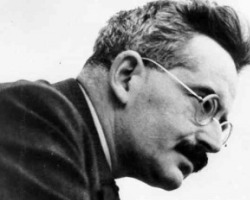
La inmensa poética de una Biblia de la modernidad: “El truco preferido de Satán”, de Walter Benjamin

leadimage

Jordi Corominas i Julián escribe sobre esta obra del filósofo Walter Benjamin, recuperada por la editorial Salto de Página y a la que acompañan fotografías de Alberto García-Alix.


Por | Portada | 18.12.12

El truco preferido de Satán. Walter Benjamín
Traducción de Vicente Forés y Jenaro Talens
Fotografías de Alberto García-Alix
Prólogo de Jenaro Talens
Epílogo de Nicolás Combarro
Salto de Página (Madrid, 2012)


“No ha existido ninguna época que, en un sentido excéntrico, no se considerara “moderna” y no se creyera de forma inmediata ante un abismo. La conciencia desesperadamente clara de encontrarse inmersa en una decisiva crisis es crónica en la humanidad. Cada tiempo se cree sin remedio tiempo nuevo. Lo “moderno”, sin embargo, es exactamente en este sentido distinto, como lo son las diferentes facetas del calidoscopio”.

España es un país donde la cita de un gran nombre apenas leído vende bien, como si quien lo mencionara ganara a partir de entonces prestigio de sapiencia cosmopolita. Walter Benjamin, y Kafka en menor medida al ser más accesible, es el paradigma de esta tendencia que quizá encierre un profundo complejo de inferioridad, como si la mera alusión al filósofo alemán sirviera para encerrar fantasmas en una jaula dorada inaccesible para muchos profanos, ignaros a la verdad de la impostura.

Lo cierto es que la obra fundamental del hombre que se suicidó en Portbou es inmensa e inaccesible por varios motivos, entre ellos el precio. Hará cinco años compré el Libro de los pasajes por la friolera de ciento tres euros. Lo leí como quien juega a las sortes virgilianae, al azar, por imposibilidad de encontrar calma para devorarlo y resignación ante el monumento que tenía entre mis manos.

Por eso para conocer hay que introducirse en la senda sin miedo, pero con garantías que la iniciación dará el estímulo para continuar el camino. En este sentido, y casi en todos los demás, hay que aplaudir la arriesgada apuesta de Salto de Página al editar a Benjamin con un formato innovador y sumamente subjetivo. El resultado es El truco preferido de Satán, volumen que mezcla los textos de los pasajes del teutón con fotografías de Alberto García-Alix. El rizo se riza porque esta peculiar unión, que tiene mucho más sentido de lo que parece a primera vista, se publica en la colección de poesía de la editorial madrileña. ¿Poesía?

Sí, y de muchos quilates. El pensamiento impregnado de lirismo responde a observaciones que captan metamorfosis y se contextualizan en una quête infinita a partir de la revolución que supone el boom urbano del siglo XIX con París vestida de faro mundial que Benjamin elige para ubicar sus pesquisas.

“En las áreas de las que nos ocupamos, la comprensión sólo se produce en forma de relámpagos. El texto es el largo trueno que los sigue”.

Walter Benjamin (foto: D.P.)

Podemos analizar los fragmentos de los pasajes como aforismos que con bien poco dicen mucho. Abruma la claridad con que se exponen conceptos y cómo se interseccionan líneas que en apariencia están completamente desconectadas entre sí. Y ello se produce con toda lógica, como si este paseo por partes concretas de la modernidad fuera una especie de sueño, única esperanza del hombre contemporáneo para traspasar umbrales y alcanzar una condición mística que enlaza fases entre lo real y el mundo onírico.

En la Barcelona del siglo XIX, siguiendo la moda proveniente del norte, se construyeron pasajes. Circular por ellos es entender cómo el capitalismo quiso tender sus redes de deseo con sutileza al situar en los laterales de estos enclaves un sinfín de escaparates que atrapaban al ciudadano hasta convertirlo en consumidor. Antes, sin embargo, fueron otra cosa, lugares mágicos que generaban un extrañamiento que entronca con un gen primigenio, el de la magia de Alicia, atrapar puertas inauditas y sumergirse en ellas para volver, una vez las hemos abandonado, a la normalidad de la calle y su fango escurridizo, siempre más volátil. Decía Karl Marx que todo lo sólido se desvanece en el aire, y yo añadiría que en demasiadas ocasiones mostramos poca atención por los vericuetos del espacio que nos rodea.

Benjamin tenía una mente privilegiada y un ojo excepcional. De la deriva económica salta a la técnica. El hierro y el vidrio, elementos simples, funcionales, aptos para un sistema como el que encumbraba lo decimonónico, cuando vislumbramos que debíamos entendernos por fuerza con la máquina. Por eso el modernismo agregó elementos decorativos en su arquitectura, porque ya no valía el simple armazón, había que añadir ornamentos que destruyeran la brusquedad de lo veloz, de tanta racionalidad al servicio de un ente perverso. Loos definió esta decoración infame como delito, y la parte textual de El truco preferido de Satán asiente encantado, no sin avisarnos que el Art nouveau apuntaba otros crímenes más benéficos, como la publicidad, que desde ese momento cobra carta artística y se instala en nuestras mentes al formar parte del entorno exterior, desnudo y complejo.

El interior queda reservado para estructuras que se asemejan a matrioskas, con la burguesía entusiasmada con los estuches que ocultan objetos, vacua protección, estética de la estética que indica sofisticación y un mixto entre anhelo de privacidad y voluntad exhibicionista.

El flâneur sintetiza ambas facetas y las destruye de cara a la galería. En un mundo donde los ítems de consumo están a la vista de cualquier ser vivo, en un universo donde la moda ya inicia la tendencia, tienen que existir individuos que se distingan de la masa que puede acudir a los grandes almacenes. El flâneur, del que Baudelaire es su quintaesencia, debería haber nacido en Roma, pero la época quiso que París se llevara la palma, con sus recodos estudiados hasta la saciedad, con sus avenidas empeñadas en anunciar la buona novella del adiós al pasado y el saludo a un presente fulgurante. El poeta de Las flores del Mal encarna la duda, la epifanía de las esquinas, la intoxicación de pasear extasiándose y un cóctel explosivo que le otorga divinidad  al ser omnipresente en su juego dentro de la cuadrícula, omnisapiente en su afán de estudio y sumamente poderoso al controlar con sus pasos el pulso de la ciudad. Esa es la clave de Satán, una deidad del séptimo día que escarba con ahínco en su sociedad y se viste de dandi demiurgo para alzar un altar que desde lo básico alcance lo metafísico. El ocio deviene un campo de seriedad analítica sin más solemnidad que la que se vive como muestra la famosa anécdota del bardo que deja caer la corona de laurel en Los Campos Elíseos justo antes de entrar en un burdel. Pies en el suelo, cerebro hodierno consciente de la necesidad de desterrar lo pretérito en una caja que sólo sirva como conocimiento para aprehender mejor lo que acaece aquí y ahora.

Podría extenderme más, pero eso significaría aparcar el sentido de la combinación de imagen y palabras. Poco puedo añadir que no se haya dicho ya del genio fotográfico de Alberto García-Alix. En el caso que nos concierne sus instantáneas encajan con las teselas benjaminianas al existir entre ambos un vínculo que indaga en la ciudad, que se erige en prima donna, escenario que además de movimiento goza de existencia propia y de una honda poética que sólo se capta a través de la contemplación del fenómeno que supone. A ello, el más difícil todavía, debemos sumarle el reto de juntar fotografías que fundieran, como Baudelaire en sus itinerarios urbanos, paisaje con pasaje, y la fusión se ha obtenido desde la doble perspectiva que permite ver el libro como un todo uniforme o cada una de sus facetas como la prueba subjetiva del hermanamiento entre artes, con la posibilidad de disfrutarlas juntas o por separado.

Siempre es una buena noticia que se editen libros hermosos y útiles en nuestro país. El truco preferido de Satán es un volumen necesario, una obra que debe saborearse con calma, como si emprendiéramos una excursión literaria que nos proyectara fuera de casa para deleitarnos con reflexiones precisas. Al pasear suelo pensar que tengo los vocablos en la cabeza y los negativos en lo que veo. Quizá los razonamientos de Benjamin y las instantáneas de García-Alix consigan el mismo efecto, deslizándose entre nosotros con la elegancia de una invencible Biblia de la modernidad, puro elogio de la reflexión y de la lentitud entendida como único método para captar la celeridad y su esencia de transformación.

Jordi Corominas i Julián
http://corominasijulian.blogspot.com

Etiquetas: , , ,

06 Breivik o el debate sobre la locura

Breivik o el debate sobre la locura

Dos equipos de expertos en psiquiatría fueron, junto al asesino y a sus víctimas, los grandes protagonistas del juicio

El presidente del Parlamento Europeo, Martin Schulz, visita la isla de Utoya un día después de recoger el Nobel de la Paz para la UE en Oslo. / SCANPIX (REUTERS)

Unos 500 noruegos —adolescentes, jóvenes— debieron sentir un horrible escalofrío al oír los detalles sobre Newtown. El hombre que un día de julio de 2011, también un viernes, intentó matarles en la isla de Utoya es el autor de la mayor matanza en solitario. Anders Behring Breivik asesinó allí a 69 personas (antes, a ocho más en Oslo). Desde entonces está en prisión. Igual que ahora se indagan los motivos del tirador de Newtown; se investigaron los de Breivik. Él insistió desde el primer minuto en que estaba cuerdo. Y el tribunal que lo juzgó le dio la razón.

El juicio contra este ultraderechista noruego de 33 años giró básicamente sobre un interrogante: ¿Fueron sus crímenes fruto de la locura u obra de un hombre consciente de sus actos? El tribunal de Oslo respondió, en agosto pasado, por unanimidad: “El acusado está criminalmente cuerdo y debe ser sentenciado a castigo”. 21 años de cárcel prorrogables. La otra posibilidad, solicitada por la fiscalía, era el tratamiento psiquiátrico. Atribuir una matanza a la locura suele ser explicación más fácil, la más cómoda, porque exime al resto de la sociedad de cualquier responsabilidad.

“Lo hice en defensa propia”, proclamó el asesino en la primera vista. Insistió en que mató a aquellos chavales —a unos, a quemarropa, a otros los venadeó—, destinados a convertirse en los futuros dirigentes del laborismo, para evitar que el país mantuviera abiertas sus puertas a una supuesta invasión de inmigrantes en general y musulmanes en particular.

Breivik, tras ser condenado el pasado agosto por las matanzas de Utoya y Oslo. / Frank Augstein (AP)

Dos equipos de expertos en psiquiatría fueron, junto al perpetrador y a sus víctimas (con sus escalofriantes testimonios), los grandes protagonistas del juicio porque sus conclusiones eran claramente contradictorias: “Donde los expertos Husby y Sorheim ven ideas delirantes psicóticas, los expertos Aspaas y Torrisen hallan opiniones políticas extremas, combinadas con una indiferencia consciente por las opiniones del adversario”, explicaba el veredicto. Durante semanas, la salud mental del asesino y la psiquiatría en general se convirtieron en un gran tema de debate ciudadano.

Muchos consideraron que la perversa minuciosidad con la que planeó sus ataques durante años —la compra al menudeo de los explosivos por Internet, disfrazarse de policía— era incompatible con la locura. Pero, incluso inmediatamente después de asistir a la lectura de la sentencia, Caroline Svendsen, 19 años, superviviente de Utoya, aún insistía: “Creo que está loco porque para matar así a 77 personas, para causar tanto daño a tantos, tienes que estar loco”.

Discrepaba de los jueces. Ellos dictaron que Breivik fue capaz de cometer semejantes actos por “la combinación de una ideología fanática de extremismo ultraderechista, la ingestión de sustancias estimulantes y la autosugestión combinada con rasgos patológicos y anormales”. Precisaron que esto solo explicaba “parcialmente” sus motivos pero concluyeron: “Queda probado más allá de la duda razonable que el acusado no estaba psicótico” cuando puso una bomba en Oslo y se lanzó a la caza de los jóvenes laboristas.

“El mal ha visitado esta comunidad”, proclamó el viernes el gobernador de Connecticut. Ojalá fuera tan sencillo.

06 Edna O’Brien interview

Edna O’Brien interview – ‘You have to be lonely to be a writer’ – video

More than half a century after scandalising the world with her taboo-breaking novel The Country Girls, the Irish writer Edna O’Brien is still going strong. As her memoir Country Girl is published, she speaks to Jane Martinson about her ‘Mata Hari’ reputation, celebrity dinner party guests such as Judy Garland and Sean Connery, how much harder her memoir was to write than her novels, and why she has always embraced her own loneliness.
Listen to Edna O’Brien reading from Country Girl here.

http://www.guardian.co.uk/books/video/2012/dec/07/edna-obrien-autobiography-country-girl-interview-video

06 Happy Birthday, Noam Chomsky

December 7, 2012

Happy Birthday, Noam Chomsky

Posted by
noam-chomsky.jpg

Noam Chomsky turns eighty-four today, more than a half century after he exploded onto the scene of linguistics, in in the late nineteen-fifties, as a young professor at M.I.T. His career began perhaps most notably with a book review that helped launch an entire field of linguistics (known as generative grammar) and laid waste to another (the behaviorist view of B. F. Skinner that then dominated psychology). From that moment forward, linguistics truly has never been the same.

He remains as influential, and divisive, as he was when Larissa MacFarquhar wrote a Profile of Chomsky in The New Yorker nearly a decade ago (“The Devil’s Accountant”). He has at least three new essays on linguistics coming out soon, and if time has slowed him down, it’s not by very much. A few months ago, I sent him a manuscript and he replied, with comments, in less than half an hour.

I can’t speak to his politics, for which he is equally well known. But since his earliest days, Chomsky’s scientific concerns have been as much about philosophy as linguistics. For most of us, words and sentences are tools for communicating. But for Chomsky, words and sentences are tools for understanding the nature and origins of knowledge. Chomsky sees himself, correctly, as continuing a conversation that goes back to Plato, especially the Meno dialogue, in which a slave boy is revealed by Socrates to know truths about geometry that he hadn’t realized he knew. Plato’s question was whether any of what we know about the world is innate as opposed to acquired through experience. For Chomsky, the interest in linguistics isn’t so much whether one language uses infinitives and another uses subjunctives but whether all languages are, at some level, deeply related and constrained by what Chomsky dubbed “universal grammar.”

That idea of universal grammar didn’t just change linguistics, it had repercussions for virtually every field that concerns the mind. In developmental psychology, for example, no idea has ever been as controversial, or as pivotal. How much do children know about language before they even begin to talk? Do they learn language simply by imitating their parents, or is there a built-in language-acquisition device (or what Steven Pinker called a “language instinct”)? Parallel questions soon arose in other aspects of cognitive development as well.

Part of Chomsky’s argument begins with the observation that language is infinite, with no end to the number of possible sentences that you can produce and comprehend. Take Chomsky’s sole entry in Bartlett’s Quotations, “colorless green ideas sleep furiously”; even if you don’t know what it means, you can still immediately apprehend that the sentence is grammatical, whereas “green furiously ideas colorless sleep” is not. Yet any given child’s experience is finite; we constantly encounter sentences that we have never heard or seen before. For Chomsky, the question of linguistics is how children bridge the gap between finite and infinite, from the finite input that they have heard to the infinity of what they can comprehend. In framing the problem in this way, Chomsky took an ancient and seemingly imponderable question—about nature versus nurture—and turned it into something that is actually testable.

***One of Chomsky’s most remarkable traits is his willingness to change his own mind, like Bob Dylan suddenly going electric to the consternation of his early fans. Take for example the distinction that he once made between “deep structure” and “surface structure.” In its crudest form, the notion is that an active sentence (“John loved Mary”) and a passive sentence (“Mary was loved by John”) might seem superficially different; yet they have some important underlying commonality, both in meaning and in their representation in the brain. It’s a neat idea that makes certain very specific claims about how language is represented in our mind, and how sound relates to meaning; decades of linguistic work have been based on it. It also (somewhat uncharacteristically for Chomsky) makes for a perfect sound bite; there are plenty of people who know nothing about linguistics, but have the sense that what he was talking about was “deep versus shallow”; there was an even a Nobel Prize winner, Niels Jerne, who used the metaphor in his Nobel address about language and the immune system. Most people would have lived off a metaphor that good for the rest of their careers; Chomsky has spent the past twenty-five years arguing that he made a mistake. Although the basic metaphor is simple, the distinction between deep structure and surface structure required a great deal of behind-the-scenes technical examination in order to make it work with the complexities of different languages. In its place, Chomsky has recently been trying to develop a simpler, more elegant theory (known as the Minimalist Program) that encompasses the spirit of the original. (Not all of us are convinced about the success of that approach; my own view is that language is irreducibly messy, and that the elegance that Chomsky seeks will not be forthcoming.)

More recently, in a co-written 2002 paper, Chomsky seemed to open a door to a view that he’d long criticized: the idea that the “faculty of language,” as he called it, might draw on parts of the brain that weren’t specialized for language. Up to then, Chomsky had been known in part for idea called “the autonomy of syntax,” which, in crude terms, suggested that grammar was cognitively separate from other aspects of the mind (like our understanding of the world and our desire to eat pizza for dinner). I was so surprised by the dramatic shift that I wrote to him to ask. “A lot of people take [your new] paper to be a renouncing of your earlier arguments.” Was that really the case? His response, as immediate as ever, “As for my own views, they’ve of course evolved over the years. This conception of ‘renouncing beliefs’ is very odd, as if we’re in some kind of religious cult. I ‘renounce beliefs’ practically every time I think about the topics or find out what someone else is thinking.”

Nine academics out of ten never change their mind about anything; most (though there are salient exceptions, like Wittgenstein) lock into a position earlier in their careers and then defend it to the hilt. Chomsky, in contrast, has never stopped critiquing his own theories with the same vigor with which he has criticized others. For fifty years, his search for linguistic truth has been relentless.

***At times, Chomsky can be maddening. He is not a particularly good listener, and he aims to win every argument, preferably by taking the most contrarian stance possible, like arguing that language evolved not for communication but for internal thought. The odder the arguments are, the more he seems to enjoy himself. A friend of mine was a student of Chomsky’s in the mid-seventies, and he recalls his strategy for meeting with Chomsky. Instead of the usual one-on-one meetings that most students have with their advisors, my friend would bring a classmate along. The two students would take turns debating Chomsky, one stepping in when the other ran out of things to say. Chomsky would win every argument (or at least never admit defeat), and the two would go home exhausted, but also elated. Each debate with Noam brought them a step closer to understanding the true nature of language and mind.

Chomsky can also be dismissive, in ways that still rankle—and stir people to action. He has, for example, never been kind to the field of semantics (which is about meaning) as opposed to the field of syntax (which is about grammar). He has also paid too little attention to the experimental data of psycholinguistics, which focusses on the dynamics of how people understand sentences as they unfold, millisecond by millisecond. Because Chomsky has a kind of first-mover advantage, his views in any area tend to dominate, even in areas, like the evolution of language, in which he is not an expert. When he makes a bad choice and unfairly dismisses an important question (like the way in which meaning is represented in the brain), linguists who aim to answer the questions that Chomsky neglects often face unnecessary resistance, as if the guru hasn’t sanctioned their mission. A good way for a young linguistics graduate student to make a name is to develop an intriguing idea that Chomsky mentions in one of his footnotes; it’s a riskier move to study something that Chomsky doesn’t find to be important.

A year and a half ago, at a symposium at M.I.T., Chomsky said, somewhat flippantly, that he didn’t think that statistical data mining approaches to language had contributed significantly to our understanding of how language worked. A more polite person would have put that sentiment more gently; a less influential person would simply have been ignored. Instead, one of the world’s busiest and most influential software engineers—Peter Norvig, the director of research at Google—wrote an eight thousand four hundred word blog post, extensively footnoted, critiquing Chomsky’s remark. It was two hundred or so paragraphs in response to a handful of Chomsky’s sentences. In practically any other context, it would be unseemly for a leading researcher at one of the world’s largest companies to spend so much effort picking on an off-the-cuff remark made by a man in his eighties. But I see it in a different way: two titans facing off, with Chomsky, as ever, defining the contest.

***When I was a second-year graduate student at M.I.T., Chomsky taught a class on philosophy, which I was lucky enough to sit in on. The class itself was an event, almost a circus; people came from all over Boston, not just M.I.T. Grad students in my department (brain and cognitive science) would walk over en masse, facetiously chanting, as if it was a mantra, “Noam… Noam… Noam.” We would poke fun at Chomsky’s body language, and his teaching habits, as if we were above it all. But the truth is that few of us have ever been to a course that stimulating, before or since. To my eternal chagrin, I became exceptionally busy that semester (working on a language acquisition project that had just taken off), and had no choice but to drop the class when I realized I wouldn’t have time to write the required paper.

Sometimes I think of my whole career since as a kind of penance, still trying to wend my way through the philosophical stage that Noam had set. None of the questions Chomsky has posed has yet been fully answered, to his satisfaction or to anybody else’s, but no scholar of the mind has ever been more influential. Chomsky may not always have the right answers. But he has always had the wisdom to pose the right questions.

Gary Marcus, a professor of psychology at N.Y.U. and the author of “Guitar Zero: The Science of Becoming Musical At Any Age,” has written for newyorker.com about the facts and fictions of neuroscience; moral machines; and Ray Kurzweil’s new book.

Photograph by Philip Jones Griffiths/Magnum.

06 10 Brilliant Quotes by Noam Chomsky

  Media

10 Brilliant Quotes by Noam Chomsky on How Media Really Operates in America

Chomsky’s observations about propaganda and corporate media are always useful to keep in mind.
December 6, 2012  |

Lo and behold, someone has put together on Tumblr a fantastic collection of great quotes by the world’s most cited intellectual, curated and verified by fans of his.  Chomsky also has his own site , a vast trove of speeches, articles, interview transcripts — and lots else.

You can easily spend hours poring through it if you’re not careful, reading up on the history of propaganda or the American empire. But the Chomsky quote site is great if you are looking for a thought of the day and you’re on the run.

Here are 10 Chomsky quotes worth mulling over on the media:

1. “The major media-particularly, the elite media that set the agenda that others generally follow-are corporations “selling” privileged audiences to other businesses. It would hardly come as a surprise if the picture of the world they present were to reflect the perspectives and interests of the sellers, the buyers, and the product. Concentration of ownership of the media is high and increasing. Furthermore, those who occupy managerial positions in the media, or gain status within them as commentators, belong to the same privileged elites, and might be expected to share the perceptions, aspirations, and attitudes of their associates, reflecting their own class interests as well. Journalists entering the system are unlikely to make their way unless they conform to these ideological pressures, generally by internalizing the values; it is not easy to say one thing and believe another, and those who fail to conform will tend to be weeded out by familiar mechanisms.”
2. “If the media were honest, they would say, Look, here are the interests we represent and this is the framework within which we look at things. This is our set of beliefs and commitments. That’s what they would say, very much as their critics say. For example, I don’t try to hide my commitments, and the Washington Post and New York Times shouldn’t do it either. However, they must do it, because this mask of balance and objectivity is a crucial part of the propaganda function. In fact, they actually go beyond that. They try to present themselves as adversarial to power, as subversive, digging away at powerful institutions and undermining them. The academic profession plays along with this game.”
From Lecture titled ” Media, Knowledge, and Objectivity ,” June 16, 1993
3.”The leading student of business propaganda, Australian social scientist Alex Carey, argues persuasively that “the 20th century has been characterized by three developments of great political importance: the growth of democracy, the growth of corporate power, and the growth of corporate propaganda as a means of protecting corporate power against democracy.”
4. “The public relations industry, which essentially runs the elections, is applying certain principles to undermine democracy which are the same as the principles that applies to undermine markets. The last thing that business wants is markets in the sense of economic theory. Take a course in economics, they tell you a market is based on informed consumers making rational choices. Anyone who’s ever looked at a TV ad knows that’s not true. In fact if we had a market system an ad say for General Motors would be a brief statement of the characteristics of the products for next year. That’s not what you see. You see some movie actress or a football hero or somebody driving a car up a mountain or something like that. And that’s true of all advertising. The goal is to undermine markets by creating uninformed consumers who will make irrational choices and the business world spends huge efforts on that. The same is true when the same industry, the PR industry, turns to undermining democracy. It wants to construct elections in which uninformed voters will make irrational choices. It’s pretty reasonable and it’s so evident you can hardly miss it.”
From lecture titled “The State-Corporate Complex: A Threat to Freedom and Survival ,” at the The University of Toronto, April 7, 2011
5. “The Obama campaign greatly impressed the public relations industry, which named Obama ‘Advertising Age’s marketer of the year for 2008,’ easily beating out Apple computers. A good predictor of the elections a few weeks later. The industry’s regular task is to create uninformed consumers who will make irrational choices, thus undermining markets as they are conceptualized in economic theory, but benefiting the masters of the economy. And it recognizes the benefits of undermining democracy in much the same way, creating uninformed voters who make often irrational choices between the factions of the business party that amass sufficient support from concentrated private capital to enter the electoral arena, then to dominate campaign propaganda.”
6. “Control of thought is more important for governments that are free and popular than for despotic and military states. The logic is straightforward: a despotic state can control its domestic enemies by force, but as the state loses this weapon, other devices are required to prevent the ignorant masses from interfering with public affairs, which are none of their business…the public are to be observers, not participants, consumers of ideology as well as products.”
From article ” Force and Opinion ” in Z Magazine
7. “The first modern propaganda agency was the British Ministry of Information a century ago, which secretly defined its task as “to direct the thought of most of the world” — primarily progressive American intellectuals, who had to be mobilized to come to the aid of Britain during World War I.”
From article “Destroying the Commons ” in Tom Dispatch
8. “One of the questions asked in that study was, How many Vietnamese casualties would you estimate that there were during the Vietnam war? The average response on the part of Americans today is about 100,000. The official figure is about two million. The actual figure is probably three to four million. The people who conducted the study raised an appropriate question: What would we think about German political culture if, when you asked people today how many Jews died in the Holocaust, they estimated about 300,000? What would that tell us about German political culture?”
9. “You don’t have any other society where the educated classes are so effectively indoctrinated and controlled by a subtle propaganda system – a private system including media, intellectual opinion forming magazines and the participation of the most highly educated sections of the population. Such people ought to be referred to as “Commissars” – for that is what their essential function is – to set up and maintain a system of doctrines and beliefs which will undermine independent thought and prevent a proper understanding and analysis of national and global institutions, issues, and policies.”
10. “Citizens of the democratic societies should undertake a course of intellectual self defense to protect themselves from manipulation and control, and to lay the basis for meaningful democracy.”
From Necessary Illusions: Thought Control in Democratic Societies

06 Life and death of Dylan Thomas.

Life and death of Dylan Thomas: BBC biopic to mark poet’s centenary

TV film focuses on writer’s last days in New York and shows how drink turned possible triumph into tragedy

Welsh poet Dylan Thomas

Dylan Thomas with wife Caitlin and daughter Aeronwy take a boat trip on the River Taff, Laugharne, circa 1950. Caitlin was at his bedside when he died. She then collapsed and was admitted to a mental hospital Photograph: Popperfoto/Getty

His death aged just 39, after a life blighted by drink and poverty, deprived the literary world of one of its most beautiful and original voices. Now the BBC and screenwriter Andrew Davies are to tackle Dylan Thomas‘s last days in a TV biopic to mark the centenary of his birth.

A Poet In New York will be a 75-minute film about the time Thomas spent in the US during October and early November 1953, with a location shoot planned. Made by fellow Welshman Griff Rhys Jones’s production company Modern TV for BBC Wales, the drama is intended to air on BBC2 on 27 October 2014, 100 years to the day since the birth of the writer best known for his radio “play for voices” Under Milk Wood, as well as his poems about mortality And Death Shall Have No Dominion and Do Not Go Gentle Into that Good Night .

Davies, one of the UK’s most prolific and successful screenwriters, with credits including Pride and Prejudice, House of Cards and The Tailor of Panama, told the Guardian that actor Toby Jones was a candidate for the part of Thomas, which has yet to be cast. Jones has portrayed real life figures including Truman Capote and Karl Rove.

But he said he needed to finish the script before a decision was taken. “I don’t think we can get someone who looks like him – he was so distinctive. The voice is impressive too – but oddly he doesn’t sound Welsh. I think he had elocution lessons when he was younger.”

The film will include flashbacks to Thomas’s earlier life including scenes in Laugharne, his home in Carmarthenshire for the last four years of his life. But the focus will be on his final days, when Thomas left his fiery and heavy drinking wife Caitlin to travel to New York to oversee the production of Under Milk Wood at the Poetry Centre in Manhattan.

The cash-strapped poet had agreed to the project to fund a proposed trip to Hollywood where he was due to collaborate with the Russian composer Igor Stravinsky, one of his many admirers, on an opera. But what might have been a triumphant new departure in his career and life turned into a requiem for a man whose life had spiralled out of control.

Instead of concentrating on his work, Thomas continued his excessive drinking and reignited a love affair with Liz Reitell, the assistant of American poet and Thomas admirer John Brinnin.

On 5 November 1953, he fell ill while drinking with Reitell at a Manhattan bar and slipped into a coma, dying four days later.

Reportedly some of his last words were: “I have had 18 straight whiskies, I think that’s the record”, after his final spree. However this anecdote, like the true cause of his death, is the subject of much debate.

Andrew Davies

Andrew Davies. Photograph: Kathy Willens/AP


Caitlin, who Thomas met in London in 1936, dashed to his New York bedside. She collapsed in hysterics and had to be straitjacketed and admitted to a mental hospital when he died.

Davies told the Guardian that having read “a number of books” about his last days he believes Thomas “drank himself to death”.

He said: “The way it looks to me it is as if he was on a half intended self-destruction. He was in a desperate state – he was hugely in debt to the Inland Revenue and he was finding it impossible to do his creative work.

“I think when he was in Wales he was a fairly moderate drinker – he drank beer but I think when he went away he went wild, and drank whisky.”

However, while Davies believes Thomas did not eat for 10 days before his death, he is certain that he could not have drunk 18 whiskies in one go and suggests that an ill-advised morphine injection he was given shortly before his demise “did not help him”. He added: “I find myself in sympathy with all the characters in the story. Dylan was so unable to look after himself and he was such a fool, apart from also being a genius.

“Caitlin was such a passionate uncompromising woman and he put her in an awful situation. He never had enough money to bring up the kids. I feel real sympathy too for Liz who looked after him, and put up with his drinking. And Brinnin was in love with Dylan a bit. He was a bit of a super-fan and there is a sense that Dylan took him a bit for granted.”

06 Ian McEwan: By the Book

Ian McEwan: By the Book

Published: December 6, 2012

The author of “Atonement” and, most recently, “Sweet Tooth,” believes the greatest reading pleasure has “an element of self-annihilation.”

Illustration by Jillian Tamaki


Related

What’s the best book you’ve read so far this year? 

Stephen Sedley’s “Ashes and Sparks.” Sedley was a senior judge in our court of appeal until last year and in this collection of essays he writes on a range of issues that concern the individual and the state. He belongs, as one commentator noted, to the English tradition of radical nonconformism — the title is taken from a 17th-century Leveller pamphlet. But you could have no interest in the law and read his book for pure intellectual delight, for the exquisite, finely balanced prose, the prickly humor, the knack of artful quotation and an astonishing historical grasp. A novelist could be jealous.

And what was the last truly great book you read?

Epithet inflation has diminished “great” somewhat so we have to be careful. Last year I reread “Hamlet.” I believe the play really did represent a world historical moment — when there leapt into being a sustained depiction of a fully realized and doubting human being whose inner life is turned outward for our consideration. Even then, I blasphemously wondered whether the last two acts were as great as the first three. Is some vital tension lost when Hamlet returns from England? Another recent encounter has been Joyce’s “The Dead,” which I’ve read many times. It needs to be considered as a novella, the perfect novella, entirely separate from the rest of “Dubliners.” An annual winter party; afterwards, a scene of marital misunderstanding and revelation in a hotel room; a closing reflection on mortality as sleep closes in and snow begins to fall — I’d swap the last dozen pages of “The Dead” for any dozen in “Ulysses.” As a form, the novel sprawls and can never be perfect. It doesn’t need to be, it doesn’t want to be. A poem can achieve perfection — not a word you’d want to change — and in rare instances a novella can too.

Do you have a favorite literary genre?

The novella. See above.

Do you read poetry?

We have many shelves of poetry at home, but still, it takes an effort to step out of the daily narrative of existence, draw that neglected cloak of stillness around you — and concentrate, if only for three or four minutes. Perhaps the greatest reading pleasure has an element of self-annihilation. To be so engrossed that you barely know you exist. I last felt that in relation to a poem while in the sitting room of Elizabeth Bishop’s old home in rural Brazil. I stood in a corner, apart from the general conversation, and read “Under the Window: Ouro Preto.” The street outside was once an obscure thoroughfare for donkeys and peasants. Bishop reports overheard lines as people pass by her window, including the beautifully noted “When my mother combs my hair it hurts.” That same street now is filled with thunderous traffic — it fairly shakes the house. When I finished the poem I found that my friends and our hosts had left the room. What is it precisely, that feeling of “returning” from a poem? Something is lighter, softer, larger — then it fades, but never completely.

Do you remember the first book that made you cry?

It was “The Gauntlet,” by Ronald Welch. I was 10 years old and in hospital, so I had time to read this wonderful historical novel for children in a day. Its hero, Peter, is transported in a dreamlike state back 600 years to a late medieval Welsh castle. Many adventures and battles and much falconry ensue. When at last Peter returns to the present, the castle is the awesome ruin it was in the opening pages, and all the scenes and the dear friends he has made have vanished. “Their bones must have crumbled into dust in the quiet churchyard of Llanferon.” It was a new idea to me then, time obliterating loved ones and turning them to dust — and I was stricken for a while. But no other novel on the children’s book trolley would do. The next day I read “The Gauntlet” again.

If you could require the president to read one book, what would it be? 

I wouldn’t trouble the president with advice, or with one more transient treatise on America’s supposed terminal decline. For the sake of the general good, I’d have him absorbed in poetry. What would suit him well, I believe, is the work of James Fenton. His “Selected” would be fine. The range of subject matter and tone is immense. The long, wise reflections on conflict (“Those whom geography condemns to war”) would be instructive to a commander in chief, and the imaginative frenzy of “The Ballad of the Shrieking Man” would give him the best available measure of the irrational human heart. There are poems of mischief and wild misrule. A lovely consolatory poem about death is there, “For Andrew Wood.” (“And there might be a pact between/ Dead friends and living friends.”) And there are the love poems — love songs really, filled with a sweet, teasing, wistful lyricism that could even (but probably won’t) melt the heart of a Republican contender. “Am I embarrassing you?” one such poem asks in its penultimate line.

If you could meet any writer, dead or alive, who would it be? What would you want to know? 

I apologize for being obvious, but every time I watch the curtain come down on even a halfway decent production of a Shakespeare play I feel a little sorrowful that I’ll never know the man, or any man of such warm intelligence. What would I want to know? His gossip, his lovers, his religion (if any), the Silver Street days, his thoughts on England and power in the 17th century — as young then as the 21st is for us. And why he’s retiring to Stratford. The biographies keep coming, and there’s a great deal we know about Shakespeare’s interactions with institutions of various kinds. England was already a proto-modern state that kept diligent records. But the private man eludes us and always will until some rotting trunk in an ancient attic yields a Pepys-like journal. But that’s historically impossible. He’s gone.

Have you ever written a fan letter to an author? Did he or she write back?

In my experience an appreciative letter from a fellow writer means a lot. (More than a review. I’ve stopped reading reviews.) So of course I write them occasionally. I owe Zadie Smith one for “NW.” The last I wrote was to Claire Tomalin about her biography of Dickens.

Do you remember the best fan letter you ever received? What made it special?

An Italian reader wrote to describe how he met his wife. She was on a bus, reading one of my books, one that he himself had just finished. They started talking, they started meeting. They now have three children. I wonder how many people owe their existence to their parents’ love of books.

Of the books you’ve written, which is your favorite?

At the moment I put my latest, “Sweet Tooth,” just ahead of “Atonement.”

If you could be any character from literature, who would it be? 

I don’t much like airports, long flights and lines for passport control and immigration, so I’d like to take on the form of Shakespeare’s Robin, who boasts of being able to “put a girdle round the earth in 40 minutes.” That would put London to New York at around five minutes.

What do you plan to read next? 

I’m well into a book in typescript about Iran and nuclear weapons, “Mullahs Without Mercy” by Geoffrey Robertson, a well-known human rights lawyer here in England. It gives a history of the murderous revolutionary theocracy, including an account of the rarely discussed mass execution of imprisoned communists and atheists in 1988. We do not want a country so careless of life to have the bomb, nor do we want the 40 or so other countries waiting in the wings to have it.

But bombing Iran is not a solution. Robertson wants to bring international human rights law to bear on the problem. It should be a violation of rights to design or procure, let alone use, a nuclear weapon. The big five need to stand by their treaty obligations and set about the process of steady disarmament. Out of a dire situation, Roberston argues a case for optimism. If we can outlaw the dum-dum bullet, if we can put tyrants on trial for genocide, we can get serious about a nuclear weapon-free world.

06 http://www.folgerdigitaltexts.org/

http://www.folgerdigitaltexts.org/

"Faith, how easy?"

Announcing Folger Digital Texts
http://www.folgerdigitaltexts.org

Today the Folger launches our brand-new Folger Digital Texts! This free online resource 
features the meticulously-edited texts from the Folger Editions of Shakespeare's canon, 
beginning with the twelve most popular plays. 

Designed with teachers and students in mind, Folger Digital Texts allows users to 
search, jump-to scenes, pages, or line numbers, and read the text either by using a built-in 
digital reader or by downloading a PDF. Plays are displayed in Folger Digital Texts with the 
same page numbers as in the Folger Shakespeare Library print editions to allow the two to 
be easily used together. Classrooms can even download the coded text and make their own 
digital applications and class projects!

Throughout 2013 we will be adding to Folger Digital Texts until all of Shakespeare's 
plays as well as his poems and other enhancements are included. Check back often to see 
what's been added!

We hope you'll be as excited about this new resource as we are, and we look forward to 
hearing your comments as you try them out! We want this to be the best resource possible 
for educators and students, so please try it out and send comments to folgertexts@folger.edu 
(mailto:folgertexts@folger.edu).

Try It Now! Folger Digital Texts 
http://www.folgerdigitaltexts.org

Learn More: Folger Digital Texts FAQs 

http://www.folger.edu/Content/About-Us/Publications/Folger-Editions/FAQs-about-the-Folger-Library-Shakespeare-Editions.cfm
BardNotes December 2012: Folger Digital Texts are Here!
Para: <Vicente.Fores@uv.es>
De: educate@folger.edu
Fecha: Thu, 06 Dec 2012 15:11:15 -0500

06 Los mitos siguen vivos

EN PORTADA

Los mitos siguen vivos

En la antigüedad se crearon relatos fabulosos que terminaron dando fondo a las diversas culturas.

El libro ‘Imagen del mito’ recupera en todo su esplendor el universo simbólico recopilado por Joseph Campbell. Mitos que hoy subsisten transformados.

‘Venus, Cupido y las pasiones del amor’, pintura de Agnolo Bronzino. / National Gallery

Es difícil dar una definición del Mito, como término unívoco y digno de letra mayúscula. Me parece que situar el “pensamiento mítico” como una forma simbólica singular y oponer el Mito a la Razón como incompatibles simplifica demasiado el enfoque. “No hay ninguna definición del mito. No hay ninguna forma platónica del mito que se ajuste a todos los casos reales”, escribió G. S. Kirk, helenista experto en el tema. Evitemos enredarnos en la retórica y la metafísica. Es más claro enfocar “lo mítico” como una vasta región de lo imaginario y tratar de “los mitos” como resonantes relatos que configuran lo que llamamos la mitología. Partamos de un trazo claro: los mitos no son dominio de ningún individuo, sino una herencia colectiva, narrativa y tradicional, que se transmite desde lejos (a veces unida a la religión, en los ritos o en la literatura).

Toda cultura alberga una tradición mítica. Según Georges Dumézil: “Un país sin leyendas se moriría de frío. Un pueblo sin mitos está muerto”. Desde siempre, “los mitos viven en el país de la memoria” (Marcel Detienne). Es decir, pertenecen a la memoria comunitaria y, como señaló el antropólogo Malinowski, ofrecen a la sociedad que los alberga, venera y difunde “una carta de fundación” utilitaria. Son, en sus orígenes, las fundamentales “historias de la tribu”; ofrecen a sus creyentes una interpretación del sentido del mundo.

Partiendo de esa consideración de la mitología, podemos proponer una definición sencilla y funcional. Con la venia del escéptico Kirk, tomemos, modestamente, esta: “Un mito es un relato memorable y tradicional que cuenta la actuación paradigmática de seres extraordinarios (dioses y héroes) en un tiempo prestigioso y lejano”. El insistir en lo narrativo y no en las vacilantes creencias que los individuos pueden tener al respecto nos permite aceptar como “mitos” no solo a los mitos religiosos, sino también a los “literarios”. Ese aspecto narrativo es el rasgo esencial del mito ya en la palabra griega mythos, que los sofistas y Platón opusieron al vocablo logos (palabra, razón, razonamiento), en el sentido de “narración tradicional, relato antiguo”. (Antes, en Homero, mythos y logos eran sinónimos). Una frase famosa define el progreso filosófico en Grecia como avance “del mito al logos”; pero ese avance —en términos absolutos— está hoy muy cuestionado. La contraposición sirve para señalar el claro progreso histórico de la razón en la Grecia antigua, en la filosofía, la historia y las ciencias, ideas y no creencias, que explican el mundo, marginando las creencias míticas. Sin embargo, ya el mythos era una búsqueda de verdad, ya el mito ofrecía, en su estilo, una ilustración (Hans Blumenberg). Hay “mito en el logos y logos en el mito”, dice Lluís Duch, que apunta la conveniencia de una ágil combinación “logomítica” para la comprensión cabal del mundo y la condición humana.

Ofrecen a la sociedad que los alberga “una carta de fundación”

Nuestra mitología clásica viene de la antigua Grecia, aunque solo persiste como brumosa herencia cultural, desde hace siglos desvinculada de su fundamento religioso. (Cómo el cristianismo la sustituyó y desterró a sus dioses es una historia bien conocida y que podemos dejar de lado ahora). Pero cualquier religión tiene su propia mitología, es decir, su oferta narrativa, que puede adquirir pretensiones dogmáticas, reforzada por los rituales y la espiritualidad personal. La cristiana se recoge en la Biblia. Con todo, la mitología griega (y su versión romana) se nos ha transmitido en la literatura europea con una belleza poética que le ha permitido una pervivencia fantasmal a través de los siglos. Recordemos que la gran poesía griega (la épica, la tragedia y gran parte de la lírica) se fundaba en la evocación de los mitos: las acciones de los famosos héroes y los dioses, y su celebración y reinterpretación constante en los poemas y los teatros. Esos mitos, que suelen designarse con el nombre de sus protagonistas, perduran así como ejemplos y enigmas (como los de Prometeo, Odiseo, Edipo, Medea, Orfeo, Casandra y otros). Y los poetas, transmisores por excelencia de los mitos, fueron, en Grecia, populares “maestros de verdad” antes de ser desplazados en esa tarea educativa por los filósofos. Pero, sin embargo, no lo olvidemos, Platón es un gran narrador de mitos, metidos en sus Diálogos. Lo que no deja de ser una admirable paradoja: el gran filósofo, tan crítico con las opiniones ajenas, tan duro con los poetas, resulta luego un fabuloso mitólogo.

Un mito no se inventa, sino que se cuenta como un saber acreditado

Pero no solo los griegos; toda cultura tiene sus mitos, como ya sabemos. Y su, más o menos fantástica, brillante tradición mitológica. Que se caracteriza, por doquier, por ese carácter memorable, en gran medida educativo. Pues un mito no se inventa, sino que se cuenta como un saber acreditado. Ya estaba antes; como una creencia, como un enigma, como lección de sabiduría, una reliquia de las “historias de la tribu”. Podemos preguntarnos qué lo hace duradero y ubicuo, ¿cómo persiste así, arcaico, y, tal vez, reactualizado? Sin duda es su temática. Los mitos hablan de los grandes temas de la existencia. Y dan respuesta. De por qué existimos, de quién hizo el mundo, cuál es nuestro destino, qué hay tras la muerte, qué significa vivir en un tiempo breve, y en una condición de dudosa justicia. Los filósofos —desde los sofistas griegos— han ofrecido respuestas varias: según unos, fueron el espanto y el agradecimiento ingenuo ante los prodigios naturales los que les crearon los dioses; según otros ilustrados, fue la codicia y astucia de los sacerdotes. Me parece más convincente la tesis de Hans Blumenberg: los mitos animan y dan sentido profundo a lo real. Frente al “absolutismo de la naturaleza”, los seres humanos ansían vivir en un albergue benévolo, un mundo humanizado y con sentido trascendente, donde, más allá de la inevitable muerte, quede algo perdurable, respondiendo al anhelo humano de pervivir y no ser un absurdo accidente disuelto en la nada. Según Blumenberg, el ser humano anhela esperanza y consuelo. El mito lo da. En otras versiones, como en la de Jung, los temas de los mitos están en la propia alma de forma innata, y tienen, como arquetipos, honda relación con el mundo de los sueños.

‘El estado de Adán, representando el aspecto masculino’.

El caso es que los mitos están ahí, desde muy antiguo y en todas partes. Aunque, desde luego, hay épocas y culturas que los cuidan más y los tienen de mejor calidad. Y, por otra parte, parece que conviene distinguir entre los grandes y fundamentales (como los de la creación, del mundo divino, de las almas y sus viajes de ultratumba) y mitos menores, por ejemplo, los de tipo político o nacionalista más o menos manipulados. En fin, los mitos se insertan en la cultura y suelen recurrir a símbolos propios y expresarse de modo vivaz en imágenes impactantes. El código simbólico que usan con frecuencia los relatos míticos viene requerido por su propia temática, fabulosa y trascendente. El símbolo remite a algo ausente, difícil de representar por los signos de la comunicación habitual; sugiere más que dice e invita a ir más allá de lo real aparente y objetivo. Sobre todo en los símbolos religiosos. Las imágenes mitológicas actúan en el mismo sentido. Invitan a la imaginación de ese universo fabuloso de dioses, monstruos y seres extraños y prodigiosos con más fuerza que las palabras. Cada cultura, luego, elabora imágenes y símbolos propios, aunque la mitología comparada puede revelar entre mitos, imágenes y símbolos de lugares muy lejanos coincidencias sorprendentes. (Acaso porque la imaginación humana tiene sus límites). El repertorio de símbolos e imágenes resulta, en la mirada comparatista, fascinante.

El personaje literario deviene mítico tan solo cuando pasa a la memoria colectiva

He apuntado ya que hay mitos de primera instancia y mitos de segunda fila. En el mundo griego, los relatos de los dioses contados por Hesíodo evocan los orígenes del cosmos, los mitos de la épica heroica nos hablan de un mundo más cercano. Y también hay, en esa mitología y en otras, frente a los mitos religiosos y cósmicos (los de los orígenes, de los que tanto escribió Mircea Eliade), mitos literarios, esto es, productos míticos de prestigio más limitado y pedigree más moderno, ya que se inscriben en una tradición libresca. A esos mitos literarios (como el de Don Juan o el de Fausto) se les puede encontrar un primer autor —lo que va en contra de lo que hemos dicho antes—. Pero el personaje literario deviene mítico tan solo cuando pasa a la memoria colectiva y no es necesario recordar quién los inventó. En ese sentido, creo, la mayoría de la gente que los conoce no sabe quién fabricó a Frankenstein o a Carmen, o a Robinsón, no menos que quién, antes de Homero, relató las aventuras del griego Ulises; los héroes se han mitificado al perdurar en el imaginario colectivo, sin que la gente necesite el texto original. Y también hay —descendiendo de nivel— héroes del cómic que pueden revestir un tono mítico (son la calderilla del fondo, para el consumo popular y más mediático). Son “superhéroes” de papel; pero conservan algunas chispas del fulgor de los clásicos, ya desconocidos para el público juvenil. (Grant Morrison subraya bien, en Supergods, su impacto social, y apunta sagazmente que “Supermán es un héroe apolíneo y Batman un héroe dionisiaco”).

Es usual calificar de “míticos” o “mitos” a las grandes estrellas del espectáculo, a futbolistas y atletas, y ahora también a algunos cocineros. “Mito” es así un sinónimo de “ídolo adorado por las masas”; “ídolo” es, en cambio, vocablo pasado de moda. Para sus fans son seres mitológicos, tan de fábula como los superhéroes, glorificados por los focos de la actualidad.

Si bien entró bastante tarde en nuestra lengua —último tercio del XIX—, la palabra “mito” tuvo un éxito enorme: hoy, “el mito se dice de muchas maneras”. En el sentido de “lo fabuloso”, el término “mito” apunta a lo irreal, y se confunde con “lo falso”, y con esa fuerte connotación negativa se usa para descalificar exageraciones, bulos, y creencias ajenas. En ese sentido, los “mitos” son vanas “ilusiones” de los otros. A las “creencias” se contraponen “ideas”, como dijo Ortega, y antes los sofistas griegos. Pero los mitos perviven, se prestan a relecturas y a manipulaciones, a veces perversas.