06 For better, for worse: my husband, the rapist

For better, for worse: my husband, the rapist

A beautiful wedding and honeymoon, then, a month later, a knock on the door and the news no woman wants to hear…

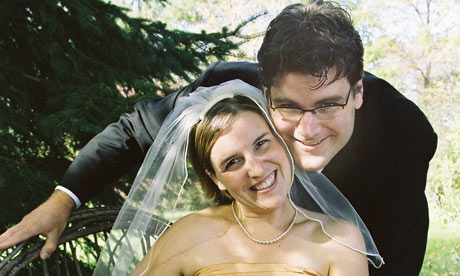
Shannon Moroney and her husband Jason

Shannon Moroney and her husband Jason: ‘It was as though the sergeant were talking about someone else – someone I didn’t know’

I was writing a thank-you card for a wedding gift when I heard the knock at my hotel room door. It was 8 November 2005. I was away from home, at a conference. When I opened the door, I expected to see my colleagues inviting me to breakfast. Instead, I saw a police uniform.

  1. The Stranger Inside: The True Story of the Woman Who Married a Sex Offender
  2. by Shannon Moroney
  3. Buy it from the Guardian bookshop
  1. Tell us what you think: Star-rate and review this book

“Are you Shannon Moroney?” he asked. “I’m here about your husband. Are you Jason Staples’s wife?”

His question flustered me. It was our one‑month wedding anniversary and I wasn’t used to being called a “wife”. But I nodded.

“I’m here about your husband, Jason. He was arrested last night, charged with sexual assault.”

I felt my body go numb. The officer continued. “I understand your husband called the police himself.”

He handed me a slip of paper with the phone number of the police station and said I should call right away. Then, quietly, he said, “I think you’d better expect that it was full rape.”

My stomach flipped. I felt like I was going to be sick. How was this possible? Less than two hours earlier, I had been lying in bed feeling so happy – I’d just had my 30th birthday, then our beautiful wedding and honeymoon. The night before, I had told Jason I thought I might be pregnant. “That would be great,” he said. “We’ll take a test when you get home.” We had planned a celebratory dinner to mark our first month as husband and wife.

My heart pounding, I called the number the officer had given me. “I’m not able to tell you very much right now except that yesterday afternoon, at about 4.30, Jason assaulted two women at the store where he works. After some time, he took them to your home.” I couldn’t believe what I was hearing. It was as though he were talking about someone else – someone I didn’t know. The sergeant continued, “Shannon, you need to prepare yourself. This is very serious. Your husband is facing many charges.”

My mind was racing. “Were the victims the two women who worked there?” I asked.

“No, they were customers. We don’t think he knew them.”

“Are they all right?”

“They are at the hospital being treated and they are expected to recover fully. I can’t really tell you anything else until you get here.”

“But how could he take them to our house? He rides his bike to work and…”

“He rented a van around six or seven o’clock… Jason drove back to the store to pick up the women and take them to your house. He called from a pay phone down the street to ask for help at 10.50 last night, and we were able to apprehend him there.”

“Where is he now?”

“Here, downstairs in a cell. You need to come directly to the station. You can’t go home, Shannon. Your house is going to be searched. Will you be all right to drive?”

“I’m going to call my parents and I’m sure they will come with me.”

“We’ll be here, waiting.”

I hung up the phone and stood for a moment. How could this be true? I’d just been told that the assaults had taken place around 4.30 in the afternoon, and Jason had called the police at 10.50 at night. But I had spoken to him just before that, around 10.20. That’s when I’d told him I thought I might be pregnant. The two women must have been there in our house while we were speaking.

As I waited for my parents to arrive, I got changed and noticed I was bleeding. A feeling of tremendous loss welled up inside.

I met Jason volunteering at a local restaurant for low-income customers in February 2003. Jason was the assistant co-ordinator and head cook. He was tall, had an easy smile and everyone liked him. He seemed articulate and well-educated; I was into pottery at the time and he told me he loved to draw. During my second shift, he gave me a little card. Jason had drawn a caricature of himself in blue pen and next to it written his name, phone number, email address and the words, “Available for pottery viewing, tea and chatting.”

I was excited and nervous before our first date. We had made small talk for less than five minutes before Jason said, “There’s something I need to tell you before we get to know each other more: I was in prison for 10 years. I’m on parole with a life sentence.”

Just a few months after his 18th birthday, in January 1988, he had been convicted of second‑degree murder. Still at school, in part‑time employment, Jason had been living with a roommate found by his mother – a friend of a friend. The roommate was a 38-year-old woman. She and Jason developed a sexual relationship, but he described their living situation as stressful. I had a hard time imagining a mother leaving her teenage son to live with an older, single woman he didn’t know.

On the day of the murder, Jason had been visiting his grandmother but needed to go home to take a shower before meeting up with friends later that night. When he got back home, his roommate turned down his sexual advances and they got into an argument. Wanting to end the conflict, Jason went into the bathroom to have a shower.

His roommate followed, yelling, “I’m going to tell your mother what’s really going on here!”

Jason struggled for the right words to explain to me his overwhelming need to gain control over the situation. “I only remember wanting her to stop screaming at me, struggling to the ground and striking her head against the bathroom floor until she stopped.” He said that he wasn’t aware of what he was doing until it was over.

I realised that I was holding my breath. Jason looked down and shook his head. When he looked up, his face wore a baffled expression. It was as though he still couldn’t believe it.

“I was found criminally responsible, which of course I completely agreed with,” Jason added.

“Had you ever been violent before?” I asked.

“No, never. I don’t know how I was capable of it. I’ve never been able to explain it; I only know that I’ll never do it again.”

I was surprised to find my heart going out to him. What I was hearing was horrible, but I worked as a school guidance counsellor and I pictured some of my 18-year-old students, with their varying levels of insecurity and vastly diverse home lives. I couldn’t yet visualise Jason’s upbringing, nor could I grasp the contrast between our lives in 1988. I would have been 12 when he’d committed this crime. I was living happily in the suburbs with my supportive, loving family.

Jason was hoping to achieve full parole status in the near future, which would mean the freedom to live completely on his own. His grandmother had died five years into his sentence, and his mother lived on a disability pension and suffered from severe bipolar disorder. Jason made no complaints about his upbringing. “She did the best she could,” he said of his mother. His father had died when he was six.

Jason paintingThe second time they met, Jason gave Shannon a card: ‘Available for pottery viewing, tea and chatting’As I got to know Jason, I was struck by how normal he seemed. There was no way that I would have known he’d been institutionalised for a decade, save for the fact that his music knowledge seemed to skip the 90s and he had a terrible sense of direction. I met his parole officer and psychologist, both of whom told me his crime was a one-off incident. He had been a model inmate and they weren’t concerned he would ever offend again. Jason made me laugh, listen, think; I could tell him anything that was on my mind and he would understand. We got together for dinner, movies, hikes at a local conservation area. I loved being with him. Over time, I began to feel that I could move toward accepting Jason as he was now, including his past – but could I take on this burden? After several weeks of dating, I told Jason I wanted to take a break. He said he was in love with me, but he understood. It didn’t take me long to realise that I was happier with Jason than I’d been in any other relationship. We bought a little house, pulled everything apart and rebuilt it. I got a job as a guidance counsellor at the local school and Jason enrolled in a drawing and painting programme, finishing with straight As. He began working on his portfolio and in the meantime got a part-time job at a health-food store to help pay the bills. We told my parents and closest friends about Jason’s past, but they loved him anyway. They respected his honesty and sense of responsibility as I did, and they could see how happy we were with each other. Now my parents had to hear exactly what he had done.

At the police station, a sergeant explained to us that a customer had entered the store where Jason worked. “Jason took her at knifepoint to a back room where he bound her with duct tape and then sexually assaulted her,” he said. I started to cry in horror and humiliation. So did my parents.

Another customer came into the store then and Jason held her at knifepoint as well. She struggled until he overpowered her by choking her to unconsciousness. At some point she was also sexually assaulted. Then Jason rented the van, returned to the store and brought the women to our house. Waves of revulsion hit me. I imagined the victims, their pain and terror. My parents and I listened in stunned silence. One of us finally formed the question we were all thinking: “How are the women?”

The sergeant took a breath. “They are alive,” he said.

They were alive? Did that mean they had come close to death? I began sobbing inconsolably. The sergeant continued. “The women were very brave. It could easily have become a double murder… My understanding is that they talked with Jason during the assault and tried to reason with him when they were at your house. He was talking about killing himself.”

Later that day, a female officer called Nora told me that Jason had confessed to surreptitiously filming people, including me, going to the bathroom in our home on several occasions over an unknown period of time. For reasons yet to be understood, Jason had put the videotapes in the van before calling the police, so now they were in evidence. Soon they would need me to come into the police station to watch the videos and identify the victims.

Nora told me in more detail what had happened that day, and I told her that I’d spoken to Jason on the phone at 10.20. She seemed surprised to hear this. Later, she and several other officers would insist that it was my phone call that prompted him to get help for the women, but I was never sure about that. I believed it was only part of the reason. The women themselves played a huge role in rehumanising him. Maybe our house, too, played a part. There, Jason was surrounded by our life: photos, grocery lists, the walls we had painted together. There must have been some reason why he chose to go home instead of anywhere else.

At one point during the interview, Nora paused and looked at my hand. “Do you and Jason have matching wedding rings?”

I nodded, caught off guard by her observation. What did it matter?

“He wasn’t wearing his ring yesterday, you know,” she said. Her tone seemed smug, almost defiant.

I didn’t know how to respond. Was she thinking he’d taken off his wedding ring yesterday because he planned to go out and rape two women? Jason always took his ring off in the shower, and that is where I later found it. Was the officer insinuating that I was a fool, naively playing my new role as bride while my husband lurked, a pervert looking for his prey? Worse, did she think I had known something in advance – or had even been a part of Jason’s deviant life?

Nora’s questioning didn’t stop there. “Do you know that the average cycle of a sex offender is seven years?” I shook my head blankly while she continued. “Jason has been out in the community for seven years.”

Should I have known this? No one had ever mentioned anything like this to me – not Jason’s parole officers nor his psychologists. And why would they? Until last night, Jason had never been considered a sex offender. There was nothing in our personal lives together that suggested Jason could be anything other than a caring, kind and fully reformed human being. Still, I thought I could hear blame in Nora’s voice, as though I, too, had done something wrong. How could Jason have done this to me? How could he have betrayed our vows and left me here to be scrutinised?

The last thing Nora said was that at the end of Jason’s statement, he had told the detective he never wanted to see his wife again. She said he had written me a note.

“What does the note say?” I asked Nora, desperate for any clue about Jason’s state of mind.

“I don’t know – it’s still at your house. It will be taken into evidence during the search and I can tell you then, if you want.”

The Jason who’d been presented to me was not a man I’d ever met. He wasn’t even the 18-year-old I’d tried to envision so many times and whom I’d come to accept as the correctional system’s “best guy”, someone who would never again pose a threat of violence. He was now a rapist.

While I was with Nora, my parents had made a number of phone calls, including one to some friends who invited us to stay. These were the same friends who had hosted our wedding, but gathered there with friends and family that night, it felt like a wake – as if Jason had been killed in a sudden accident. I recounted everything that the police had told me. When I finished, my dad responded in a broken voice, “I just know something must have happened to Jason when he was a little boy… I love him like my own son.”

Shannon (left) with her siblings, mum and dadShannon (left) with her siblings, mum and dad. ‘I love him like my own son,’ said her dad after Jason’s arrestOver the following weeks, my body developed a cycle to cope with the shock: 30 minutes of really hard crying, easing off into numbness for an hour or so during which I couldn’t really move but my mind would start to gain momentum. Then I would begin talking to a family member or friend, trying to figure things out – until this search for answers reached an almost manic state.

At night, my mind created a film strip of all the violence and it circled continuously. When I managed to fall asleep, those images became violent nightmares. I would often wake up screaming or gasping for air. Sometimes, upon first waking, I would be graced with one split second when I didn’t remember, and then it would all hit me again, a crushing wave.

I had a vast network of friends, family and colleagues, and most were trying to get in touch to see how I was. Where was Jason? What state was he in? What had happened? How were the victims? Suddenly, I was a crime reporter instead of a bride. Most people expressed feelings of shock and concern for everyone affected. But soon enough, others began to express anger and rejection, even judging me and my family. They seemed to think that our love for Jason meant we felt nothing for his victims. Yet when I pictured the Jason I knew in his cell, I imagined he must be suffering and I wanted to be with him.

Less than a week after I’d found out, I visited Jason in prison for the first time. He came through the door on the other side of the room – face down, drawn and grim. He looked up, our eyes met and we both began crying uncontrollably. “I’m sorry, I’m sorry,” he kept saying.

“Jason,” I said, “the police told me you said that you never wanted to see me again – why did you say that?”

The expression on his face changed from sorrow to confusion, and after a moment he said softly, “No, Shanny. I said, ‘My wife never has to see me again.'” I felt a pulse of relief. It was something to hold on to.

Jason went on to confess that he had been gorging himself on pornography over the weekend while I was away, and had gone to see a very violent movie. He said he’d become addicted to pornography while he was in prison, but he’d been too ashamed to tell me. The voyeurism was new in the last few months. He explained that he had always known something was wrong with him, but had convinced himself he was in control of whatever it was, experiencing long periods of time when he was “unplugged” from his demons. Recently, the addictive behaviours had been building again, though he couldn’t explain exactly why.

“Why didn’t you tell me?” I asked. I felt repulsed, but also helpless and betrayed.

“I’m sorry. I was so afraid. I wanted to keep you out of it; to protect you from it. I thought it would go away.”

Jason had given a full confession that matched the victims’ statements. He would plead guilty. The days went by quickly as I completed task after task in the aftermath of his crimes. At night, when I could no longer make phone calls to lawyers or help agencies, I searched for information that would help me understand. I banished my maternity books to my nightstand. Instead, I read psychiatric journal articles about sexual deviance, men who murder and rape, and adult survivors of childhood abuse and neglect, still suspecting something had happened to Jason that might help explain his acts of violence. Later, he told me he had endured physical and sexual violence at the hands of his mother, her boyfriend and his late grandfather. And that, at 18, when he was at a detention centre, he had been gang‑raped.

I once asked Jason if he thought his early life experiences were related to what he did to the women that day. He said he didn’t know, but they were definitely not an excuse. I had no idea what would happen to my relationship with Jason over time, but as long as I felt right in myself about supporting him and being in touch, I would continue. I visited Jason almost every week for months. I always cried for several minutes in the parking lot before I was able to drive home.

I continued to be plagued by nightmares, insomnia, anxiety and flashbacks. I worried incessantly about the victims, but was helpless to do anything for them. I was easily agitated and had no outlet for my anger when it surfaced. I had lost my job as a result of Jason’s actions and I could no longer even afford my TV bill. I was desperately lonely. Seeing people in town would elicit either a warm embrace or a cold stare – many days, I couldn’t take the chance.

On 15 May 2008, Jason was declared a dangerous offender and sentenced to an “indeterminate period in a penitentiary”. Everyone around me seemed to expect that I would feel relieved that the court process was over, but instead I felt drained and empty. On the one-year anniversary of Jason’s sentencing, in May 2009, our divorce was finalised. I’d decided it would be best to lump two sad anniversaries together, rather than tarnish another day on the calendar.

I began speaking out about my experiences and volunteering for Peacebuilders International, making space for victims to tell their stories and have their needs addressed. At a party, on Valentine’s Day 2010, I was introduced to a man called Mike and, on my 36th birthday, in September 2011, we learned we were expecting a baby. Two weeks later, we went for an ultrasound. “There are two. I see two heartbeats!” Mike exclaimed. The technician smiled and confirmed: we were expecting twins.

Telling my story has made me feel that what I went through wasn’t for nothing. I heard from the mothers, fathers, grandparents, sisters and brothers of people who had committed crimes and were serving time. They had lived with the same shame and loss that I knew; the same disappointment, confusion, sadness and stigma. I have opened myself up to renewed criticism and judgment at times, too. The harshest critiques came from those who could not get past the fact that I had married Jason knowing about his past. But we don’t live in a black-and-white world; issues of crime and justice are never simple. I will never condone Jason’s violent or harmful acts, nor can I plaster a simple term like “monster” on an individual. Knowing what I know, I don’t have that luxury

06 How to Plot Your Takeover (1969) an homage

How to Plot Your Takeover

August 21, 1969

E.J. Hobsbawm

Coup d’Etat, a Practical Handbook
by Edward Luttwack
Knopf, 209 pp., $4.95

Ever since Machiavelli intelligent observes have exploited one of the most effective stylistic devices of nonfiction, the contrast between the official versions and the realities of politics. It is an effective device for three reasons: because it is easy (all one has to do is use one’s eyes), because political reality is notoriously at variance with the moral, constitutional or legalistic claptrap which surrounds political actions, and because, more surprisingly, the public can still be readily shocked by pointing this out. Mr. Luttwack is obviously an intelligent and excellently informed observer. One suspects that, like Machiavelli himself, he enjoys truth not only because it is true but also because it shocks the naïve. He has therefore laid out his very able little book on the coup d’état as a manual for potential putschists.

In a way this is a pity, for it both diverts attention from the real interest of the work and somewhat biases his argument. Though it will no doubt be recommended reading in courses organized by the CIA or other bodies with an interest in the quick and efficient overthrow of inconvenient governments, it will not tell experts in the field—and in many countries these include every army and police officer from lieutenant upwards—much that they do not already know and practice, except perhaps to apply some economic rationality to post-coup repression (see the useful Appendix A). Plotters with a literary turn of mind may also benefit from the author’s concise, devastating, and very funny analysis of the different types of communiqué announcing that the country is about to be saved. But on the whole Luttwack’s information, which has shock value in London or Washington, is common knowledge in Buenos Aires, Damascus, or even Paris, where people’s reaction to the appearance of armored cars at streetcorners is based on experience. Those who are most likely to make coups patently don’t need Mr. Luttwack to tell them how.

Who are they? Coup d’Etat makes it clear, and its author knows, that they belong to a rather restricted group, since coups are made by armed forces and practically never by anyone else. This imposes both political and technical limitations which exclude most of us. In spite of Mr. Luttwack’s suggestion to the contrary, coups are not politically neutral. Though officers—and therefore coups—can occasionally favor the Left, the circumstances when they do so are comparatively rare, and not by any means universal even in the underdeveloped world. Unfortunately the author omits to discuss these conditions. The general bias of both officers and coups is in the opposite direction. “Bonapartism” normally tends to be a political move to the conservative side, or at best a corporative self-assertion of the armed forces as a special economic and professional pressure group within the status quo.

Social revolutionary regimes, keenly aware of this ever since the days of Napoleon I, have therefore always (at any rate up to Mao Tse-tung) been the firmest supporters of civilian revolutions and civilian supremacy in politics; even to the point of sacrificing the powerful publicity value of successful generals, to which presidential elections in the USA and elsewhere have long borne witness. The ideal role of the army in classical social revolutions is negative: it ought at the crucial moment to refuse to obey the old regime and after that preferably disintegrate. The Left which puts its trust in progressive soldiers (as in Cuba in the days of the young Batista, and up to 1964 in Brazil) has been more often than not disappointed. Even genuinely red armies are traditionally viewed with caution. When revolutionary regimes need marshals, they have in the past preferred to put civilian party leaders into uniform.

The technical limitation on prospective organizers of coups is, that relatively few people are in a position to subvert the required group of officers. (Non-coms are less promising, and the subversion of troops produces not coups but revolutions.) About the only civilians who can do so are already in government—the country’s own or that of some dominant or influential foreign power, or that of some vast international corporation which can occupy an analogous position in relation to a poor and backward state. Such people can organize a coup comparatively simply and rather effectively, and perhaps for this reason the process is too uninteresting to detain Mr. Luttwack, though it has probably produced more actual coups than any other. Also, of course, it offers little scope for the native self-made coup-leader unless he has first got to the top in his country’s politics.

Anyone else who tries must, as the author shows convincingly, be on such terms of powerful solidarity with his potential recruits as to be able to rely on their discretion even if they refuse to join him. The best way to get on such terms with them is a) to be an officer and b) to share with the other potential plotters some strong emotional bond such as belonging to the same family, tribe, sect (generally a minority sect), ritual brotherhood etc., or the comradeship of a regiment, military academy, club or even of ideology. Of course in countries with a long tradition of coups all officers will consider plans for one as potentially successful, and will therefore hesitate to disclose them. Once, as in the classical Iberian pronunciamento, the tacit convention has been established that men on the losing side will not be seriously penalized (after all, they might be on the winning side some day), the risks of committing oneself to an uncertain adventure are further diminished.

Still, the number of those in any country who can set out to plan a coup with any hope of success is almost as limited as the number of those who can become important bankers. The rest of us had better stick to different kinds of political activity.

But if we can dismiss Coup d’Etat as a manual for plotters, we can appreciate it as a contribution to the study of the structure of political power. A coup is a game with three players (we omit the dominant foreign power or corporation which may hold an effective veto—or the trump cards). These are the armed forces which can make it, the politicians and bureaucracy whose readiness to accept it makes it possible, and the political forces, official or unofficial, which can check or checkmate it. For the success of a coup depends essentially on the passivity of the existing state apparatus and the people. If either or both resist it may still win, but not as a coup. The Franco regime failed as a military putsch, but won after a civil war. Mr. Luttwack has some very interesting things to say about each of these three.

He is probably at his best on the professional soldiers, members of that curious esoteric world which has so little contact with the civilian world, and works in such different ways. The non-professional soldier, the conscript or temporary officer, or in most cases the policeman, however heavily armed, tends to react much more like the civilians to whom he will return or among whom he operates. Separated from the rest of society by a life consisting (in peacetime) of fancydress, instruction and practice, games and boredom, organized on the assumption that their members at all levels are generally rather stupid and always expendable, held together by the increasingly anomalous values of bravery, honor, contempt for and suspicion of civilians, professional armies tend almost by definition to ideological eccentricity.

As Mr. Luttwack rightly reminds us, the politics of officers’ corps are frequently quite different from those of their civilian masters, generally being both more reactionary and more romantic. They are, moreover, untrained and unaccustomed to cope with unusual situations, and therefore naturally seek to assimilate them to usual ones. As the author does not fail to note, one of the most convenient mechanisms for explaining away unusual situations is to see them as just another example of the mess politicians are always making. The situation of professional officers is indeed paradoxical: it combines collective power and individual unimportance. After thirty-five years Germany has not yet quite recovered from the transfer of a few hundred scientists from German to foreign laboratories and universities. Yet time and again armies have actually had their effectiveness improved by the mass emigration, expulsion or other elimination of their senior officers—so much so that one is tempted to believe that few wars can be won unless the military leadership is first purged. But the political power of scientists is negligible, whereas in the right circumstances a half-dozen colonels can overthrow a government.

Bureaucracies have been more written about, and most of us have more continuous experience of them. So Mr. Luttwack’s observations on this subject will probably bring the pleasure of recognition rather than that of illumination. Still, two of his points are always worth remembering. The first is that the only methods that have ever been discovered for controlling the Parkinsonian tendency of bureaucracies, public or private, to grow into infinity, are themselves bureaucratic. One such method consists of setting up another department “which fulfills its instincts by opposing the growth of all other bureaucratic organizations,” a role usually played by the financial bureaucracy; another relies on each empire-building department to do its best to keep its potential rivals in check.

The second observation is that bureaucracies are essentially Hobbesian institutions, which cannot be relied on to defend existing regimes once they suspect that the victory of a new regime is probable. This applies to the police as much as to all other parts of the state apparatus, though with some qualifications. However, Mr. Luttwack fails to note that this does not make them politically neutral. Neither army nor police opposed any resistance to the overthrow of Fascism in Italy, but as recent events in that country demonstrate, the persistence of the apparatus of the Fascist era makes the solution of fundamental problems in post-Fascist Italy almost impossible. Marx’s observations that revolutions cannot simply “lay hold of the readymade state machinery and wield it for its own purposes,” however anxious it may be to be taken over, makes even more sense today than it did in 1872.

Lastly, Mr. Luttwack’s comments on political organizations and movements are original and instructive. Essentially, he argues, we must distinguish between movements geared for real action and those which have settled down to symbolic action such as the organization of voting, the ritual of institutionalized bargaining, or verbal political conflict. Faced with a coup d’état the British Labour Party would be certain, the British Trade Union Congress nearly certain, to do nothing, though the National Union of Students might take to the streets, however ineffectively. On the other hand the major Italian trade union federation, linked with a Communist Party, with a long tradition of political strikes and, what is more important, of liberation from Fascism by direct mass action, could not be relied on to remain passive. Neither could insurrectionary parties, though of course many once insurrectionary organizations have either turned into machines (i.e. distributors of favors and jobs). Or, like some Communist Parties, they may have allowed long political stability to atrophy their capacity for rapid action. Also, insurrectionary parties have the disadvantages as well as the advantages of centralization: once decapitated, they drastically and very rapidly lose their effectiveness.

So far as the special case of coups d’états is concerned, the distinction between political movements which move and those which don’t is sufficient. For in the most favorable case a coup can be defeated by any sign of organized resistance, which immediately reveals the weaknesses of the bid for power, and may also give time for the rest of the armed and civilian apparatus to decide that there is no cause to change sides. In much less favorable cases it may still confront a weak, uncertain, or patchily established new regime with effective resistance. But the interest of Mr. Luttwack’s observations is far wider than this. We are living in a period when various forms of direct action in politics are once again becoming significant in the developed countries. In these countries both the official doctrines of politics and the practical know-how of people in public affairs exclude the politics of extra-legal power. The old have forgotten that governments can be overthrown, or dismissed the possibility from their minds, the young merely believe that they can, but have no idea how. In these circumstances any work which realistically discusses the seizure of power as an operation is particularly helpful.

Mr. Luttwack’s little book should therefore be immensely useful in bringing up to date the political education of all age groups. Students of international affairs, and especially the Middle East, about which the author appears to know a great deal, will also appreciate his remarkably good information. He can be read with pleasure, both for his dead-pan style and above all because he demonstrates that big problems can be adequately treated in short books, if the writer uses words to express thoughts rather than as a substitute for them.

06 Bill Moyers Calls Out Book Censorship

Bill Moyers Calls Out Book Censorship

Wed, 09/26/2012 – 15:49 — nperez

Award-winning broadcast journalist Bill Moyers discusses book banning and the harms of censorship in a new video essay to commemorate the 30th anniversary of Banned Books Week. Banned Books Week is an annual event sponsored by the American Library Association (ALA) that recognizes the importance of the freedom to read. Both Bill and Judith Davidson Moyers were named Honorary Co-Chairs of this year’s celebration, September 30-October 6.

In his essay titled “The Bane of Banned Books,” Moyers talks about how libraries provided his first opportunity to indulge his love of reading and learning, and shares his dismay over efforts to remove books from schools and libraries in modern times.

Moyers will also discuss book censorship and Banned Books Week, among other topics, in a “Live Chat with Bill Moyers” on Monday, Oct. 1 at 3 p.m. ET. The live chat can be found online. To participate in the chat, comments and questions can be left on the site or via Twitter @BillMoyers.

Collaborating with his wife and creative partner, Judith Moyers, for more than 25 years, Bill Moyers has produced groundbreaking TV series and specials including “NOW with Bill Moyers,” “Bill Moyers Journal” and “Joseph Campbell and the Power of Myth.” His latest book, “Bill Moyers Journal: The Conversation Continues,” was released last year. Judith Moyers is the Executive Editor of “Moyers & Company” and CEO of Public Affairs Television, their independent production company. For more information about Bill and Judith Moyers, please visit http://www.BillMoyers.com.

Moyers’s video is part of the ALA’s Virtual Read Out, an advocacy campaign to spotlight the harms of censorship of books in schools and libraries, and provide an opportunity for readers to demonstrate their support for the First Amendment by reading from their favorite banned or challenged books. Joining Moyers on the Virtual Read-Out this year are highly acclaimed and/or frequently challenged authors Dori Hillstad Butler, Stephen Chbosky, Sara Paretsky, Carmen Tafolla and many more. More than 800 videos were uploaded during Banned Books Week last year including posts from highly acclaimed and/or frequently challenged authors Jay Asher, Judy Blume, Chris Crutcher, Whoopi Goldberg, Lauren Myracle and many more. Check out the Banned Books Week YouTube channel to view the videos.

For more information about book challenges and bans in your area, or a listing of Banned Books Week events sponsored by libraries, bookstores and other groups throughout the United States, visit ala.org/bbooks.


06 Twelfth Night and Original Practices by Dr Farah Karim-Cooper

Thursday, 20 September 2012

Twelfth Night and Original Practices by Dr Farah Karim-Cooper

+ SHARE THIS PAGE

Twelfth Night and Original Practices by Dr Farah Karim-Cooper

Mark Rylance as Olivia in Twelfth Night 2002 (c) John Tramper

This September the Globe revisits its award-winning Twelfth Night of 2002 with an all-male ‘Original Practices’ production, exploring clothing, music, dance and settings possible in the Globe of around 1601.

To further explain what  you can expect from an ‘Original Practices’ production  we spoke to our  Head of Courses & Research, Dr Farah Karim-Cooper who has undertaken research on this subject, with a focus on cosmetics in Shakespearean and Renaissance Drama. 

When Mark Rylance was the Artistic Director at Shakespeare’s Globe, he and his artistic team pioneered a visually and aurally stunning artistic movement which has been termed ‘original practices’. But what is ‘original practices’, you may ask? The idea behind this type of production (as Mark Rylance, Jenny Tiramani, Claire van Kampen and Tim Carroll outline in Shakespeare’s Globe: A Theatrical Experiment published in 2008) is to recreate or replicate as many performance practices of Shakespeare’s company who occupied the original Globe.

What did these experiments consist of? To quote Rylance, three important principles were always in mind: research, materials and craft. The Globe’s artistic team from 1997-2005 attempted to put on at least one ‘original practices’ production a season, the rest were designed and performed with a ‘free hand’ as Rylance puts it. The reason for doing ‘original practices’ was simple: experimentation. Once the most accurate reconstruction of the Globe Theatre had been built, it was important to experiment with it and to experiment boldly. The same principles that were applied to the reconstruction of the Globe, in terms of ‘authenticity’ were also applied to ‘original practices’, as Jenny Tiramani informs us:

‘Materials, construction, shape, iconography and context: these simple principles – principles directly inspired by the building of the theatre itself—eventually offered a framework within which we could work on the costumes, properties and hangings for what became known as our ‘original practices’ productions’ (Shakespeare’s Globe: A Theatrical Experiment, p. 62).

Unprecedented was the painstaking research that went into each production to re-create the clothing the actors might have worn, the music that audiences might have heard in the space and the ways actors might have engaged with audiences. What was really fascinating about these productions was to see how the clothes related to the architecture and the painted iconography of the tiring house facade or scenic frons; and to hear original instruments in a polygonal theatre built entirely of oak, lime plaster and thatch. One of the results of this experiment in performance was a re-interpretation of the visual and acoustic worlds of early modern England. Audiences were used to seeing Hollywood versions of this period that played it fairly fast and loose with historical detail and most theatre productions that were designed with the Renaissance in mind, had not typically been designed with as much historical accuracy as these early Globe productions.

Perhaps the most controversial element of a complete ‘original practices’ production (as some OP productions were only OP with regard to clothing or music and some of these consisted of mixed-gender casts) was the choice to cast only male actors. In an industry where female parts are difficult to come by, this seemed, in some views, to be a huge step backwards. All-male casting was of course an original theatre practice in Shakespeare’s time, as women were not permitted to perform on the commercial stages in London, at least not until the Restoration in 1660.

Mark Rylance preparing to play Olivia, 2002 (c) John Tramper

Mark Rylance preparing to play Olivia, 2002 (c) John Tramper

From a historical point of view, it seemed perfectly reasonable for Rylance and his team to make this choice. To offset any negative response, and perhaps fuelled by his own passion for theatrical experimentation, Rylance offered up a couple of seasons in which there would be all-female casts. I am so glad he did, but not just because it offset negative reactions, but because as a woman and a feminist, it allowed me to see more clearly the complexities of the sexual politics of the plays (e.g. Much Ado About Nothing, 2004, and The Taming of the Shrew, 2003). It was an extraordinary experiment in itself. Since then, many scholars and students have written about these productions as bold, promoting feminist readings of Shakespeare and incredibly innovative.

Not every original practice could be tested: no intervals, no directors, three day rehearsals, working with parts/cue scripts. But these are all experiments that are indeed happening elsewhere in England, Europe and North America (The American Shakespeare Center, Shakespeare and the Queens Men Project, to name only two). What Rylance did was to respond to the great building Sam Wanamaker had entrusted him with, and this required him and the theatre practitioners who worked with Rylance to deliver Shakespearean performance in a radically different way. The chief result was the emergence of a new kind of ‘original’ Shakespeare, a Shakespeare that was simultaneously new and old—like the Globe itself.


Dr Farah Karim-Cooper
Head of Courses & Research, Shakespeare’s Globe

05 At the Democratic Convention, the Words Being Used

http://www.nytimes.com/interactive/2012/09/04/us/politics/democratic-convention-words.html?nl=todaysheadlines&emc=edit_th_20120906


UPDATED September 5, 2012

At the Democratic Convention, the Words Being Used

A look at how often speakers at the Democratic National Convention have used certain words and phrases so far, based on an analysis of transcripts from the Federal News Service.
Obama
507 mentions
Biden
25
Romney
241
Ryan
78
Economy
158
Forward
90
Education
91
Together
98
Tough
40
Families
177
Jobs
235
Values
70
Future
83
Energy
51
God
66
Choice
60
Health
111
Medicare
74
Obamacare
11
Decisions
34
Work
343 mentions
Women
213
Middle class
145
American dream
57
bin Laden
8
Auto industry
33
Four years
52
Seniors
33
Fair
35
Fight
111
Community
30
War
35
Leadership
91
Opportunity
89
Affordable
51
Responsibility
40
Oil / Gas
26
Business
104
We will
49
Tax
103
Vote
75
Invest
71
Arithmetic
6
PACs
3
Wall Street
10
Level playing field
8
Equal pay for equal work
12
A sampling of excerpts from the speeches
Includes speeches through Wednesday night.
Click on a highlighted word or bubble to show related excerpts.
Barbara Lee
U.S. representative, California

It embodies the values we hold dear as Democrats and as Americans, and it sets forth our great president’s vision for our future where, together, we will reignite the American dream for all — (scattered applause) — because the reality is — the reality is, four years ago, the American dream had slipped out of reach for too many, and it had turned into a nightmare for millions.

(Boos.) They’ll end the fundamental guarantee of Medicare that people have earned. (Boos.) They’ll let Wall Street write its own rules again.

(Boos.) And they’ll allow insurance companies to once again deny health care to working families and interfere with women’s health care decisions. (Boos.) President Obama and Democrats will not let this happen.

We can’t afford to go back or abandon the change we fought so hard for. We will not turn the clock back. We can move forward.

Kamala D. Harris
Attorney general of California

That ideal is written into our laws, the rules of the road that create a level playing field in this country. Those are the rules I became attorney general to uphold.

(Cheers, applause.) We need to move forward. President Obama will fight for working families. He will fight to level the economic playing field and fight to give every American the same fair shot my family had.

Lincoln Chafee
Governor of Rhode Island

Mitt Romney and Paul Ryan want to return us to the fantasy land of never having to pay for things we buy, such as education, medical research, good roads and clean energy.

(Cheers, applause.) The values I have spoken of tonight aren’t Republican or Democratic values.

Nydia Velázquez
U.S. representative, New York

From doubling funding for Pell Grant scholarships to make college more affordable — (cheers) — to Head Start, to community college, to job training.

President Obama has worked with us for the last four years, in good times and in tough times. And now we are going to work with the president.

Steny Hoyer
House minority whip

In January 2009, when the president took office, our economy lost more than 800,000 jobs in January. This past July, the economy added 172,000 jobs — the 29th consecutive month of private sector job gains.

Dannel P. Malloy
Governor of Connecticut

And all of these cuts, all of these cuts are being done so Romney can give a tax cut of $265,000 to your average millionaire.

JOHN PEREZ

On our nation’s campuses — on our nation’s campuses, students are seeking the opportunity to go to college, earn a degree and find a career that will unleash their full potential.

Maya Soetoro-Ng
Sister of Barack Obama

Making sure everyone in America has a chance to make it like he did — that’s what my wonderful big brother is all about, and that’s what he’ll do for four more years. (Cheers, applause.)

Joyce Beatty
Congressional candidate, Ohio

Moving America forward means higher education that’s affordable and prepares our young people to lead in the 21st century economy. Moving America forward means affordable health care and equal pay for equal work.

Cory Booker
Mayor of Newark

We choose American might and American muscle, standing strong on the bedrock of the American ideal, a strong and empowered and ever-expanding and ever-growing middle class. (Cheers, applause.) Our platform emphasizes that a vibrant, free and fair market is essential to economic growth.

Elizabeth Warren
Senate candidate, Massachusetts

Billionaires pay lower tax rates than their secretaries. And Wall Street CEOs — the same ones who wrecked our economy and destroyed millions of jobs — still strut around Congress, no shame, demanding favors and acting like we should thank them.

— and I can’t believe I have to say this in 2012 — a country where women get equal pay for equal work. (Cheers, applause.) He believes in a country where everyone is held accountable, where no one can steal your purse on Main Street our your pension on Wall Street.

(Cheers, applause.) The passage teaches about God in each of us, that we are bound to each other and we are called to act — not to sit, not to wait, but to act — all of us together.

Chris Van Hollen
U.S. representative, Maryland

Then he said President Obama doesn’t have a plan to reduce the deficit.

Is it brave to reward companies that ship jobs overseas while cutting education here at home?

Judy Chu
U.S. representative, California

And though there were moments when it seemed hard to make ends meet, he still supported his family. It was my grandfather’s dream for his family, his children and grandchildren that kept him working for 15 hours a day, seven days a week for decades.

But then I realized that this was the perfect phrase. “Obamacare” is perfect because President Obama cares.

Jimmy Carter
39th president of the United States

In just four short years, he has worked to avert economic calamity, brought a dignified end to the ill-conceived war in Iraq and signed into law historic health care reform — a dream that was already decades overdue when I called for it at this convention 36 years ago.

Overseas, President Obama has restored the reputation of the United States within the world community. Dialogue and collaboration are once again possible, with the return of a spirit of trust and goodwill to our foreign policy.

Sandra Fluke
Lawyer and women’s rights activist

It’s an America in which no one can charge us more than men for the exact same health insurance — (cheers, applause.) — in which no one can deny us affordable access to the cancer screenings that could save our lives — (cheers, applause)

Nancy Pelosi
House minority leader

It’s just plain wrong. When you go to the vote — polls, vote for Medicare. Vote for President Obama. (Cheers, applause.)

Steve Westly
Former state controller and chief financial officer of California

It’s about championing the exports of our entrepreneurs, because good jobs at home come from selling more goods abroad.

Deval Patrick
Governor of Massachusetts

— quit waiting for pundits or polls or super PACs to tell us who the next president or senator or congressman is going to be.

Kathleen Sebelius
U.S. secretary of Health and Human Services

If you’re self-employed, between jobs or can’t get insurance through work, you’ll have access to affordable health insurance, as good as Congressman Paul Ryan’s.

Tim Kaine
Former governor of Virginia

We went from 25 months of job loss to 28 straight months of private sector job growth. The auto industry is back, and manufacturers are hiring again.

R.T. Rybak
Mayor of Minneapolis

The auto industry was on the brink of collapse. He faced two wars. Bin Laden was at large, and so much more. Barack Obama got to work.

He added years to Medicare’s life by cutting waste and fraud and abuse while preserving services for seniors. He got us out of Iraq. He got bin Laden.

(Cheers, applause.) We come together in tough times. You know, back on that cold day in Buffalo Center, I was so incredibly proud to support a man named Barack Obama.

Bill Clinton
42nd president of the United States

(Cheers, applause.) And I am especially grateful to Michelle Obama and to Joe Biden for supporting those military families while their loved ones were overseas — (cheers, applause)

It’s a heck of a lot better. It passes the arithmetic test, and far more important, it passes the values test.

BILL BUTCHER

We don’t care about the daily back-and-forth of campaigns. We just want leaders in Washington who believe in us and make it a little easier for us to succeed.

For these last four years I’ve had a president who’s on my side. He cut small business taxes 18 times. He kept middle-class taxes low, which meant more customers for my product.

Ken Salazar
U.S. secretary of the Interior

Under President Obama’s leadership, the United States moved forward with an all-of-the-above energy strategy. Oil and gas, nuclear, hydro, biofuels, wind, geothermal, solar — all of it.

On November 6th, America faces a choice: return to the Romney- Ryan ticket of failed policies of the past, or move ahead with a smart, focused and determined president who understands that America always does best when it harnesses the winds of innovation and change.

Jim Sinegal
Co-Founder of Costco

These are the building blocks of President Obama’s plan for the future, and that’s why I’m proud to stand with him.

Austin Ligon
Co-Founder of CarMax Inc.

As a businessman, I’ll tell you, Mitt Romney just doesn’t get it. (Cheers, applause.)

Barbara A. Mikulski
U.S. senator, Maryland

(Cheers, applause.) The 77 cents that women make for every dollar men earn makes a real difference to our families — families stretching to make every dollar count.

Pedro R. Pierluisi
Resident commissioner of Puerto Rico

And I know that Barack Obama will stand with my people the day they choose to have the same rights and responsibilities as their fellow American citizens. (Cheers, applause.)

Julián Castro
Mayor of San Antonio

President Obama got it done. (Cheers, applause.) He made a historic investment to lift our nation’s public schools and expanded Pell Grants so that more young people can afford college.

Rosa DeLauro
U.S. representative, Connecticut

— yes! Yes! (Cheers, applause.) The Fair Pay Act, to give victims of pay discrimination their day in court, was the first bill that President Barack Obama signed into law.

Charlie Gonzalez
U.S. representative, Texas

They belong to the American who is willing to invest his or her energy to better themselves, to provide for their families and to build a brighter future.

By MIKE BOSTOCK, SHAN CARTER and MATTHEW ERICSON |

Send Feedback

Source: Federal News Service

05 At the Republican Convention, the Words Being Used

http://www.nytimes.com/interactive/2012/08/28/us/politics/convention-word-counts.html?nl=todaysheadlines&emc=edit_th_20120829

Para ver la imagen interactiva ir a la direción anterior.

UPDATED August 28, 2012

At the Republican Convention, the Words Being Used

A look at how often speakers at the Republican National Convention have used certain words and phrases so far, based on an analysis of transcripts from the Federal News Service.
American dream

36

Business

136 mentions

Change

28

Common sense

8

Debt

34

Economy

58

Energy

11

Fail

22

Families

81 mentions

Fiscal

14

Free enterprise

13

God

62 mentions

Health care

11

Medicare

10

Obamacare

15

Hope

24

Immigration

15

Jobs

130 mentions

Leadership

72 mentions

Limited government

5

Make ends meet

2

Middle class

4

Obama

94 mentions

Opportunity

27

Red tape

7

Regulation

24

Romney

148 mentions

Ryan

61 mentions

Spending

28

Success

65 mentions

Tax

48

Unemployment

33

Values

13

War

12

Work

142 mentions
A sampling of excerpts from the speeches
Includes speeches through 10 PM ET, Tuesday.
Click on a highlighted word or bubble to show related excerpts.
Chris Christie
Governor of New Jersey

They believe that the American people don’t want to hear the truth about the extent of our fiscal difficulties. They believe the American people need to be coddled by big government.

Mitt Romney will tell us the hard truths we need to hear to end the debacle of putting the world’s greatest health care system in the hands of federal bureaucrats and putting those bureaucrats between an American citizen and her doctor.

We’re taking our country back because we are the great-grandchildren of men and women who broke their backs in the name of American ingenuity, the grandchildren of the “Greatest Generation,” the sons and daughters of immigrants, the brothers and sisters of everyday heroes, the neighbors of entrepreneurs and firefighters, teachers and farmers, veterans and factory workers and everyone in between who shows up, not just on the big days or the good days, but on the bad days and the hard days, each and every day, all 365 of them.

John Kasich
Governor of Ohio

But ladies and gentlemen, when over those last four years we had lost 400,000 jobs, in Ohio today we have grown new jobs by 122,000 — 122,000 families better off. But you know what? The wind is in our face.

(Cheers, applause.) And we could not raise taxes because we were not competitive. So you know how we did it?

Reince Priebus
Republican National Committee chairman

We’ll fight for a future where government spends tax dollars wisely, where every American has the education needed to succeed, where energy is affordable because America is energy-independent and where the middle class is growing because incomes are rising.

(Cheers, applause.) We’ll fight for a future where government spends tax dollars wisely, where every American has the education needed to succeed, where energy is affordable because America is energy-independent and where the middle class is growing because incomes are rising.

Tim Griffin
U.S. Representative, Arkansas

We can’t afford to rehire someone with a bankrupt vision and a failed plan. This moment in history is too big.

You know, like a man who’s lost but won’t ask for directions, President Obama has no earthly idea how to solve this country’s problems.

Jack Gilchrist
Small business owner

Sure, there are things which I cannot control, but running the business is my job and mine alone. I blame no one else for the challenges we face.

John Archer
U.S. Representative, Iowa

We’ll talk about protecting Medicare and Social Security for this generation of seniors and the next.

Sher Valenzuela
Candidate for Lt. Gov. of Delaware

Last April, I was privileged to be one of a dozen business leaders in Delaware to sit down and meet with Mitt Romney.

Mary Fallin
Governor of Oklahoma

The president believes that government is responsible for our successes, and that’s why his solution to everything is more government, bigger spending, more regulation, more bureaucratic programs like “Obamacare.” And he says his plans are working, but look at the results: 42 months of unemployment, over 8 percent; 23 million Americans out of work, underemployed or even just not even looking for work anymore; a nation that is threatened by nearly $16 trillion of debt; and families that are feeling pinched, not just by a bad economy, but by a president that promised hope and change, and left many Americans with no hope and just change in their pockets. President Obama believes that the power of big government is the key to American success.

(Cheers, applause.) Mitt Romney understands that it’s free enterprise and hard work, not the government, that has made the United States the envy of the world.

Gosh. The president believes that government is responsible for our successes, and that’s why his solution to everything is more government, bigger spending, more regulation, more bureaucratic programs like “Obamacare.” And he says his plans are working, but look at the results: 42 months of unemployment, over 8 percent; 23 million Americans out of work, underemployed or even just not even looking for work anymore; a nation that is threatened by nearly $16 trillion of debt; and families that are feeling pinched, not just by a bad economy, but by a president that promised hope and change, and left many Americans with no hope and just change in their pockets.

Rick Berg
U.S. Representative, North Dakota

We understand, just like Mitt Romney and Paul Ryan, that small businesses are the engines of our economy. So we get government out of their way and let entrepreneurs build their businesses.

— Mitt Romney shares an understanding of the solutions North Dakota has developed, and is prepared to lead where President Obama has left broken promises. With Mitt Romney and Paul Ryan in the White House and a Republican majority in the Senate, our North Dakota way can be the American way.

Alex Schriver
College Republican National Committee chairman

Our country is nearly $16 trillion in debt, a burden placed on our generation’s back.

Dan Benishek
U.S. Representative, Michigan

We have nearly $16 trillion in debt. It’s hard for Michigan families to make ends meet. But I believe we can fix these problems by staying true to what has always made this country great — individual liberty, free enterprise and limited government.

Richard Hudson
Congressional candidate, North Carolina

And you can’t support Barack Obama if you want to stop the spending, stop the waste, stop the assault on our values. (Cheers, applause.) Thank you.

Barbara Comstock
State Representative, Virginia

(Applause.) They have a common-sense plan to reward and unleash our entrepreneurs and innovators and put America back to work.

I am so pleased that this week, the American people are again meeting this man, this leader and seeing what so many of us who have been privileged to know and work with him over the years have always seen.

Bev Gray
Small business owner

Our first nine months we had one client — a client who waited six months to pay us. We sustained our business by (cashing ?) into our personal credit cards and borrowing against our home.

Governor Romney knows and, more importantly, appreciates what it takes to build a successful business. And that’s why I’m supporting Mitt Romney.

Bob McDonnell
Governor of Virginia

(Cheers, applause.) This election is about restoring the American dream. That dream led my grandfather, a poor farm boy, to leave Ireland a hundred years ago and come to Ellis Island to begin his journey of freedom in America.

We will lift up and grow the middle class. We will celebrate job creators again. We will restore that great American dream that led my grandfather here from Ireland a hundred years ago.

Kelly Ayotte
U.S. Senator, New Hampshire

He’ll fight to lower and simplify taxes. He’ll work to eliminate job-killing red tape. And he will roll back “Obamacare” starting on day one.

They want to focus on their business; the Obama administration wants to bury them with rules, regulations and red tape. (Boos.) From the National Labor Relations Board to the Department of Labor to the EPA, under this administration, the regulations are up and the job creation is down.

Ted Cruz
Senate candidate, Texas

Can we repeal “Obamacare“?

And yet this administration has waged a war on small businesses, a war that is costing our future and our opportunity.

Artur Davis
U.S. Representative, Alabama

(Cheers, applause.) And of course — and of course we know that opportunity lies outside the reach of some of our people.

David Rouzer
Congressional candidate, North Carolina

This election will determine whether we continue on the path of more spending, more debt and economic disaster, or whether we choose real solutions and return to the basic principles of free enterprise and limited government. Now, at this critical hour in our nation’s history, we can’t afford to re-elect Barack Obama, a man who believes that America is the problem.

Sean Duffy
U.S. Representative, Wisconsin

Let’s get it done. God bless. (Cheers, applause.)

By MIKE BOSTOCK and MATTHEW ERICSON |

Send Feedback

Source: Federal News Service

05 El espíritu de las islas – Lawrence Durrell

El espíritu de las islas

Se cumplen cien años del nacimiento del autor de El cuarteto de Alejandría. Una nueva edición recoge en un volumen sus libros sobre Corfú, Rodas y Chipre

Lawrence Durrell en su casa de la Provenza, en 1961 / Elliott Erwitt / Magnun Photos

El cuarteto de Alejandría y El quinteto de Aviñón no estarían completos sin la trilogía de las islas. Efectivamente, el mapa de la creación de Lawrence Durrell (1912-1990) se extiende más allá de los límites de sus dos mayores obras de ficción y tiene en el conjunto que componen sus tres grandes libros literarios sobre islas —consagrados respectivamente a Corfú, Rodas y Chipre— un maravilloso archipiélago, al que ahora se puede arribar en un solo viaje al haberlos reunido en un único volumen la editorial Edhasa bajo el título de Trilogía mediterránea (2012). Una estupenda opción de lectura para los felices mortales que aún estén de vacaciones y una cita de indudable melancolía para los que ya hayan (hayamos) regresado de alguna isla similar. Es cierto que en puridad deberíamos añadir al lote insular de Larry Carrusel siciliano (Noguer, 1990) y Las islas griegas (Folio, 2004), aunque el primero escapa al ámbito griego y el segundo, publicado originalmente en 1978, es una obra mucho más tardía que las otras tres y utiliza parte del material de las anteriores.

La celda de Próspero (Corfú), Reflexiones sobre una Venus marina (Rodas) y Limones amargos (Chipre) son mucho más que libros de viajes, aunque compartan algunos elementos de ese género literario. El escritor y amigo de Durrell, Richard Aldington, al que, por cierto, debemos la primera (1955) biografía desmitificadora de otro Lawrence, el de Arabia, decía muy acertadamente que había que considerar más bien esas tres obras insulares como “foreign-residence books”, libros de extranjero residente. Durrell, hombre que pasó su vida abroad —en outremer, que diría él—, hizo mucho más que viajar allí: pasó una larga temporada en cada una de las islas, periodos muy importantes de su vida personal —con diferentes mujeres, amistades y circunstancias— y creativa, y adquirió viviendas en todas ellas, como la vieja y encantadora casa de pescadores (Casa Blanca) en Kalamai, al norte de Corfú; la pequeña Villa Cleóbulo, junto a un cementerio turco en Rodas, oculta por adelfas y rododendros, o la gran casa hecha una ruina, pero de tan indescriptibles vistas en el pueblo de Bellpais, bajo el castillo de Buffavento, en Chipre, y cuya rocambolesca compra es motivo de algunas páginas divertidísimas antes de que el libro derive hacia la tragedia.

La trilogía reivindica una cierta “islomanía”, como la define encantadoramente uno de los personajes de Reflexiones sobre una Venus marina, una “dolencia del espíritu” que afecta a las personas para las que las islas resultan irresistibles. “El simple conocimiento de que se encuentran en una isla, un pequeño mundo rodeado por el mar, las llena de una indescriptible embriaguez”. Los islómanos natos serían (seríamos) descendientes directos de los atlantes, “y durante toda su vida isleña su subconsciente tiende hacia la perdida Atlántida”…

En conjunto, estos libros de islas, llenos de caiques, pescadores de esponjas, baños en aguas frescas y transparentes de un mar “que enreda y desenreda sus mallas de plata”, veladas con gentes inolvidables fumando cigarrillos Papastratos, y una vida en general frugal, pero bien regada de vinos, licores y amistades, componen una mezcla bastante completa de los intereses de Durrell. Hay historia, atravesada de mito, leyenda y folclore (destruye nidos de golondrinas y te saldrán pecas, advierten en Rodas); hay formidables descripciones de paisajes, llenas de un lirismo arrebatador que entra a menudo en el campo de la poesía (y algunos de los poemas de Durrell brotan directamente de ahí); hay una riquísima galería de personajes y sucesos, en cuyo dibujo puede verse cómo el autor tiende a ficcionalizarlos (incluso a sí mismo), como si fueran embriones de sujetos y episodios de sus novelas; hay política (la ocupación aliada en Rodas al final de la II Guerra Mundial, el conflicto de la enosis, la aspirada unión con Grecia de la comunidad grecochipriota, en Chipre, que nos muestran a Durrell en su avatar de funcionario del Foreign Office), y hay aventura (de la que le gustaba a Larry, de película de espías), incluso pistola en mano…

El autor de El cuarteto de Alejandría

La deriva continúa hacia lo narrativo, la metaliteratura, la atracción por los elementos oscuros, heterodoxos, sexuales y morbosos; la experimentación con el lenguaje, incluidas metáforas audaces hasta la torsión, y la fijación con la amistad y la recurrente pérdida de los amigos, la despedida, la desbandada y el recuerdo (“qué lejano viaje podemos desear a los amigos / para mimar su ausencia con nuestro recuerdo”, decía en unos versos), son otros aspectos comunes a este apasionante abanico durrelliano.

Por encima de todo está la obsesión característica de Durrell por definir el sprit of the place, el alma del lugar, algo que siempre consigue tan magistralmente, sea en Alejandría o la Provenza. Y está Grecia, por supuesto, el gran amor del escritor (que en cambio —nadie es perfecto— difícilmente soportaba Egipto).

La celda de Próspero, que arranca con una frase memorable —“En algún sitio entre Calabria y Corfú comienza realmente el azul” (con perdón de Formentera)—, describe la estancia de Durrell y su mujer entonces, Nancy Myers, en la isla jónica, a la que la familia Durrell, la madre viuda, Louisa, y sus cuatro hijos (Larry, obsesionado con la literatura, Leslie, obsesionado con las armas, Margo, obsesionada con los chicos y Gerald, obsesionado con los bichos, como sintetiza simpáticamente el biógrafo de Lawrence Durrell, Gordon Bowker —Trough the dark labyrinth, Pimlico, 1996—), habían llegado en 1935 desde una Inglaterra que les parecía gris y opresiva. Lo era especialmente en comparación con la India que había sido su hogar (el padre era ingeniero de los ferrocarriles del Raj) y donde Larry había nacido (Jalunda —actual Jalandhar—, 1912). El libro, en el que encontramos a Larry y “N.” en su propia casa, apartados de la encantadora, pero ruidosa familia y de la afición de Gerald a la fauna más indeseable, es delicioso aunque inevitablemente elegiaco, pues está escrito desde una “abrumadora distancia”: desde Alejandría, donde Durrell se instaló tras huir por los pelos de Grecia a raíz de la invasión alemana en 1941 y cuando pensaba que jamás regresaría a la brillante y diminuta motita de aquella Arcadia jónica. La añoranza es contagiosa y más cuando Durrell recuerda los baños desnudo en el mar del verano o el hallazgo en la playa de una tortuga muerta de pesados párpados amarillos. De la vecina Léucade, otra de las jónicas, yo conservo la imagen muy durrelliana de una mantarraya gigante extendida sobre la parte trasera de la baqueteada camioneta del capitán Spyros (un saludo desde aquí, ¡yasas kapitanos!), rezumando mar y misterio a partes iguales.

Los enamorados de las islas, irredentos islómanos, serían para el escritor los nostálgicos descendientes de los atlantes

Hay muchas otras cosas maravillosas en el libro: la pesca de una anguila fiera como Satanás y de pulpos con tridente, las historias de náyades y del dios Pan, o la de san Espiridón, a cuya momia le puedes besar las zapatillas; la búsqueda del lugar de encuentro entre Ulises y Nausica, las conversaciones con el conde D. (al tío del cual, acreditado vampiro —vrikolakas—, hubo que exhumarlo y clavarle una estaca para acallar habladurías). El conde sostiene que Shakespeare pensaba en Corfú al describir la isla de La tempestad. En los silencios de las veladas se oyen las naranjas que caen de los árboles en el huerto, y a los búhos. Aprenderemos que es peligroso echar la siesta bajo un ciprés o que la cama es lo único que no te pueden embargar por deudas en Corfú. Entre los personajes, Mateo, el dinamitero de peces que, como un Stauffenberg de la pesca, ha perdido un ojo y media mano; Zarian, el poeta armenio, y Theodore Stephanides, el médico erudito que introdujo a Larry en la poesía de Palamas y Kavafis y al que Durrell consideraba uno de sus “tíos” espirituales.

Encontramos en este y los otros dos libros un interés por la anécdota histórica culta y las etimologías similar al de los hermosos libros griegos de Patrick Leigh Fermor, buen amigo de Durrell. Paddy, al que Larry conoció durante la guerra en El Cairo, aparece, retratado con cariño y admiración (Durrell al cabo no fue soldado, ni héroe), en diferentes episodios en Rodas y Chipre, acompañado por su camarada de armas Xan Fielding y por la que el escritor denomina La Diosa del Trigo (Joan Eyres-Monsell, la futura esposa de Paddy). Juntos, Larry, Paddy y Xan, exploran los conductos subterráneos de agua infestados de murciélagos de la antigua Cameirus, en Rodas, aventura origen del poema de Durrell The lost cities.

Hay momentos de una poesía sublime, y de indecible tristeza en Corfú; otros jocosos. Como cuando al mostrársele a un viejo campesino el cuarto de baño del conde —con sus elementos tan insólitos en la isla, carente de retretes—, el hombre se persigna y dice: “Ruego a Dios, mi Señor, que nunca lo necesite”. O cuando un pastor, al interrogársele por la costumbre local de tener una oveja favorita, a la que se engalana, responde: “Desde cualquier punto de vista son superiores a nuestras esposas. Pero sobre todo no hablan”.

La famosa Casa Blanca de Lawrence Durrell en Kalamai, al norte de Corfú

Rodas es una isla que conozco bien y por eso he de confesar una debilidad especial por Reflexiones sobre una Venus marina, aunque, claro, la Rodas de la inmediata posguerra, sin gatos, con prisioneros alemanes, alambradas, el aeródromo con sus aviones chamuscados y aún con playas minadas está muy lejos de mi experiencia turística. Por supuesto no debe haber nada mejor, históricamente hablando, que ver Rodas después de un asedio. Durrell llega desde Egipto (“hervidero de sabandijas”) como oficial de información de las fuerzas de ocupación británicas tras cuatro años de exilio de su querida Grecia. Inmediatamente entra en un éxtasis Egeo con el reencuentro y se pone bajo la advocación de la Venus de Rodas, la bellísima estatua de la diosa pescada en el mar y genius loci de la isla (que tiene su alter ego en Afrodita, la pobre puta que vende sus favores en los muelles). Pronto se le une su nuevo amor, E. (Eve Cohen, la inspiración para el personaje de Justine). De nuevo el azul, los amigos que vienen y van, el aire con aroma a mandarinas. A Durrell, anonadado de dicha, le cautivan las famosas puestas de sol rodias que provocan la ignición de las murallas y los minaretes entre hibiscos y adelfas, y no deja de escribir sobre el legendario Coloso —“tardes enteras zambulléndonos en el puerto en busca de fragmentos”— . En Rodas los niños pasean con una cigarra atada como un juguete ruidoso. El periódico que lanza Durrell tiene sumo éxito por la falta de papel para envolver los pescados. “Eso sitúa al periodismo en su perspectiva correcta”, anota.

Me ha sorprendido encontrar un párrafo que sugiere el inicio de Justine: “Otra vez el siroco: un gigantesco oleaje coronado de espuma blanca que corre hacia Anatolia y estalla en pedazos contra los promontorios hundidos en humo”. Y en Limones amargos, unas consideraciones sobre los templarios y Bafomet que apuntan al Quinteto.

A Chipre llega Durrell en 1953 tras cinco años de destierro griego, esta vez en Serbia. Las primeras noticias sobre la isla son desalentadoras. Árida y la gente bebe demasiado. “¿Y las mujeres?”, pregunta Larry. “Muy feas. Feas de veras”. No es extraño que sus primeros pensamientos vayan hacia Bragadino, el defensor de Famagusta, desollado por los turcos y cuya piel rellena de paja fue paseada por el Mediterráneo en el palo de una galeaza. No obstante Durrell acaba disfrutando en Chipre, donde se reencuentra con las encantadoras moeurs mediterráneas. Para evitar una pelea con un macizo chipriota —pese a que Larry era buen boxeador—, se inventa que su hermano ha muerto combatiendo junto a los griegos contra los pánzer nazis en las Termópilas (1941). Luego, al llegar de visita Gerald, se produce la natural sorpresa. El libro deriva hacia lo político y el thriller al irse agriando la situación en la isla por la aparición del terrorismo del EOKA. Durrell se encuentra en la difícil coyuntura de ser funcionario británico entre sus amigos griegos encabronados. El escritor acaba pareciendo un personaje de Graham Greene: le llaman vecino, pero lleva pistola. Cuando se marcha por piernas, le prometen que le cuidarán la casa y le despiden con el proverbio chipriota: “El vino del año próximo es el más dulce”.

Trilogía mediterránea. Lawrence Durrell. Traducción de Floreal Mazía. Edhasa. Barcelona, 2012. 768 páginas. 28,50 euros.

05 The world’s most difficult books: how many have you read?

The world’s most difficult books: how many have you read?

Literary website the Millions claims to have identified the toughest books ever written. How many of its top 10 have you read, and which others might be on your list

American novelist Djuna Barnes
‘Fantastically convoluted’ … Nightwood by Djuna Barnes. Photograph: Oscar White/Corbis

Two and a half. I have read two and a half of the 10 most difficult books ever written, as selected by Emily Colette Wilkinson and Garth Risk Hallberg of the Millionsafter three years’ research.

The pair started their quest to identify the toughest books out there back in 2009, looking for “books that are hard to read for their length, or their syntax and style, or their structural and generic strangeness, or their odd experimental techniques, or their abstraction”. And I salute them for it – they’re entirely aware that people are going to quibble, and use their choices to imply intellectual superiority: “There will, doubtless, be those readers who look scornfully on our choices (“Psh. These aren’t that hard, you’re just not smart enough to read them.”) – and they don’t care.

Anyway, they’ve now picked the most difficult of the most difficult – the 10 “literary Mount Everests waiting out there for you to climb, should you be so bold” – and have laid them out for discussion at Publishers Weekly.

The titles?
Nightwood by Djuna Barnes;
A Tale of a Tub by Jonathan Swift;
The Phenomenology of Spirit by GF Hegel;
To the Lighthouse by Virginia Woolf;
Clarissa, or, The History of a Young Lady by Samuel Richardson;
Finnegans Wake by James Joyce;
Being and Time by Martin Heidegger;
The Faerie Queene by Edmund Spenser;
The Making of Americans by Gertrude Stein;
and Women and Men by Joseph McElroy.

There are a few other books I might include in the list – Thomas Pynchon’s Gravity’s Rainbow, David Foster Wallace’s Infinite Jest, and if I was going to choose Woolf, I’d go for The Waves. But of what they’ve come up with, I’ve managed To the Lighthouse – which I loved, and didn’t actually think was all that difficult, but perhaps I was missing something – Clarissa, over a significant period of time, and half of The Faerie Queen. I’m not going to count A Tale of a Tub, because although I did read (most of) it at university, it was in that hopeless, 19-year-old fashion that means I can’t really remember it, apart from a few quotes – “books, the children of the brain” – learned for exams.

I’m not sure, if I’m honest, that I’m going to increase this measly total. Will I ever tackle Finnegans Wake? It’s unlikely, although I like the suggestion of reading 25 pages a day out loud in an Irish accent: “You’ll be maddened, you’ll be moved, and you’ll be done in about four weeks.” I’m tempted by Nightwood, particularly glancing at the fantastically convoluted, bonkers start here. So maybe I can get it up to three and a half.

How about you? Is there anyone out there who has read all 10, and has thus, in the words of Publishers Weekly, ascended “to the being immediately above homo sapiens”?


Y si no sabes inglés posiblemete no conozcas más que a Hegel o Heidegger que siendo los únicos no ingleses también habrás tenido que leer o en su original alemán o en una traducción.

Curioso que en el mundo del ibro en Inglaterra sólo existan autores ingleses, pero luego se atreven a hablar de los libros más difíciles del mundo por que han incluído a dos alemanes.


salut

vicente

05 UK citizenship test: Could you pass on British history?

UK citizenship test: Could you pass on British history?

Try this example of what the new section of the UK citizenship test on British History might look like. Tell us how you get on in our open thread

Questions taken from Red Squirrel Publishing, who publish a range of British citizenship test study guides

The government has announced a major update to the citizenship test taken by all those who want to settle in Britain with a UK passport.

The new section will cover a range of British history, from the Roman conquest of Britain to the modern day after the home secretary, Theresa May, called for a more “patriotic guide” for migrants wishing to settle in the UK, with less emphasis on knowing human rights and reading the gas meter.

Would your knowledge of British History stand up to the test? These sample questions were created by Red Squirrel Publishing, who publish a range of British citizenship test study guides, and are drawn from the official study materials published by the Home Office, A Journey to Citizenship.

Note: Although the new official test questions have not been published, the quiz below is an independent representation of the new questions that a would-be citizen could be asked. You need more than 10 answers to pass the test, and in real life if you fail you’d have to wait a week and pay £50 to take another one (and hand over your British passport in the meantime…). Let us know how you’ve done in our open thread.

Map of Great Britain Surveyed by John Speed and Engraved by Jocodus Hondius

A 1616 map of Great Britain engraved by Jocodus Hondius. Do you know your British history? Photograph: Philip Spruyt/ Stapleton Collection/Corbis

  1. 1. Which countries make up ‘Great Britain’?

     SATELLITE IMAGE OF GREAT BRITAIN south

  2. 2. Which tribal leader fought against the Roman conquest of Britain?
  3. 3. Which king defeated the Vikings at the end of the 9th Century?

    Vikings silhoutted against a bonfire

  4. 4. When did the English first impose English laws on Wales and the Welsh?
  5. 5. Which famous document eventually led to the formation of Parliament in England?
  6. 6. Under the feudal system, what were people who worked the land called?
  7. 7. What proportion of the population of the UK were killed by the Black Death?
  8. 8. Which kinds of skilled workers did not come to England in large numbers from Europe in the Middle Ages?
  9. 9. Which monarch established the Church of England?
  10. 10. Which monarch was defeated by Oliver Cromwell in the English Civil War?

    Oliver Cromwell

  11. 11. Who was the first Prime Minister?

    Jubilee: Decorated Number 10 Downing Street

  12. 12. When did potato famine in Ireland lead to great numbers of deaths owing to starvation and disease?
  13. 13. Which were the first colonies granted independence by the Labour Party in 1947?
  14. 14. Which British Prime Minister oversaw the introduction of the National Health Service?

    A NHS nurse with a stethoscope

  15. 15. What does NATO stand for?

05 El fantástico y profético universo de Blake llega a CaixaForum

El fantástico y profético universo de Blake llega a CaixaForum

Coproducida con la Tate, ‘Visiones en el arte británico’ muestra cien obras del pintor y poeta

ver fotogalería ‘La noche del júbilo de Enitharmon’.

Con solo diez años, William Blake (1757-1827) tomaba lecciones de dibujo y grabado. Las clases le hicieron conocer muy pronto los rudimentos técnicos a la vez que creaba un mundo imaginativo y profético, fuera de toda norma. Con el inconformismo como principio y con el gótico y Miguel Ángel como fuentes de inspiración, a los 16 años dio a conocer su filosofía mística a través de grabados y acuarelas, nunca el óleo. Convencido de que el mundo visible de los sentidos es un mero envoltorio de la realidad espiritual, Blake es dueño de una vasta obra en la que sus sorprendentes composiciones dan rienda suelta a sus poemas visuales. Mitologías y delirios, temas religiosos y sociales protagonizan la deslumbrante retrospectiva que hasta el 21 de octubre se puede ver en el CaixaForum coproducida con la Tate Britain, propietarios de la mayor parte del legado de Blake, la exposición de adentra también en la obra de algunos de los artistas influidos por su obra.

Alison Smith, conservadora de la Tate Britain, ha organizado la exposición destacando la vigencia y actualidad de uno de los artistas más queridos entre los ingleses y más admirados en todo el mundo. “Producto del romanticismo, es nuestro equivalente a Goya. Como él, a Blake le tocó vivir la guerra y sufrir las desigualdades sociales. Solo al final de su vida su arte empezó a ser reconocido, pero su estela sigue inspirando a generaciones de artistas”.

Entre 1788 y 1806 se condensa una producción poética que alimenta sus trabajos plásticos

Entre 1788 y 1806 se condensa una producción poética que alimenta sus trabajos plásticos. En sus poemas mezcla las tradiciones religiosas con las ideas esotéricas o la pura literatura. La vigencia de su obra es tal que el poema Jerusalén se sigue vendiendo cada año durante diferentes eventos culturales como los proms. Revolucionario y muy adelantado a su tiempo, en el frontispicio de Visiones de las hijas de Albión (1793), se pueden ver tres figuras encadenadas entre sí que aparecen amarradas a las rocas de Inglaterra, detalla la comisaria de la exposición, que añade que la obra libertad sexual y la igualdad entre hombres y mujeres.

Sus cuadros son, en general, obras de pequeño y mediano formato en los que aparecen imágenes de un inconformismo y misticismo inspirado en las visiones que le acompañaron a lo largo de toda su vida. Utilizaba esas visiones para denunciar los vicios del sistema a través de personajes fantásticos o nacidos del antiguo testamento.

La exposición está dividida en ámbitos en los que se desarrollan la mayor parte de los temas que nutren su obra. Empieza con sus primeros trabajos como grabador, sigue con los libros proféticos, los grabados en color, las escenas bíblicas, sus pinturas al temple, el libro de Job, La divina comedia, los Antiguos (los primeros artistas que le adoptaron como maestro), los prerrafaelitas y simbolistas y los neorrománticos ingleses.

05 La traductora de los Simpson

La traductora de los Simpson

15 June, 2012 | 06:00 | Lo escribe 26 comment

Probablemente eres una de las millones de personas que cada día ve, al menos, un capítulo de Los Simpson. Te compadezco si formas parte de la gran masa que arrastra los pies, de bajón, precisamente porque no puede hacerlo. Si estás en uno de estos dos grupos, María José Aguirre de Cárcer es una persona muy importante en tu vida, aunque seguramente te acabas de enterar.

Desde su estreno en España en 1991, María José ha sido la encargada de traducir todos los guiones de Los Simpson, incluida la película y los videojuegos. Así que si te sueles despedir de los sitios con un “Adiós, pringaos” igual que Homer, María José es la culpable, porque cuando Homer habla en inglés… No dice eso.

Pero aunque es una serie muy exigente para un traductor como ahora veremos, María José no solo se ha dedicado a traducir las ocurrencias de los habitantes de Springfield, sino que también ha sido la responsable de la adaptación al román paladino de, entre muchísimas otras, Seinfeld, Lost, Expediente X, Futurama, Sensación de vivir, Melrose Place, Primos Lejanos, Entre Fantasmas, documentales como los de Lonely Planet e innumerables películas.

“La traducción de una serie, a diferencia de un largometraje, debe plantearse como un viaje de largo recorrido”. Para realizar este trabajo, María José ha ido creando un archivo exhaustivo sobre la serie en el que cuenta con glosarios, guiones originales, traducciones, guiones adaptados y definitivos, documentación e información diversa de todo tipo. Un auténtico paraíso para cualquier fanático de la serie estrella de Matt Groening.

La traducción audiovisual no es un negocio sencillo por muchas razones. “Los traductores somos los primeros que trabajamos con un material que más tarde pasará por diversas manos: departamento de producción, ajustador, director y actores, y debemos facilitar la labor a quienes nos siguen. Hay que procurar mantener el mismo ritmo y la misma longitud de frases que el guión original para que encaje con la imagen, lo que no es siempre fácil ya que en castellano necesitamos más palabras que en inglés para decir lo mismo”.

“También es muy importante no perder matices ni referencias. En este capítulo entrarían también los gestos y expresiones. Hay que encontrar la forma de adaptarlos a nuestro idioma”. Decisiones que una vez tomadas al principio de la serie han sido tanto parte de su éxito como algo fundamental que ha dado forma a su personalidad única. “Por ejemplo, el ‘Wow!’ de Homer pasó a ser ‘¡Mosquis!’, pero es ‘¡mola!’ o ‘¡toma!’ si quien habla es Bart o ‘¡guay!’ si es Lisa. ‘Woohoo!’ se convirtió en ‘¡Yuju!’ y ‘D´oh!’ en ‘¡Jo!’”.

La coherencia es algo fundamental en Los Simpson, serie que contiene miles de autorreferencias que incluso son comentadas en muchos casos por los propios personajes. María José también tiene cuidado con eso: “Con la directora de la serie, Ana María Simón, comparto todos mis conocimientos. Si una frase ha aparecido antes, le hago saber en qué episodio se dijo, en qué contexto y cómo se tradujo. También introduzco notas sobre el tono o la intención, que son muy útiles para los actores que tienen que interpretar el texto”.

Otro tema fundamental son las referencias culturales. Todos recordamos algunas series de hace años en las que quizá en un intento para acercarlas al espectador se sustituían las referencias originales de la serie por referencias españolas, dando como resultado, por ejemplo, que un chaval negro de Filadelfia imitase a Chiquito de la Calzada.

“Yo estoy totalmente en contra de esto, además esas sustituciones suelen envejecer muy mal, mi enfoque ha sido siempre el de adaptarlas, acercando el texto al espectador pero manteniéndome fiel al original. Para hacer esto, me pregunto qué función cumple cada referencia para que, aun cambiándola, se alcance el mismo objetivo. Si una frase, por ejemplo, contiene el nombre de una persona de la vida pública estadounidense desconocida en España, lo cambio por otra conocida por un sector más amplio. Por ejemplo, en el episodio 370, Ned Flanders, hablando de los inocentones Rod y Tod, dice:

‘Our last babysitter let them watch Comedy Central! Now Rod makes me check the closet every night for Rita Rudner’

Traducción:

‘La última canguro les dejaba ver la MTV y ahora Rod me obliga a mirar todas las noches debajo de la cama por si está Michael Jackson’

Siempre explico el cambio que he hecho y por qué, y en ocasiones ofrezco más de una alternativa. La directora es siempre la que tiene la última palabra”.

Otra característica muy marcada de la serie es que cada uno de los personajes tiene una forma absolutamente particular de expresarse, cualquier personaje secundario tiene sus muletillas y es fundamental respetarlas. “Me divierte especialmente traducir los diálogos del Señor Burns, buscar frases hechas y exabruptos anacrónicos que se adapten a su forma de ser y que dejen patente que pertenece a otra época. Por ejemplo:

‘¡Es una auténtica sinvergonzonería que las mozas de buen ver se libren con sus coqueteos de las multas por exceso de velocidad!’

También es siempre un reto alcanzar un nuevo nivel de cursilería cada vez que habla Ned Flanders:

‘He preparado galletitas de arroz para nuestros desprogramadorcillos’”.

Lo que nos hemos podido reír. Pero todo tiene que acabar. Los rumores sobre el fin de Los Simpson han sido una constante en los últimos tiempos, sobre todo después de los problemas de renegociación de contratos de los actores americanos que ponen la voz a los personajes.

Finalmente lo han confirmado, se ha llegado a un acuerdo y la temporada 25 será la última de Los Simpson (a la gente que no lo sabía, lo siento, odio ser quien te de la noticia). “Sí, efectivamente, la serie acaba con la temporada 25, me va a dar mucha pena porque mi labor como traductora se ha desarrollado de su mano y les debo mucho a ‘Los Simpson’. También es cierto que veinticinco años son muchos y, antes de que se vea afectada su calidad, es mejor que termine. Entonces, estoy segura de que Matt Groening nos sorprenderá con algo nuevo y original. Pero en fin, siempre nos quedará Futurama”.

“Me siento afortunada de haber podido traducir la serie y de haber tenido ocasión de ir depurando mi traducción con los años. Traducir Los Simpson es un trabajo especialmente laborioso, pero tiene sus contrapartidas. Una de ellas, quizá mi preferida, es la libertad con la que puedo encarar las traducciones gracias al entendimiento que he conseguido tener con la directora de la serie. Poder inventar palabras como ‘fresisuis’ (‘squishee’ en el original) o frases como ‘mutiplícate por cero’ supone un desafío y un importante aliciente”.

“Por otra parte, sigo conservando palabras ideadas por el anterior director de la serie y antigua voz de Homer, Carlos Revilla, como badulaque o mosquis para mantener el estilo y como homenaje a él”. Nunca está de más recordar algunas de las mejores traducciones de María José, mis favoritas: “Espumito MacDuff”, “Idiotasio Z. Bragapompi”, “Me duele la barriga de ganas de quererte”, “El peso específico del Salchichonio” o los “Gambones al vapor”.

¿Me atreveré a decir que Los Simpson en español son más graciosos que en inglés? María José tiene una opinión muy abierta para una persona tan implicada en el sector del doblaje. “Como amante de los idiomas, me gusta la versión original. Desde que tengo cuenta en Filmin, me estoy inflando a ver películas que solamente pueden verse en festivales o salas en V.O.S.E durante un breve espacio de tiempo. Me encantan el cine iraní, el japonés, el danés… Y a fuerza de escuchar, voy reconociendo palabras. No pretendo aprender esos idiomas, pero sí cogerles el aire, acostumbrar mi oído a ellos”.

“Sin embargo, hay series que me gustan más dobladas, por ejemplo ‘Los Soprano’. Me he habituado a sus voces y el trabajo de traducción, adaptación y doblaje me parece fantástico. Con esto quiero decir que una cosa no quita la otra, tanto el doblaje como el subtitulado tienen sus ventajas e inconvenientes. Con el doblaje te puedes concentrar en la imagen y olvidarte de ‘leer’. Por otra parte, las películas subtituladas te permiten disfrutar de las voces originales, pero a veces la labor de síntesis conduce a que te parezca estar leyendo textos tipo telegrama. En resumen, me gustan los buenos doblajes y los buenos subtítulos, aunque lo de ‘buenos’ sea un poco subjetivo. Mis series y películas favoritas, si puedo, las veo en ambas versiones”.

Otro tema polémico cuando se habla del mundo audiovisual es el papel de internet. Está claro que, problemas de piratería aparte, los seguidores de una serie saben cuándo se comienza a emitir en versión original y quieren verla sea como sea, los hábitos de entretenimiento actuales no tienen nada que ver con los de hace diez años. “Se podría hablar mucho sobre este tema. La necesidad de anticiparse a las páginas de descarga ha obligado a la industria del cine a llevar a cabo ‘estrenos mundiales’, cosa que afecta mucho al trabajo de los traductores audiovisuales. Tenemos que traducir versiones preliminares hasta que llega la versión final. De ‘Los Simpson, la película’ llegué a traducir hasta siete versiones”.

“Entiendo que mucha gente quiera ver sus series preferidas en cuanto se estrenan. Los cambios de programación de las cadenas de televisión, a veces repentinos y sin justificar, hacen muy difícil seguir una serie. Por suerte, las cadenas están empezando a reaccionar y ya algunas ofrecen sus principales series en versión ‘streaming’. La gente ha cambiado y ya no quiere sentarse frente al televisor a la espera de que pasen una serie, quiere abrir una página web y elegir lo que quiere ver cuando lo quiere ver”.

—

Foto Home: Wiki Simpsons

05 Suspenso en inglés

Suspenso en inglés

Solo un cuarto de los alumnos españoles domina el idioma al final de la ESO

La comprensión oral es el punto más flaco, según un estudio europeo

Una clase de inglés en un colegio de Madrid. / ÁLVARO GARCÍA

A veces hay que hacer las preguntas obvias, aunque las respuestas sean obvias. ¿Cree usted que hablar idiomas es muy útil? Sí, responden el 88% de los europeos en un Eurobarómetro. ¿Y les resultará a sus hijos útil para su futuro? 98% de asentimiento. Pero del dicho al hecho hay un gran trecho. Menos de la mitad (42%) de los adolescentes de 14 países europeos tienen competencia suficiente en una lengua extranjera, porcentaje que se vuelve a reducir a la mitad (25%) entre los capaces de manejar un segundo idioma. Y los españoles, como siempre, están entre los que más dificultades tienen: solo el 27% de los estudiantes del último curso de la ESO se maneja con independencia en inglés (y son menos, el 24%, si nos fijamos solo en la comprensión oral). Están sin duda muy lejos del 82% de los suecos.

Hace una década, el Consejo Europeo celebrado en Barcelona en marzo de 2002 acordó enseñar a los niños del continente al menos dos lenguas extranjeras desde edad temprana. El primer análisis sobre los progresos, hecho público ayer, revela que queda mucho camino por recorrer.

ampliar foto Fuente: Ministerio de Educación / EL PAÍS

Las cifras reales pueden ser distintas porque, por razones no explicadas, en el estudio solo han participado 14 de los Veintiocho (Croacia se sumará a la UE dentro de un año y está entre los consultados), aunque han sido cotejados 54.000 estudiantes.

Los alumnos españoles no son los peores en el juego multilingüístico —donde menos se habla otra lengua es Hungría (65% de monolingües), Italia (62%), Reino Unido, Portugal (61%) e Irlanda (60%)— pero sí está, sin duda, en el furgón de cola.

“España debe mejorar sus resultados con el inglés, sobre todo en la comprensión oral”, dice el informe. De los tres ámbitos que mide el estudio, el oral es el peor: casi un tercio de los alumnos de 14 años tienen el nivel de competencia más bajo (solo por delante de Francia); en compresión lectora es el 18% y en escritura, el 14%. En la cifra combinada de las tres categorías ofrecida por la Comisión Europea, apenas uno de cada cuatro estudiantes españoles (27%) alcanza a manejar el inglés con comodidad.

¿Por qué a los españoles se les da tan mal los idiomas? El estudio europeo da algunas claves que, aunque apuntan en gran medida a factores externos a la escuela, no eximen a esta de su parte de responsabilidad en los malos datos publicados ayer. El hecho de que el español sea una lengua de una enorme potencia internacional, y, sobre todo, lo poco que dominan el inglés los padres de los alumnos suponen una gran losa para el aprendizaje del idioma, aseguran las profesoras de la Universidad del País Vasco Sara de la Rica y Ainara González en uno de los trabajos que ha encargado el Ministerio de Educación español para analizar el informe. Las académicas comparan los resultados de España con el mejor clasificado en el ranking: Suecia.

Así, contra esos condicionantes externos (el dominio de la lengua por parte de los padres y la potencia internacional del español) de poco parece servir que los alumnos españoles empiecen a estudiar inglés antes (a los tres años frente a los seis o siete en Suecia), que den más horas de clase (unos 50 minutos más a la semana) y que hagan casi el doble de deberes (3,11 horas semanales frente a 1,8 del país escandinavo).

Navarra se coloca casi en la media; Canarias y Andalucía muy por debajo

La otra gran variable que suele explicar las diferencias es el contexto socioeconómico y cultural. Tres comunidades españolas aumentaron la muestra de alumnos en el examen para tener datos propios: Navarra, una de las regiones más ricas, está prácticamente en la media europea, y Canarias y Andalucía, más pobres, aparecen muy por debajo de esa media.

Sin embargo, la escuela tiene también mucho que mejorar. Y no solo porque “los recursos humanos, materiales y financieros” condicionan las diferencias, según el informe elaborado por el ministerio. Sino, además, porque el hecho de que las clases extraescolares de inglés supongan una gran ventaja para quien las toma puede significar que “algo podría estar fallando en la metodología de las aulas españolas, quizá con un enfoque todavía demasiado tradicional”, según De la Rica y González.

“La escuela debe contribuir a articular los contextos de aprendizaje también en el contexto familiar y comunitario”, explica por teléfono el profesor de la Universidad de La Laguna Plácido Bazo. Y pone un ejemplo: “Si le estoy enseñando a mis alumnos en clase de inglés la diferencia entre comida saludable y no saludable, les puedo dar listas de vocabulario para que se lo aprendan, que es lo se suele hacer y así nos va… Pero también puedo pedirles que cuando lleguen a casa abran su nevera y hagan con sus padres la lista de comida sana e insana que contiene; si el padre sabe inglés, le ayuda, si no, pasan un rato divertido. Y al día siguiente en clase comentamos las neveras de todos los demás”, señala.

Las familias tienen un bajo nivel de lenguas, destacan los especialistas

Pero no es todo método, pues otro de los grandes problemas señalados persistentemente es la falta de competencia lingüística de los propios profesores. Si se comparan los docentes de inglés y de francés (de este idioma se examinaron los alumnos españoles como segunda lengua extranjera) resulta que uno de cada cinco docentes de la lengua gala la hablaban ya de pequeños, frente a menos de uno de cada 10 de los maestros de inglés. Un mayor dominio, en general, del idioma que enseñan es una de las explicaciones que dan los especialistas a los resultados de España en francés: un 28% lo maneja con soltura, teniendo en cuenta que es una materia optativa que se estudia muchas menos horas que el inglés y que, de entre 13 países, tan solo superan a España en este otro ranking Bélgica y los Países Bajos.

Hay que tener en cuenta, en todo caso, que el francés fue durante muchos años la lengua extranjera que se enseñaba en las escuelas españolas. Además, es crucial la autoselección del alumnado: el francés es una asignatura optativa a la que suelen apuntarse chavales de familias de mayor nivel socioeconómico y cultural y con mejores notas.

Pero también hay un factor que apunta a la importancia de los recursos en estos tiempos de recortes presupuestarios que están reduciendo significativamente (y lo harán más) las plantillas de profesores y, con ello, la posibilidad de tener aulas con menos estudiantes o desdobles. “Un 79% de los centros de la muestra de francés tienen clases de menos de 25 alumnos, frente a un 56% de los centros de la muestra de inglés”, dicen en uno de los trabajos hechos para el ministerio las profesoras Brindusa Anghel y Maia Güell. Y añaden: “El tamaño de la clase afecta a algunas destrezas (como la comprensión oral), aunque no afecte a otras (como la comprensión escrita)”. Recordemos que, dentro de los malos resultados generales en inglés, el agujero más profundo está en la comprensión oral.

La metodología en la escuela está fallando, según varios académicos

Y esta comprensión oral es la base de todo lo demás, según los especialistas de la Universidad de Santiago de Compostela José Manuel Vez, Esther Martínez y Alfonso Lorenzo. “Quien no comprende o comprende poco, no habla o habla muy poco. La creencia extendida de que los idiomas se aprenden en la escuela o en centros especializados gracias a una buena disciplina de estudio no tiene una correspondencia empírica suficiente”, dicen en su trabajo. Así, centran sus sugerencias en aumentar el contacto de los niños y adolescentes con el inglés a través de los medios de comunicación, sobre todo, la televisión. “Que en los hogares el canal de audio de la TDT se reciba por defecto en versión original y no como ahora, que activa en modo doblaje las películas y las series extranjeras (en un altísimo porcentaje en lengua inglesa)”.

El inglés es la primera lengua extranjera más estudiada y hablada por los europeos (la número uno en 19 de los 25 países en que no es oficial: todos menos Irlanda y Reino Unido) y en inglés respondió ayer a las preguntas la comisaria europea de Educación, la chipriota Androulla Vassiliou. “Seamos realistas: en la UE se elige el inglés, que se está convirtiendo en la lengua franca. Lo que no quiere decir que no haya que promocionar otras lenguas”.

De hecho, este primer estudio sobre competencia lingüística se ha realizado teniendo en cuenta la enseñanza como lengua extranjera de solo cinco idiomas (alemán, español, francés, inglés e italiano) y tomando en consideración los dos más enseñadas en cada país (inglés y francés para España). Tras el imbatible inglés, el francés es estudiado como primera lengua solo en Reino Unido. En Bélgica también lo es como primera alternativa en las regiones neerlandófona y germanófona del país, aunque tenga carácter cooficial.

El paisaje lingüístico se enriquece en el ámbito de las segundas lenguas extranjeras más demandadas, entre las que el alemán se lleva la palma en su calidad de lengua más hablada de Europa (16% de lengua materna) y la influencia que Alemania ejerce sobre el centro y este de Europa. El español es la segunda lengua extranjera más estudiada en Francia y Suecia (que suman entre ambos unos 70 millones de habitantes) mientras que el francés lo es en España, Grecia y Portugal (unos 66 millones). El italiano solo es segunda lengua en Malta.

El sondeo sobre competencia lingüística revela que a la utilidad manifiesta del inglés como lengua franca europea se une su facilidad de aprendizaje, lo que hace que la mitad de quienes lo estudian termine por alcanzar un nivel aceptable de manejo. En el extremo opuesto está el español: solo el 8% de los estudiantes llega a rematar la faena con un control que le permita el manejo autónomo de la lengua de Cervantes.

05 Quiz: were these sex scenes written by a man or a woman?

Quiz: were these sex scenes written by a man or a woman?

Speaking at the Hay festival last week, Martin Amis claimed that women write sex better than men. Can you tell the difference?

WARNING: Contains sexually explicit language

  • guardian.co.uk, Tuesday 12 June 2012 07.37 EDT
  • Couple in bed

    Toe to toe … Do women write better sex scenes than men, as novelist Martin Amis has suggested? Photograph: Mathew Sturtevant/Alamy

    1. 1. Klara turned head to foot, and put her most unmentionable part down on his hard-breathing nose and mouth, and took his old battering ram into her lips. Uncle was now as soft as a coil of excrement. She sucked on him nonetheless with an avidity that could come only from the Evil One – that she knew
    2. 2. Was that her tongue? Was that what they meant when they said flames had tongues? I was hard all right, and then I was sinew, I was a snake, I changed stone to snake in three simple moves, stoke stake snake, then I was a tree whose branches were all budded knots, and what were those felty buds, were they antlers? Were antlers really growing out of both of us? Was my whole front furring over? And were we the same pelt?
    3. 3. She said, “Don’t make me wait, I’ve had enough of that,” and so I kissed the sweaty hollow of her temple and moved my hips forward … She gasped, retreated a little, then raised her hips to meet me. “Sadie? All right?” “Ohmygodyes,” she said and I laughed. She opened her eyes and looked up at me with curiosity and hopefulness. “Is it over, or is there more?”
    4. 4. Almost screaming after five agonizingly pleasurable minutes, I make a grab, to put him, now angrily slapping against both our bellies, inside, but he holds both my arms down, and puts his tongue to my core, like a cat lapping up a dish of cream so as not to miss a single drop. I find myself gripping his ears and tugging at the locks curling over them, beside myself, and a strange animal noise escapes from me as the mounting, Wagnerian crescendo overtakes me. I really do hope at this point that all the Spodders are, as requested, attending the meeting about slug clearance or whatever it is
    5. 5. We made love by our fire, watching the snow shape the entrance to the cave. When I touch her, my fingers don’t question what she is. My body knows who she is. The strange thing about strangers is that they are unknown and known. There is a pattern to her, a shape I understand, a private geometry that numbers mine. She is a maze where I got lost years ago, and now find the way out. She is the missing map. She is the place that I am
    6. 6. She took him by the wrist and moved the base of his hand into her pubic hair until his middle fingertip settled on the no-man’s-land between her ‘front parlour’ and ‘back door’ (those were the quaint, prudish terms of her girlhood)
    7. 7. She felt as though she were melting into a pool of delight, as his hand reached for the soft fur of her mound and then put a finger at the top of her slit, and began to draw circles inside. When he reached the spot that sent bolts of shudders through her, she moaned and arched into them. He went lower, found the entrance to her warm, wet cave and reached inside
    8. 8. No, not everybody did it. But Nicola did it. At a certain point (and she always vowed she wouldn’t, and always knew she would) Nicola tended to redirect her lover’s thrusts, down there in the binary system … She had a thing of readying herself with the third finger of the left hand. The marriage finger. It was appalling, the crassness with which the symbolism suggested itself: the marriage finger, seeking a different ring, in the place whence no babies came
    9. 9. Then they embraced and with their hands caressed each other’s breasts and backs and arms – her skin smooth and creamy and soft as fine silk, his alabaster white and tautly drawn over muscle and bone – and their separate bodies gradually lost their boundaries and merged into a third body, one that contained all their female and male differences and erased all their anatomical contrasts and inversions
    10. 10. His chest was the size of a South American country. A slanting tongue of lamplight lit up his lap and I could see the outline of his large appendage. After agonizing for, oh, about two-fifths of a second, I straddled him on the bed, pinning his arms beside him with all my body weight.”Remember what you said about chastity being curable if caught early enough?”

Sex scenes: who wrote what?

The extracts from our quiz – Are these sex scenes written by a man or a woman? – with the authors’ names revealed

WARNING: Contains sexually explicit language

  • guardian.co.uk, Tuesday 12 June 2012 07.26 EDT
  • Martin Amis

    ‘She always vowed she wouldn’t, and always knew she would’ … Is Martin Amis right about women writing better sex scenes? Photograph: Sahm Dohert/Time Life/Getty

    “Klara turned head to foot, and put her most unmentionable part down on his hard-breathing nose and mouth, and took his old battering ram into her lips. Uncle was now as soft as a coil of excrement. She sucked on him nonetheless with an avidity that could come only from the Evil One – that she knew.”
    Norman Mailer

    “Was that her tongue? Was that what they meant when they said flames had tongues? I was hard all right, and then I was sinew, I was a snake, I changed stone to snake in three simple moves, stoke stake snake, then I was a tree whose branches were all budded knots, and what were those felty buds, were they antlers? Were antlers really growing out of both of us? Was my whole front furring over? And were we the same pelt?”
    Ali Smith

    “She said, ‘Don’t make me wait, I’ve had enough of that,’ and so I kissed the sweaty hollow of her temple and moved my hips forward … She gasped, retreated a little, then raised her hips to meet me. ‘Sadie? All right?’ ‘Ohmygodyes,’ she said and I laughed. She opened her eyes and looked up at me with curiosity and hopefulness. ‘Is it over, or is there more?'”
    Stephen King

    “Almost screaming after five agonizingly pleasurable minutes, I make a grab, to put him, now angrily slapping against both our bellies, inside, but he holds both my arms down, and puts his tongue to my core, like a cat lapping up a dish of cream so as not to miss a single drop. I find myself gripping his ears and tugging at the locks curling over them, beside myself, and a strange animal noise escapes from me as the mounting, Wagnerian crescendo overtakes me. I really do hope at this point that all the Spodders are, as requested, attending the meeting about slug clearance or whatever it is.”
    Rachel Johnson

    “We made love by our fire, watching the snow shape the entrance to the cave. When I touch her, my fingers don’t question what she is. My body knows who she is. The strange thing about strangers is that they are unknown and known. There is a pattern to her, a shape I understand, a private geometry that numbers mine. She is a maze where I got lost years ago, and now find the way out. She is the missing map. She is the place that I am.”
    Jeanette Winterson

    “She took him by the wrist and moved the base of his hand into her pubic hair until his middle fingertip settled on the no-man’s-land between her ‘front parlour’ and ‘back door’ (those were the quaint, prudish terms of her girlhood).”
    David Guterson

    “She felt as though she were melting into a pool of delight, as his hand reached for the soft fur of her mound and then put a finger at the top of her slit, and began to draw circles inside. When he reached the spot that sent bolts of shudders through her, she moaned and arched into them. He went lower, found the entrance to her warm, wet cave and reached inside.”
    Jean M Auel

    “No, not everybody did it. But Nicola did it. At a certain point (and she always vowed she wouldn’t, and always knew she would) Nicola tended to redirect her lover’s thrusts, down there in the binary system … She had a thing of readying herself with the third finger of the left hand. The marriage finger. It was appalling, the crassness with which the symbolism suggested itself: the marriage finger, seeking a different ring, in the place whence no babies came.”
    Martin Amis

    “Then they embraced and with their hands caressed each other’s breasts and backs and arms – her skin smooth and creamy and soft as fine silk, his alabaster white and tautly drawn over muscle and bone – and their separate bodies gradually lost their boundaries and merged into a third body, one that contained all their female and male differences and erased all their anatomical contrasts and inversions.”
    Russell Banks

    “His chest was the size of a South American country. A slanting tongue of lamplight lit up his lap and I could see the outline of his large appendage. After agonizing for, oh, about two-fifths of a second, I straddled him on the bed, pinning his arms beside him with all my body weight. ‘Remember what you said about chastity being curable if caught early enough?'”
    Kathy Lette

05 Imagining Jane Austen

http://www.arthistorynews.com/

Imagining Jane Austen

June 11 2012

Image of Imagining Jane Austen

Picture: Mail

There was a flurry of news about the Rice portrait of ‘Jane Austen’ this weekend. The portrait has long been claimed as Jane Austen thanks to its apparent provenance. But more recently the identity has been questioned, most notably by the National Portrait Gallery in London, and not least on grounds of date. It is thought to have been painted too late to show Jane as a girl. Jane was bown in 1775, but the portrait, stylistically and in the fashion represented, seems to date from the early 19th Century.

The family who own the picture have been on a long quest to prove that it does indeed show Jane. Their latest evidence that it is her, which hit the headlines this weekend, is based on a series of inscriptions found on old photographs of the painting. These prove, say the owners, that the portrait was by Ozias Humphry – an attribution which is important since it would push the date back to when Jane was a girl. The story goes that these highly important inscriptions have since been removed by over-zealous restorers. See more details in The Guardian here, and the background on the dedicated Rice portrait site here.

The Daily Mail concluded their report on the new evidence:

If the portrait is confirmed as being Austen, it may be an embarrassment to the National Portrait Gallery, which granted the picture a licence for sale abroad on the basis that it could not be the writer.

The gallery chose not to comment.

The NPG need not fear embarrassment, however. I applaud the owner’s attempts to prove their painting is Jane. But I’m afraid these apparent inscriptions in old photos of the painting, which I have been shown, are (to me at least) not compelling. Nor is this the first time apparently conclusive ‘writing’ on the painting, seen in questionably interpreted and magnified old photographs, has been claimed. For the best critique of the painting’s identity, read former NPG chief curator Jacob Simon’s brief note here. In particular, he deals with the question of the apparent inscriptions written on the painting:

The [Rice Portrait] website claims that the portrait is signed several times in monogram, inscribed JANE and dated 1788 but, from my lengthy experience of examining British portraits, these apppear to be purely incidental and meaningless markings. They were not noted by Thomas Harding Newman, owner of the portrait in 1880, who attributed it to Zoffany. They do not appear in photographs taken by Emery Walker in about 1910, despite claims to the contrary on the website. They were not apparent to the professional painting conservator who examined the portrait with others at Henry Rice’s request before cleaning it in 1985. They were not apparent to Christie’s experienced cataloguing staff in 2007 when the portrait was put up for sale in New York, despite an earlier report of initials on the portrait.

05 Seeing Jane Austen

June 13, 2012

Seeing Jane Austen

Posted by

JaneAustenPortrait_Original_opt.jpg

Last week, researchers unveiled new evidence suggesting that a long-disputed portrait does, in fact, depict a thirteen-year-old Jane Austen. The painting in question is a picture of a very pretty girl with dark eyes and pursed lips, wearing a cloudy-white Empire-waist dress. Since the late nineteenth century, members of a branch of Austen’s family have contended that it is a portrait of their famous ancestor—but historians have disputed the claim, saying that the style of the girl’s dress was not in fashion until Austen was twenty years old.

The new evidence comes from early photos of the portrait (taken in 1910, before the painting underwent several restorations) that reveal Austen’s name, the name of the painter, and the date 1789, at which time Austen was thirteen. If the girl in the painting really is Jane Austen then the portrait is the only professionally painted likeness of her—and it joins a sketch by Austen’s sister and, possibly, an unauthenticated drawing discovered last year by the Austen biographer Paula Byrne, among the only known portraits of the author created during her lifetime. These unearthed pictures, historical debates, and “Blow-Up”-style investigations reinforce the celebrity aura that has developed around Austen in recent years.

It’s difficult to think of another writer whose life story holds such popular fascination or whose works define such a commonly lusted-after fantasy world. The expansion of the Austen universe, pushing it into familiar genres and conventions (the alternate-ending novels, the choose-your-own-adventure books, and of course the zombies) is omnipresent. And who by now couldn’t describe Georgian-era formal wear fairly accurately thanks to the multiple film adaptations of almost all of Austen’s books? For such an un-cinematic author, her posthumous career has taken a cinematic, image-driven turn.

Austen’s life took place in a sphere of drawing rooms and country walks, where psychological and social drama simmered under a thick layer of protocol. While Mary Shelley created trans-European scandal with Percy, and Anne Radcliffe “caverned” and “waterfalled” her readers with wild Gothic tales, Austen never married, never travelled far, and wrote books in which high drama was a loaded conversation or a twisted ankle. Yet it is Austen who inspires the A-list Hollywood biopics.

The hubhub around a possible discovery of an unknown Austen portrait is a symptom of the same impulse that drives us to translate her works into more accessible versions. It is a true that we live in a visual culture, but it is also true that we live in a culture in which self-presentation and social nuance are topics of keen interest. Confronted with an author like Austen, who offers piercing comprehension of our social habits but doesn’t provide much by way of compelling visuals, we’ve created a visual world in which to house her so that we can enjoy the candles, teas, and bonnets while we consider her weighty human insights.

When Paula Byrne announced her discovery of an alleged Austen portrait last year, she said it “has the potential to change our image of her for ever” because it shows “a professional writer at the height of her powers” rather than the “prim spinster” seen in the familiar sketch by Austen’s sister, Cassandra. The Guardian noted that the new portrait presented a contrast to Cassandra’s drawing, in which Austen “looks cross.”

We shouldn’t need a picture to prove that Austen was not always grouchy, or that she took her writing seriously. Nor do we need a picture to prove that she was once thirteen years old. But our reading of Austen has been visually augmented, so that we are used to reading her texts along with Colin Firth’s barely raised eyebrows and Gwyneth Paltrow’s furrowed brow. Of all writers, she is one that we would like to visualize accurately, in the half-belief that if we could just get a good look at her, we would be able to see something more of her world.

Keywords

1 comment | Add your comments

An alternative view of the recent Rice family claim is to be found on the Web site of the art historian Bendor Grosvenor on his Web site: <<www.arthistorynews.com>>He concludes: “The {National Portait Gallery] need not fear embarrassment, however. I applaud the owner’s attempts to prove their painting is Jane. But I’m afraid these apparent inscriptions in old photos of the painting, which I have been shown, are (to me at least) not compelling. Nor is this the first time apparently conclusive ‘writing’ on the painting, seen in questionably interpreted and magnified old photographs, has been claimed. For the best critique of the painting’s identity, read former NPG chief curator Jacob Simon’s brief note here. In particular, he deals with the question of the apparent inscriptions written on the painting: The [Rice Portrait] website claims that the portrait is signed several times in monogram, inscribed JANE and dated 1788 but, from my lengthy experience of examining British portraits, these apppear to be purely incidental and meaningless markings. They were not noted by Thomas Harding Newman, owner of the portrait in 1880, who attributed it to Zoffany. They do not appear in photographs taken by Emery Walker in about 1910, despite claims to the contrary on the website. They were not apparent to the professional painting conservator who examined the portrait with others at Henry Rice’s request before cleaning it in 1985. They were not apparent to Christie’s experienced cataloguing staff in 2007 when the portrait was put up for sale in New York, despite an earlier report of initials on the portrait.

Posted 6/13/2012, 8:53:46pm by mrselsasol1

05 Así era Jane Austen a los 13 años

LETRAS EN 360º

Así era Jane Austen a los 13 años

Por: Virginia Collera18/06/2012

Janeausten

Reproducción en alta resolución de la fotografía realizada al retrato de Austen en 1910.

Quienes cada Bloomsday piensen “de este año no pasa, tengo que leer Ulises” encontrarán en el blog Prospero de The Economist justificación suficiente para cumplir, de una vez por todas, la promesa. Ulises es, llegan a decir, el mejor libro para llevarse a la playa este verano. Y mientras en Dublín se prepararaban para las celebraciones joyceanas, en el Reino Unido confirmaban la autenticidad de un retrato de la joven Jane Austen, en Francia Google y los editores firmaban la paz y en Estados Unidos desempolvaban una entrevista perdida con el escritor Carlos Fuentes.

IRLANDA

Ulises
Página de la novela gráfica Ulysses Seen de Robert Berry.

Ya lo saben: el pasado sábado joycianos de todo el mundo celebraron el Bloomsday y, para la ocasión, en The Economist publicaron una pieza que arrancaba así: “Hay dos tipos de personas: los que han leído Ulises y lo que no”. Toda una invitación/admonición dirigida a aquellos que pronuncian excusas para no leer, de una vez por todas, la obra de James Joyce. Es más, recomiendan no sólo leer Ulises, sino también Ulysses Annotated de Don Gifford, The New Bloomsday Book de Harry Blamires y hasta Wings of Art de Joseph Campbell para entender mejor -o entender, a secas- la laberíntica obra del irlandés.  No obstante, quienes quieran tomar un atajo siempre pueden recurrir a Ulysses Seen, la novela gráfica (aún in-progress) del estadounidense Robert Berry –invitado de honor a las celebraciones del Bloomsday en esta edición 108-, que se ha propuesto acercar a los lectores modernos libros “difíciles” como Ulises o La tierra baldía de T. S. Eliot. (vía The Economist, The Irish Times y Publisher’s Weekly)

REINO UNIDO
Así era la escritora Jane Austen a la edad de trece años. Investigadores británicos concluyeron la pasada semana que sí, que el retrato del siglo XVIII que los expertos habían desdeñado durante décadas, era verdadero, como aseguraba la familia de Austen. Ponen punto final al misterio unas fotografías del lienzo tomadas en 1910 antes de que éste se restaurase y se tapasen el nombre de la retratada, el del pintor, Ozias Humphrey, y la fecha, 1789. Este es el único retrato profesional de la autora de Sentido y sensibilidad, que se suma a este boceto realizado por su hermana Cassandra y al dibujo que descubrió el año pasado Paula Byrne, biógrafa de la novelista inglesa. (vía The Guardian y The New Yorker)

Martin Amis acudió al Hay Festival para promocionar su nueva novela, Lionel Asbo: State of England. El inglés habló del declive de Estados Unidos -donde vive-, la deriva de la cultura británica, el oficio de escribir, su amigo Christopher Hitchens y de sexo. Según Amis, a las mujeres se les da mejor trasladar el sexo al papel. La razón: “Cuando un hombre escribe una escena de sexo se siente omnipotente y se olvida de todos los fiascos y compromisos incumplidos. Pero las mujeres no, por eso escriben mejor”. Quienes, como Amis, se crean capacez de leer unas tórridas líneas y detectar de inmediato si han sido escritas por un hombre o una mujer, que se pongan a prueba aquí (vía The Telegraph y The Guardian)

05 Eve Ensler and Lisa Brown to read Vagina Monologues in Michigan

The Guardian home

Eve Ensler and Lisa Brown to read Vagina Monologues in Michigan

Author and state congresswoman will protest Brown’s banishment from debate for referencing anatomy

• Lisa Brown: My vagina monologue

  • in New York
  • guardian.co.uk, Saturday 16 June 2012 15.47 EDT

  • Eve Ensler

    Eve Ensler: ‘Vagina. If you can’t say it, you can’t protest or complain when it’s violated.’ Photograph: Martin Argles for the Guardian

    Award-winning playwright Eve Ensler is set to add her voice to a wave of outrage against the silencing of a state lawmaker for uttering the word “vagina” in a political debate over abortion in Michigan.

    Ensler, whose best known piece is the Vagina Monologues, will now join other protesters on Monday in a reading of the famous feminist work on the steps of the state’s capitol building in Lansing.

    “I can’t wait to moan!” she said in a message posted to her Twitter account.

    The demonstration will be just the latest manifestation of dismay against the barring of state congresswoman Lisa Brown after she referred to her own vagina during a debate on the passing of contentious new abortion regulations.

    “I’m flattered that you’re all so interested in my vagina, but ‘no’ means ‘no’,” Brown said at the end of her speech on the new anti-abortion laws last week, prompting Republicans to disallow her from speaking at a different debate the next day.

    When news of the censure broke it prompted a Twitter storm of protest that spread around the world, as well as vocal condemnation from women’s rights and free speech proponents.

    On her own Twitter account Ensler has been furious in condemning the action. “Vagina. If you can’t say it, you can’t protest or complain when it’s violated. It never belonged to you,” she stated.

    Ensler will now join Brown and other local state politicians and actors for a performance of the Vagina Monologues on Monday night.

    She has also encouraged her 11,000 Twitter followers to send stories about their own vaginas to Michigan Republican leader James Bolger.

    Bolger, who took the step to silence Brown, has defended the move. In a statement released to the press he claimed Brown had “failed to maintain the decorum” of the legislature.

    At a news conference on Friday Brown retorted: “If I can’t say the word vagina, why are we legislating vaginas? What language should I use?”

    The Vagina Monologues is work that was first performed in New York in 1996 and consists of a series of different stories that each in their way relate to women’s sexuality and their own bodies.

    Each year a new monologue is added to highlight a different women’s issue, and performances of the play have become a key part of many women’s rights organisations activities around the world.

    ThinkProgress – Health ThinkProgress Logo

    Massive Crowd Gathers For Reading Of Vagina

    Monologues At Michigan Capitol

    By Judd Legum on Jun 18, 2012 at 7:36 pm

    After two female legislators were banned from the Michigan House floor last week after saying “vagina” during a debate about an anti-abortion measure, a massive crowd has gathered at the state capitol for a reading of “The Vagina Monologues.” There are an estimated 5,000 people in attendance.

    Picture via @eclectablog:

05 And Now a Few Words About Shakespeare from a Beautiful Woman

June 11, 2012, 1:50 AM

And Now a Few Words About Shakespeare from a Beautiful Woman

Because we didn’t watch the Tonys either

By Matt Sullivan

More from this author

renee elise goldsberry 2012

Joan Marcus (inset)

Renee Elise Goldsberry plays Celia with Andre Braugher in the Public Theater’s new production of As You Like It

Shakespeare in the Park, which is one of the great things not just about summer in New York City or summer in any city but about summer in general — every hamlet should have free plays outside this good — is celebrating its 50th anniversary. And while The Meryl will be attending some fancy reading or another for The Public Theater’s continued public service, it is low on the wattage and high on the fun in Central Park’s Delacorte Theater this year: As You Like It, with treehouses, and bluegrass songs by Steve Martin (yes, that one). There is the great Lily Rabe as The Bard’s Rosalind, and Oliver Platt as Touchstone, and Renee Elise Goldsberry, from The Good Wife, which you watch with your wife, as their fellow exile, Celia. We caught up with her in a cab through New York on a hot summer night’s day just now, since she’s having such a fantastic summer already and summer hasn’t even really started yet.

ESQUIRE.COM: You must be happy to be out of that corset for a few hours.

RENEE ELISE GOLDSBERRY: Exactly. How’d you know?

ESQ: Well you’re pulling love letters out of it and everything. I always thought of As You Like It as a romance, but this was maybe a little more sexualized. At least with the picnic-table groping and whatnot.

REG: You know, I find Shakespeare surprisingly sexual. A lot of his language — a lot — has that kind of sexual innuendo that is at once everywhere but also kinda lost because we have our own innuendo now, our own language. Our objective is to, shall we say, bring the bawdiness out. And if that’s how it works, great.

ESQ: Isn’t it always kind of working itself out, though?

REG: One thing I’ve found in my character, Celia — a hole! — is that there’s a point where she’s just doing a lot of observing. There were a lot of questions about what do during those teams, but they’re immediately answered when an audience comes in. You react to them, and them to you.

ESQ: You’ve done a lot of Shakespeare before, but things always seem alive like that when you’re alfresco. Probably helps that half this thing takes place in an actual forest. How much of it all comes together on-set as opposed to early rehearsal?

REG: You do a lot of table work, because that’s crucial with Shakespeare, and there’s a comfort in this being casted well, to say the least, but then you kinda play. And [director Daniel Sullivan] is really un-intrusive, so if there’s any imposition of his ideas, you’re not even really feeling it until you’re on the stage and desperate for it.

ESQ: Speaking of casting, what’s the dynamic like with some of the bigger TV and film actors who come through the park? I mean, it’s not like Oliver Platt hasn’t done Shakespeare either, but Andre Braugher’s on that silly show with Ray Romano or playing a submarine captain when he’s not playing a Duke for a couple weeks. Is there kind of that Hollywood/Broadway divide?

REG: There probably is, but most of us tend to work in both fields and, really, there’s no more prestigious job than doing summer in the park. It’s this great equalizer that we’re trying to live up to the opportunity, and that bond kind of trumps it all. Most of my movie-star friends are still trying to get in.

ESQ: Do you think Americans are — generally speaking, and not maybe in the sense of an Upper West Side of Manhattan crowd that waits in line for your show — not as good as embracing Shakespeare as they could be? The Park obviously helps break down some barriers – it’s free — but you don’t exactly see Corialanus breaking box-office records.

REG: The free thing is a big deal. It makes the audience generous, even if the audience is already smart — all theater audiences are smart. But there’s a new magnificence added with this crossection of people that come in, like they have an ownership of it. This is my thing, this is their thing, this is all of our thing.

ESQ: It’s a beautiful thing.

Read more: http://www.esquire.com/the-side/qa/renee-elise-goldsberry-2012-9603187#ixzz1xW5vLZSS

05 Turn Spain’s budget crisis into an opportunity

Es ofensivo e insultante la argumentación que presenta la tipeja esta.

Con quién ha competido ella para que la nombraran? Qué apoyos tiene entre los investigadores? Qué mecanismos democráticos se han empleado para llegar a nombrarla? Dónde ha demostrado ella su excelencia en gestionar el sistema de la investigación española? No será que sobran politicos mangoneando, e interfiriendo en el desarrollo de la ciencia en España.? No será que a la mayoría de los políticos les fastidia no entender ni jota de ciencia? El auténtico científico sabe hacer preguntas, son los políticos los que no saben contestarlas. Si están acomplejados, que estudien.

Nature | Column: World View

EPE/Photoshot

Turn Spain’s budget crisis into an opportunity

Strict funding cuts mean that the country’s research system must renew its focus on quality rather than quantity, says science secretary Carmen Vela1.

06 June 2012

Spain’s 2012 budget is the most austere in our democratic history. The government has been forced to optimize its limited resources in all areas — and science, technology and innovation cannot be exempted. That is why I have agreed to a significant, although not insurmountable, decrease in resources.

In the part of the budget allocated mainly to the grants and subsidies that are indispensable to research, there has been a €475-million (US$591-million) reduction: a decrease of 22.5%. This comes on top of cuts in previous years, so it cannot be denied that we face a very challenging situation.

We know what needs to be done. My department must prioritize and strive for excellence. One-quarter of the Spanish labour force is unemployed, so although investment in science, technology and innovation is a priority, it must also be realistic.

Look around and don’t be fooled. We must now stop talking about the importance of science, and instead commit ourselves to the need for excellence in science.

Research, development and innovation in Spain have unquestionably advanced over the past decade. But this accelerated growth can hamper the effective management of resources, and a number of overlapping institutions and functions have been created. Currently, there is a biotechnology research centre or a science park in almost every Spanish region.

To strengthen the research system in our country we must slim it down, but it is important to cut back on quantity, not quality. This process will be complex and unpopular: after all, nobody likes cuts or re­adjustments. Under the changes that I announce here, only those scientists who can demonstrate that they are pushing the frontiers of our knowledge will be allotted resources. We want to support only the really competitive projects that are bearing fruit, or that show the potential to do so through recent results, and which aim to improve the daily lives of our citizens. Competitiveness will become part of the process of obtaining state funding.

We must develop and optimize the Science, Technology and Innovation restructuring law that came into force last year: to do this, we will create a government agency to evaluate and fund research and develop­ment (R&D). This agency will make the management of public funding more efficient; establish enforceable commitments in management contracts; and give more autonomy and responsibility to the science and technology community.

We also need the private sector to have a role in R&D, and we are looking into possible options, including optimization of the tax framework for R&D and crowd-funding schemes.

I encourage our researchers to demonstrate their excellence by competing internationally with the best in Europe. The European Union foresees an investment of more than €80 billion through the Horizon 2020 Framework Programme for 2014–20. Our scientists must seek and win some of this money.

We will encourage this through the recruitment of specialists to propose and manage European projects. We will also attach increased weight to previous European and international experience when making domestic funding decisions.

“When it comes to science, our number-one priority  remains support for Spain’s excellent researchers.”

When it comes to science, our number-one priority remains support for the excellent researchers that Spain already has. In February, we were able to continue the Researcher Staff Training funding scheme for our youngest talent with the same total funds as last year.

We need to change the number of researchers by maintaining and improving the quality of the contracts while reducing the quantity. We would have needed to do this anyway: the Spanish R&D system is not large enough to justify paying as many researchers as it currently does.

We will reduce the number of grants offered each year in the Ramón y Cajal tenure-track programme for young researchers, from 250 in 2010 to around 175 in 2012. However, the quality of each grant will improve, with researchers gaining more independence through higher initial grants and a better distribution of the salary. The programme’s total budget will increase from €45 million in 2010 to €54 million in 2012.

There will be similar changes to other significant programmes: the Juan de la Cierva postdoctoral grants, the Torres Quevedo industrial-research grants and employment of technical support staff members in Spanish universities and public-research organizations. We will offer 700–800 grants in total for these programmes this year, in comparison with 960 in 2011.

The situation is not ideal, but continued criticism will not help us to dig our way out. Excellence involves having an attitude based on effort and work, not just on criticism. It is not enough to focus on the present without planning for the future. My job, and that of my team, is to achieve excellence in investment using the available resources.

Albert Einstein, one of the few scientists whom people in Spain were able to name in a survey last month, once said that there is a driving force more powerful than steam, electricity and atomic energy: the will. With will, our slimmed-down R&D system will be able to take advantage of the crisis — and emerge from it stronger than ever.

Journal name: Nature Volume: 486, Pages: 7 Date published: (07 June 2012)
DOI: doi:10.1038/486007a

Related stories and links

    1. Carmen Vela is Spain’s secretary of state for research, development and innovation.

    Author details

05 Ray Bradbury, un escritor muy cinematográfico

Bienvenida a España: Huffington Post

Muerte de Ray Bradbury: sus citas

El HuffPost |  Publicado: 06/06/2012 22:59 Actualizado: 07/06/2012 00:32

La muerte de Ray Bradbury a los 91 años deja un impresionante legado literario. Repasamos algunas de sus citas:

Número uno, como he dicho, calidad de información. Número dos: tiempo libre para digerirla. Y número tres: el derecho a llevar a cabo acciones basadas en lo que hemos aprendido de la interacción de las dos primeras (Fahrenheit 451)

Los buenos escritores tocan la vida a menudo. Lo mediocres la rozan rápidamente. Los malos la violan y la abandonan a las moscas (Fahrenheit 451).

No hablo de cosas, caballero, dijo Faber. Hablo del significado de las cosas. Me siento aquí y sé que estoy vivo (Fahrenheit 451).

Él llevó su felicidad como una máscara y la chica corrió por el césped con la máscara y no hubo forma de llamar a su puerta y pedirle que la devolviera (Fahrenheit 451).

Si escondes tu ignorancia, nadie te herirá y nunca aprenderás (Fahrenheit 451).

Eso es lo bueno de estar muriéndose, cuando no tienes nada que perder, corres todos los riesgos que quieres.

Gracias a dios, la niñez se acabó para él. No más pellizcos, moratones, passiones sin sentido y sueños destrozados (The playground).

Estoy siendo irónico. No interrumpas a un hombre cuando está siendo irónico, no es educado (Crónicas marcianas).

Mi trabajo es ayudaros a que os enamoréis (Discurso en Brown, 1995).

Ray Bradbury, un escritor muy cinematográfico

  • Numerosos relatos y libros suyos han sido adaptados al cine
  • Además escribió guiones para series y películas
Ampliar fotoFragmento del cartel de 'Farenheit 451', la adaptación de Truffaut del libro de Ray BradburyFragmento del cartel de ’Farenheit 451’, la adaptación de Truffaut del libro de Ray Bradbury
Ampliar foto Ray Bradbury en el paseo de la fama de Los Ángeles, California.Ray Bradbury en el paseo de la fama de Los Ángeles, California.BS

JESÚS JIMÉNEZJESÚS JIMÉNEZ 06.06.2012La relación de Ray Bradbury con el cine y la televisión abarcó 60 años. Sus intrigantes relatos de ciencia ficción eran perfectos para ser trasladados a la pantalla, como Farenheit 451, y también escribió numerosas historias directamente para el cine o la televisión, como sus participaciones en la serie Alfred Hitchcock presenta. De hecho su primer trabajo para la televisión fue en la serie Lights hour, de 1951. También colaboró en clásicos como la serie Tales of Tomorrow (1953)

Ese mismo año firmó su primer argumento para una película It came from outer space (Llegó del más allá) (1953), de Jack Arnold (“El increíble hombre menguante”). Una película convertida en un clásico.
También ha pasado a la historia del cine El monstruo de tiempos remotos (Eugène Lourié, 1953). A causa de un experimento nuclear un monstruo prehistórico causará el pavor en Nueva York. La película está basada en una historia de Bradbury titulada The Beast from 2.000 Fathoms.
Ray Bradbury escribió cuatro episodios para la conocida serie Alfred Hitchcock presenta (1955), presentada por el gran maestro del suspense.

Y ayudó en la escritura del guión de Moby Dick (1956). Con el protagonismo de Gregory Peck, John Huston llevó a la pantalla grande esta famosa novela de Herman Melville, con el capitán Ahab enfrentado a una gran ballena blanca.

También colaboró como guionista en series como Steve Canyon (1958), de Arthur Hiller; y sus relatos se adaptaron en otras series como la archifamosa En los límites de la realidad (1959) de Rod Serling, o Historias para no dormir (1964) de Chicho Ibáñez Serrador.

El director francés François Truffaut, adaptó, en 1966, el clásico de Ray Bradbury, Fahrenheit 451, que nos llevaba a una sociedad en la cual los libros están prohibidos y son quemados por los bomberos.
Otras películas basadas en sus novelas son El hombre ilustrado (1969), de Jack Smight; y The Picasso Summer (1969), de Serge Bourguignon y Robert Sallin.

Y en 1980 hubo una adaptación televisiva de gran presupuesto sobre su novela más popular, Crónicas marcianas (Michael Anderson). Una miniserie protagonizada por Rock Hudson, Roddy McDowall, Gale Hunnicutt y Darren McGavin. Una producción de ciencia-ficción cuenta las peripecias de una expedición de terrícolas en Marte.

Ray Bradbury también escribió los guiones de La feria de las tinieblas (1983), dirigida por Jack Clayton (Suspense); El pequeño Nemo (1992) de Masami Hata. Una película de animación basada en el cómic de Winsor McCay. La secuela de It came from outer space (1996), de Roger Duchowny. El maravilloso traje de color vainilla (Stuart Gordon, 1998), o El sonido del trueno (2005) de Peter Hyams.

La última adaptación de uno de sus relatos, de momento, fue en 2012, en el corto Ray Bradbury’s Kaleidoscope. Además Bradbury hizo cameos como actor y narrador en series y películas. Sin duda el cine será menos fantástico sin su indudable talento.