05 Prólogo de la novela gráfica de Fahrenheit 451

Edición impresa |  LIBROS

Prólogo de la novela gráfica de Fahrenheit 451

por Ray Bradbury

Publicado el 30/04/2010

Para Guy Montag, bombero de profesión, el queroseno es el más embriagador de los perfumes. Más que de un eslogan oficial, se trata de un mantra, de un deber, en un mundo estrictamente controlado, donde pensar es peligroso y los libros están prohibidos. En 1953, Ray Bradbury escribió su pesadilla futurista Fahrenheit 451 y, más de medio siglo después, el artista gráfico Tim Hamilton la convierte en una novela gráfica. Esta adaptación ha contado con la colaboración del propio Bradbury. En ella, Hamilton expresa en imágenes la toma de conciencia del bombero Montag, que ya es un símbolo universal de la miseria que genera el pensamiento único y del inestimable valor de la filosofía y la literatura. A continuación les ofrecemos el prólogo escrito por el propio Bradbury para esta versión visual de su popular novela.

Prólogo, por Ray Bradbury
Sería el año 1950 aquel día en que un amigo y yo salimos a cenar. Algo más tarde, esa misma noche, íbamos andando por la avenida Wilshire cuando a nuestra altura se detuvo un coche patrulla del que se bajó un agente para preguntarnos qué estábamos haciendo.

-Poner un pie delante del otro -le contesté no muy solícito.

El policía siguió interrogándonos, nos preguntó por qué íbamos de peatones, como si el hecho de dar un paseo nocturno nos acercase peligrosamente al límite de la ley. Airado, volví a casa y me puse a escribir un relato titulado «El peatón».

Varias semanas después saqué de paseo literario a mi peatón y se encontró con una chica llamada Clarisse M Clellan. Siete días más tarde había acabado el primer borrador de El bombero, la novela corta que no tardaría en convertirse en Fahrenheit 451.

Pasados los años, al mirar hacia atrás, pensaba que «El peatón» era el verdadero germen de Fahrenheit 451; mi memoria, sin embargo, fallaba. Ahora me doy cuenta de que en mi subconsciente había otros mecanismos activados.

Solo en estos momentos, cincuenta años después de que aquel agente de la Policía de Los Ángeles desafiara mi derecho a ser un peatón, soy capaz de ver las ideas insólitas que surgieron para desempeñar un papel en los relatos, sin que yo fuese consciente al escribirlos.

Escribí un cuento en el que exilian a Marte a todos los grandes autores del género fantástico de la historia, mientras en la Tierra queman sus libros. Se convertiría en un relato titulado «Los exilios».

Y escribí otro cuento, «Usher II», en el que el protagonista, un escritor de relatos de fantasía, se siente rechazado por los intelectuales de la Tierra, que se mofan de lo grotesco de los cuentos de Edgar Allan Poe y de autores similares.

Unos años antes publiqué otra novela corta titulada Pilar de fuego en la que un muerto se levantaba de su tumba para revivir las extrañas vidas de Drácula y el monstruo de Frankenstein.

Aunque todas estas historias cayeron en el olvido cuando escribí Fahrenheit 451, siguen ahí, en alguna parte, filtrándose en mi subconsciente.

Lo que el lector tiene ahora ante sí es el rejuvenecimiento de un libro que una vez fuera una novela corta que una vez fuera un relato corto que una vez fuera un paseo por la manzana, un muerto viviente en un cementerio y la caída final de la Casa Usher. Nunca habría imaginado que mi subconsciente fuera tan complejo.

Con los años he aprendido a dejarlo campar a sus anchas, para que me ofrezca así las ideas conforme le vienen, sin caer en favoritismos ni tratamiento especial alguno; Cuando llega el momento, se fusionan y erupcionan desde mi subconsciente para finalmente esparcirse por el folio.

Julio de 2009

05 How Texas Inflicts Bad Textbooks on Us

How Texas Inflicts Bad Textbooks on Us

June 21, 2012

Gail Collins

collins_1-062112.jpgHenry Cabluck/AP Images

Texas State Board of Education members Cynthia Dunbar, Barbara Cargill, and Gail Lowe discussing curriculum standards, Austin, May 2008. Cargill, who was appointed chairwoman last year by Governor Rick Perry, has expressed concern that there are now only ‘six true conservative Christians on the board.’

“What happens in Texas doesn’t stay in Texas when it comes to textbooks”

No matter where you live, if your children go to public schools, the textbooks they use were very possibly written under Texas influence. If they graduated with a reflexive suspicion of the concept of separation of church and state and an unexpected interest in the contributions of the National Rifle Association to American history, you know who to blame.

When it comes to meddling with school textbooks, Texas is both similar to other states and totally different. It’s hardly the only one that likes to fiddle around with the material its kids study in class. The difference is due to size—4.8 million textbook-reading schoolchildren as of 2011—and the peculiarities of its system of government, in which the State Board of Education is selected in elections that are practically devoid of voters, and wealthy donors can chip in unlimited amounts of money to help their favorites win.

Those favorites are not shrinking violets. In 2009, the nation watched in awe as the state board worked on approving a new science curriculum under the leadership of a chair who believed that “evolution is hooey.” In 2010, the subject was social studies and the teachers tasked with drawing up course guidelines were supposed to work in consultation with “experts” added on by the board, one of whom believed that the income tax was contrary to the word of God in the scriptures.

Ever since the 1960s, the selection of schoolbooks in Texas has been a target for the religious right, which worried that schoolchildren were being indoctrinated in godless secularism, and political conservatives who felt that their kids were being given way too much propaganda about the positive aspects of the federal government. Mel Gabler, an oil company clerk, and his wife, Norma, who began their textbook crusade at their kitchen table, were the leaders of the first wave. They brought their supporters to State Board of Education meetings, unrolling their “scroll of shame,” which listed objections they had to the content of the current reading material. At times, the scroll was fifty-four feet long. Products of the Texas school system have the Gablers to thank for the fact that at one point the New Deal was axed from the timeline of significant events in American history.

The Texas State Board of Education, which approves textbooks, curriculum standards, and supplemental materials for the public schools, has fifteen members from fifteen districts whose boundaries don’t conform to congressional districts, or really anything whatsoever. They run in staggered elections that are frequently held in off years, when always-low Texas turnout is particularly abysmal. The advantage tends to go to candidates with passionate, if narrow, bands of supporters, particularly if those bands have rich backers. All of which—plus a natural supply of political eccentrics—helps explain how Texas once had a board member who believed that public schools are the tool of the devil.

Texas originally acquired its power over the nation’s textbook supply because it paid 100 percent of the cost of all public school textbooks, as long as the books in question came from a very short list of board-approved options. The selection process “was grueling and tension-filled,” said Julie McGee, who worked at high levels in several publishing houses before her retirement. “If you didn’t get listed by the state, you got nothing.” On the other side of the coin, David Anderson, who once sold textbooks in the state, said that if a book made the list, even a fairly mediocre salesperson could count on doing pretty well. The books on the Texas list were likely to be mass-produced by the publisher in anticipation of those sales, so other states liked to buy them and take advantage of the economies of scale.

“What happens in Texas doesn’t stay in Texas when it comes to textbooks,” said Dan Quinn, who worked as an editor of social studies textbooks before joining the Texas Freedom Network, which was founded by Governor Ann Richards’s daughter, Cecile, to counter the religious right.

As a market, the state was so big and influential that national publishers tended to gear their books toward whatever it wanted. Back in 1994, the board requested four hundred revisions in five health textbooks it was considering. The publisher Holt, Rinehart and Winston was the target for the most changes, including the deletion of toll-free numbers for gay and lesbian groups and teenage suicide prevention groups. Holt announced that it would pull its book out of the Texas market rather than comply. (A decade later Holt was back with a new book that eliminated the gay people.)

Given the high cost of developing a single book, the risk of messing with Texas was high. “One of the most expensive is science,” McGee said. “You have to hire medical illustrators to do all the art.” When she was in the business, the cost of producing a new biology book could run to $5 million. “The investments are really great and it’s all on risk.”

Imagine the feelings of the textbook companies—not to mention the science teachers—when, in response to a big push from the Gablers, the state board adopted a rule in 1974 that textbooks mentioning the theory of evolution “should identify it as only one of several explanations of the origins of humankind” and that those treating the subject extensively “shall be edited, if necessary, to clarify that the treatment is theoretical rather than factually verifiable.” The state attorney general eventually issued an opinion that the board’s directive wouldn’t stand up in court, and the rule was repealed. But the beat went on.

“Evolution is hooey”

Texas is hardly the only state with small, fierce pressure groups trying to dictate the content of textbooks. California, which has the most public school students, tends to come at things from the opposite side, pressing for more reflection of a crunchy granola worldview. “The word in publishing was that for California you wanted no references to fast food, and in Texas you wanted no references to sex,” Quinn told me. But California’s system of textbook approval focuses only on books for the lower grades. Professor Keith Erekson, director of the Center for History Teaching and Learning at the University of Texas at El Paso, says that California often demands that its texts have a Californiacentric central narrative that would not be suitable for anywhere else, while “the Texas narrative can be used in other states.” Publishers tend to keep information on who buys how much of what secret, but Erekson said he’s seen estimates that the proportion of social studies textbooks sold containing the basic Texas-approved narrative range from about half to 80 percent.

Some extremely rich Texans have gotten into the board of education election game, putting their money at the disposal of conservative populists. No one has had more impact than James Leininger, the San Antonio physician who has had an intense interest in promoting school vouchers. He backed a group called Texans for Governmental Integrity, which was particularly active in state school board elections. Its most famous campaign was in 1994, when it mailed flyers to voters’ homes in one district, showing a black man kissing a white man and claiming that the Democratic incumbent had voted for textbooks that promoted homosexuality. Another organization Leininger has supported, the Heidi Group, sent out a prayer calendar in 1998, which unnervingly urged the right-to-life faithful to devote one day to praying that a San Antonio doctor who performed abortions “will come to see Jesus face to face.”

The chorus of objections to textbook material mounted. Approval of environmental science books was once held up over board concern that they were teaching children to be more loyal to their planet than their country. As the board became a national story and a national embarrassment, the state legislature attempted to put a lid on the chaos in 1995 by restricting the board’s oversight to “factual errors.” This made surprisingly little impact when you had a group of deciders who believed that the theory of evolution, global warming, and separation of church and state are all basically errors of fact.

In 2009, when the science curriculum was once again up for review, conservatives wanted to require that it cover the “strengths and weaknesses” of the theory of evolution. In the end, they settled for a face-saving requirement that students consider gaps in fossil records and whether natural selection is enough to explain the complexity of human cells. Don McLeroy, the board chairman who had opined that “evolution is hooey,” told Washington Monthly that he felt the changes put Texas “light years ahead of any other state when it comes to challenging evolution!”

The process by which the board came to its interesting decisions sometimes seemed confused to the point of incoherence. Things would begin tidily, with panels of teachers and expert consultants. Then the expert consultants multiplied, frequently becoming less and less expert, until the whole process ended in a rash of craziness. The science curriculum was “this document that had been worked on for months,” Nathan Bernier, a reporter for KUT in Austin, told National Public Radio.

Members of the [teachers’ association] had been involved…. People with Ph.D.s had been involved in developing these standards. And then at the last second, there was this mysterious document that was shoved underneath the hotel doors of some of the board members, and this document, at the very last minute, wound up—large portions of it wound up making its way into the guidelines.

In 2010, the board launched itself into the equally contentious sea of the social studies curriculum, and the teacher-dominated team tasked with writing the standards was advised by a panel of “experts,” one of whom was a member of the Minutemen militia. Another had argued that only white people were responsible for advancing civil rights for minorities in America, since “only majorities can expand political rights in America’s constitutional society.”

“The way I evaluate history textbooks is first I see how they cover Christianity and Israel,” McLeroy told Washington Monthly. “Then I see how they treat Ronald Reagan—he needs to get credit for saving the world from communism and for the good economy over the last twenty years because he lowered taxes.”

In their first year of work on social studies, the board agreed that students should be required to study the abandonment of the gold standard as a factor in the decline in the value of the dollar. If the students were going to study the McCarthy anti-Communist witch hunt of the 1950s, they were also going to contemplate “how the later release of the Venona papers confirmed suspicions of communist infiltration in US government.”

The changes often seemed to be thrown out haphazardly, and to pass or fail on the basis of frequently opaque conclusions on the part of the swing members. In 2010, the board tossed out books by the late Bill Martin Jr., the author of Baby Bear, Baby Bear, What Do You See?, from a list of authors third-graders might want to study because someone mixed him up with Bill Martin, the author of Ethical Marxism.

collins_2-062112.jpg

The final product the board came up with called for a curriculum that would make sure that students studying economic issues of the late nineteenth century would not forget “the cattle industry boom” and that when they turned to social issues like labor, growth of the cities, and problems of immigrants they also take time to dwell on “the philanthropy of industrialists.” When it came to the Middle Ages, the board appeared to be down on any mention of the Crusades, an enterprise that tends to reflect badly on the Christian side of Christian–Islamic conflict. And when they got to the cold war era, the board wanted to be sure students would be able to “explain how Arab rejection of the State of Israel has led to ongoing conflict.” Later, they were supposed to study “Islamic fundamentalism and the subsequent use of terrorism by some of its adherents.” And that appeared to be pretty much all young people in Texas were going to be required to know about Arab nations and the world’s second-largest religion.

For the most part, however, the board seemed determined just to sprinkle stuff its members liked hither and yon, and eliminate words they found objectionable in favor of more appealing ones. Reading through the deletions and additions, it becomes clear that a majority of board members hated the word “democratic,” for which they consistently substituted “constitutional republic.” They also really disliked “capitalism” (see rather: “free enterprise system”) and “natural law” (“laws of nature and nature’s God”).

Study of the first part of the twentieth century should include not only the Spanish-American War and Theodore Roosevelt but also Sanford B. Dole, a Hawaiian lawyer and son of missionaries. When teachers get to Clarence Darrow, Henry Ford, and Charles Lindbergh, they’d also better not forget Glenn Curtiss, who broke early motorcycle speed records. For the modern era, they needed to study “the conservative resurgence of the 1980s and 1990s,” including Equal Rights Amendment opponent Phyllis Schlafly, the Contract With America, the Heritage Foundation, the Moral Majority, and the National Rifle Association. And when students learn how to describe the impact of cultural movements like “Tin Pan Alley, the Harlem Renaissance, the Beat Generation, rock and roll,” the board demanded that they also look into “country and western music.”

That last one actually seems totally fair.

The social studies curriculum was perhaps the last hurrah for the extreme agenda that Don McLeroy, the anti-evolution dentist, had championed. When the discussions began, he could frequently rally a majority on the fifteen-member panel, with the consistent support of people like Cynthia Dunbar, who once wrote that sending children to public schools was like “throwing them into the enemy’s flames, even as the children of Israel threw their children to Moloch.” (She also once called Barack Obama a terrorist sympathizer.) In 2011, Dunbar announced her retirement; she had been commuting between Texas and Virginia, where she taught at Jerry Falwell’s Liberty University School of Law. After McLeroy himself lost a Republican primary to a candidate who believes in evolution, Barbara Cargill, his successor as board chair, expressed concern that she was left with only “six true conservative Christians on the board.”

“Readable? I’ve never heard a discussion of that”

These days the Texas board is far less powerful than in its heyday. But in a way, it’s more influential than ever.

The state legislature has diluted the board’s ability to control what books local districts pick. And the expanding Web-based curricula make it easier for publishers to work around the preferences of any one state, no matter how big. But students all around the country will be feeling the effect of Texas on their textbooks for years, if not generations. That’s because the school board’s most important contribution has not been to make textbooks inaccurate. It’s been to help make them unreadable.

“Readable? I’ve never heard a discussion of that,” said Julie McGee.

The typical school textbook is composed of a general narrative sprinkled liberally with “boxes”—sidebars presenting the biographies of prominent individuals, and highlighting particular trends, social issues, or historical events. As the textbook wars mounted, those boxes multiplied like gerbils. It’s the ideal place to stash the guy who broke the motorcycle speed record, or the cattle boom, or, perhaps, the gold standard. (It’s also where, in bows to gender and racial equality, mini-biographies of prominent women and minorities can be floated.) In an era of computerized publishing, changing the boxes is easy. The problem comes when the publisher has to change the narrative, something many committees of experts may have labored over at the cost of millions of dollars.

All the bickering and pressuring over the years has caused publishers to shy away from using the kind of clear, lively language that might raise hackles in one corner or another. The more writers were constrained by confusing demands and conflicting requests, the more they produced unreadable mush. Texas, you may not be surprised to hear, has been particularly good at making things mushy. In 2011, the Thomas B. Fordham Institute, a conservative education think tank, issued an evaluation of US history standards for public schools. The institute was a longtime critic of curricula that insisted that representatives of women and minorities be included in all parts of American history. But the authors, Sheldon Stern and Jeremy Stern, really hated what the Texas board had done. Besides incorporating “all the familiar politically correct group categories,” the authors said,

the document distorts or suppresses less triumphal or more nuanced aspects of our past that the Board found politically unacceptable (slavery and segregation are all but ignored, while religious influences are grossly exaggerated). The resulting fusion is a confusing, unteachable hodgepodge.

All around the country, teachers and students are left to make their way through murky generalities as they struggle through the swamps of boxes and lists. “Maybe the most striking thing about current history textbooks is that they have lost a controlling narrative,” wrote historian Russell Shorto.

And that’s the legacy. Texas certainly didn’t single-handedly mess up American textbooks, but its size, its purchasing heft, and the pickiness of the school board’s endless demands—not to mention the board’s overall craziness—certainly made it the trend leader. Texas has never managed to get evolution out of American science textbooks. It’s been far more successful in helping to make evolution—and history, and everything else—seem boring.

05 Reverse Integration Germans Learn Turkish to Promote Understanding

05/31/2012 31.05.2012

Reverse Integration Germans Learn Turkish to Promote Understanding

By Kate Katharina Ferguson in Berlin

Photo Gallery: Learning Turkish in Germany

Photos
dapd

For years, the focus of the integration debate in Germany has been on the assimilation of the Turkish migrant population into German society. But now some Germans are beginning to consider it their responsibility to integrate with their Turkish neighbors — and are going to language schools to learn Turkish.

For reasons of data protection and privacy, your IP address will only be stored if you are a registered user of Facebook and you are currently logged in to the service. For more detailed information, please click on the “i” symbol.

Ergün Isik is writing on a chalk board in a little classroom in Berlin’s southern district of Neukölln. It’s a Friday evening in May and sunlight is streaming in through the window. His students have cups of tea and large yellow Turkish-German dictionaries on their desks.

Isik, who studied sociology at Humboldt University in Berlin, opened the language school in 2011 to meet an increased demand from Germans wanting to learn Turkish. “When I first came to Germany I couldn’t even find a partner to do a language exchange with,” says Isik, laughing. “But in the last five years there’s been a real rise in demand. Business is booming.”The integration of the Turkish migrant population, which stems from the “guest workers” that Germany began recruiting in the 1950s, has long been a hot topic in German public discussion. Today some 2.5 million people in Germany have Turkish roots, but Turkish migrants have been accused of being unwilling to fit into German culture, failing to learn the language and remaining isolated in their own communities. The reverse side of the relationship — whether Germans make an effort to better understand the migrant population — has been largely ignored. But now, some 60 years after the arrival of the first guest workers, Germans are showing a new interest in Turkish language and culture.

The students in the classroom in Neukölln, where there is a particularly high density of Turkish migrants, come from a variety of backgrounds. “I enrolled in the course because I have so many Turkish friends,” Ulrich, a social worker with a ponytail, told SPIEGEL ONLINE. His classmate, Hendrikje, a secretary, is in the same situation. “I’m from around here so I know a lot of Turkish people,” she says. “It’s nice to be able to understand more and to know what’s going on.”

Another student, Constanze, is a teacher at Max Planck high school in Berlin, which organizes exchange programs with Turkish schools. “I wanted to learn enough of the language to get by,” she says.

‘Bridge to the Islamic World’

Olaf Zimmermann, managing director of the Arts Council of Germany, believes that the debate about the integration of guest workers is outdated. “That issue is a thing of the past. Historically, Germany and Turkey have a lot in common,” he told SPIEGEL ONLINE. “Turkey is the most important bridge we have to the Islamic world and we should have the courage to cross it.”

For Zimmerman, culture and language are the most direct ways for Germans to connect with the Turkish migrant population. “Germans should learn Turkish,” he says. “The very best way to lessen a divide is to learn about the culture of others, and that includes their language.” He adds: “In my opinion, educators should have a basic knowledge of Turkish.”

Isik, the teacher in Neukölln, also emphasises the role of culture in encouraging Germans to show a greater interest in their Turkish neighbors. He attributes a great deal of the rise in demand for his Turkish lessons to the 2005 film “Crossing the Bridge,” which follows German musician Alexander Hacke (best known for his work with the band Einstürzende Neubauten) on his journey through the Istanbul music scene. “It’s about breaking down barriers,” Isik says. “Many of my students who have been in Istanbul say that the culture there was not as they expected. They were surprised to see a vibrant night life and fashionable women.”

The German Embassy in Turkey has embraced culture as a go-between too. In October of last year, the embassy opened a cultural academy on the grounds of its summer residence in Tarabya, Istanbul, where it provides space for German artists to work on projects related to their experience of Turkish culture.

Social Issue

Turkish-German relations may well be boosted through such measures. But further down the social ladder, barriers remain. “Well educated, left-wing people are more open already,” says Isik. “We need to find things that appeal to less educated, working-class people too. We need to find a way into consumer culture.”

When Isik first came to Germany, he worked in two low-skilled jobs — one in a lamp factory and another in a postal sorting office, where he found he had more in common with his German colleagues than they imagined. “They thought of Turks primarily as kebab sellers. But in reality they probably had a lot in common with their Turkish counterparts. I always thought: ‘Hey, they should go have a barbeque together, they would probably get along great.”

For some, a lack of education presents a significant barrier on both sides of German-Turkish integration. According to Isik, the assumption that some Turks do not want to learn the language is “nonsense.” After all, many Germans without higher education are intimidated by the prospect of learning a new language too, he says.

Isik’s experience of two men in their sixties, one a German and one Turkish, illustrates the point. The Turk, having been in the country for many years, was desperate to learn German but confessed that he found it too difficult. Conventional language courses, which rely on knowledge of grammatical terminology, do not cater to people with low-level educations.

The German man, on the other hand, wanted to learn Turkish so that he could visit his friends in Alanya, a beach resort in the Mediterranean area of Turkey that is a popular retirement spot for German pensioners. Isik remembers his first encounter with the German man, whose education was also limited. “He came into my class and I was talking about the subject and object of a sentence. He just looked at me blankly. He had no idea what I was talking about. It was really sad. We need new methods.”

Starting Young

Some schemes aimed at tackling the issue of Turkish-German divides within the educational system are already in place, though. The Robert Bosch Stiftung, a large non-profit private German foundation, facilitates exchanges between German and Turkish schools. “The children work on a project together,” Robert Bosch Stiftung representative Natalie Ferber told SPIEGEL ONLINE. “Often they stay in contact via Facebook or by text message after the exchange.”Some Berlin schools are also offering bilingual education. The Aziz Nesin primary school in Kreuzberg teaches pupils through both German and Turkish and aims to allow Turkish children to master German while continuing to nurture their native language. The Jens Nydahl school nearby, where the vast majority of students come from immigrant families, provides classes in both German and Turkish and also offers German courses for Turkish mothers. But such programs are sometimes the subject of criticism based on stereotypes. Last year, mass-circulation tabloid Bild ran a story on the school in which it claimed that most of the families of the children were on welfare and that the school had stopped serving pork in its canteen out of respect for Muslim students.

For Isik, it is all about challenging the status quo. “When people realise you are an English speaker, they are immediately keen to use a few words,” he says. “That’s not the case with Turkish.” His students, who laugh together at a joke their teacher has made in Turkish, are doing their best to change that.

05 Globe Theatre: Israeli play goes on despite protests

29 May 2012 Last updated at 04:39 ET

Globe Theatre: Israeli play goes on despite protests

Members of the Habima theatre company rehearse at the Globe Theatre
The Habima theatre company performed a Hebrew-language Merchant of Venice

Pro-Palestinian activists have disrupted the UK debut of Israel’s Habima theatre company in London.

Around 15 people were carried or led out of Shakespeare’s Globe theatre after unfurling banners or Palestinian flags. One man was arrested.

Before the performance of The Merchant of Venice, Globe artistic director Dominic Dromgoole asked the audience to stay calm in the event of disturbances.

The actual performance carried on despite the disruptions.

The protests came after a group of stage figures including Mark Rylance, Mike Leigh and Emma Thompson called for the Globe to boycott the company over its performances in Israeli settlements in the West Bank.

“Start Quote

You’re not watching politicians or policy-makers. You are watching artists who are here to tell a story”

End Quote Dominic Dromgoole Globe artistic director

In a letter to The Guardian, they said Habima had “a shameful record of involvement with illegal Israeli settlements in Occupied Palestinian Territory”.

Shakespeare’s Globe said its current international festival was “a celebration of languages and not… a celebration of nations and states”.

It added that “people meeting and talking and exchanging views is preferable to isolation and silence”.

Security was stepped up ahead of Monday’s show, with airport-style metal detectors in the foyer and audience members’ bags searched.

There were small-scale demonstrations outside the Globe by both pro-Palestinian and pro-Israeli groups.

As the performance was about to begin on the open-air stage, Dromgoole addressed the audience and joked about the unusual security arrangements.

“If there are disturbances, let’s be perfectly calm,” he went on. “Don’t get angry.

“You’re not watching politicians or policy-makers. You are watching artists who are here to tell a story.”

About 10 minutes into the play, a banner reading “Israel Apartheid leave the stage” was unfurled from the first-floor balcony accompanied by several Palestinian flags.

Other protesters showed peace signs or stood up with tape over their mouths.

More banners and flags were unfurled on two more occasions before the interval.

As the protesters were removed, some shouted “Free Palestine!”

After the interval, a man standing in front of the stage was ejected after shouting: “Hath a Palestinian not eyes?” in a twist on Shylock’s famous speech.

One protester, Zoe Mars, said: “We tried non-violently to convey the message that culture may not be used to give a civilised gloss to a state that perpetrates human rights abuses.”

A Metropolitan police spokesman said a man was arrested on suspicion of assaulting a security guard outside the theatre.

Another performance of the Hebrew-language production is due to take place on Tuesday. The play is part of the Globe to Globe festival, which sees all of Shakespeare’s plays performed in 37 different languages over six weeks.

Ilan Ronen, Habima’s artistic director, told the BBC: “I think it is important for Israeli theatre in general to be part of international activities.”We are very much involved in the last three years in a lot of collaborations with the leading theatres in Berlin, Moscow and other places. This is the reason we were so happy to be invited to this festival.

“I think politically it’s an important festival. This is a way for artists to meet each other and have a better dialogue and be helpful, maybe, to our politicians, to make the world better.”

Founded in Moscow in 1913, Habima settled in Tel Aviv in the late 1920s. Since 1958 it has been recognised as the National Theatre of Israel.

About 500,000 Jews live in more than 100 settlements built since Israel’s 1967 occupation of the West Bank and East Jerusalem. The settlements are considered illegal under international law, though Israel disputes this.

More on This Story

Related Stories

05 “No tengo ningún miedo literario”

martes, 15 mayo 2012 Actualizado 21:46 CET
Desaparece uno de los pilares del ‘boom’ latinoamericano

Muere el escritor Carlos Fuentes

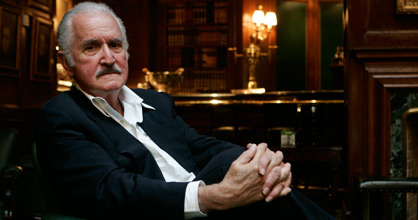
El escritor Carlos Fuentes, en el año 2007. / CRISTÓBAL MANUEL

Ha fallecido a los 83 años en México, donde se encontraba hospitalizado. Nacido en ciudad de Panamá en 1928, era autor de más de 20 novelas y contaba entre otros con el Premio Cervantes (1987) y el Príncipe de Asturias (1994). De su pluma brotaron obras como ‘La región más transparente’, ‘La muerte de Artemio Cruz’, ‘Cambio de piel’ o ‘Terra nostra’

“No tengo ningún miedo literario”

A sus 83 años, Carlos Fuentes mantiene la juventud creativa

Con ‘Federico en su balcón’ recién terminada, ya planea nueva novela: ‘El baile del centenario’

El escritor Carlos Fuentes, fotografiado en Barcelona en la presentación de su ensayo ‘La gran novela latinoamericana’, en 2011 / Marcel.li Saenz Martinez

Carlos Fuentes llegó a Buenos Aires a comienzos de mayo para asistir a la Feria del Libro. Acababa de entregar un libro a su editorial y ya tenía otro en la cabeza, iba de un almuerzo a una cena, firmó ejemplares durante tres horas, recibió a decenas de periodistas, uno detrás de otro, respondió a cientos de preguntas sin titubear, sin demorarse, sin dudar en un nombre ni una fecha. Y siguió paseando sus 83 años entre América y Europa, sin atisbo de cansancio. El secreto tiene mucho que ver con su pasión por la escritura.

“Mi sistema de juventud es trabajar mucho, tener siempre un proyecto pendiente. Ahora he terminado un libro, Federico en su balcón, pero ya tengo uno nuevo, El baile del centenario, que empiezo a escribirlo el lunes en México”.

Pregunta. ¿Sin horror al vacío de la página en blanco?

Respuesta. Miedos literarios no tengo ninguno. Siempre he sabido muy bien lo que quiero hacer y me levanto y lo hago. Me levanto por la mañana y a las siete y ocho estoy escribiendo. Ya tengo mis notas y ya empiezo. Así que entre mis libros, mi mujer, mis amigos y mis amores, ya tengo bastantes razones para seguir viviendo.

P. ¿No cree que a veces al cumplir años uno no se hace más sabio sino más torpe a medida que se afianza en sus viejas convicciones?

R. Depende de quién. Yo soy muy amigo de Jean Daniel, el director del Nouvel Observateur. Es un hombre que acaba de cumplir 91 años y es más lúcido que usted y yo juntos. Nadine Gordimer tiene noventa y tantos. Luise Rainer, la actriz, a quien veo mucho en Londres, tiene 102 años. Y va conmigo a cenas, se pone un gorrito y va feliz de la vida. No hay reglas. El hecho es que cuando se llega a cierta edad, o se es joven o se lo lleva a uno la chingada.

Las calles de Buenos Aires le hacen recordar a Carlos Fuentes su adolescencia entre risas, como si acabara de sucederle ayer, inmune a las trampas de la nostalgia.

R. Viví mucho Buenos Aires porque mi padre llegó como consejero de la embajada de México en 1943. Como el ministro de educación era Hugo Wast, en la escuela se daba una educación fascista. Y le dije a mi padre: “Mira, yo vengo de la escuela pública de Washington, no soporto esto”. Y mi padre me dijo: “Tienes toda la razón, tienes 15 años, dedícate a pasear”. Y eso hice. Durante un año me convertí en hincha de la orquesta de Aníbal Troilo. Lo seguí por todos lados. La librería Ateneo me alimentó con literatura argentina, me enamoré de una vecina que me doblaba la edad. Yo tenía 15 años, ella 30. Y siempre que regreso tengo la sensación de que rejuvenezco, de que vuelvo a tener 15 años y dónde está la francesita de enfrente, ¿no?

P. ¿Fue correspondido?

R. Mmmuy correspondido porque el marido estaba dirigiendo películas el día entero.

P. ¿Cómo nota ahora la ciudad?

R. Ha cambiado muy poco, es una ciudad idéntica a sí misma. Era una ciudad que se hizo en el gran auge ganadero y agrícola, desde [Domingo F. ] Sarmiento (1811-1888) hasta 1940. Pero están las mismas grandes avenidas, los mismos grandes hoteles… México es una ciudad más antigua, una ciudad india primero y después una gran ciudad de la colonia. Pero esto era una aldea en 1820 y dio un gran salto y se convirtió en Buenos Aires, que era la ciudad más atractiva, más moderna de América Latina. En esos años los argentinos despreciaban mucho al resto de América Latina: los brasileños eran macacos, los mexicanos éramos pistoleros. Y ahora ya somos iguales todos.

P. ¿Bailaba tangos?

R. Lo bailo muy bien. Tuvimos una cena en Montevideo que le dio el presidente [Julio María] Sanguinetti al presidente [Ernesto] Zedillo. Sanguinetti baila el tango estupendamente. Bailó con su mujer… ¡guau, aplausos!… Y le dijo a Zedillo: “Ahora, usted”. Y el presidente me dijo: “Carlos, tú represéntame”. Y yo bailé con mi mujer. Representé a México gracias al tango.

P. Un escritor que recibe trato casi de jefe de Estado, ¿cómo se las arregla para escuchar?

R. Un escritor tiene que escuchar porque si no, no se sabe cómo habla la gente. Anoche, por ejemplo, pasé dos horas o tres firmando libros en la feria. Pero, sobre todo, para oír a la gente, para ver qué piensa. Y, más que nada, yo les pregunto a ellos.

Fuentes está leyendo dos libros. Uno es Mañana o Pasado, de su compatriota Jorge Castañeda sobre la actualidad mexicana – “un libro muy inteligente, con el que estoy de acuerdo a veces sí y a veces no, pero es una mirada muy inteligente”– y el otro es Los Living, de Martín Caparrós. “Muy buen libro de muy buen escritor”. También le encantó Libertad, de Jonathan Franzen: “Rompe con los moldes y restricciones de la novela americana. Él mete todo, periodismo, política, deportes… todo va entrando de una manera natural para dar un mundo completo de esta gente tan decente y simpática que son unos monstruos, pero que están rodeados de un mundo de cultura verdadero”.

Cuando publicó en España su ensayo La gran novela latinoamericana indicó que al chileno Roberto Bolaño no aparecía en el libro porque no lo había leído y no le gustaba opinar de lo que no conoce. Esperaba leerlo cuando encontrase más tranquilidad. Pero aún no debido encontrarla. Se declara desbordado por la cantidad de libros y escritores que salen cada año en Latinoamérica.

P. ¿De qué tratan su último libro y el que va a comenzar ahora?

R. En la que he terminado, Federico en su balcón, Nietzsche aparece resucitado en un balcón a las cinco de la mañana y yo inicio con él una conversación. Y la que voy a empezar, El Baile del Centenario, termina una trilogía de la Edad Romántica, que cubre desde la celebración del centenario de la independencia en septiembre de 1910, que lo organiza Porfirio Díaz, y la celebración del fin del centenario en 1920, que la organiza Álvaro Obregón con José Vasconcelos, de manera que cubre diez años de la vida de México. Tengo ya muchos capítulos, notas y personajes. Hay una mujer que me interesa mucho, que no quiere decir nada de su pasado y se va descubriendo poco a poco, hasta que llega al mar y se libera.

P. ¿Le atrae algo en particular de este principio de siglo?

R. Me fascinan los cambios que estamos viviendo. ¿Quién iba a decirle a usted que los cambios iban a empezar en el norte de África? Y de ahí se ha extendido a buena parte de Europa y a los Estados Unidos, donde muchos de mis estudiantes me dicen: “Yo soy doctor y no encuentro trabajo”. O… “Mi padre ascendió a la clase media y yo siento que estoy bajando a la clase trabajadora”. En América Latina también hay cambios muy grandes, aunque se ha mantenido cierta estabilidad. Antes los problemas empezaban en América Latina. Ahora parece que van a llegar a América Latina. Y es un mundo que no sabemos nombrar. Si uno le dice a Dante, ¿qué se siente estando en plena Edad Media?, él nos diría: “¿Y qué es la Edad Media?” No podemos nombrar esta época pero sentimos que todo está cambiando. El Renacimiento sabía que era el Renacimiento, la Edad Media no sabía que era la Edad Media.

P. ¿Qué tal se maneja con Internet y las redes sociales?

R. Yo me quedé en el fax; escribo a mano en una página en blanco con pluma, corrijo en la página de enfrente. Es mi esposa la que me informa de las novedades. Antes decía voy a la Enciclopedia Británica a busca y ahora mi esposa me dice, no, le da a una tecla y aquí está.

P. ¿Considera que en las últimas décadas se ha producido una especie de revolución silenciosa por parte de las mujeres?

R. Ha sido clamorosa, no silenciosa. Pero no es un problema que empezó hoy. La suya es una victoria de la humanidad, no solo de las mujeres.

P. ¿Qué opina de la expropiación del 51% de las acciones de Repsol en YPF?

R. En México nacionalizamos el petróleo en 1938. Hay actos que está dentro de las facultades de cada Gobierno y después están las consecuencias de esos actos. Y eso es lo que todavía no sabemos. Vamos a ver qué consecuencias tiene este acto. Los problemas internos de la Argentina, que son muchos, son resueltos a veces con un golpe de prestidigitación que acarrea el apoyo de toda la sociedad. Aquí hasta Menem se ha manifestado a favor de esta medida. Y se olvidan un poco de algunos errores, que ya vendrán otros.

05 En tres idiomas mejor que en dos

En tres idiomas mejor que en dos | Sociedad | EL PAÍS 5/13/12 7:58 AM

SOCIEDAD

VIDA Y ARTES »

En tres idiomas mejor que en dos

Las familias multilingües se multiplican en un mundo globalizado El modelo gana fuerza en las escuelas, también en las españolas

J. A. AUNIÓN

Archivado en:

Leyla es una niña de casi seis años que vive cerca de Bruselas. Su madre es francesa, pero aparte de esa lengua habla inglés, árabe y español, y un poco de neerlandés e italiano. Su padre, Andrew, es escocés y, aparte de inglés, habla bastante bien francés y un poco de neerlandés. A Leyla, su padre le habla en inglés y su madre en francés y, aunque domina perfectamente ambos idiomas (alguna vez, eso sí, mezcla palabras de unos y otros, pero cada vez menos), el que se va imponiendo como dominante para ella es el neerlandés, el que habla en el colegio.

El de Leyla es uno de los ejemplos de plurilingüismo familiar que se pueden encontrar en el libro Multilingües desde la cuna. Educar a los hijos en varios idiomas (Editorial UOC, 2010), en el que Anna Solé Mena trata de dar contexto y guía a las familias plurilingües, unas familias cada vez más numerosas en un mundo globalizado y crecientemente interconectado. Se extiende así este fenómeno tradicionalmente común en Escandinavia, África, la India, el sureste de Asia u Oriente Medio.

Muchos especialistas asumen que las bondades atribuidas al bilingüismo valen también para el trilingüismo, pero algunos de los pocos trabajos que existen sobre el tema, como el de Suzanne Barron-Hauwaert en el año 2000, ponen de manifiesto que es más difícil manejar equilibradamente tres lenguas que solo dos. Y el debate se complica, además, si lo que se pretende es llevar un modelo trilingüe a los sistemas educativos de áreas con varios idiomas oficiales donde se quiere añadir otro más, en la mayoría de los casos, el inglés. En España lo están planteando los Gobiernos de País Vasco, Galicia o la Comunidad Valenciana y, en Cataluña y Navarra, aún sin intención de cambiar sus modelos, tienen numerosos proyectos en colegios e institutos para intensificar la enseñanza en lenguas extranjeras.

11 MAY 2012 – 21:17 CET


““Elmultilingüesueleser másflexibleycreativo”, defiende una experta

“Unapersonabilingüetienequesaltarentredoslenguasyelegirla quequiereusarencadamomento.Elusodeunasoladeellascada vez, mientras se deja la otra fuera, requiere unos mecanismos cerebrales que también sirven, por ejemplo, para conducir un coche. El bilingüismo es una especie de complejo entrenamiento de esos

importantes mecanismos. Yo creo que el trilingüismo supone todavía más entrenamiento y, por lo tanto, mejora de las habilidades cognitivas y retraso de la demencia”, asegura en un

correo electrónico Julia Festman, investigadora del Instituto de Multilingüismo de la Universidad de Postdam, en Alemania.

La especialista Madalena Cruz-Ferreira, portuguesa afincada en Singapur y autora del blog Being multilingual (ser multilingüe) esta de acuerdo con Festman —“Usar distintas lenguas habitualmente es un poderoso entrenamiento mental que mantiene tu cerebro en forma”, dice —, pero admite la escasez de experimentos al respecto.

Una escasez que ya señalaba hace más de una década en su trabajo del año 2000 Suzanne Barron-Hauwaert. En él insistía: “Muchas de las teorías sobre el bilingüismo no pueden aplicarse sin más al trilingüismo”, es decir, que la mayor complejidad quizá traiga consigo unos elementos negativos que pudieran contrarrestar los positivos, aunque no se sabe hasta qué punto.

El especialista británico “Colin Baker, a pesar de considerar el trilingüismo como posible y valioso, opina que es más inestable que el bilingüismo. Baker aconseja a los padres que se aseguren que uno de los idiomas se desarrolle completamente, ya que es importante para el desarrollo cognitivo del niño que como mínimo uno se desarrolle en la edad adecuada. Por ejemplo, el niño necesita poder seguir el programa escolar en el momento adecuado. Para Baker, en casos de trilingüismo existe un riesgo mayor, por muy pequeño que sea, de que las tres lenguas no se desarrollen lo suficiente”, explica Anna Solé en su libro. Otro riesgo que señala es el de disolución de la identidad.

En todo caso, aún con todas las limitaciones, parece evidente la ventaja que supone para un joven dominar varias lenguas, recordemos, en un mundo cada vez más globalizado. “Estoy en contacto con muchas familias que han educado o están educando a sus hijos en tres lenguas con éxito”, explica Solé por correo desde Bruselas, donde vive. “Mis propios hijos están siendo educados en cuatro lenguas desde que nacieron y las han activado sin problemas. Las investigaciones recientes en los cinco continentes indican que los niños bilingües o multilingües tienen ventajas cognitivas: suelen ser más explícitos, flexibles y creativos. El niño puede distanciarse de la lengua y darse cuenta de la relatividad con la que un idioma verbaliza el mundo gracias al hecho de hablar más de uno”, continúa.

Mas el debate no está cerrado, a falta de estudios al respecto, como tampoco lo está la discusión sobre el modelo trilingüe en las escuelas, que lleva años ensayando en distintos rincones del mundo, desde Finlandia hasta China, pasando por España.

Los colegios temen que se acabe por perjudicar otros aprendizajes

En China,con unos 300 idiomas y dialectos, existen algunos programas de trilingüismo en las escuelas en ciertas regiones, aunque no es una política oficial, explica por correo electrónico Zhenzhou Zhao, investigadora del Instituto de Educación de Hong Kong. “La educación trilingüe ayuda a mejorar la participación educativa de los estudiantes cuyas lenguas son minoritarias, es decir, que tienen más posibilidades de llegar a la Universidad. Sin embargo, también hay problemas: tienen menos tiempo para estudiar cada lengua y quizá para el resto de asignaturas”, señala.

“La escuela es un medio excelente para introducir una segunda o tercera lengua en una edad

El peligro es que alguna de las lenguas no se desarrolle lo suficiente temprana, siempre que se haga con naturalidad y de manera lúdica. Una segunda lengua se aprende más fácil y naturalmente mediante su uso (por ejemplo en asignaturas como gimnasia, música o plástica) que a través de listas interminables de verbos irregulares”, dice Solé. “Pero hay dificultades. Los niños multilingües están en contacto con diferentes personas que les hablan sus lenguas nativas de manera natural y en contextos múltiples. Esto no es fácil de replicar en la escuela: primeramente, los profesores deberían tener un excelente nivel de la lengua que van a transmitir”.

La preparación de los profesores y el impacto en el resto de aprendizajes son dos de las principales preocupaciones de quienes intentan encontrar un buen modelo trilingüe en la escuela.

El Gobierno vasco, por ejemplo, mantiene un sistema de evaluación externa del programa piloto de educación trilingüe que desde hace dos años se ha implantado en colegios e institutos de la comunidad: este curso son 118 centros de primaria y secundaria. Esa evaluación quiere comprobar, precisamente, que no se ven afectados los aprendizajes de ninguna de las materias ni de ninguna de las lenguas, explica la viceconsejera de Educación, María Antonia Ozcariz.

“La clave es la formación docente”, asegura la viceconsejera vasca

El modelo vasco consiste en dar libertad a los centros a la hora de elegir cuántas asignaturas se dan en cada idioma (euskera, castellano e inglés), aunque marcando un mínimo de horas semanales para cada uno de ellos: seis. “Incluso, pueden elegir dar solo algunos contenidos de una materia en una lengua u otra”, explica Ozcariz.

La viceconsejera asegura que se han vencido algunas resistencias iniciales por parte de quienes pensaban que con el nuevo modelo saldría perjudicado el idioma más débil, en este caso, el euskera. Precisamente ese reproche es uno de los que se le hizo a la idea de trilingüismo impulsada por la Xunta de Galicia, aunque tampoco ha dejado contentos a los miembros de la plataforma que peleó en la comunidad porque sus hijos pudieran escolarizarse con el castellano como lengua vehicular principal.

Un sistema trilingüe requiereungranesfuerzo materialyorganizativo

Al final, el modelo ha quedado como una forma de equilibrar la enseñanzaencastellanoyengallego,conintroduccióndelalengua extranjeraenaquelloscentrosqueseapuntenalplande plurilingüismo (110) o bilingüismo (1.800 secciones, que no colegios). En los primeros se ofrecen más horas en inglés y cuentan

siempre con auxiliares de conversación, explica una portavoz de la Consejería de Educación. Como en el caso vasco, los centros tienen margen, aunque menor, para repartir las horas en cada idioma.

El Gobierno de la Comunidad Valenciana también ha anunciado que abrazará un modelo similar, y en esta autonomía, quizá más que en ninguna otra por sus graves problemas de endeudamiento, sale a flote otra de las dificultades de un modelo trilingüe: los medios que hacen falta para que funcione. Si en distintas comunidades ya se ha puesto en cuestión el modelo de los centros bilingües públicos por la falta de medios y, sobre todo, de preparación lingüística de los docentes, con un modelo multilingüe las dificultades se multiplican.

En Galicia, una portavoz de la consejería admite mayor inversión en auxiliares de conversación: “Hay cuatro veces más que en el curso 2008-2009”, dice. En País Vasco, la viceconsejera de Educación María Antonia Ozcariz explica que se ha dado “un credito horario moderado” a los profesores (menos carga de clases) y se ha multiplicado por dos el gasto en formación en lenguas extranjeras. La formación docente es la clave, asegura: “No solo en la lengua extranjera, sino, sobre todo, en metodología para poder enseñar bien utilizando una segunda lengua”.

Pero aún hay otro gran problema para este modelo, precisamente, el que planteaban los padres gallegos que quieren que sus hijos aprendan en castellano (también hay un movimiento similar en Cataluña), pues no ven utilidad en la otra lengua cooficial. Este es, según la especialista china Zhenzhou Zhao, la clave para que funcione un sistema trilingüe o no. “En China, estamos luchando todavía por encontrar un modelo que funcione. Desde mi punto de vista, lo importante es la valoración de las lenguas en el mercado; por ejemplo, el inglés es muy valorado por los padres y los estudiantes y en el caso de China ha conseguido desplazar al ruso en solo tres décadas. Así, creo que lo principal es que el Gobierno haga comprender a la gente el valor potencial de esas lenguas minoritarias: por ejemplo, que dominar dos lenguas facilita el futuro aprendizaje de otras o el valor que ese idioma puede tener en áreas concretas de la economía o de la cultura”, asegura la investigadora.

La profesora de la Universidad de Bruselas Alex Housen admite que hay muchos factores que deben jugar para que funcione un sistema multilingüe, pero pone un ejemplo que viene funcionando “desde hace más de un siglo”, el de Luxemburgo, país con tres lenguas oficiales: luxemburgués, alemán y francés. En él, los niños aprenden en luxemburgués en la escuela infantil y en la mayor parte de la escuela primaria (de los 6 a los 12 años). En esta etapa, el alemán es una asignatura desde primero y en el último curso empieza la transición desde el luxemburgués a este idioma. El francés se introduce como materia a los 10 años. En secundaria, las clases se dan en alemán los primeros cursos y luego en francés.

“Entiendo que puede ser un poco contradictorio, pues en el mundo de hoy, si lo que queremos es educar a nuestros hijos para comunicarse, lo lógico es querer que aprendan la lengua mayoritaria”, asegura el profesor de Ingeniería Lingüística de la Politécnica de Madrid Jesús Cardeñosa. “Pero lo cierto es que multitud de estudios aseguran que lo mejor es escolarizar a los niños hasta los 10 años en el idioma que se habla en su casa. Y, a partir de ahí, una vez ha madurado intelectualmente, ya pueden empezar con las lenguas que sean”, lo mismo para un niño quechua en Perú, que para un castellanohablante en Cataluña, añade. “Si en la casa conviven los dos idiomas, cualquiera de los dos vale para los primeros años de escuela, si no, no”, insiste.

“Si la segunda lengua se usa solo puntualmente en la escuela sin que haya oportunidades o necesidad de usarla en la calle, el niño solo tendrá una motivación limitada para aprenderla y no la activará rápidamente. La educación bilingüe en Cataluña, País Vasco o Galicia funciona bien porque las dos lenguas son usadas en el territorio y los niños tienen oportunidades de practicarlas en muchas circunstancias. No debemos esperar un resultado tan optimista con la introducción de una tercera lengua ajena al territorio, como el inglés, a menos que los padres

“Es crucial el valor que dé la familia al idioma minoritario”, dice una docente busquen ocasiones para aumentar la presencia de la tercera lengua fuera de clase”, dice Anna Solé. “Evidentemente, la introducción de la tercera lengua debería hacerse de manera en que no peligrasen los sistemas más exitosos, es decir, que la lengua principal de enseñanza debería seguir siendo la lengua del territorio”, añade en referencia a Cataluña, Galicia o País Vasco.

© EDICIONES EL PAÍS, S.L.

05 “Querido Juan, es preciso que vuelvas a reír…”

“Querido Juan, es preciso que vuelvas a reír…”

Una carta y un poema simbolizan la pasión de la pareja

Lorca, en la Huerta de San Vicente, 1935. / FUNDACIÓN GARCÍA LORCA

Los recuerdos no curan las heridas pero ayudan a mitigar la nostalgia. Tras confirmarse el fusilamiento de Federico García Lorca, Juan Ramírez de Lucas guardó como oro en paño los restos en papel de aquel amor de juventud que le habían arrebatado. La última noticia del poeta llegó en forma de carta a la casa de los Ramírez de Lucas, en Albacete, cuatro días después del alzamiento nacional.

Datada el 18 de julio de 1936 en Granada, la misiva salió en el correo antes de que se interrumpieran las comunicaciones. Lorca la escribió el día de San Federico, una fecha señalada para su familia, acostumbrada, como en casi toda Andalucía, a festejar los santos más que los cumpleaños. Impregnada del olor que había dejado una flor del jazmín de la Huerta de San Vicente, oculto entre los folios, el mensaje de Lorca incidía en que Juan Ramírez de Lucas debía ser fuerte y tratar de convencer a sus padres para que respetaran sus ideas. Se trataba de su familia, las personas más importantes de su vida junto con los amigos. “Conmigo cuentas siempre. Yo soy tu mejor amigo y te pido que seas político y no dejes que el río te lleve. Juan: es preciso que vuelvas a reír. A mí me han pasado también cosas gordas, por no decir terribles, y las he toreado con gracia”, se lee en uno de los párrafos. Precisamente como “amigo”, Federico le aseguraba que siempre estaría a su lado. Se despedía deseando que todo acabara felizmente sin hacer ninguna referencia a la situación política.

La carta pasó a formar parte de los recuerdos que guardaba Juan Ramírez junto a otros documentos del poeta. Entre ellos el poema que le dedicó cuando ambos viajaban hacia Córdoba. Según los testimonios reflejados en su diario, Lorca lo escribió sobre la marcha, en el único papel que llevaban encima, un recibo de la Academia Orad, situada en el número 3 de la madrileña Carrera de San Jerónimo, donde estudiaba Ramírez de Lucas. Se trata del pago del mes de mayo de 1935, por valor de 10 pesetas. El escritor Manuel Francisco Reina tiene clara la enorme importancia del documento, dedicado a su “rubio de Albacete”, porque desvelaría finalmente a quién iban dedicados sus Sonetos del amor oscuro. “Lorca, que corregía hasta la extenuación como muchos de los poetas, empezó a redactarlos en Valencia en 1935, un poco en paralelo a los avances de su nueva relación sentimental con Juan Ramírez. Los escribió como un homenaje a San Juan de la Cruz pero también como un símbolo del sufrimiento silencioso hasta encontrar el verdadero amor. Seguramente había muchos restos de otras pasiones, fruto de la experiencia dejada por cada uno de sus amores en esos versos, pero siempre el último amor, como pasa también con los amigos, es el que más pesa”.

ampliar foto Reverso del recibo de la academia Orad, donde Lorca escribió el romance.

En el terreno de las hipótesis en que nos movemos, otros estudiosos de la obra de Lorca, incluido el biógrafo Ian Gibson, señalan como protagonista de esos encendidos versos en los que se desnudaba sentimentalmente al futbolista Rafael Rodríguez Rapún, con el que Lorca tuvo un idilio anterior. El autor de la novela Los amores oscuros resta importancia a esa suposición. “La relación de ambos se rompió antes del viaje de Federico a Nueva York y Uruguay”, apunta Gibson. De entre el mucho material que maneja en su novela, el escritor destaca que Luis Rosales le entregó a Ramírez de Lucas, años después de la muerte del poeta, una carpeta con todos los sonetos mecanografiados que habían encontrado en la buhardilla de su familia. “Pensaban que esos documentos debían quedar en su poder”.

El poema, escrito a mano por Federico García Lorca, ha sido auditado por el reconocido calígrafo Luis Alamancos Pampín. “Del análisis pericial caligráfico al que se ha sometido el cuerpo de escritura estampado en este documento, podemos determinar que no se aprecian rasgos de falsificación por imitación de la grafía, añadidos directos o superposición de trazos”, añade en el informe que concluye: “El texto tiene las mismas características morfológicas que otros escritos autentificados del poeta”.

‘Romance’

Aquel rubio de Albacete
vino, madre, y me miró.
¡No lo puedo mirar yo!
Aquel rubio de los trigos
hijo de la verde aurora,
alto, sólo y sin amigos
pisó mi calle a deshora.
La noche se tiñe y dora
de un delicado fulgor
¡No lo puedo mirar yo!
Aquel lindo de cintura
sentí galán sin…
sembró por mi noche obscura
su amarillo jazminero
tanto me quiere y le quiero
que mis ojos se llevó.
¡No lo puedo mirar yo!
Aquel joven de la Mancha
vino, madre, y me miró.
¡No lo puedo mirar yo!

05 Así se fundó el Globe (western isabelino)

Así se fundó el Globe (western isabelino)

Inglaterra, año de gracia de 1597. Ha muerto el viejo James Burbage, el hombre que construyó y dirigió durante dos décadas el Theatre, el primer coliseo de Londres, en la zona de Shoreditch. El Theatre, sede de la compañía de Shakespeare, los Lord Chamberlain’s Men, era un imponente edificio poligonal, enyesado en blanco y negro, con aforo para mil quinientas personas, que se repartían en tres galerías y un patio cubierto, alzado sobre columnas, con techumbre de tejas. Contaba también, a diferencia de otros teatros, con “sala de atuendos”, un espacio que servía para las entradas, salidas y cambios de vestuario.

Se procede a la lectura del testamento. El viejo Burbage ha dejado el Theatre a su hijo Cuthbert, partícipe de la compañía y manager del local, y a Richard, su otro hijo, el edificio de lo que luego sería Blackfriars, el teatro “de lujo” (esto es, en mejor zona), donde Shakespeare estrenaría sus últimas obras, los romances, y también un solar en Southwark, cerca del Rose, del que luego se hablará. Richard Burbage es the Player King, el jefe de la compañía y el primer actor, el hombre que a los veintiún años encarnó a Ricardo III, y luego fue Romeo, y Macbeth, y Hamlet, y Otelo, y Lear, y también Enrique V, Coriolano, Antonio y Próspero; el hombre que elegía las obras y planificaba las giras. Y el gran amigo de Shakespeare: como tal bautizó William a su hijo y Juliet a su hija.

El testamento tiene un problema y ese problema se llama Gilles Allen, propietario del solar del Theatre, un puritano avaro que detesta a los cómicos: vive en el campo y solo viaja a Londres cuatro veces al año para cobrar el alquiler. Para empezar, Allen decide cerrar el Theatre. En el verano de 1597, los actores de la compañía de Shakespeare han de trasladarse al vecino Rose. En otoño todavía no han llegado a un acuerdo. Los Burbage repasan y repasan el contrato hasta que encuentran una vía de escape. ¿Cómo no se les había ocurrido antes? Allen es dueño del terreno, pero no del edificio.

Y ahora viene la parte que más me gusta, tanto que me extraña que nadie haya hecho una película (un western isabelino) con esta culminación, digna del duelo en O.K. Corral. El 28 de diciembre de 1598, un grupo amenazante avanza bajo la gran nevada hasta las puertas del Theatre. Abren la marcha Cuthbert, Richard, la madre de ambos (que debía de ser una señora de armas tomar) y William Smith, promotor financiero de la familia; detrás, su principal carpintero, Peter Street (o Streete) y diez o doce peones, todos ellos armados, según Allen, “con espadas, dagas, palas, hachas y otras herramientas afines”. El agraviado dueño legó una pintoresca descripción de esta escena extraordinaria: “Varias personas”, escribe, “pidieron que desistieran de su ilegítima empresa, pero los Burbage rechazaron las objecciones de forma muy ultrajante, violenta y clamorosa”. Las “grandes y aterradoras molestias” duraron cuatro días. En ese tiempo, los Burbage y sus operarios retiraron las vigas del Theatre y las colocaron en carros, y desmontaron luego las galerías y el patio y la sala de atuendos, y los transportaron en barcazas hasta la otra orilla del río. Según Peter Ackroyd, biógrafo de Shakespeare, “Allen no alude al armazón de hierro, aunque no parece probable que abandonaran algo tan valioso”. El día de año nuevo de 1599 acaban de depositar su carga en el solar de Southwark, sobre una marisma desecada: allí levantarían el Globe. Gilles Allen demandó a los Burbage por una cantidad que, según él, ascendía a “800 libras por los daños, 700 libras por el teatro” y, detalle conmovedor, “40 chelines por pisotear el césped”. El dickensiano litigio duró más de dos años y pasó por diversos tribunales, fallando que los Burbage “se habían limitado a la interpretación estricta de la ley”, por lo que el propietario del solar no obtuvo la menor compensación. Bien por ellos.

05 Shakespeare Meets Bollywood

http://kut.org/2012/05/

Art & Culture, News

Shakespeare Meets Bollywood

May 7, 2012 5:01 am by: Ryland Barton

Viola and Sir Andrew begrudgingly duel in Austin Shakespeare's Twelfth Night. From left to right: David Boss, Mary Candler, Philip Kreyche, Rick Roemer. Photo by Sushma Khadepaun-ParmarViola and Sir Andrew begrudgingly duel in Austin Shakespeare’s Twelfth Night. From left to right: David Boss, Mary Candler, Philip Kreyche, Rick Roemer. Photo by Sushma Khadepaun-Parmar

This month, Austin Shakespeare performs William Shakespeare’s “Twelfth Night” at Zilker Park. The comedy features cross-dressing, mistaken identities and sword fighting, but with a twist: Bollywood-style dancing and singing.

“Twelfth Night” gets its name from the bygone Twelfth Night festival, which was celebrated on the last of the 12 Days of Christmas. Traditionally, servants would take on the roles of their masters and children would pretend to be adults –merrymaking in the name of a rebellious inversion of what was considered the natural order of things.

So it’s fitting that Austin Shakespeare is doing an unconventional Bollywood-style staging of the age-old comedy. But as choreographer Prakash Mohandas points out, Shakespeare and Bollywood tap into some similar scenarios.

“It’s a very Bollywood-ish plot. The story is very melodramatic,” Mohandas says. “There’s a lot of entanglements with relationships and stuff like that, which is stereotypical of Bollywood movies.”

For those who don’t know what Bollywood is, it gets its name from the Indian film industry based in Mumbai – formally known as Bombay. Just think: bright colors, pop music and larger-than-life dance numbers.

Austin Shakespeare’s version of “Twelfth Night” features new music composed by Mumbai-born singer-songwriter Naga Valli. Valli used Shakespeare’s verse to compose Bollywood-style songs.

“It’s an un-intimidating way to go see some heavy literature and some heavy drama,” Valli says. “It makes it so much more approachable.”

Besides the singing and dancing, the production is a traditional Shakespeare comedy. There’s romantic verse and bawdy prose, with lots of laughs and near tragedy. Ann Ciccolella is Austin Shakespeare’s artistic director.

“It brings real joy,” Ciccolella says. “’Twelfth Night’ can have some ambiguity in it, but Bollywood has no ambiguity – everything is either really happy or really sad.”

The show runs through May 27. Performances are at 8 p.m. from Thursday to Sunday at the Zilker Hillside Theater.

James Jeffrey contributed to the reporting of this story.

05 Shakespeare: All the web is a stage

Click here to find out more!

Life:Connected | 1 May 2012

IN ASSOCIATION WITH Click here to find out more!

Shakespeare: All the web is a stage

Tom Chatfield
About the author
Tom is an author, commentator and technology theorist. His most recent book, How to Thrive in the Digital Age (Pan Macmillan) is published on 10th May. He blogs at tomchatfield.net and tweets at @TomChatfield

Scence from Hamlet (Copyright: Getty Images)(Copyright: Getty Images)

Shakespeare is as relevant to the remix culture of the web as viral videos and cute cats, argues Tom Chatfield.

Related

IN BBC NEWS:

A scene from A Midsummer Night's Dream (Copyright: Getty Images)

World Shakespeare Festival opens

The World Shakespeare Festival is launched in Stratford-upon-Avon, alongside the annual birthday celebrations.

In his 1939 poem In Memory of WB Yeats, WH Auden described the strange immortality of literary legacy: “The death of the poet was kept from his poems. / But for him it was his last afternoon as himself… he became his admirers.”

Admirers die just like poets, of course, and most authors can hope for only a brief literary afterlife. A few, however, become something else: a permanent part of culture and language. The mightiest of all such figures is William Shakespeare, who since his death at the age of 52 in April 1616 has become the closest thing the English language has to a presiding deity.

This April, the launch of the World Shakespeare Festival brings the greatest celebration yet of “the world’s playwright”. And alongside its readings, performances, commissioned art and gatherings, an intriguing digital counterpoint to events is taking place: My Shakespeare – a site dedicated to “measuring Shakespeare’s digital heartbeat” some four centuries after his actual one stopped.

What, then, does an author’s digital heart sound like – and how, in the words of the Royal Shakespeare Company’s artistic director Michael Boyd, “can our understanding of a 17th century English playwright be transformed by new media”?

Above all, these questions are connected by the new kind of relationship being established online between artists and audiences. The theatre is, itself, a space defined by an audience: its energy and ritual driven by live performance. On the page, even words like Shakespeare’s are only half alive.

Ghostly imprint

Online, however, a work comes alive in quite a different sense: not in performance, but in the drama of action and reaction that is the texture of 21st-century lives. If Shakespeare has, in Auden’s phrase, become his admirers, then he is a composite of many millions of modern lives: taught in half the world’s schools, performed more than any living writer, and quoted more than any other English language writer other than those who penned the King James Bible.

It’s this audience that – along with artistic commissions, blogs, videos, discussions, and much else besides – the My Shakespeare site has set out to map, through an intriguing data visualisation tool dubbed Banquo (after the ghost in Macbeth). Where the original Banquo silently stalked the man who commanded his murder, however, his digital descendant is considerably more articulate, plotting Shakespeare-related keywords from Twitter, Flickr and eBay in real time onto a colour-coded graph.

My Shakespeare describes its Banquo as a ghostly emblem of the way “social media leaves a lasting impression of our comments, ideas, thoughts and activity that remain in cyberspace long after they initially existed”. And there’s certainly something uncanny about the waves of interest it charts, with captured images drifting against a background of mentions and invocations: book covers, pictures of castles, quotations, comments on performances, links, debates (dominated, the digerati may be interested to learn, by Twitter).

What this quantifiable sense of a work’s passage through the world most suggests to me, however, is something that has always been true, but until recently never spelled out quite so bluntly: that even the greatest art and ideas are part of a vaster human ebb and flow; and that perhaps the most important way in which new media can transform our relationship with Shakespeare is, ironically, by taking him off the pedestal erected beneath his legacy, and restoring him to the present as an embodiment of what a truly vigorous creative culture should like like.

London’s theatrical world was less than two decades old when Shakespeare began his career, with the first successful purpose-built theatre (called, simply, “The Theatre”) opening outside the city walls in 1576. The medium was unruly, unstable; closer to the mob delights of bear-baiting than high literature.

It was a time, in fact, not entirely unlike our own: a volatile age of new words, new technologies and new ambitions. Between them, printing and playhouses were set to transform the way a nation delighted and described itself. Relationships between authors and audiences, creators and consumers, were profoundly in flux. The English language itself gained over ten thousand new words during the Elizabethan and Jacobean eras – not to mention some of the greatest literature in history.

Yet none of the young playwrights of the early theatre would have considered themselves “authors”. They were actors, scriptwriters, entrepreneurs, innovators and crowd-pleasers. Shakespeare’s own ambition and prolific rate of production meant much borrowing, adaptation and recombination. His plots and characters were brilliant mash-ups of recent, classical and European sources. His took universal human themes and reimagined them for his time – playing fast and loose with history, probability and conventional creative assumptions. He scarcely took any interest in his own literary legacy. And though he won fame, fortune and royal favour, he continued to be dismissed by some after his death as ill-educated, provincial and insufficiently aristocratic even to have written his own plays.

The lessons and opportunities for today, as the World Shakespeare Festival and its cornucopia of commissions suggests, are immense. His plays themselves are constantly reimagined, reworked and transposed – whether it is Richard III set in World War II or a Maori version of Troilus and Cressida complete with a Haka. New media, however, grant entirely new levels of freedom: not only to share the greatest works and words of all time instantly and universally; but to respond, remix and recreate, whether that means Othello through the Simpsons or Macbeth through the songs of Jonny Cash (you can find other mash-ups here and here). It’s this that the My Shakespeare project promises most enticingly to tap into – from artist Emma Wolukau-Wanambwa’s Nicely Turned tumblr blog, clothing Shakesperian lines and allusions in a 21st-century cultural context, to Will Power’s forthcoming fusion project Hip Hop Shakespeare.

For some people, art shorn of old boundaries and hierarchies is a dangerously cheap commodity: devalued and debased to the level of the mob. This was the argument levelled against actors and playhouses four centuries ago by those who wished only the best possible taste to prevail. And it remains an argument we should gleefully ignore, delving instead into Shakespeare’s work much as he delved into his sources: borrowing, adapting and augmenting; determined both to innovate and to delight; unafraid to be judged by popular taste.

Not every artist will win admirers, let alone become a Shakespeare. Yet perhaps the best lesson to take from the 17th century is a bluntly timeless one: past glories are little use unless you’re prepared to grasp the present moment by the scruff of its neck.

05 La juventud a cambio de 35 millones de libros vendidos

La juventud a cambio de 35 millones de libros vendidos

Christopher Paolini cierra temporalmente su millonaria tetralogía fantástica de ‘Eragon’

Ha vendido 35 millones de libros en todo el mundo, uno de ellos en España

El escritor estadounidense empezó la saga con 15 años y la terminó con 27

El escritor Christopher Paolini. / TEJEDERAS (El País)

Antes ha sido una especie de gnomo con gorro y botas; ahora es un río con un par de meandros que desciende de unas altas y nevadas montañas y que cruza frondosos bosques… Christopher Paolini (Los Ángeles, EEUU, 1983) se entretiene así en las entrevistas, dibujando en una libreta, a pluma o rotulador negro, desde detalladísimos ojos de dragón a signos de su inventado lenguaje élfico. Y en las últimas páginas recopila autógrafos de famosos –nivel Tarantino por ejemplo, uno de los últimos–, que se va encontrando por esos mundos de Dios, los mismos donde ha vendido cerca de 35 millones de ejemplares (uno en España, entre castellano y catalán) de su tetralogía fantástica que, en principio, acaba de cerrar con Legado (Roca). Una serie que arrancó en 2002 con Eragon, con la que consiguió desbancar a Harry Potter en Estados Unidos y -eso dice la leyenda- con un ejemplar de su primera edición superar en una subasta de e-bay una de El hobbit de su modélico J.R.R.Tolkien.

Barbilampiño, gafitas metálicas redondas, enjuto pero atlético, un punto de timidez desconfiada, la enseñanza recibida en casa por su madre (maestra devota del método Montessori que nunca le llevó a escuela) ha dado un joven detallista y educado pero parco en palabras, gestos y, se intuye, en sentimientos, peajes quizá de una maduración antes de tiempo.

Pregunta. Empezó esta saga con 15 años y la ha acabado con 27. ¿Cómo ha podido mantener la inocencia y el tono inevitables del mundo juvenil que demandaba la serie?

Respuesta. Esta última entrega es la que más dificultades personales y profesionales me ha conllevado, pero esa preocupación la detecté en la tercera entrega [Brisingr] donde ya no traté tanto a los lectores como niños; siempre he buscado subvertir el mundo de buenos y malos y en los dos últimos libros he acentuado eso. Mis úrgalos pasarían por malos pero acaban aliados con Eragon… Esas son las cosas que critico de Tolkien, por ejemplo, la predestinación de los personajes: quien nace troll muere troll y muere como malo, claro, no hay estadios intermedios. Creo que no es bueno que los niños vean el mundo como malos o buenos, que las cosas no vayan a cambiar nunca. Creo y espero que los lectores hayan crecido conmigo.

P. Usted sí ha crecido como escritor: sus personajes son cada vez más ricos en matices, en lo formal han desaparecido muchos adverbios…

al final es como tocar un instrumento: he estado escribiendo ininterrumpidamente casi 13 años, a tiempo completo, una situación que solo suele darse cuando uno está a finales de los 20 o de los 30 años; yo, desde que tengo 14

R. Es que al final es como tocar un instrumento: he estado escribiendo ininterrumpidamente casi 13 años, a tiempo completo, una situación que solo suele darse cuando uno está a finales de los 20 o de los 30 años; yo, desde que tengo 14, estoy ahí…Salí un poco encogido por la idea original pero creo que he encontrado mi propia voz; éste es mi mejor libro, seguro: técnicamente he aprendido a vincular diálogos, hacer entrar o salir a un personaje de escena y de contexto… Sí, creo que poseo ya otra voz, por eso quiero escribir algo nuevo; tengo entre 20 y 30 novelas pensadas y estructuradas…

P. ¿Dentro del ciclo de El Legado o abrirá otro mundo o quizá saltará a la literatura ya para adultos?

R. Es cierto que he dejado preguntas sin resolver, como ocurre con la vida misma, y siempre hay la posibilidad de un quinto libro: llevo 14 años trabajando con esos personajes y ese mundo y es difícil deshacerse de ellos; creo que al final los lectores mayores han disfrutado más del fenómeno que los más jóvenes… El gran reto será ver si se da la transición de lectores de Eragon a lectores de Paolini; en cualquier caso, la ciencia-ficción y la fantasía son mis géneros favoritos y tienen mucha salida, cualquier historia puede contarse desde ellos. Creo que iremos por la ciencia-ficción ahora…

P. El final de la tetralogía es muy moralizante; sorprende que eso tenga éxito en la juventud de hoy…

R. Mis novelas, o también las de la serie Harry Potter o incluso la de Los juegos del hambre, no dejan de ser un retrato de un grupo de adolescentes que crecen y maduran y ganan poder; el corazón de muchas de esas tramas están en eso y en el sentido de la amistad… Los adolescentes se sienten más indefensos y sin un papel claro en esta sociedad, y estos libros les ayudan.

P. ¿Esa proyección implica que este tipo de literatura ayuda a mantener una especie de status quo social de la juventud?

R. No creo que por leer esos libros el joven acepte ya el mundo de los adultos; yo mismo, a pesar de leer todo eso y hasta escribirlo, había tenido la idea de irme de casa y buscarme la vida por otra parte. No, hay cosas más preocupantes en la literatura fantástica tipo Conan el Bárbaro o el propio El señor de los anillos y es cómo puede ser que a nadie le afecte la violencia y sus consecuencias: es totalmente irresponsable por parte de un autor olvidarse de eso; por no hablar del uso indiscriminado de la magia y lo prodigioso en el supuesto mundo real: ¿se imagina que la Bolsa funcionara por una especie de sortilegios? Eso son temas que de algún modo estarán en mis próximos libros.

Mis novelas, o también las de la serie Harry Potter o incluso la de Los juegos del hambre, no dejan de ser un retrato de un grupo de adolescentes que crecen y maduran y ganan poder; el corazón de muchas de esas tramas están en eso y en el sentido de la amistad…

P. Sorprende la fe que tuvieron sus padres en usted, invirtiendo los ahorros en una primera autoedición del libro, o la suya, vendiendo ejemplares por las escuelas, disfrazado; o saber que en su casa de Montana no llegaba la señal de televisión. Son una familia muy particular.

R. Sin duda soy fruto de mis padres; mi madre ensayaba pequeños proyectos educativos con mi hermana y conmigo y, bueno, el pueblo cercano estaba a media hora de casa y lo de exponer a los niños a la televisión no es muy sano porque mucho de lo que emiten, y especialmente los anuncios, están pensados para el adoctrinamiento a través del engaño; tampoco teníamos videoconsolas… Sí, recibí una educación de calidad a pesar de no haber ido al colegio. De haber asistido lo hubiera quemado o hubiera tenido que ir sedado: me cuesta recibir órdenes de nadie; también es verdad que así me evité humillaciones de otros estudiantes… ¿Fe? No hablo de religión ni de política en mis entrevistas: siempre hay un lector que no está de acuerdo y no quiero tampoco marcar las lecturas de mis libros.

P. No creerá que ha construido un Eragon neutro en lo sociopolítico.

R. Eragon hace de algún modo reflexiones religiosas y políticas, claro, digamos que trabaja para la oposición al sistema, pero creo que si algo resume la saga es esa búsqueda para comprender en qué creen. Sé qué y cómo piensa Eragon, pero no voy a decírselo.

P. Cuando habla de sus lecturas hay mucha fantasía y ciencia ficción: Frank Herbert, Ursula K. Leguin… pero también habla de Ana Karenina.

Fotograma de ‘Eragon’.

R. Eso es influencia de mi madre, que adora la literatura clásica; Jane Austen, leída en voz alta es muy graciosa; ahora mismo estoy con Dickens… Ana Karenina la leí con 16 años y me afectó muchísimo: vi una profundidad psicológica en los personajes como nunca antes, en cada momento se preguntan por qué están haciendo lo que hacen y en muchos casos eran preguntas y dudas reales que yo tenía. Y pensé que me gustaría intentar incorporarlo a mis obras. Hay tanto bueno por leer…

P. Por su precocidad y por su éxito, ¿no ha temido quemar etapas antes de tiempo o quemarse usted mismo?

R. Cuando estaba a punto de terminar la serie tuve esa sensación, sí… La culpa es del método y del planteamiento original, que por su intensidad no repetiré más. Ahora quiero tomarme un tiempo, iré a la playa a las Hawai y en el nuevo proyecto intentaré equilibrar más la balanza: se necesita vivir para escribir, si solo escribes te quedas sin ideas, hasta una frase corta se convierte en un reto. ¿Sabe? Tengo una lista con 164 libros por leer; me encanta aprender: me descargo cursos universitarios por Internet de todo, de ciencias, física… He seguido un curso de 30 sesiones sobre la Segunda Guerra Mundial…

P. Antes dijo que cada victoria tiene su precio, ¿cuál ha sido el de su éxito?

R. El tiempo, mi juventud; no he hecho cosas que sí han realizado la gente de mi edad; mientras estaban conociéndose e intercambiando experiencias personales y profesionales yo estaba frente a un ordenador, solo.

05 Los de dentro – Antonio Muñoz Molina

IDA Y VUELTA

Los de dentro

Archivado en:

William Carlos Williams (en el centro), en 1949 en Nueva York. / BETTMANN (CORBIS)

Decía Borges que los seres humanos nacen aristotélicos o platónicos; yo he pensado muchas veces que nacen, nacemos, acreedores o deudores, de modo que hay quien se pasa toda la vida exigiendo lo que se le debe y quien vive angustiado por las deudas urgentes que se le están reclamando siempre. También empiezo a sospechar que se nace para estar dentro o para quedarse o sentirse fuera, para creerse instalado sin incertidumbre o para temer a cada momento que lo expulsen a uno de donde acaba de llegar, que vayan a rechazarlo cuando se acerca al control de pasaportes de un aeropuerto, incluso que no se le vayan a abrir unas puertas automáticas. La paradoja es que la mayor parte de los logros más valiosos, en las artes o en las ciencias, suelen deberse a personas que están fuera, o al menos al margen, o en una esquina no privilegiada; y que quienes se encargan de juzgar y de extender certificados de legitimidad son los que están dentro, los situados, los instalados, los que mucho antes de llegar a su posición inapelable ya la presentían, ya la ejercían, ya estaban entrenándose.

Hay quien desconfía tanto de los grupos que nunca aceptaría, a la manera de Groucho Marx, pertenecer a ningún club que admitiera a gente tan deplorable como él mismo. Aunque ni siquiera hace falta desconfiar: basta con sentirse incómodo, con carecer de ciertas habilidades sociales; basta incluso con una predisposición no necesariamente melancólica a la soledad. Hay quien cuadra perfectamente en un grupo, en una generación, en una minoría sexual, en una patria, y ejerce voluntaria o espontáneamente de portavoz o de figura representativa. A los amigos pintores de Robert Motherwell —gente tan desatinada como Jackson Pollock o tan huraña como Willem de Kooning o Mark Rothko— les sorprendía que Motherwell abrazara con tanto entusiasmo las teorías sobre expresionismo abstracto elaborado por algunos críticos, que sin ninguna vacilación hablara y escribiera en nombre de algo, un grupo, una generación, que para los demás no era más que una confluencia azarosa de amistades, conversaciones, noches de bebida, solitarios afanes estéticos.

Los dos más grandes compositores americanos del siglo XX, Charles Ives y George Gershwin, estaban fuera o al margen, cada uno a su modo. Ives era un directivo muy competente en compañías de seguros; Gershwin, un hijo de emigrantes judíos rusos que siempre sintió cierta incomodidad entre las personas de clase alta a las que lo acercó su éxito. Pero ni siquiera el éxito le permitió el alivio o la conformidad de pertenecer. Ganaba mucho dinero componiendo musicales para Broadway, pero quería escribir también música de concierto y óperas. Entre la gente práctica de Broadway y de Hollywood, que Gershwin quisiera ser visto como un compositor serio provocaba desconcierto, y tal vez recelo. Viajó a Europa para aprender más de cerca una tradición que reverenciaba con la entrega del advenedizo e intentó ser discípulo de Maurice Ravel. Compuso Porgy and Bess y los instalados, los guardianes de la ortodoxia clásica, los que estaban dentro y lo veían como a alguien de fuera —con un desdén ayudado de manera conveniente por la envidia, porque Gershwin ganaba muchísimo dinero— lograron amargarle eficazmente la vida.

El pobre Gershwin murió de un tumor cerebral a los 37 años sin librarse de la amargura por el rechazo crítico de Porgy and Bess, que ahora es una de las pocas óperas del siglo XX ineludibles en cualquier repertorio. Los que están dentro deciden cuándo admiten al que está fuera y cuándo no, y no tienen el menor reparo en condecorarse con el prestigio de alguien a quien no mucho tiempo atrás habían rechazado. Quizás a un muerto es más fácil no tenerle envidia.

Hay quien publica un tomo liviano de verso o prosa y enseguida se llama a sí mismo poeta, escritor, escritor joven, y va a congresos de poetas vestido de poeta o de escritor joven, y firma manifiestos de jóvenes poetas o jóvenes narradores, y es incluido en antologías generacionales o identitarias, y habla con aplomo de los escritores en primera persona del plural, y muy pronto se hace jurado en premios y antólogo y dirigente de congresos, cada vez más en el meollo, en el centro, en el ajo. El formidable Wallace Stevens fue también, como Ives, ejecutivo de seguros, y parecía exactamente eso. La foto que más me emociona de Primo Levi es esa en la que aparece en un laboratorio, vestido con su mandil de químico. Esa profesión que le gustaba tanto era un antídoto contra las vaguedades de la literatura y contra las tentaciones gremiales del oficio de escritor. Y es precisamente su mirada exterior, de científico, una de las razones de su originalidad.

La química era tan importante como la experiencia de Auschwitz en la literatura de Primo Levi, en su desasosiego de no encontrar nunca un sitio al que pertenecer indudablemente. El ejercicio de la medicina es igual de decisivo en la poesía de William Carlos Williams, el menos previsible, el menos clasificable de los grandes poetas de la lengua inglesa en el siglo XX. Leyendo su biografía más reciente, escrita por Herbert Leibowitz, me gusta comprobar la constancia con que Williams cultivó su posición lateral, menos por voluntad que por temperamento, por amor al ejercicio diario y muchas veces agotador de sus tareas de médico, por apego al paisaje entre rural y provinciano de la pequeña ciudad de New Jersey en la que vivía. No era un ermitaño y le gustaba mucho cruzar el río hacia Manhattan. Veía a otros escritores, iba al teatro o a conciertos, visitaba exposiciones, se concedía aventuras eróticas más o menos secretas. Pero le bastaba regresar a Rutherford y era de nuevo el doctor Williams, y ninguno de sus pacientes, que solían pertenecer a familias trabajadoras de emigrantes, imaginaba que aquel médico bondadoso y eficaz que cobraba tan poco tuviera otra vida volcada en algo tan ajeno a ellos como la literatura, como la poesía.

Se reconoce en seguida a los que están dentro, a los que han nacido para estarlo. Es un club en el que por ahora todavía está representado mayoritariamente el sexo masculino. Hay quien sin haber publicado nada o casi nada ya ha aprendido todas las maneras, que en su variante española incluyen una jactancia áspera, un lenguaje de clan, una destreza para situarse y repartir juego, para intercambiar favores, una soltura para citar el título de lo que uno mismo ha escrito como si fuera de dominio público, para pronunciar nombres de pila. La literatura es un local que ellos controlan desde la barra; acodados en ella, intercambiando claves, inapelablemente aprobando o descartando, volviéndose a medias para mirar de soslayo a la concurrencia, administrando el sarcasmo, contando anecdotillas denigratorias ya muy manoseadas, detectando candidatos posibles a los que quizás convenga admitir en el club. Les pasa como decía Augusto Monterroso que les pasa a los enanos, que tienen un sexto sentido que les permite reconocerse entre ellos. Siempre están en el secreto de algo que los demás ignoran.

Virginia Woolf, que los padeció bastante, sabía que su dominio es imperfecto, y, al menos a la larga, tal vez irrisorio. Por eso escribió: “La literatura está abierta a todo el mundo”. Basta leer con atención y fervor para estar dentro de la literatura.

Something urgent I have to say to you. The Life and Works of William Carlos Williams. Herbert Leibowitz. Farrar, Straus & Giroux, 2011. 496 páginas.

antoniomuñozmolina.es

05CISPA Critics Warn Cybersecurity Bill Will Increase Domestic Surveillance and Violate Privacy Rights

< Headlines | Next Story >

Thursday, April 26, 2012 Whole Show

CISPA Critics Warn Cybersecurity Bill Will Increase Domestic Surveillance and Violate Privacy Rights

Laptop user

As it heads toward a House vote, critics say the Cyber Intelligence Sharing and Protection Act (CISPA) would allow private internet companies like Google, Facebook and Microsoft to hand over troves of confidential customer records and communications to the National Security Agency, FBI and Department of Homeland Security, effectively legalizing a secret domestic surveillance program already run by the NSA. Backers say the measure is needed to help private firms crackdown on foreign entities — including the Chinese and Russian governments — committing online economic espionage. The bill has faced widespread opposition from online privacy advocates and even the Obama administration, which has threatened a veto. “CISPA … will create an exception to all existing privacy laws so that companies can share very sensitive and personal information directly with the government, including military agencies like the National Security Agency,” says Michelle Richardson, legislative counsel for the American Civil Liberties Union. “Once the government has it, they can repurpose it and use it for a number of things, including an undefined national security use.” [includes rush transcript]

Filed under  Domestic Surveillance, ACLU
Guest:

Michelle Richardson, legislative counsel for the American Civil Liberties Union.

Rush Transcript

This transcript is available free of charge. However, donations help us provide closed captioning for the deaf and hard of hearing on our TV broadcast. Thank you for your generous contribution.Donate >

Transcript

JUAN GONZÁLEZ: A legislative battle has erupted on Capitol Hill over a controversial House bill that critics say would allow private internet companies to hand over troves of confidential customer records and communications to the National Security Agency and other agencies. In a letter on Monday, 18 Democratic House members warned that unless specific limitations were put in place, the bill, quote, “would, for the first time, grant non-civilian federal agencies, such as the National Security Agency, unfettered access to information about Americans’ internet activities and allow those agencies to use that information for virtually any purpose.” The bill is titled the Cyber Intelligence Sharing and Protection Act, or simply CISPA.

Backers of the legislation say it is needed to help private companies crack down on foreign entities—including the Chinese and Russian governments—committing online economic espionage that is stealing trade secrets from U.S. corporations and the government. But the bill has faced widespread criticism from online privacy advocates and even the Obama administration.

AMY GOODMAN: On Thursday, the White House threatened to veto the legislation, saying, quote, “The sharing of information must be conducted in a manner that preserves Americans’ privacy, data confidentiality and civil liberties and recognizes the civilian nature of cyberspace. Cybersecurity and privacy are not mutually exclusive,” they said. Critics also say the bill would essentially legalize a secret domestic surveillance program already being run by the National Security Agency.

Last week, a former top NSA official appeared on Democracy Now! to give his first TV interview. William Binney said domestic surveillance is already expanding under the Obama administration.

WILLIAM BINNEY: Actually, I think the surveillance has increased. In fact, I would suggest that they’ve assembled on the order of 20 trillion transactions about U.S. citizens with other U.S. citizens.

AMY GOODMAN: How many?

WILLIAM BINNEY: Twenty trillion.

AMY GOODMAN: Where do you get the number 20 trillion?

WILLIAM BINNEY: Just by the numbers of telecoms, it appears to me, from the questions that CNET posed to them in 2006, and they published the names and how—what the responses were. I looked at that and said that anybody that equivocated was participating, and then estimated from that the numbers of transactions. That, by the way, estimate only was involving phone calls and emails. It didn’t involve any queries on the net or any assembles—other—any financial transactions or credit card stuff, if they’re assembling that. I do not know that.

AMY GOODMAN: National Security Agency whistleblower William Binney. To see the full interview with him, you can go to our website at democracynow.org.

We’re joined now by two guests. Michelle Richardson is with us in Washington, D.C., legislative counsel for the American Civil Liberties Union. Jacob Appelbaum is back with us again here in Democracy Now!’s studios in New York, computer security researcher, developer and advocate for the Tor Project, a system that enables its users to communicate anonymously on the internet.

Michelle, let’s begin with you. Talk about this legislation, this bill that is expected to be voted on this week, debates beginning today.

MICHELLE RICHARDSON: CISPA, the bill that will come up later today and probably be voted on tomorrow, will create an exception to all existing privacy laws so that companies can share very sensitive and personal information directly with the government, including military agencies like the National Security Agency. And then, once the government has it, they can repurpose it and use it for a number of things, including an undefined national security use. The violations of privacy are just amazing under this bill, and it’s even invoked a veto threat from the Obama administration.

JUAN GONZÁLEZ: And specifically in terms of the new powers that this grant, what does this do to existing laws that protect the privacy of American citizens and requires the government to get even FISA warrants when it wants to actually do surveillance in particular situations?

MICHELLE RICHARDSON: Right. Current law now creates a presumption of privacy in our phone calls, emails and internet records, and they say that companies have to keep them private unless there’s an emergency or the government serves them with a subpoena or warrant. And in one fell swoop, this bill will say that these privacy laws simply no longer apply. So, all of the process afforded under those laws, the protections, the congressional reporting, the role of a judge, all of that is swept away in one bill and will allow companies to decide how much and what type of information they want to turn over to the government. And it can include incredibly sensitive information, like the content of emails or internet use history. There’s no obligation on the companies to extract the personally identifiable information. And that’s the important thing to remember here, that information sharing may be a good thing. There are ways that it could be done, where companies would share technical data with the government that wouldn’t invade privacy. But that’s not what we’re talking about. This bill is incredibly broad and will allow the companies to turn over even the personally identifiable information.

AMY GOODMAN: The chief author of CISPA, Republican Congress Member Mike Rogers, the chair of the House Intelligence Committee and a former FBI agent, when he introduced the bill in November, predicted privacy advocates would oppose the legislation.

REP. MIKE ROGERS: I expect that some will allege that the bill creates a new wide-ranging government surveillance program. This is false. The bill has nothing to do with government surveillance. It simply provides clear authority to the private sector, not the government, to identify and share cyber threat information. And remember what the threat is: up to a trillion dollars a year in lost intellectual property. The one thing that has set America apart from every other nation is our innovation in our intellectual property. If we lose that game, we lose this fight.

Moreover, the bill only permits sharing of cybersecurity threat information when a company is engaged in the protection of its own systems or networks or those of the corporate customer. Our bill does not require anyone to provide information to the government. Any sharing of information with the government is completely voluntary every step of the way. A government surveillance program that doesn’t require any information privileged to the government shouldn’t be a very good surveillance program. Now, I couldn’t believe it. As an old FBI guy, we would say that is an unworkable event.

AMY GOODMAN: House Intelligence chair, Michigan’s Republican Congress Member Mike Rogers, unveiling the legislation at a meeting hosted by the National Cable and Telecommunications Association, a lobbying powerhouse. The association’s president, Michael Powell, praised the legislation. Powell is the former chair of the Federal Communications Commission and the son of former secretary of state, General Colin Powell.

MICHAEL POWELL: It’s not an exaggeration to say, when it comes to cybersecurity, what you don’t know can hurt you. And one of the most valuable aspects of this legislation is it deals with the most critical problem when industries and government face a challenge like this: inadequate information flow. You can’t fix what you don’t know. You can’t work in cooperation and coordination with others when you’re not able to effectively share information. I think the legislation we’ll hear about today takes a dramatic and important step.

AMY GOODMAN: That was Michael Powell, formerly chair of the FCC. Michelle Richardson, your response?

MICHELLE RICHARDSON: Well, the advocacy and civil liberties community is united in their opposition to this bill. We all believe that this is an unjustifiable infringement on privacy. And while the sponsors speak about limitations, they’re just not in the bill. We’re being asked to just trust the companies and the NSA to work in secret and protect our privacy. And we know from the warrantless wiretapping scandal after 9/11, when these groups are allowed to work in private like this, they’re going to invade our privacy.

JUAN GONZÁLEZ: Well, Michelle Richardson, there’s been apparently a series of amendments proposed, some of them by liberal Democrats like John Lewis and others who are hoping to make portions of this legislation more palatable. Your sense of these attempts at soothing the rough edges of this legislation, but leaving it essentially intact?

MICHELLE RICHARDSON: Well, last night, the House Rules Committee decided which amendments would actually get a vote on the floor tomorrow, and they decided that amendments offered by Mr. Lewis or Jan Schakowsky or some of the other progressive members simply will not get a floor vote. And these were incredibly important amendments that would have squarely made Congress decide whether the military and the NSA would be able to collect internet records on innocent Americans. But Congress will not be able to vote on that this week, and instead they’ll just have to vote no on the entire bill, to send the message that they don’t want the military surveilling internet.

AMY GOODMAN: Interestingly, the legislation was co-sponsored by Democratic Congress Member Dutch Ruppersberger, the ranking member of the House Intelligence Committee. He has denied the bill would increase surveillance.

REP. DUTCH RUPPERSBERGER: What the bill basically does is—in 1947, there was a bill, the intelligence bill, that really created what the rules or regulations were for CIA, NSA and all of the intelligence agencies. And what this bill basically does is allow a government entity—in most situations, the NSA here—it allows them to give information to the private sector. The 1947 bill says, if it’s classified information, you cannot give it to the other side. And how the bill really came together was this DIB pilot program. It’s a pilot program that allowed the NSA, working with the providers, the—I believe it was AT&T, it was Verizon and Qwest—and allowed them to give that information over to the private companies to work to protect themselves. That worked extremely well. And as a result of that, we kind of—we kind of modeled our bill after that.

AMY GOODMAN: Now, interestingly, the Obama administration at this point says that they would veto this, but that’s Democratic Congress Member Dutch Ruppersberger. And among those who are supporting the legislation are major companies, ones that have actually opposed SOPA, the Stop Online [Piracy] Act—for example, Google, and then there’s Facebook and these other companies. What do they have to gain, and what are the companies that are supporting it?

MICHELLE RICHARDSON: Last I heard, all of the major corporations that are involved with the internet are supporting this CISPA, the Rogers bill. And frankly, they’re going to make out like bandits. Under this bill, if they share our private information, they get complete protection from liability. Consumers will no longer be able to assert their privacy rights that exist under current law and hold them accountable in court. They can’t be prosecuted by the government like they currently can for illegal wiretapping or sharing information. They’re getting FOIA exemptions, so that no one will ever know about these breaches or the things that they share with the government. They’re really walking away here with maximum flexibility to share our personal information with minimum accountability and no enforcement to make sure that they are not oversharing and infringing on our privacy.

JUAN GONZÁLEZ: Well, Michelle Richardson, what are the prospects of this legislation passing, first in the House, and obviously then it would also have to pass in the Senate? And how would the White House react to its possible passage?

MICHELLE RICHARDSON: Well, we were very, very pleased to see that the Obama administration issued a veto threat yesterday and said, in very clear terms, that they believe that control of the internet needs to remain civilian, and the military shouldn’t be routinely collecting information on innocent people. We expect the bill to probably pass tomorrow, but we expect a strong no vote. And even just a month ago, if this bill had been brought to the floor, it probably would have sailed through without much amendment at all. But the online organizing and the organizing by the advocacy community over the last month has really changed the game, and the members are more educated. And I think we’re going to see a very strong no vote from both Democrats and Republicans tomorrow.

AMY GOODMAN: Michelle Richardson—

MICHELLE RICHARDSON: Now, the Senate has its own alternative and is slated to vote on their bill in May. And it does include more protections, so it will come down to a conference between the House and the Senate to see which bill prevails.

AMY GOODMAN: Michelle Richardson, legislative counsel for the American Civil Liberties Union. When we come back, Jacob Appelbaum is back with us, computer security researcher. This is Democracy Now! Back in a minute.

05 Un manifiesto moral

Un manifiesto moral

Por: Juan Cruz | 26 de abril de 2012

Víctor García de la Concha, el director del Instituto Cervantes (que organizaba con Alfaguara, allí estaba Pilar Reyes, y con la Cátedra Vargas Llosa, allí estaba Armas Marcelo), explicó en tres palabras la propuesta que hace Mario Vargas Llosa en La civilización del espectáculo, el libro que presentó anoche, acto del que da muy buena cuenta Iker Seisdedos en EL PAÍS de hoy. Este es “un manifiesto moral”, dijo De la Concha, que denuncia la banalidad en la que quieren meter (y donde ya está metida) la cultura contemporánea; el autor peruano “desmonta trivialidades y lugares comunes”, y se adentra en el proceso de ese desmontaje con la capacidad narrativa que convirtieron también en fábulas morales (eso lo dijo también el director del Cervantes) y “en novelas de ideas” La ciudad y los perros o La fiesta del chivo.

Vargas Llosa está “pensativo” y “preocupado”; la cultura que a él le permitió amparar sus sueños literarios o sus esperanzas civiles, cuando ya la religión no le podía dar nada, ahora recibe el influjo del espectáculo y de los guarismos, y corre el riesgo de convertirse (del todo) en una respuesta cuantitativa: cuanto más se vende, cuanto más se ve, cuanto más se traslada o trafica, cuanto más…, mejor. La calidad se está devaluando a los niveles que pueden hundir a Góngora o a Proust porque no pueden llegar al extremo de las películas de Spielberg, aunque Spielberg (lo dijo Gilles Lipovetski, su interlocutor, y algunas veces su contradictor en el debate que llevó Montse Iglesias) también aborda fábulas humanistas que tienen como destinatario al gran público.

El libro no es pesimista, sino preocupante; igual que Qué está haciendo Internet con nuestras mentes, de Nicholas Carr, reclama del público lector (y público lector significa público consciente de lo que lee) más atención a la amenaza que supone la falta de concentración a la hora de ocuparse de la cultura escrita, La civilización del espectáculo indaga en las consecuencias culturales (y educativas) de la banalización de la cultura de la cantidad frente a la cultura de la calidad. Esa dicotomía, y la facilidad con la que los que en otro tiempo defendían la lectura (sobre todo) como arma para huir de la trivialidad, tienen a Mario (él lo dijo) “pensativo”.

Lipovetski fue un buen contrafuerte para el Nobel peruano, pues le recordó que, al contrario de lo que pretendía Rimbaud, “la cultura ya no puede cambiar la vida”. Cómo que no; quien lea a Joyce, quien lea a Proust, quien lea a Rimbaud, quien lea a Gide o a Flaubert, tendrá mejores armas para enfrentarse a la vida y para mejorarla, vino a decirle Vargas Llosa. ¿Y si no se lee a ninguno de ellos? La vida ya es distinta gracias a Proust, gracias a Joyce, etcétera; su influjo está ahí y supone en el mundo contemporáneo lo que llamamos cultura, ese espacio de encuentro intelectual y civil, laico, que sustituye a las religiones y a las ideologías totalizadoras y dotan al hombre de una esperanza que antes le daba Dios.

Es un manifiesto moral, como dice De la Concha, y es sobre todo la confirmación de que cuando se pone “pensativo” Vargas Llosa da de sí estas cartas de batalla que él luce como una espada que deja ahí con un entusiasmo que los años no le quitan. Cuando quería ser presidente de Perú, por las noches leía a Góngora. Aún lo hace, para ordenar el mundo, pues el mundo está mal hecho, dijo anoche, como dijo en su día Jorge Guillén. El mundo está mal hecho, leamos literatura, busquemos en la cultura los argumentos para huir de la pena de vivirlo.

05 World Shakespeare festival: around the Globe in 37 plays

World Shakespeare festival: around the Globe in 37 plays

The World Shakespeare festival, with performances from across the globe in nearly 50 languages, begins this weekend. Andrew Dickson travelled to India to watch rehearsals for a Bollywood version of Twelfth Night and an All’s Well about the opium trade in Mumbai

  • Andrew Dickson guardian.co.uk, Friday 20 April 2012 08.15 EDTArticle history
  • Miranda (Emily Taaffe) kisses Ferdinand (Solomon Israel) in the RSC's forthcoming The Tempest

    Isle be damned … Miranda (Emily Taaffe) kisses Ferdinand (Solomon Israel) in the RSC’s World Shakespeare festival production of The Tempest. Photograph: RSC

    This weekend, a curious ritual will overtake the streets of Stratford-upon-Avon. Just after 10.30am on Saturday, a procession led by the band of the Royal Engineers will commence a march-past of the Town Hall, before unfurling flags at the top of Bridge Street. Boys from King Edward VI grammar school will lay oblations inside Holy Trinity church, while the Coventry Corps of Drums prepares to lead a “people’s parade” towards Bancroft Gardens, where the River Avon widens, and where – if you’re lucky – you might see a swan or two cruise by. After a gala Celebration Luncheon addressed by, among others, the high commissioner for Antigua and Barbuda, the Royal Engineers will raise their instruments one last time and solemnly beat the retreat.

    1. World Shakespeare festival
    2. by William Shakespeare
    3. Various venues
    1. Starts 23 April 20112
    2. Until 8 September 2012
    3. Festival website

    Despite its internationalist trappings, this grand day out is an earnestly, perhaps anxiously, English confection: part military display, part politico-religious rite, part post-Blairite tourist attraction. Were you to breeze into town with no idea of the date, you would probably hazard that it had something to do with the diamond jubilee, or possibly the Olympics.

    That is, of course, to ignore the importance of William Shakespeare to the town and the country that spawned him. In Stratford there has long been only one resident deity, and experts calculate this to be both the date he arrived on this earth and, 52 years later, departed it. The eagle-eyed will note that Shakespeare’s birthday is traditionally celebrated on the 23rd, St George’s Day (a nice piece of patriotic legerdemain); but in 2012 the 23rd falls on a Monday. And you can’t have a people’s parade without people.

    This year, however, England’s national poet is not quite his usual self. This weekend also marks the beginning of the World Shakespeare festival – a sprawling, summer-long celebration of the kind of Shakespeare that isn’t generally seen in Stratford, and all too rarely in the UK. Though led by the RSC, it involves over 50 companies from across the world and will be blossoming in many different corners of Britain, from the Royal Shakespeare theatre to a film studio in Bridgend, as well as taking over TV and radio, courtesy of the BBC.

    One of the most interesting strands of the WSF will be housed in Shakespeare’s old haunt (albeit reconstructed), the Globe. The theatre’s contribution is simple but ambitious: performances of nearly every play in the canon by companies from 35 countries working in 37 languages. It is a motley collection – an Armenian King John, Henry IV Part Two in Argentine Spanish, Coriolanus in Japanese, the Henry VIs done as a “Balkan trilogy” by companies from Serbia, Albania and Macedonia.

    The project hasn’t been straightforward: as well as the logistical hassle of getting companies across, and preparing them to perform on an Elizabethan-style stage with no scenery and few props, in the open air, diplomatic relationships have sometimes been strained. There are whisperings of behind-scenes power struggles with the main organisers (even now, the Globe doesn’t deign to link to anyone else’s Shakespeare projects on its website); more seriously, a bitter dispute about whether an Israeli company should be allowed to perform erupted on the letter pages of this newspaper, because it has performed in the Occupied Territories.

    But even these disputes prove that Shakespeare reflects the world around us, its conflicts as well as its shared values – and the World Shakespeare festival, this “great feast of languages” (to borrow from Love’s Labour’s Lost), reminds us that Shakespeare is no longer ours alone. Everyone knows the line from As You Like It, “all the world’s a stage”. This summer, if all goes to plan, the metaphor will be vividly recast: the Globe’s stage will itself become a world.

    ❦

    Perhaps it’s about time we caught up. Were Shakespeare suddenly to reappear in Stratford like Banquo’s ghost – unsportingly interrupting, say, the salmon and caper starter of the Birthday Luncheon – he would find bewildering the notion that there is anything intrinsically English about his writing. Although he was certainly fascinated by debates about nationalism – the arcing theme of his English histories – he was more engaged by the spectacle of nations breaking down, of countries at war with themselves: it makes for better drama, apart from anything else.

    Only one of the plays, The Merry Wives of Windsor, is set in anything resembling the Britain he knew; although myriad glimpses creep in elsewhere, what is striking is how diffuse and remote they are, optical puzzles seen at a distance: beery hints of Elizabethan drinking holes in the Henry IV plays; whiffs of the Jacobean stews in the problem comedies; the odd moment that winks at life in Stratford, but never too directly (my favourite is in his early poem “Venus and Adonis”, which with its primrose banks and “timorous flying hare” testifies that the poet’s rural youth wasn’t entirely misspent).

    Were you to plot them on an atlas, too, Shakespeare’s locations would give most Hollywood accountants a breakdown. With the exception of the histories and the odd drama set in ancient Britain, the plays are set either on the European continent (Venice, Verona, Rome, Athens, Vienna) or further afield in Asia (Egypt, the Levant). He has a fixation with islands (Cyprus, Sicily, The Tempest‘s nameless “isle”). Occasionally he makes geography itself impossible – the Bohemian seacoast in A Winter’s Tale, or the lion that saunters through Arden in As You Like It – but even these, it might be argued, are testament to the boundlessness of his imagination.

    For although Shakespeare seems to have regarded physical travel with suspicion – the furthest any biographer can place him is Lancashire, and even that’s doubtful – his curiosity ranged restlessly. He lodged for a time in London with a family of French Huguenot refugees; a number of the plays, from Love’s Labour’s Lost to Othello, are drawn from French or Italian sources, quite apart from their author’s numerous imaginative grand tours through the worlds of ancient Greece and Rome. And he was fascinated not only by classical texts but by the travel literature that became a minor publishing industry in his era, from Hakluyt’s stirring accounts of naval derring-do to eyewitness reports of a Bermudan shipwreck.

    What Shakespeare didn’t get from books, he could see in the London that surrounded him, particularly after James I ascended the throne in 1603: the cosmopolitan throng of merchants clustered around the Royal Exchange; the Jews, Spanish “blackamoors” and other religious refugees living nearby; the dockyards, echoing with voices from Europe and much further overseas; the ambassadors and tourists who came to pay court (and see drama) at Whitehall; the stock-market buzz about companies setting out to explore new worlds, east and west. Some tourists even caught Shakespeare’s plays themselves. A Swiss doctor named Thomas Platter made various theatre excursions, notably to a performance of Julius Caesar in September 1599: “the English,” he observed, “for the most part do not travel much, but prefer to learn foreign matters and take their pleasures at home.”

    It has been suggested that Shakespeare’s lifelong concern with themes of exile and separation, from the shipwreck that splits open The Comedy of Errors to the relentless journeying that propels the final romances, is a sign of his remarkable powers of empathy, even, as the critic Northrop Frye repeatedly argued, a mythic image of our voyage through life. The truth might be simpler, and closer to home: it was simply a reflection of the fast-globalising world he observed.

    ❦

    But what of the world Shakespeare inhabits now? The simple answer is that you would have to go to the ends of the earth to escape him – and even there it’s hard (in 2003 a life-size replica of the Globe sculpted from ice opened in Swedish Lapland).

    Within his lifetime, the plays were spreading beyond Britain: by the 1600s adaptations were being acted by English companies on the trade routes through the German principalities and into what is now Poland; in Gdánsk on the Baltic, these hardy touring actors even built a playhouse. By the end of the 17th century Shakespeare’s name was known in Italy; by the mid-18th the plays had surfaced in America, soon after in France. When Japan was finally opened to western influence by Colonel Perry in 1854, Shakespeare’s works – via Lamb’s Tales – followed closely behind.

    Nearly 400 years after his death, the plays have been performed in hundreds of countries and translated into nearly every language. Even Stratford, amusingly, now has twins: Stratford, Connecticut, the site of a once-legendary Shakespeare theatre (currently being rebuilt); and Stratford, Ontario, home of Canada’s largest Shakespeare festival.

    It is a sense of this world that the World Shakespeare festival seeks to capture and bring back to these shores. A genuine voyage around global Shakespeare would take Puck-like speed (not to mention organisational ability), but the Globe is keen to give me a flavour of what’s on offer, so I pull out a map. Afghanistan looks fascinating, until it turns out that rehearsals have been abruptly relocated because of security concerns. The combination of The Tempest and Bangladesh, one of the most waterlogged countries in the world, looks intriguing, but there might not be time to sort a visa.

    I linger over India – a country with a rich and fascinating Shakespearean history – not least because two companies are being dispatched to the Globe from the subcontinent: the Company Theatre and a sister troupe, Arpana, both from Mumbai. It’s an attractive pairing: each doing an early Jacobean comedy, Twelfth Night and All’s Well respectively, performing in rival Indian languages (Hindi and Gujarati). The pairing seems too good to resist. India it will be.

    ❦

    When Shakespeare thought of the subcontinent – egged on by semi-mythic reports of European travellers – it was an orientalist fantasy of shimmering beauty, untold riches, exotic people, embodied in the strange but beguiling figure of the “lovely boy” stolen by Titania in A Midsummer Night’s Dream. Swamped by the evening heat and stagnant stench of diesel of a Delhi traffic jam, the kids listlessly hawking flowers on the asphalt, I feel that fantasy slipping away.

    However Atul Kumar, Company Theatre’s artistic director – a sleek, buoyant figure, his fingernails bright pink from the Holi festival, which finished the previous day – proves invigorating company. Whatever audiences are expecting, they had better get used to the idea of Shakespeare being defamiliarised many times over. While the Globe’s homegrown production of Twelfth Night this summer will feature Mark Rylance in an original-practices interpretation first seen in 2002 – farthingale skirts, ruffs and the rest – Company Theatre is looking in an entirely different direction. “Right from the beginning,” Kumar explains, “we felt there had to be a lot of singing and dancing and music. The play is full of sex and love, fights, high passion and high drama, so we have to respond to that … We’ve come up with a kind of musical. Almost like Bollywood.”

    Though the idea of transplanting Bollywood to the timbers of the Globe might raise eyebrows, it’s not as perverse as it appears: Indian cinema has a long and sometimes dishonourable tradition of adapting Shakespeare’s plays. What is thought to be the first ever talkie Shakespeare anywhere in the world, a 1935 version of Hamlet, is Indian; and one of the most popular Bollywood comedies of all time, Angoor (1982), is based knowingly on The Comedy of Errors – and there are countless more. While Indian cinema has occasionally paid lip service to the west, most often it has cheerfully gone its own way: ransacking Shakespearean plot and characters, but remaking them for audiences who see no reason to care whether William Shakespeare was the world’s greatest poet or an uncredited hack scriptwriter.

    Some of the same buccaneering spirit is at work in Company Theatre. Kumar is still experimenting when I visit, but this Twelfth Night will be short, just 100 minutes long with 15 songs, and have a cast of nine, drawing on folk traditions and Kathakali dance, but hybridising them with commedia dell’arte and western performance. It will be, he says, “sing-song, funny, a bit slapstick”.

    He clearly isn’t troubled by notions of authenticity. A previous Shakespeare, Hamlet the Clown Prince (2008), rattled through the text in a breakneck 90 minutes, recasting it for a troupe of six clowns with Kumar as Hamlet himself. It perplexed British critics when it toured here last year, not only because it mingled English with Spanish, French and what sounded alarmingly like gibberish, but because it approached this most familiar of tragedies with a disarming lack of reverence. “Who has not at some point,” confessed one critic, “felt the need to gag Polonius with a roll of duct tape?”

    Is his approach unusual in India? “Not really. That’s the reality of today’s contemporary Indian theatre – influences from all sorts of places, traditional as well as modern, and now internationally too.” Significantly, the one thing that is making him worry is the Globe’s stipulation that no English should be used – something that takes little account of how in India language itself has become globalised, along with so much else.

    That’s not to say, though, that this Twelfth Night won’t be Indian through and through. “The whole play seems very Indian to me. For a start, it’s about family and loving people from other communities, hidden desire, and how challenging that is. It’s about class and caste, the idea of upstairs-downstairs romance, and that’s a big Indian concern.” He laughs heartily. “It’s even got twins!” That’s an especially Indian motif? “Oh, we have a lot of folklore that involves identical twins. They get separated, grow up, one of them becomes a cop and the other a thief, they meet again … They both have a mole in the same place, which is how they know.”

    ❦

    Packing blearily for the red-eye flight to Bangalore, where Arpana are performing, it occurs to me that there is a glorious freedom in this kind of Shakespearean reinvention. Discreet pruning is as close as most British directors get to meddling with the sacred text; in other traditions, however, where the works are continually translated and retranslated, Shakespeare is (as the Polish critic Jan Kott once claimed) genuinely a contemporary author. More than that, in a world as borderless as ours, where culture travels at the speed of YouTube clips and Facebook links, the plays seem to have entirely kept up.

    This is not to say that performing Shakespeare is an act innocent of the past, or of politics – something that is unavoidably true in India, with its own complex colonial and postcolonial history. While previous generations of scholars seemed happy to settle for the theory that Shakespeare’s universal genius is what made him so exportable (the splendidly named Sir Walter Raleigh, Oxford’s first professor of English, wrote in 1916 that this “English man of letters” had “steadily advanced to the conquest of the world”), since the 1980s academics have begun to explore the tangled web of power relationships that surround global Shakespeare.

    In India, at least, it’s hard to dispute the outlines of the case. Shakespeare’s arrival in the subcontinent was undeniably a colonial byproduct: the plays were first performed in English, in the entrepots of Kolkota and Mumbai, for employees of the East India Company, the mighty military-industrial complex (regarded by some as the world’s first true multinational) that would eventually become the Raj.

    There are records of performances by expats in the 1770s, and also of actors visiting from England – a tradition that continued to the dying days of British rule, when Geoffrey Kendal and his troupe roamed the subcontinent playing everything from boarding schools to maharajas’ palaces (an odyssey recorded in the semi-autobiographical film Shakepeare-Wallah).

    The British also employed Shakespeare as a form of cultural colonialism. A notorious paper written in 1835 by Thomas Macaulay, commenting coolly that “a single shelf of a good European library was worth the whole native literature of India and Arabia”, called for all printing in Sanskrit and Arabic to be banned, and Hindu and Muslim religious schools outlawed. Although the British government did not go quite that far, as late as 1884 the governor-general passed a resolution promoting Indian civil servants who had expertise in European literature – Shakespeare included.

    Yet during the 19th century, the plays were also being translated into many Indian languages by different companies performing in major cities – Hindi, Gujarati, Urdu, Marathi, Punjabi, Bengali and local dialects. One scholar counts no fewer than six different versions of The Comedy of Errors performed from the 1860s to 1912, each wildly different; another estimates seven Othellos from 1857 to 1919.

    As with cinema later, many of these versions were freely, even crazily inventive – an Urdu Hamlet interspersed with songs and a comic subplot where the prince murders a rival for Ophelia’s hand; a version of Measure for Measure with Isabella cast as a Muslim avenger, and Angelo as a drunkard. At exactly the same moment as Shakespeare was supposedly a servant of the Raj, in other words, he was also working for the opposition: hobnobbing with myriad local cultures, changing beyond all recognition.

    ❦

    Political tensions have found their way into the work of Arpana. Founded in 1985 by director Sunil Shanbag, the company has focused on texts with political bite: Cotton 56, Polyester 84, about the textile workers of Mumbai struggling to find a place in a metropolis hurriedly reinventing itself; Sex, Morality and Censorship (2009), which examined the work of Maharashtra’s theatre censors – the only Indian state still to employ them.

    Though the show they are performing in Bangalore is undeniably a crowd-pleaser – a series of musical playlets called Stories in a Song – even here there are hints of how India’s complicated past informs its present. One piece I watch in the packed theatre is based on a classic piece of north Indian folk theatre, poking fun at a clownish British redcoat who attempts to have his wicked way with a local girl. Another portrays an English memsahib haplessly attempting to transcribe a traditional song; in a pointed metaphor for colonial rule, the music will not obey the iron-clad barlines of western notation, to the Englishwoman’s frustration and the audience’s delight. As the singer traces the delicate filigree of her song, elderly men in spotless white dhotis sway their heads in fierce concentration, and even the children cease to fidget.

    Where is Shakespeare in all this – is he redcoat or rebel? Whose side is he on? Shanbag, a spry, watchful man in his mid-50s, smiles quietly when I ask. “These days, perhaps both. The ingredients of Shakespeare’s plays – the universality, the passion, the love, the mixed identities – all of these Indians delight in, because we’ve been watching them in our folk theatre forever. But at the same time he is of course a writer who came to us via the British.”

    Some of those tensions will be visible – albeit subtly – in their new version of All’s Well. It will be performed in a larger-than-life style known as Bhangwadi, which sprang up in the 19th century among the Gujarati-speaking labourers of Mumbai, many of them serving the darkest aspect of British interests, the opium trade (“bhang” is opium).

    There will be laughs, Shanbag emphasises – but Arpana will not shirk the unsettling side of All’s Well, one of Shakespeare’s most discomfiting plays, the ostensibly comic plot of which (a woman pursues the man she wants so doggedly that she ends up tricking him into bed) is at odds with its riddling, uncertain tone. “I’m generalising, but the Gujarati audience is a fairly conservative one,” Shanbag says. “I think they’re going to feel that he is a victim, because he got pushed into this marriage. But hopefully they’ll respond to her strength also: she’s decided this is the man she loves, and she goes after it. Everything is going to be ambivalent.”

    We get on to the subject of British–Indian relations. Is there still a tension there, particularly when it comes to Shakespeare, that old colonial spear-carrier? Shanbag chuckles. “I was in Stratford a few years ago. We all went off to see the RSC, these British people and me. I was so excited, but they seemed surprised. ‘You know this?’ they asked; they were amazed that someone from India could be enthusiastic about Antony and Cleopatra.” He looks at me imperturbably. “They didn’t even know the play.”

    If the World Shakespeare festival brings anything home, surely it will be that while we in Britain like to imagine Shakespeare is ours alone, the reality is that he has long since slipped over the border, evaded our grasp, moved on elsewhere, to many places at once. As I stand in the corridor of the hotel in the still-warm evening, listening to one of the actors sing a song she’s rehearsing for Twelfth Night – a yearning, aching rag – Shakespeare feels both present and distant, intimate and freshly unknowable.

    “You know, I’m not interested in a limited idea of Shakespeare,” Shanbag says. “We’ll be performing in the spirit of the play, but we’ve made it our own. That’s where your critics may be a bit surprised – how many people have made Shakespeare their own.”

    • Andrew Dickson is writing a book about global Shakespeares, to be published by Bodley Head.

    Playing: the field

    Venus and Adonis

    Cape Town’s carnivalesque Isango Ensemble kick off Globe to Globe with this most seductive of love poems.

    Shakespeare’s Globe, 21–22 April

    Romeo and Juliet in Baghdad

    Monadhil Daood’s Arabic version transposes the play into a conflict between Sunni and Shia, giving this timeless love story a powerful contemporary charge.

    Stratford, 26 April–5 May

    What Country, Friends, Is This?

    The RSC’s mini-season of three “shipwreck plays” – Comedy of Errors, Twelfth Night and The Tempest – illuminates this most potent of Shakespearean themes.

    Stratford, various dates until 7 October

    Henry VI: A New Balkan Trilogy

    Companies from Serbia, Albania and Macedonia do battle with the first Henriad.

    Shakespeare’s Globe, 11–13 May

    King Lear

    Belarus Free Theatre, forced to work in exile, address their country’s politics with savage wit; hard to think they won’t have something to say about Shakespeare’s study of alienation and madness.

    Shakespeare’s Globe, 17–18 May

    The Comedy of Errors

    Shakespeare’s farcical, knockabout comedy is an intriguing choice for Afghanistan’s Roy-e-Sabs company, who have rehearsed amid bombs and death threats.

    Shakespeare’s Globe, 30–31 May

    I, Cinna

    Tim Crouch’s one-man reimaginings of the plays, intended for young audiences, are riotous. This spin on the lowly poet in Julius Caesar should be no different.

    Stratford, 13 June – 6 July

    West Side Story

    Bernstein’s musical is rechoreographed for a company mixing professionals and talented amateurs, by Will Tuckett.

    Sage Gateshead, 4–7 July

    Troilus and Cressida

    Multimedia magician Elizabeth LeCompte from New York’s the Wooster Group takes on this most problematic of problem comedies. Whatever they come up with, it’ll be worth watching.

    Stratford, 3–18 August

    Coriolan/us

    National Theatre Wales’s site-specific version – from the creators of The Passion – promises to update Shakespeare’s jagged portrayal of politics for the era of 24-hour, always-on digital culture.

    Dragon Film Studios, Bridgend, 9–18 August

05 China’s censorship can never defeat the internet

China’s censorship can never defeat the internet

It is interesting to pick one’s way through the obstacles of censorship, but freedom can’t be stopped in the internet age

• 阅读中文 | Read this in Chinese

  • Andrzej Krauze Ai Weiwei illustration

    Illustration: Andrzej Krauze

    Chairman Mao used to say: “As communists we gain control with the power of the gun and maintain control with the power of the pen.” You can see propaganda and the control of ideology as an authoritarian society’s most important task. Before the internet, all people could do was watch TV or read the People’s Daily. They would carefully read between the lines to see what had happened. Now it is very different. The papers try to talk about things, but even before they appear, everyone has talked about it on the internet.

    I still think Gorbachev’s revolution in Russia – glasnost – was more important. Openness and transparency are the only way to limit these dark powers. Chinese citizens have never had the right to really express their opinions; in the constitution it says you can, but in the real world it is more dangerous. In the west people think it’s a right they’re born with. Here it’s a right given by the government, and one that’s not really practised.

    Even though we had reform and opening, “opening” didn’t mean “openness”; it meant opening the door to the west. It was more practical than ideological. At the very beginning, nobody – even in the west – could predict the internet would have so much to do with freedom of speech and that social media would develop in the way it has. They just understood it was a more efficient, fast and powerful means of communication.

    But since we got the net and could write blogs – and now microblogs – people have started to share ideas, and a new sense of freedom has arisen. Of course, it varies from silly posts about what you’ve had for breakfast to serious discussions of the news but, either way, people are learning how to exercise their own rights. It is a unique, treasured moment. People have started to feel the breeze. The internet is a wild land with its own games, languages and gestures through which we are starting to share common feelings.

    But the government cannot give up control. It blocks major internet platforms – such as Twitter and Facebook – because it is afraid of free discussion. And it deletes information. The government computer has one button: delete.

    But censorship by itself doesn’t work. It is, as Mao said, about the pen and the gun. At midnight they can come into your room and take you away. They can put a black hood on you, take you to a secret place and interrogate you, trying to stop what you’re doing. They threaten people, your family, saying: “Your children won’t find jobs.”

    Yet, at the same time the government talks about how to make national culture strong and creative. Of course, if a person has never had the right to choose their information, freely associate with any kind of ideology, and develop an individual character with some passion and imagination – how can they become creative? It is against human nature. If you are against every essential value of individualism and independent thinking, and the willingness to take risks and bear consequences, and have a sense of responsibility – what kind of creativity do you expect?

    It’s putting this nation far behind in the world’s competition in the coming decades. You can’t create generations just to labour at Foxconn. Everyone wants an iPhone, but it would be impossible to design an iPhone in China because it’s not a product; it’s an understanding of human nature.

    But without censorship, I think I would be much less interesting. Trying to find possibilities through the difficulties can make life more interesting. I often see my cats put their toys in an area littered with obstacles, and their play becomes interesting and dramatic.

    Censorship is saying: “I’m the one who says the last sentence. Whatever you say, the conclusion is mine.” But the internet is like a tree that is growing. The people will always have the last word – even if someone has a very weak, quiet voice. Such power will collapse because of a whisper.

    When I was young I became rebellious. My hair got longer and, right before I was about to cut it, my parents said: “Cut your hair: it’s too long”. So then I thought I would keep it for a while, and it became very long. A whole generation of young people are like that now – different from the values of their parents, who just wanted to survive and make money.

    China may seem quite successful in its controls, but it has only raised the water level. It’s like building a dam: it thinks there is more water so it will build it higher. But every drop of water is still in there. It doesn’t understand how to let the pressure out. It builds up a way to maintain control and push the problem to the next generation.

    It still hasn’t come to the moment that it will collapse. That makes a lot of other states admire its technology and methods. But in the long run, its leaders must understand it’s not possible for them to control the internet unless they shut it off – and they can’t live with the consequences of that. The internet is uncontrollable. And if the internet is uncontrollable, freedom will win. It’s as simple as that.

    • Follow Comment is free on Twitter @commentisfree

05 Se puede saber idiomas sin viajar (pero no igual)

Se puede saber idiomas sin viajar (pero no igual)

La máxima inmersión en otra lengua se consigue con estancias largas en el extranjero.-La relación profesor-alumno no reproduce del mismo modo situaciones reales en otra sociedad

¿Se puede dominar un idioma sin viajar? Sí, según el ministro de Educación, José Ignacio Wert. No del todo, según la mayoría de los expertos. Lo importante para aprender cualquier lengua es la exposición a la misma. Se puede conseguir un buen nivel, dicen, sin necesidad de vivir en el extranjero, con tesón e interés por aprender. Pero la mayoría coincide en apuntar que para alcanzar un nivel alto —fluido— es preciso viajar a un país donde se hable y vivir situaciones reales. Es necesario que la persona esté obligada a comprar el pan de verdad, reiteran. Esto contradice la afirmación de Wert, que ha dicho esta semana que son “más eficientes los cursos de inmersión lingüística que se realizan en España, que los de turismo lingüístico que llevan a lugares como Australia, Nueva Zelanda o EE UU”. Este fue su argumento para justificar el recorte en las becas para estudiar cursos de idiomas en verano, que este año están dotadas con la mitad de presupuesto y que el próximo no significarán viajar al extranjero.

“La inmersión en otro idioma en España tiene sus límites”, explica Eusebio de Lorenzo, profesor de Filología inglesa en la Universidad Complutense de Madrid. “Casi todos los alumnos son españoles y, una vez terminadas las horas de su intensivo, socializan y se comunican en español”. Esto no ocurre, dice, si esos cursos se hacen en el extranjero, donde la mayoría de alumnos son de nacionalidades distintas y la única vía para comunicarse entre ellos es la lengua común que estén estudiando. Esto no quiere decir que no se pueda aprender un idioma en España, según el experto, pero asegura que para “pasar del eterno nivel intermedio es imprescindible vivir en la cultura que hable ese idioma”.

Carl Davies, arqueólogo de nacionalidad inglesa y residente en España, tenía ese nivel medio de español gracias a sus estudios en el instituto. Pero reconoce que su castellano lo ha aprendido en sus cuatro años aquí. “La diferencia es el lenguaje de la calle”, dice, “el verbo que nos enseñaban para lo que vosotros entendéis por molestar era fastidiar, que casi no se usa”. Algo parecido le pasó a Nieves Ramos, licenciada en Traducción e Interpretación, durante el año que vivió en Alemania con una beca Erasmus. En clase había aprendido que überqueren significa “cruzar la calle” y era la palabra que utilizaba aunque los alemanes no la usan habitualmente. “Un día andando con una amiga me salió drüber gehen sin pensarlo ni nada, que es el término que ellos dicen”, recuerda. “Para que te pase esto, tienes que estar allí escuchando a gente decir drüber gehen una y otra vez”.

El nivel de dominio de un idioma, qué se considera saber otra lengua, es difícil de definir. El marco común europeo de referencia divide en seis los grados de conocimiento de un idioma, que se acreditan con un examen. Este baremo distingue entre usuario básico, independiente y competente, con dos subniveles cada categoría (A1-A2-B1-B2-C1-C2). Xavier Ballesteros, director de marketing de la School of Languages (ESOL) de la Universidad de Cambridge en España, sostiene que establecer lo que significa “saber un idioma” depende de “para qué se quiere usar”. Pero apunta que un nivel B1 sería “operativo”. Esto es: comprender los puntos principales de un escrito sobre cuestiones conocidas, desenvolverse en la mayor parte de las situaciones durante un viaje y poder producir textos sencillos y coherentes sobre temas familiares.

El ministro Wert cree más eficaces los cursos que las estancias fuera

Los expertos coinciden en que “es posible aprender” idiomas sin viajar. “En España hay excelentes profesionales”, recalca más de uno. La diferencia de opiniones surge cuando se trata de establecer si es más efectivo, como afirmó Wert, estudiar en casa. Cristina Naupert, profesora de alemán en la Universidad Complutense, lo tiene claro: “Si quieres dominar un idioma es mejor vivir en el país donde se habla. Ir a trabajar o estudiar, pero comunicarte en la vida real”. Ballesteros, de Cambridge ESOL, cree que se puede dominar un idioma sin necesidad de viajar, pero con esfuerzo. Un criterio intermedio es el de Julio Larrú, profesor de inglés (recientemente jubilado) con 46 años de experiencia en la Escuela Oficial de Idiomas, que afirma que se puede alcanzar un nivel “bastante bueno si se empieza desde pequeño”, pero considera que la práctica en otro país es necesaria para “soltarse”.

Alba Martín, estudiante de Derecho y Políticas en la Universidad Autónoma, no cree que le haga falta vivir en Estados Unidos para perfeccionar su inglés, que considera “consolidado”. Tiene un nivel certificado C2 (el más cercano al bilingüismo) y su estancia más larga en el extranjero ha sido unos días de vacaciones en Londres. Pero no lo ha conseguido sin esfuerzo y una inversión económica que no está al alcance de todos: ha tomado clases semanales con un profesor particular desde los tres años. Ahora mantiene su inglés con una cita mensual, leyendo y viendo películas en versión original. Estudió en el Colegio Alemán, donde asegura que el método para aprender idiomas es más eficaz que en el sistema educativo español, que “se centra en la gramática y el nivel es más bajo”.

Noemí M., periodista, ha elegido una opción “asequible” para estudiar inglés. Este año ha empezado el tercer curso en la Escuela Oficial de Idiomas (OIE). Aunque reconoce que recibe “una enseñanza muy correcta y bastante completa”, cree que lo mejor para “desenvolverse” es viajar. “En la EOI aprendes lo académico: hablar ya es otra cosa…”, comenta. “Sin práctica continua, el inglés no se aprende”.

El aprendizaje de idiomas es un “objetivo fundamental en la formación integral del alumnado”, según indica el Ministerio de Educación en la convocatoria de las becas de estudios lingüísticos. Pero no está al alcance de numerosas familias sufragar el coste de las clases, los viajes y los programas en el extranjero. Por eso se establecen ayudas económicas, que este año llegarán a menos estudiantes. El presupuesto para estudiar inglés, francés o alemán en verano se ha reducido a la mitad respecto al año pasado (de 51 millones de euros a 24,5). La dotación más importante (20 millones) es para universitarios que quieran realizar esta formación en el extranjero. Modalidad que desaparecerá en 2013.

“Llegamos a una situación en la que solo se irán chicos de familias que puedan pagarlo”, comenta Naupert, profesora de alemán. Esta situación ya ocurre con las becas Erasmus, conocidas como las “de los padres”, porque son los que completan la dotación de 105 euros al mes que aporta la Comisión Europea, más una cantidad subvencionada por el Ministerio de Educación —172 euros mensuales en 2011— y otra que pone la universidad y que varía según el centro. Andrea Castelló pasó medio año en Hungría con los 390 euros al mes de su beca. “Me podía apañar porque es más barato, el piso me costaba 60 euros”, dice. Para ella fue “fundamental” vivir fuera para aprender húngaro, idioma que nunca había estudiado. “Ahora puedo mantener una conversación perfectamente de cualquier tema”.

Pero viajar no es una receta mágica. También requiere esfuerzo. No vale solo con estar. “Es necesario que la persona se integre totalmente en la cultura del idioma. Cuanto más lo haga, mayor profundización idiomática alcanzará el estudiante”, dice el profesor De Lorenzo. Así lo cree también María del Rosario Coronado, auxiliar de conversación en un instituto en Francia, país donde cursó su último año de carrera con una beca Erasmus. “Un idioma no es solo un sistema de signos, letras y palabras ordenadas, es el reflejo de una forma de pensar, entender la vida y comportarse en el mundo. Un idioma forma parte de ese todo, y es preciso conocerlo para entender por qué expresamos algo de una determinada manera y no de otra”. Vivir en otro país es además una experiencia de vida que no viene en los libros, comentan los estudiantes que lo han experimentado.

En la práctica, saber idiomas, es útil para viajar y buscar trabajo. Un 27,5% de las ofertas de empleo de 2011 requerían el conocimiento de otra lengua, según un estudio de la empresa de recursos humanos Adecco. De ellas, la mayoría (72%) solicitaba candidatos con dominio de inglés. Para Nieves Ramos, licenciada en Traducción e Interpretación, fue fundamental saber idiomas para conseguir su puesto. Trabaja en Escocia en el servicio de atención al cliente de una empresa de venta de productos por Internet al Reino Unido, Alemania y España. “No podría desempeñar esta labor si no hubiera vivido dos años en Alemania”.

Las empresas demandan cada vez más trabajadores multilingües. Según Nuria Rius, directora de Servicios de Adecco, no dan más importancia a un título que a una estancia en el extranjero para escoger un candidato u otro. “Un certificado es una prueba objetiva de que la persona tiene un determinado nivel, pero eso no significa que otra pueda tener un inglés más fluido”, observa Rius. Lo esencial es que tenga el nivel que demanda la empresa, independientemente de si lo ha aprendido en una academia o durante un viaje de estudios.

Los niveles de idiomas en la UE

E Usuario básico.A1. Comprende y utiliza expresiones sencillas para satisfacer necesidades inmediatas.

A2. Entiende frases cotidianas sobre cuestiones conocidas (familia, compras, ocupaciones, lugares)

E Usuario independiente.

B1. Conversación: sabe desenvolverse en la mayor parte de situaciones durante un viaje. Lectura: comprende textos en lenguaje estándar si son cuestiones conocidas. Redacción: puede producir escritos coherentes de temas familiares.

B2. Conversación: puede relacionarse con nativos en un grado suficiente de fluidez. Lectura: entiende las ideas principales de textos complejos tanto de temas concretos como abstractos. Redacción: es capaz de defender puntos de vista de temas generales en un escrito.

E Usuario competente.

C1. Conversación: sabe expresarse de manera fluida y espontánea sin muestras de esfuerzo. Puede hacer un uso flexible del idioma para fines sociales, académicos y profesionales. Lectura: puede reconocer los sentidos implícitos en textos con cierto nivel de exigencia. Redacción: sabe escribir textos bien estructurados sobre temas de cierta complejidad.

C2. Es capaz de comprender con facilidad prácticamente todo lo que oye y lee. Sabe reconstruir la información y los argumentos de diferentes fuentes, ya sean orales o escritas. Puede expresarse espontáneamente, con gran fluidez y gran precisión en los matices.

05 Rereading: authors reveal their literary addictions

Rereading: authors reveal their literary addictions

Click on the pictures within the grid to find out which books these leading authors regularly reread and which novels they are desperate to unlock the secrets of

Tom Lamont on the pleasures of rereading

  • Interactive by
  • The Observer, Saturday 7 April 2012
  • Article history
  • Link to this interactive

    gridgrid
    gridgrid
    gridgrid
    gridgrid
    gridgrid
    gridgrid
    gridgrid
    gridgrid
    gridgrid
    gridgrid
    gridgrid
    gridgrid
    gridgrid
    gridgrid
    gridgrid

    Philip Hensher

    You have to reread – the surface amusements of plot, subject and mystery drop away, the deeper pleasures of prose and reflection stay. I must have read some favourite novels 30 times – Natalia Ginzburg’s Lessico Famigliare, PG Wodehouse‘s The Code of the Woosters, Thomas Mann‘s Buddenbrooks, Laura Ingalls Wilder’s Little House in the Big Woods and Elmore Leonard’s Rum Punch. The most memorable rereadings in my life have been of Proust, who I read when I was 16, 18, 30 and 40 – every time a different novel. It used to be a big farce about duchesses; these days it’s about how to make sense of the world around you. I don’t think you can read Proust, only reread, making adjustments and corrections and changes in understanding as you go.

    • Back to the picture grid interactive

    Geoff Dyer

    Funnily enough, I recently reread part of Wendy Lesser’s book on rereading, Nothing Remains the Same: Rereading and Remembering, and then I bought another book on the same subject – a kind of rewriting, I suppose – called On Rereading by Patricia Meyer Spacks. Clearly, this is an issue worth revisiting. If I’m reviewing a book I always read it twice – I re-view it – as a courtesy to the writer and to persuade myself that I haven’t missed something. Otherwise I’m not a great rereader – or at least, I’m a failed one: I decide to reread something I read 20 years ago and then give up because the original experience, presumed forgotten, turns out to have been mysteriously preserved, like a leaf between the pages. Or I try again to read something I failed to get through three times before and end up falling at exactly the same fence. The exceptions are rather surprising: I’ve reread On the Road and Tender is the Night a bunch of times, always fearing that they will fall short of my teenage infatuation – but they never do. The novel I’ve read most often in the past 20 years – about six times – is Don DeLillo‘s The Names; it is like a trance. And then there’s the epic I don’t reread so much as never stop reading: David Thomson’s A Biographical Dictionary of Film.

    • Back to the picture grid interactive

    Ian Rankin

    There are certain books (and poems) that I reread with pleasure. These range from Bleak House to TS Eliot’s Four Quartets, and from Anthony Powell’s 12-novel sequence A Dance to the Music of Time to Raymond Chandler’s The Big Sleep. I’ve probably reread Muriel Spark’s The Prime of Miss Jean Brodie more than any other book, partly because I studied it at university and partly because I glean something new with each reading. With Eliot, I find that the older I get, the more I understand – as is true of Shakespeare. But the book that sticks in my mind is Rivals by Jilly Cooper. We were snowed in one winter, and this was the only book in the house I’d not read (it belonged to my wife). I found it great fun, and decided to reread it the following summer – then again many a summer after that. Pure escapism and a non-guilty pleasure.

    • Back to the picture grid interactive

    Marina Warner

    I retain strong flashes of certain moments from much-loved writers: emblematic scenes such as when the eponymous hero in Elizabeth Bowen’s marvellous story The Demon Lover presses his fiancée so closely to his chest that his military button bites deep into her hand, branding her so that she can’t ever rid herself of his hold. But when I go back to the works I’ve loved, they’ve often become different in ways that show me how much I’ve changed; so I usually worry that I’ll be disappointed if I revisit old favourites. What about Jack Kerouac now? Or Lawrence Durrell? I daren’t try. I returned to Wuthering Heights and was dismayed by Heathcliff’s brutality. But I continually, compulsively, reread fiction-in-poetry that itself keeps changing, as new translations and new revisionings come out, like The Lost Books of the Odyssey by Zachary Mason, who recasts Homer via Borges; Alice Oswald’s Memorial, where she dissembles and reassembles The Iliad to make a war requiem for our times, and the late Christopher Logue’s “accounts” of Homer in his extraordinary, passionate War Music.

    • Back to the picture grid interactive

    Mark Watson

    The one book I’ve read more than a couple of times is Flann O’Brien‘s The Third Policeman, a baffling and brilliant novel. It’s full of footnotes, digressions and other distractions, so it rewards the time spent revisiting it. Even this book, though, hasn’t been off my shelf for years. I find rereading a strange activity in general. Every week 10 or 20 books are published which would enrich your life if you read them, and then there’s a backlog of several centuries, and even then there are the bloody Greeks to catch up on. With this impossible wealth of literature to pick from, retreading old ground seems like being one of those people who stay in the same guesthouse in Lyme Regis every summer rather than get out the atlas. I think it’s important to keep travelling, as it were. Not that there’s anything wrong with Lyme.

    • Back to the picture grid interactive

    Hilary Mantel

    You have to find out by experience what everyone tells you: that a good book is never the same twice. Rereading is a pleasure and duty of middle age, and illuminating, even if it only sheds light on how you yourself have changed. In 2010, during a long spell in hospital, I reread Evelyn Waugh‘s Sword of Honour trilogy, written in the 1950s and 60s and set during the second world war. A novel is different when you read as a practitioner, and I saw that the first book in particular, Men at Arms, offers a masterclass in structure. The three novels were much, much funnier than I remember from when I read them at 17 – then, I saw Guy Crouchback’s solemn Catholic agonies but I did not see how far they made him a figure of comic futility as well as quiet tragedy. This time around my bourgeois pleasure was enhanced by reading the trilogy in a Folio Society edition, rather than a grubby library book. It glowed like something living amid the grey beeping machines.

    • Back to the picture grid interactive

    Mohsin Hamid

    I tend to reread small books. This wasn’t always the case – when I was younger I reread long volumes too. I spent many a summer making my way, again and again, through Tolkien’s capacious fantasies and Frank Herbert’s sprawling sci-fi. But in the two decades that I have been writing novels myself I have reread infrequently, and what I have reread has mostly been short. Books such as Tabucchi’s Pereira Declares tug me back now, or Murakami’s Sputnik Sweetheart. Perhaps it is because I find the slender, literary long-form innately interesting. Perhaps it is because novels are like affairs, and small novels – with fewer pages of plot to them – are affairs with less history, affairs that involved just a few glances across a dinner table or a single ride together, unspeaking, on a train, and therefore affairs still electric with potential, still heart-quickening, even after the passage of all these years.

    • Back to the picture grid interactive

    Jilly Cooper

    Rereading is crucial. If a plot of a book grabs me I gallop to the end, and only on later readings appreciate the depth of the characters, the wit, or the beauty of the language. Poetry I reread constantly. Currently on the bathroom shelf, their pages wrinkled with being dropped in the bath, are Tennyson, Housman, Ezra Pound, Yeats and Eliot’s Four Quartets. With fiction I frequently reread Anthony Powell’s A Dance to the Music of Time and Barbara Pym’s Jane and Prudence. With other books I tend to seek favourite passages: the glorious end of The Incredible Journey by Sheila Burnford, or the last, heartbreakingly lovely scene from The Boy with a Cart by Christopher Fry. In my youth I joyfully devoured Proust then shamingly abandoned him, until last night. Waiting for the dogs to dawdle in from the garden, I picked up a volume of A La Recherche and was utterly blown away by the description of a party where the Duke of Guermantes is distributing varying degrees of largesse, his outstretched hand swimming through the room like a “shark fin”. Back in bed I read until dawn.

    • Back to the picture grid interactive

    Julie Myerson

    I almost never reread. Life just seems too short – there’s so much out there I still haven’t read. But I’m also reluctant to try to repeat experiences. What if the magic isn’t there a second time? I think there are only four novels that I’ve gone back to – Wuthering Heights by Emily Brontë, Le Grand Meaulnes by Henri Alain-Fournier, The Great Gatsby by F Scott Fitzgerald and The Magus by John Fowles – and my reason for rereading was quite surgically precise. I first read them as a teenager and was dazzled; now, as a writer, I wanted to try to unpick them, unlock the mystery, see how it worked. I failed completely, of course. They’re still brilliant and dazzling, and they all still remain as tightly furled and secret as they ever were. And if I had to pick a single one of those to keep on rereading? It would be between Meaulnes and Gatsby… don’t make me choose. Both are so much more than the sum of their parts – painful, truthful, slippery, perfect. I don’t really understand either of them and I suppose I’m happy to keep it that way.

    • Back to the picture grid interactive

    John Gray

    In order to have the time to re-read the books you love most you must curtail your reading of other books, and it’s a sacrifice I’m happy to make in the case of JL Borges’s Fictions. It was probably in the late 60s that I first read the book, and I must have reread the short, gnomic stories dozens of times. Part of the book’s inexhaustible charm is Borges’s style, which even in translation has an inimitable, lapidary clarity. None of the stories is more haunting than “Tlön, Uqbar, Orbis Tertius”, in which an imaginary world, portrayed in a mysterious encyclopedia, disrupts and disintegrates the world that we take to be real. The narrator hints that he means the tale (first published in Argentina in May 1940) as a mocking critique of systems of ideas – “dialectical materialism, antisemitism, nazism” – whose power depends on creating an illusion of order. With its playful yet deeply earnest scepticism, this beautiful story liberates the reader from every false and demeaning certainty. As a tonic for the mind, Borges’s Fictions never fails, and I will never stop rereading it.

    • Back to the picture grid interactive

    Andrew O’Hagan

    I’ve been reading the same books for 30 years. Now and again I’ll let another one in, just to see what it feels like, but essentially it’s the same old devils that keep me up. And when I read a great new book the experience tends to have the quality of rereading: I feel the book has known me all my life. A well-made book is a thing that continues its own making. It doesn’t let up, and neither should you. I sometimes wish I could read stuff that was disposable, but, sad sack that I am, I seldom meet a thriller, seldom meet a page-turner, that doesn’t make me pine for Boswell’s The Life of Johnson again. I never set out to be well read but I did always want to be well reread. I scout around and I pay attention to what’s coming out, but being a good reader, I feel, is probably a bit like being a good family man: at some point you have to give up on promiscuity and just settle with the people you really love.

    It’s my habit to read novels like you read poems. I’ve been rereading the poems of Yeats, Burns, Coleridge and Wallace Stevens since I was young. And I find fresh truths there every year, just as, over time, you find new lines on your face… and the joy is seeing them and knowing they were always just waiting to emerge, and for you to find them. We live in such a period of fearfulness about age – such cultural hysteria about time’s expense – that we can forget how lovely it is to advance. There’s a kind of vitality that comes only with age, and that matters in several areas of your life, not least in your life as a reader. Simply put: you don’t read The Great Gatsby the same way at 50 as you do at 25. By 50, you might know something about the costs of idealism, the penalties of romance, the management of delusion, the persistence of hope or the expanding nature of your capacity for wonder. If so, you’ll simply be a better reader of the book.

    With Gatsby, Madame Bovary, Tess of the D’Urbervilles or A House for Mr Biswas, it’s likely the book will grow with you. Some books won’t unlock themselves to the first-time reader. And that’s a nice thing to hold on to: a great book is its very own elixir; it will show you, each time you pick it up, that you are fitter for the task of reading it than you ever were before.

    • Back to the picture grid interactive

    Joe Dunthorne

    Since I sleep in the shadow of my to-read pile, it would feel dangerously irresponsible to read the same book twice. I do, however, reread paragraphs, pages or scenes if they contain something I want to steal for my own work. While writing my latest novel the book I most often turned to was White Noise by Don DeLillo. I reread his echoing dialogue – with characters who never seem to hear each other – and his jokes that don’t sound like jokes. More than anything I wanted to know how he sustained the book’s central set piece, a 60-page mini-masterpiece called the Airborne Toxic Event. He managed to seamlessly combine the ordinary – a bickering family car journey – with the extraordinary – a chemical cloud blooming in the rear-view mirror. But no amount of rereading could make this scene give up its secrets.

    • Back to the picture grid interactive

    Tessa Hadley

    I probably reread novels more often than I read new ones. The novel form is made for rereading. Novels are by their nature too long, too baggy, too full of things – you can’t hold them completely in your mind. This isn’t a flaw – it’s part of the novel’s richness: its length, multiplicity of aspects, and shapelessness resemble the length and shapelessness of life itself. By the time you reach the end of the novel you will have forgotten the beginning and much of what happens in between: not the main outlines but the fine work, the detail and the music of the sentences – the particular words, through which the novel has its life. You think you know a novel so well that there must be nothing left in it to discover but the last time I reread Emma I found a little shepherd boy, brought into the parlour to sing for Harriet when she’s staying with the Martin family. I’m sure he was never in the book before.

    • Back to the picture grid interactive

    John Banville

    The more often we reread a favourite classic the more of its secrets it gives up: each time we revisit it we see more clearly the cogs and flywheels of the writer’s technique behind what at first had been its opaque and burnished surface. Inevitably this brings on a certain disenchantment. The only book I know of that successfully resists this process is The Great Gatsby. Fitzgerald’s novel is not “great” in the way that War and Peace or Beethoven’s Ninth Symphony are great – and is all the better for it. Fitzgerald was forever the inspired amateur, and Gatsby has all the tremulousness and delicacy of a masterpiece made against the odds. He managed it once and never again – but what an achievement it is, a kind of miracle, ever fresh, ever new, no matter how many times one ventures back into its sad, soiled and enchanted world.

    • Back to the picture grid interactive

    Jackie Kay

    I first read Toni Morrison‘s The Bluest Eye when I was 19. It struck a deep chord. It was the voice that first drew me: richly textured, wonderfully comic, deeply lyrical, infused with the music of gospels and the blues, it pulled me in and didn’t let me go. Since then I’ve often returned to Pecola Breedlove, a young black girl who desperately wants the bluest eyes in the world, as if those eyes could change the way she sees things and is seen. Written in the 60s, when the Black is Beautiful movement was forming, The Bluest Eye was a deep enquiry into the tragic consequences of self-loathing. “How do you do that? I mean, how do you get somebody to love you?” Pecola asks, late one night. Claudia MacTeer, the nine-year-old narrator, doesn’t know. Later in this moving novel she discovers that “love is never any better than the lover”. Morrison’s first book is all about love, the way it can shape and mould you, if given; the way it stunts and silences you if withheld.

    Morrison takes the Dick and Jane children’s book of happy white families and deconstructs it, making her reader question what makes a story. How she manages to retain Pecola’s dignity and shifts the point of view are what keep me coming back to this wee gem of a book, as affecting a coming-of-age story as To Kill a Mockingbird, The Member of the Wedding or The Catcher in the Rye. Morrison is often compared to Faulkner. I think she’s even better – her black characters have such an authentic voice. Each time I reread The Bluest Eye I find something new. Thank goodness for Toni Morrison – she made me see with fresh eyes, holding up an uncomfortable mirror. In her world the invisible becomes visible, and silence speaks. At 19 I’d never come across anybody like her. At 50 I still haven’t. Toni Morrison is in a class of her own.

    • Back to the picture grid interactive

05 Doris Lessing’s Golden Notebook, 50 years on

Doris Lessing’s Golden Notebook, 50 years on

Lessing’s radical exploration of communism, female liberation, motherhood and mental breakdown was hailed as the ‘feminist bible’ and reviled as ‘castrating’. Four generations of writers reflect on what it means to them

guardian.co.uk, Friday 6 April 2012 17.55 EDT

  • Article history
  • Doris Lessing and John Osborne

    Lessing (front right) with John Osborne in 1961. Behind them are Sheila Delaney and Vanessa Redgrave. Photograph: Reg Warhurst/Associated Newspapers/Rex

    Diana Athill

    Of course I read The Golden Notebook as soon as it came out. Everyone did. But I took against it. I and most of my friends, who were more or less the same age as Doris Lessing, felt, as she did, that society was in a shocking mess and that socialism was probably the answer, so most of us flirted with the idea of joining the Communist party. My own reason for not, in the end, doing so was that I knew myself to be too frivolous for the necessary commitment, and there was also a streak of something more respectable in my motive: I felt dubious about ends justifying means, which I took to be an important part of Communist thinking. Those of us who did not choose to join the party (the majority) had no trouble believing the evidence of Stalinist horrors that soon began to leak out of Russia, because that evidence was far more convincing than Communist pieties; so I soon became impatient with a book full of minute analysis of the dismay and distress of party members when they had to face the ugly truth which had been accepted by everyone else for years. Their situation was interesting, but not so tremendously interesting as all that. Lessing’s involvement with it made me think of the Holy Roman Emperor’s supposed comment on an opera by Mozart: “Too many notes.” On this subject Lessing had written “too many words”.

    Her other important theme, the situation of women, would have appealed to me much more if it had not been for the elaborate structure in which she had chosen to wrap it, her tendency to overstate, and her style. This seemed to me often to become stiff, particularly in the heavy-handed passages of dialogue between Anna and Molly. The switches of mood that occurred so often in these were unconvincing and so obviously engineered to exemplify the points Lessing wanted to make. I loved her earlier writing about her life in Africa, which was relaxed and vivid, and which I recognised again when The Golden Notebook‘s story took it to Africa, but when it moved to London the style became clumsier. It tended to be assertive, and I agree with Montaigne that assertiveness provokes resistance. Although Lessing writes with feeling about the uncertainties and frailties of her women characters, there is a slightly pompous solemnity – almost didacticism – in the atmosphere that prevails in The Golden Notebook, as though its author were not searching out the truth, but stating that she knows it – always a dangerous thing for anyone to do.

    Or so it seemed to me when I first read it. Going back to it, I find it easier to forgive the clumsiness of its structure, and that stiffness – to admire the boldness of its ambition and be moved by its passion. It is certainly impressive, looming so large in the landscape of 20th-century literature. But I cannot say that it was a landmark book for me.

    Margaret Drabble

    The Golden Notebook is a novel of shocking power and blistering honesty. I first read it about five years after its publication, when I was about 30, and it had an overwhelming impact. I remember vividly the state of excitement, terror and awe in which I read it, a semi-deranged state not unlike that of Lessing’s narrator, Anna, in her north London flat. Here was a writer who said the unsayable, thought the unthinkable, and fearlessly put it down there, in all its raw emotional and intellectual chaos. She managed to make sense of her material, but at enormous risk. Luckily for me, I had already published three novels, and I had three children to keep me sane. Otherwise I might never have found my own voice. I might have gone off the rails completely.

    It’s impossible to calculate all it taught me and the warnings it gave me, but to begin with motherhood: Lessing writes about the conflicts between the maternal and the erotic life, of the responsibility that can keep a suicidal mother alive in the midst of breakdown, of the efforts (sometimes disastrous) to conduct a career while rearing a child. She has never had any time for would-be women writers who complain that pregnancies silenced them or reduced their output: get on with it, that was her bracing advice. She did see the problems women writers face as being different from those faced by men, and although she vehemently rejected the feminist label, of course we read her as a feminist. She spoke for us, in the sexual confusion of the 1960s.

    As a feminist and a free woman, living a life of what was then striking promiscuity, her protagonist Anna Wulf displays some curiously traditional female behaviour, which is even more puzzling on rereading. On one page she can declare, shockingly but truthfully, that “every woman believes in her heart that if a man does not satisfy her she has a right to go to another. That is her first and strongest thought, regardless of how she might soften it later out of pity or expediency.” But this same woman (albeit writing in a different notebook, about a later period in her life) is discovered preparing a meal for the man she loves and knows she is about to lose. Much care is lavished on this memorable set piece describing a breaded veal escalope with mushroom in sour cream, a dish that the defaulting man never turns up to eat. Throughout the novel it is the women who do all the cooking and make all the cups of tea, even for men to whom they owe less than nothing. It’s almost like being in a Kerouac novel. And yet it seemed liberating at the time.

    Liberating indeed was all that discussion of menstruation and orgasm and frigidity. These subjects were about to hit the new women’s magazines, but they hadn’t yet quite made it, and we were enthralled by this direct confrontation with literary decorum. Anna’s excessive fear of her own body odours is alarming, and one is not quite sure if it is intended to be neurotic, but at least it is named. James Joyce named defecation, and Lessing named menstruation. As for orgasm – well, we knew about that from Freud and the Kinsey Report as well as from real life, but we’d never seen it written about in this personal, descriptive, anecdotal, confessional, aggressive way. Again, Lessing’s views are simultaneously progressive and conservative. She puts sexually conservative views into the mouth of Mother Sugar, the wise old Jungian analyst, but Anna seems to share them, and there is much inner debate about whether a woman can have an orgasm with a man she does not love, whether vaginal orgasm is superior to the clitoral orgasm (she decides it is), and whether a woman needs a “real man”. I remember finding this concept of a “real man” very worrying at the time, and I still do.

    Anna, in her various manifestations, thinks most Englishmen are not real men. Those few that are real men are unfaithful and polygamous, but most men are unsatisfactory – rude to their wives, unable to give pleasure, bullying, selfish, indifferent to their children, eager to marry a younger secretary. Even the good-hearted ones come too quickly. No wonder Lessing’s work was described as ball-breaking and “castrating”, a word she often invokes. Experienced women had not written openly like this in the history of literature. It must have been terrifying. The pact of polite silence had been broken for ever.

    The insistence on a lack of “real men” spills over into a homophobia more disturbing than the exposure of heterosexual male sexual vanity and insecurity. England is described as a country “full of men who are little boys and homosexuals and … half-homosexuals”, and Americans don’t fare much better. Anna’s lodger Ivor and his partner Ronnie are “frightened men who measure out their emotions like weighed groceries”. I noted this censoriously 40 years ago, when homophobia was more common than it is now, and it seems even more offensive today. Lessing has never been much interested in being fair or balanced. Anna/Lessing did note that Ivor and Ronnie’s relationship was illegal, and there is a hint of speculation that that was why they behaved as they did. But she disapproved of them. She seems to have disapproved of lesbians, too, although brother-sister incest appears to be viewed as harmless. Lessing’s moral spectrum is full of surprises and challenges, and that is one of the reasons why she is such an important writer. She takes little for granted.

    I haven’t left myself much space to praise Lessing’s extraordinarily innovative experiment with the novel form, although this too deeply impressed me when I was young. It is not like anything else: it’s in a different league from the other experimental novels of the 1960s in its grappling with narrative, identity, tone, truth. This is not experiment for its own sake, it is in no way modernist or ludic or post-modern, although one of the passages I know by heart is the one in which she writes: “Words. Words. I play with words, hoping that some combination, even a chance combination, will say what I want … The real experience can’t be described … I think, bitterly, that a row of asterisks, like an old-fashioned novel, might be better.”

    The Golden Notebook original coverLessing is relentlessly truth-seeking, not ideologically experimental. Labels such as modernism meant nothing to her. When I was in China with her in 1993, we were introduced to our audiences by a Chinese professor whose specialist area of study was Joyce. He described himself as a scholar of modernism. “I don’t call Joyce very modern,” Doris muttered, as an aside. She made her own place. She didn’t like categories. She didn’t even recognise them.

    Rachel Cusk

    The Golden Notebook is a radical work, whose character nonetheless derives from and is encompassed by literary tradition. Doris Lessing set out to write a novel that was neither morally deformed by the politics and mores of its own reality nor was forced to process the deformity through modernist techniques. But if The Golden Notebook is a consciously traditional text, its forebears are Tolstoy and Stendhal and Chekhov, not Jane Austen or George Eliot. The evasiveness of the English novel has nothing in common with Lessing’s personal and political realism at all. Of the English novelists, only DH Lawrence can be found – though found strongly – in the make-up of The Golden Notebook, and something of the loathing and rejection Lawrence inspired was to be Lessing’s, too.

    The Golden Notebook‘s radicalism lies not in the author’s intention to break with or rebel against past forms, but to take breakage itself – or “breakdown”, her preferred word – as her subject. That subject is made concrete in the person of a writer, Anna Wulf, who cannot write. In creating Anna, Lessing created also a distinction of which the book itself fell foul when it came out in 1962. In this novel the artist is not potent but bankrupt. Anna can’t write because, as she admits, what she writes isn’t true. “The parochialism of our culture is intense,” Lessing wrote in her 1971 preface to the novel, in which she confesses that although she believed she had a balanced and indeed humble view of the value of literary criticism, over the hostile reception to The Golden Notebook she “lost it”. “There is no doubt that to attempt a novel of ideas is to give oneself a handicap.” The narrative’s remarkable construction, through which its ambitions “to talk through the way it was shaped” are so brilliantly realised, was – when it first emerged – subjected to precisely the reductive reading against which it militates. If The Golden Notebook has one unmistakable theme, it is the danger of uncoupling the personal from the universal, of seeing the subjective as inimical to – even undermining of – objectivity. The novel’s extraordinary achievement lies in its demonstration of subjectivity as elemental, as a life force whose containment, as Anna Wulf has discovered, causes human identity to collapse. “Nothing is personal, in the sense that it is uniquely one’s own. Writing about oneself, one is writing about others.” Early critics and readers of The Golden Notebook did not see things this way at all. They saw a book by a woman about a woman, and in “personalising” the novel enforced the very limitation against which it warns. Even though the failure of Marxism is one of The Golden Notebook‘s great subjects, Lessing admits that the intelligent early readings of the text came largely from Marxist critics, who were able to “look at things as a whole and in relation to each other”.

    Lessing resisted the labelling of The Golden Notebook as a feminist novel, though she conceded that it was written “as though the attitudes that have been created by the Women’s Liberation movements already existed”. Hence the misunderstandings by her critics: “some books are not read in the right way because they have skipped a stage of opinion, assumed a crystallisation of information in society which has not yet taken place”. In fact, what Lessing concerns herself with in the novel is the adjustment of the relationship between men and women as it was being lived in the contemporary era, not its distillation as “opinion”. This adjustment was many-faceted, infinitely complex, and her great achievement – like Lawrence’s in The Rainbow and Women in Love – was to posit the individual, male and female, as a structure through which evolving forces and historical currents pass. In a sense The Golden Notebook begins where Lawrence left off, with the idea of “free women” – a phrase Lessing uses as the title of the novel’s freestanding interior text. Like him, she writes intimately about sex, parenthood, creativity, work, belief and politics, and like him she does so not through people with enormous power or importance in the world but through a concept of intelligent private life that acts as a prism for these larger forces.

    The idea of the notebooks, however, is what makes Lessing’s vision even more radical than Lawrence’s and it remains of great significance to 21st-century readers. As a paradigm of the modern self, the set of different-coloured notebooks belonging to the writer (and divorcee, and single parent) Anna Wulf continues to serve the novel’s themes of compartmentalisation and breakdown half a century on. These notebooks represent the strain to personality of unintegrated consciousness, and it remains as characteristic of (female) experience now as then that what Lessing calls the existence of “false dichotomies and divisions” – the self as fragmentary and compartmentalised and thus as potentially dishonest in and of itself – damages individuality and its status in culture. The artificial-personal supplants the universal-personal; truth becomes intermittent and fractured, calling for madness, breakdown and disintegration of personality in order for division and falsehood to be swept away. The different notebooks can no longer be written in: only the book of synthesis, the golden notebook, has a future. This compelling idea, so classical in its interpretations of violence and change, continues to offer a valid way of thinking about who we are and why. Indeed, the modern reader may find The Golden Notebook far franker, more open, more intellectual and more politically and personally revolutionising a text than its first readers did. She may find it more necessary, or even perhaps more shocking, for it makes our age seem prim and puritanical and half-witted by comparison, not to mention more parochial. Doris Lessing has always been a writer interested in the future, so I doubt this would come as any surprise to her at all.

    Natalie Hanman

    The Golden Notebook is the book I have given most as a gift since I read it for the first time nearly a decade ago, in my early 20s. If a new acquaintance becomes a new friend, or an old friend is in trouble, and I have not already spotted the novel’s reassuringly solid spine on their bookshelf, I pass on a copy and tell them that reading this book changed me – as Doris Lessing said the writing of it did her.

    Lessing published The Golden Notebook in 1962, as the so-called second wave of the women’s movement was gathering pace. It is set in the wake of the cold war Soviet leader Nikita Khrushchev’s anti-Stalinist speech of 1956 and the suppression of the Hungarian uprising against Communist rule, with the spectre of nuclear oblivion haunting its pages. The protagonist Anna Wulf – a thirtysomething published writer, mother and political radical – is undergoing a breakdown.

    Why did all this speak to me, then, a young woman born under the Thatcher government, raised in comfortable conservatism in rural southern England, and coming of voting age under Blair’s New Labour? The context of my political upbringing was shaped by individualism, neoliberalism, consumerism and “post”-feminism; it could not be further from the ideologies held by the novel’s central characters. That is, of course, precisely what appealed – John Mullan, in his Guardian Review Book Club columns on the novel, has identified this “vein of vicarious nostalgia” often felt by readers of the novel who were unborn when its defining events took place.

    “It’s all due to the times we live in,” a doctor tells Anna when she describes an episode of madness. When I left school, the Tories finally kicked out of office, I was promised change by a beaming Tony Blair. The times I lived in then felt like a trick. It is too simplistic to say that the communism of The Golden Notebook offered an appealing alternative – especially when any political certainties the characters hold are so thoroughly satirised by the novel’s end, with Anna joining the Labour party and her friend Molly swapping political gatherings for marriage – but reading the novel was one of the things that jolted me into thinking an alternative was possible. Its intense engagement with global politics offered sharp relief from the bland cynicism of my generation: even when some young people marched against the Iraq war – to little avail – many more were too busy shopping to vote.

    Anna’s struggle with formlessness, with the seemingly separate and competing parts of herself, mirrored on a first reading my struggle in young adulthood – who was I, who did I want to be? This was only in part about being, or becoming, a woman. In the novel’s 1971 preface, Lessing writes derisively of how the book was “claimed by women as a useful weapon in the sex war”. I’m just guessing, but maybe she bridles at the suggestion that women are the only ones throughout history who have been systemically disadvantaged, or that men are the only ones to do the exploiting. In my reading of the novel, then and now, it was never solely about women and men. It certainly would be odd if a novel full of Marxists confined itself to this power relation alone. Indeed, Lessing has an acute eye for all those small shifts in a room that reveal the many different power relations being negotiated from moment to moment.

    The debates Anna has in the novel, with herself and others, I think start to conceive of gender as a relational thing: not just about women, and a particular type of woman at that (white, middle class and so on), versus men, but about all the ways in which people struggle together, through complex intersections of sex, class, race and location. In this sense, it is a mistake to claim the novel as only of feminism’s second wave (such clear-cut chronological narratives often seem nonsensical anyway), for it attempts to take “the personal is political” to a more inclusive place than, say, Betty Friedan‘s conceptualisation of the “problem that has no name”. That Lessing probes some of the diversity of our lived experiences rather than only dull dichotomies felt thrilling to me then.

    Coming back to the novel now, in my early 30s, is like discovering an old diary: in the writing of her four experimental notebooks, Anna puts her politics and personal life under reflexive scrutiny, with constant self-questioning; in the turned-down corners and scribbled margins of certain of those pages, I tried to do the same. Some of that seems awkward now, and certainly dated. For the times have changed again.

    When I reread The Golden Notebook earlier this year, the global financial crisis was being met by an array of inventive protests, and I had a newborn baby sleeping on my chest; now, I write this in snatches of half-hour slots as my four-month-old naps upstairs. The wonderful, frightening discombobulation of early motherhood: how do I reconcile that with my politics, my feminism? Again: who am I, who do I want to be? And is there hope for ongoing unsolved dilemmas – such as childcare, and how best to rethink our commitments to work, home and community – in the fact that capitalism is now in crisis, or can we only despair as it takes ever more vicious forms when under attack?

    I did not find any answers in The Golden Notebook when I first read it, nor did I identify with Anna Wulf – Anna Freeman – as some sort of personal feminist hero. I do not think that was the point. But then, as now, it helped to steer me towards knowing which questions to ask, in order to try to do things differently. That’s why I gave the novel as a gift, and will continue to do so.

05 The fall of the Roman empire and the rise of Islam

The fall of the Roman empire and the rise of Islam

Rome’s collapse inspired many gripping tales, from Gibbon’s history to Dune and Battlestar Galactica. The story of Arthur’s Camelot has its origins in this era of political convulsion, as does a narrative that has taken on vast global importance – the foundation of Islam

guardian.co.uk, Friday 30 March 2012 17.52 EDT

    • Medusa head

      Head of Medusa, at the Severan Forum, Leptis Magna, Libya. Photograph: © Martin Bedall/Alamy

      Whenever modern civilisations contemplate their own mortality, there is one ghost that will invariably rise up from its grave to haunt their imaginings. In February 1776, a few months after the publication of the first volume of The Decline and Fall of the Roman Empire, Edward Gibbon commented gloomily on the news from America, where rebellion against Britain appeared imminent. “The decline of the two empires, Roman and British, proceeds at an equal pace.” Now, with the west mired in recession and glancing nervously over its shoulder at China, the same parallel is being dusted down. Last summer, when the Guardian’s Larry Elliott wrote an article on the woes of the US economy, the headline almost wrote itself: “Decline and fall of the American empire”.

      1. In The Shadow of ohe Sword: The Battle for Global Empire and the End of the Ancient World
      2. by Tom Holland
      3. Buy it from the Guardian bookshop
      1. Tell us what you think: Star-rate and review this book

      Historians, it is true, have become increasingly uncomfortable with narratives of decline and fall. Few now would accept that the conquest of Roman territory by foreign invaders was a guillotine brought down on the neck of classical civilisation. The transformation from the ancient world to the medieval is recognised as something far more protracted. “Late antiquity” is the term scholars use for the centuries that witnessed its course. Roman power may have collapsed, but the various cultures of the Roman empire mutated and evolved. “We see in late antiquity,” so Averil Cameron, one of its leading historians, has observed, “a mass of experimentation, new ways being tried and new adjustments made.”

      Yet it is a curious feature of the transformation of the Roman world into something recognisably medieval that it bred extraordinary tales even as it impoverished the ability of contemporaries to keep a record of them. “The greatest, perhaps, and most awful scene, in the history of mankind”: so Gibbon described his theme. He was hardly exaggerating: the decline and fall of the Roman empire was a convulsion so momentous that even today its influence on stories with an abiding popular purchase remains greater, perhaps, than that of any other episode in history. It can take an effort, though, to recognise this. In most of the narratives informed by the world of late antiquity, from world religions to recent science-fiction and fantasy novels, the context provided by the fall of Rome’s empire has tended to be disguised or occluded.

      ❦

      Consider a single sheet of papyrus bearing the decidedly unromantic sobriquet of PERF 558. It was uncovered back in the 19th century at the Egyptian city of Herakleopolis, a faded ruin 80 miles south of Cairo. Herakleopolis itself had passed most of its existence in a condition of somnolent provincialism: first as an Egyptian city, and then, following the conquest of the country by Alexander the Great, as a colony run by and largely for Greeks. The makeover given to it by this new elite was to prove an enduring one. A thousand years on – and some 600 years after its absorption into the Roman empire – Herakleopolis still sported a name that provided, on the banks of the Nile, a little touch of far-off Greece: “the city of Heracles”. PERF 558 too, in its own humble way, also bore witness to the impact on Egypt of an entire millennium of foreign rule. It was a receipt, issued for 65 sheep, presented to two officials bearing impeccably Hellenic names Christophoros and Theodorakios and written in Greek.

      But not in Greek alone. The papyrus sheet also featured a second language, one never before seen in Egypt. What was it doing there, on an official council receipt? The sheep, according to a note added in Greek on the back, had been requisitioned by “Magaritai” – but who or what were they? The answer was to be found on the front of the papyrus sheet, within the text of the receipt itself. The “Magaritai”, it appeared, were none other than the people known as “Saracens”: nomads from Arabia, long dismissed by the Romans as “despised and insignificant”. Clearly, that these barbarians were now in a position to extort sheep from city councillors suggested a dramatic reversal of fortunes. Nor was that all. The most bizarre revelation of the receipt, perhaps, lay in the fact that a race of shiftless nomads, bandits who for as long as anyone could remember had been lost to an unvarying barbarism, appeared to have developed their own calendar. “The 30th of the month of Pharmouthi of the first indiction”: so the receipt was logged in Greek, a date which served to place it in year 642 since the birth of Christ. But it was also, so the receipt declared in the Saracens’ own language, “the year twenty two”: 22 years since what? Some momentous occurance, no doubt, of evidently great significance to the Saracens themselves. But what precisely, and whether it might have contributed to the arrival of the newcomers in Egypt, and how it was to be linked to that enigmatic title “Magaritai”, PERF 558 does not say.

      We can now recognise the document as the marker of something seismic. The Magaritai were destined to implant themselves in the country far more enduringly than the Greeks or the Romans had ever done. Arabic, the language they had brought with them, and that appears as such a novelty on PERF 558, is nowadays so native to Egypt that the country has come to rank as the power-house of Arab culture. Yet even a transformation of that order barely touches on the full scale of the changes which are hinted at so prosaically. A new age, of which that tax receipt issued in Herakleopolis in “the year 22” ranks as the oldest surviving dateable document, had been brought into being. This, to almost one in four people alive today, is a matter of more than mere historical interest. Infinitely more – for it touches, in their opinion, on the very nature of the Divine. The question of what it was that had brought the Magaritai to Herakleopolis, and to numerous other cities besides, has lain, for many centuries now, at the heart of a great and global religion: Islam.

      ❦

      It was the prompting hand of God, not a mere wanton desire to extort sheep, that had first motivated the Arabs to leave their desert homeland. Such, at any rate, was the conviction of Ibn Hisham, a scholar based in Egypt who wrote a century and a half after the first appearance of the Magaritai in Herakleopolis, but whose fascination with the period, and with the remarkable events that had stamped it, was all-consuming. No longer, by AD 800, were the Magaritai to be reckoned a novelty. Instead – known now as “Muslims”, or “those who submit to God” – they had succeeded in winning for themselves a vast agglomeration of territories: an authentically global empire. Ibn Hisham, looking back at the age which had first seen the Arabs grow conscious of themselves as a chosen people, and surrounded as he was by the ruins of superceded civilisations, certainly had no lack of pages to fill.

      PERF 558 PERF 558 … the receipt for 65 sheep, issued in year 22, written in Greek and Arabic. Photograph: National Museum In ViennaWhat was it that had brought the Arabs as conquerors to cities such as Herakleopolis, and far beyond? The ambition of Ibn Hisham was to provide an answer. The story he told was that of an Arab who had lived almost two centuries previously, and been chosen by God as the seal of His prophets: Muhammad. Although Ibn Hisham was himself certainly drawing on earlier material, his is the oldest biography to have survived, in the form we have it, into the present day. The details it provided would become fundamental to the way that Muslims have interpreted their faith ever since. That Muhammad had received a series of divine revelations; that he had grown up in the depths of Arabia, in a pagan metropolis, Mecca; that he had fled it for another city, Yathrib, where he had established the primal Muslim state; that this flight, or hijra, had transformed the entire order of time, and come to provide Muslims with their Year One: all this was enshrined to momentous effect by Ibn Hisham. The contrast between Islam and the age that had preceded it was rendered in his biography as clear as that between midday and the dead of night. The white radiance of Muhammad’s revelations, blazing first across Arabia and then to the limits of the world, had served to bring all humanity into a new age of light.

      The effect of this belief was to prove incalculable. To this day, even among non-Muslims, it continues to inform the way in which the history of the Middle East is interpreted and understood. Whether in books, museums or universities, the ancient world is imagined to have ended with the coming of Muhammad. Yet even on the presumption that what Islam teaches is correct, and that the revelations of Muhammad did indeed descend from heaven, it is still pushing things to imagine that the theatre of its conquests was suddenly conjured, over the span of a single generation, into a set from The Arabian Nights. That the Arab conquests were part of a much vaster and more protracted drama, the decline and fall of the Roman empire, has been too readily forgotten.

      ❦

      Place these conquests in their proper context and a different narrative emerges. Heeding the lesson taught by Gibbon back in the 18th century, that the barbarian invasions of Europe and the victories of the Saracens were different aspects of the same phenomenon, serves to open up vistas of drama unhinted at by the traditional Muslim narratives. The landscape through which the Magaritai rode was certainly not unique to Egypt. In the west too, there were provinces that had witnessed the retreat and collapse of a superpower, the depredations of foreign invaders, and the desperate struggle of locals to fashion a new security for themselves. Only in the past few decades has this perspective been restored to its proper place in the academic spotlight. Yet it is curious that long before the historian Peter Brown came to write his seminal volume The World of Late Antiquity – which traced, to influential effect, patterns throughout the half millennium between Marcus Aurelius and the founding of Baghdad – a number of bestselling novelists had got there first. What their work served to demonstrate was that the fall of the Roman empire, even a millennium and a half on, had lost none of its power to inspire gripping narratives.

      “There were nearly twenty-five million inhabited planets in the Galaxy then, and not one but owed allegiance to the Empire whose seat was on Trantor. It was the last half-century in which that could be said.” So begins Isaac Asimov’s Foundation, a self-conscious attempt to relocate Gibbon’s magnum opus to outer space. First published in 1951, it portrayed a galactic imperium on the verge of collapse, and the attempt by an enlightened band of scientists to insure that eventual renaissance would follow its fall. The influence of the novel, and its two sequels, has been huge, and can be seen in every subsequent sci-fi epic that portrays sprawling empires set among the stars – from Star Wars to Battlestar Galactica. Unlike most of his epigoni, however, Asimov drew direct sustenance from his historical model. The parabola of Asimov’s narrative closely follows that of Gibbon. Plenipotentiaries visit imperial outposts for the last time; interstellar equivalents of Frankish or Ostrogothic kingdoms sprout on the edge of the Milky Way; the empire, just as its Roman precursor had done under Justinian, attempts a comeback. Most intriguingly of all, in the second novel of the series, we are introduced to an enigmatic character named the Mule, who emerges seemingly from nowhere to transform the patterns of thought of billions, and conquer much of the galaxy. The context makes it fairly clear that he is intended to echo Muhammad. In an unflattering homage to Muslim tradition, Asimov even casts the Mule as a mutant, a freak of nature so unexpected that nothing in human science could possibly have explained or anticipated him.

      Parallels with the tales told of Muhammad are self-evident in a second great epic of interstellar empire, Frank Herbert’s Dune. A prophet arises from the depths of a desert world to humiliate an empire and launch a holy war – a jihad. Herbert’s hero, Paul Atreides, is a man whose sense of supernatural mission is shadowed by self-doubt. “I cannot do the simplest thing,” he reflects, “without its becoming a legend.” Time will prove him correct. Without ever quite intending it, he founds a new religion, and launches a wave of conquest that ends up convulsing the galaxy. In the end, we know, there will be “only legend, and nothing to stop the jihad”.

      There is an irony in this, an echo not only of the spectacular growth of the historical caliphate, but of how the traditions told about Muhammad evolved as well. Ibn Hisham’s biography may have been the first to survive – but it was not the last. As the years went by, and ever more lives of the Prophet came to be written, so the details grew ever more miraculous. Fresh evidence – wholly unsuspected by Muhammad’s earliest biographers – would see him revered as a man able to foretell the future, to receive messages from camels, and to pick up a soldier’s eyeball, reinsert it, and make it work better than before. The result was yet one more miracle: the further in time from the Prophet a biographer, the more extensive his biography was likely to be.

      Herbert’s novel counterpoints snatches of unreliable biography – in which Paul has become “Muad’Dib”, the legendary “Dune Messiah” – with the main body of the narrative, which reveals a more secular truth. Such, of course, is the prerogative of fiction. Nevertheless, it does suggest, for the historian, an unsettling question: to what extent might the traditions told by Muslims about their prophet contradict the actual reality of the historical Muhammad? Nor is it only western scholars who are prone to asking this – so too, for instance, are Salafists, keen as they are to strip away the accretions of centuries, and reveal to the faithful the full unspotted purity of the primal Muslim state. But what if, after all the cladding has been torn down, there is nothing much left, beyond the odd receipt for sheep? That Muhammad existed is evident from the scattered testimony of Christian near-contemporaries, and that the Magaritai themselves believed a new order of time to have been ushered in is clear from their mention of a “Year 22”. But do we see in the mirror held up by Ibn Hisham, and the biographers who followed him, an authentic reflection of Muhammad’s life – or something distorted out of recognition by a combination of awe and the passage of time?

      ❦

      There may be a lack of early Muslim sources for Muhammad’s life, but in other regions of the former Roman empire there are even more haunting silences. The deepest of all, perhaps, is the one that settled over the one-time province of Britannia. Around 800AD, at the same time as Ibn Hisham was drawing up a list of nine engagements in which Muhammad was said personally to have fought, a monk in the far distant wilds of Wales was compiling a very similar record of victories, 12 in total, all of them attributable to a single leader, and cast by their historian as indubitable proof of the blessings of God. The name of the monk was Nennius; and the name of his hero – who was supposed to have lived long before – was Arthur. The British warlord, like the Arab prophet, was destined to have an enduring afterlife. The same centuries which would see Muslim historians fashion ever more detailed and loving histories of Muhammad and his companions would also witness, far beyond the frontiers of the caliphate, the gradual transformation of the mysterious Arthur and his henchmen into the model of a Christian court. The battles listed by Nennius would come largely to be forgotten: in their place, haunting the imaginings of all Christendom, would be the conviction that there had once existed a realm where the strong had protected the weak, where the bravest warriors had been the purest in heart, and where a sense of Christian fellowship had bound everyone to the upholding of a common order. The ideal was to prove a precious one – so much so that to this day, there remains a mystique attached to the name of Camelot.

      Nor was the world of Arthur the only dimension of magic and mystery to have emerged out of the shattered landscape of the one-time Roman empire. The English, the invaders against whom Arthur was supposed to have fought, told their own extraordinary tales. Gawping at the crumbling masonry of Roman towns, they saw in it “the work of giants”. Gazing into the shadows beyond their halls, they imagined ylfe ond orcnéas, and orthanc enta geweorc – “elves and orcs”, and “the skilful work of giants”. These stories, in turn, were only a part of the great swirl of epic, Gothic and Frankish and Norse, which preserved in their verses the memory of terrible battles, and mighty kings, and the rise and fall of empires: trace-elements of the death-agony of Roman greatness. Most of these poems, though, like the kingdoms that were so often their themes, no longer exist. They are fragments, or mere rumours of fragments. The wonder-haunted fantasies of post-Roman Europe have themselves become spectres and phantasms. “Alas for the lost lore, the annals and old poets.”

      So wrote JRR Tolkien, philologist, scholar of Old English, and a man so convinced of the abiding potency of the vanished world of epic that he devoted his life to conjuring it back into being. The Lord of the Rings may not be an allegory of the fall of the Roman empire, but it is shot through with echoes of the sound and fury of that “awful scene”. What happened and what might have happened swirl, and meet, and merge. An elf quotes a poem on an abandoned Roman town. Horsemen with Old English names ride to the rescue of a city that is vast and beautiful, and yet, like Constantinople in the wake of the Arab conquests, “falling year by year into decay”. Armies of a Dark Lord repeat the strategy of Attila in the battle of the Catalaunian plains – and suffer a similar fate. Tolkien’s ambition, so Tom Shippey has written, “was to give back to his own country the legends that had been taken from it”. In the event, his achievement was something even more startling. Such was the popularity of The Lord of the Rings, and such its influence on an entire genre of fiction, that it breathed new life into what for centuries had been the merest bones of an entire but forgotten worldscape.

      It would seem, then, that when an empire as great as Rome’s declines and falls, the reverberations can be made to echo even in outer space, even in a mythical Middle Earth. In the east as in the west, in the Fertile Crescent as in Britain, what emerged from the empire’s collapse, forged over many centuries, were new identities, new values, new presumptions. Indeed, many of these would end up taking on such a life of their own that the very circumstances of their birth would come to be obscured – and on occasion forgotten completely. The age that had witnessed the collapse of Roman power, refashioned by those looking back to it centuries later in the image of their own times, was cast by them as one of wonders and miracles, irradiated by the supernatural, and by the bravery of heroes. The potency of that vision is one that still blazes today.