04 El bueno de Cuttlas vs. Steve Jobs

Gracias Calpurnio por este regalo. Steve estará riéndose todavía.

6.10.11

Steve Jobs 🙁

Todo un personaje. Un gran hombre. Lástima.
Una vez hice un comic en el que aparecía Steve Jobs… publicado en 20MINUTOS, en el 2008. Creo que fue poco antes de que llegara el primer iPhone a España… y el iPad era solo un rumor.

Publicado por Calpur. en 11:45 AM

04 ‘Occupy Wall Street’ Tax Proposal

‘Occupy Wall Street’ Tax Proposal Is Backed By Wall Street Itself
The “Buffett tax rule” promoted by Occupy Wall Street is exactly what the Wall Street-owned Obama administration wants


by Paul Joseph Watson

here’s no better way of deciding an outcome than owning both sides of the debate. That’s why the Wall Street-owned Obama administration must be licking its lips at the fact that ‘Occupy Wall Street’ protesters have been conned (=tricked) into advocating new tax policies backed by billionaires like Warren Buffett and Bill Gates that will do nothing to touch Wall Street, but everything to sink what’s left of the American middle class.

The Occupy Wall Street protesters are campaigning for the Obama administration to “Pass the Buffett Rule on fair taxation, so the rich pay their fair share.” This demand is posted on their own website. The campaigners are demanding that the US Congress pass a bill backed by the Obama administration, which is comprised of Wall Street operatives and is a creature of Wall Street.

Do you see the dichotomy here?

The protesters are pushing for a new tax rule which is supported by the Wall Street-owned Obama administration, therefore the demonstrators are unwittingly doing the bidding of Wall Street itself.

The “Buffett tax rule” will do virtually nothing to make the ‘filthy rich pay their share’ – it will only raise taxes for middle class Americans and middle class businesses.

As the Wall Street Journal reports, “Roughly 90% of the tax filers who would pay more under Mr. Obama’s plan aren’t millionaires, and 99.99% aren’t billionaires.” It is the middle class – not Warren Buffett or Wall Street corporations – who will be most hurt by the very policies the ‘Occupy Wall Street’ crowd are calling for.

Warren Buffett’s Berkshire Hathaway still owes taxes from 10 years ago. Buffet is the ultimate Wall Street insider – he is the third wealthiest person on the planet. Buffet avoids billions in taxes because most of his interests are based offshore. Indeed, most top corporations pay virtually no income tax, not because of any law that isn’t in place, but because they have parked most of their wealth in offshore tax havens.

Buffett, aided by the Occupy Wall Street protesters who amplify his message, is volunteering the middle class, not himself, for a tax increase, that’s why the Wall Street-owned Obama administration is fully on board with the idea.

“No differences exist between the Obama administration and billionaire investor Warren Buffett on the principles of a White House tax proposal that bears his name, Jay Carney, President Barack Obama’s spokesman,” told Bloomberg.

The Buffett tax plan is also being backed by multi-billionaire Microsoft honcho Bill Gates, who like Buffett advocates a proposal that would hit the middle class with tax hikes while his own company avoids paying billions in taxes through its offshore subsidiaries.

The protesters are also demanding the passage of the Tobin Tax, which is a tax on all financial transactions. Again, this will simply be passed on to consumers by large corporations, it will not touch Wall Street. The Tobin Tax will only hurt the poor and middle class and will do nothing to reign in the multinationals.

Bearing all this in mind is it any wonder that MoveOn.org, the Democratic front organization that aggressively lobbied in support of the Obama campaign in 2008 and went on to become a primary advocate for his administration’s policies, is now moving to steer the Occupy Wall Street movement?

How do we reconcile the fact that an organization which vehemently backed a Wall Street creation, the Obama campaign, which was aided with almost $2 million dollars in campaign contributions from Goldman Sachs and JP Morgan Chase, is now posturing as an advocate for anti-Wall Street protests?

None of this is to say that the thousands of Occupy Wall Street protesters aren’t genuine activists who are trying to be a force for positive change. The problem is that their self-appointed leaders are completely in league with the very Wall Street interests the protesters are supposedly there to oppose.

Paul Joseph Watson is the editor and writer for Prison Planet.com. He is the author of Order Out Of Chaos. Watson is also a regular fill-in host for The Alex Jones Show.

Paul Joseph Watson is a frequent contributor to Global Research.  Global Research Articles by Paul Joseph Watson


http://www.globalresearch.ca/index.php?context=va&aid=26915

04 Literature & politics

October 2010

Literature & politics

by James Piereson

A review of Grand Strategies: Literature, Statecraft, and World Order by Charles Hill

For over a decade now, a group of senior historians at Yale University has led a two-semester seminar called “Studies in Grand Strategy” in which they guide undergraduates through an intensive study of the great writers on international politics from Thucydides to Machiavelli to Churchill and Kissinger. The course was initially devised by Professors Donald Kagan, Paul Kennedy, and John Lewis Gaddis as a means of encouraging students to think broadly about the roles of strategy and statesmanship in international affairs and to help them to understand current controversies against the long historical backdrop of war, diplomacy, and the collapse of nations and empires. The course is controversial among some faculty and students on the Yale campus who think that the study of statesmanship and statecraft is “elitist” and thus in conflict with democratic ideals. It is, nevertheless, a highly popular course, as more than one hundred students apply each year for the twenty or so reserved seats in the class.

Professors Kagan, Kennedy, and Gaddis were soon joined in this enterprise by Charles Hill, a veteran of the U.S. diplomatic service who worked closely and successfully over the decades with prominent political figures, including especially Henry Kissinger and George Schultz during their respective tenures as Secretary of State. Professor Hill thus brought to the seminar a measure of practical experience to complement the scholarly understanding of his academic colleagues. In view of that experience, he has a great deal to tell Yale’s students about the various international controversies in which he has been engaged, from the war in Vietnam to the conflict in the Middle East to the end game in the Cold War. Judging by his new book, however, he also has a great deal to say about the intersection between great literature and high politics and about the lessons to be drawn from the study of great books.

The general aim of Grand Strategies is to resurrect the study of great literature as a training ground for diplomacy and statecraft. There was a time not so long ago when it was assumed that a basic familiarity with the classic texts was a prerequisite for the practice of high politics. It was not so much that these works of history, philosophy, and literature offered practical lessons that could be put to immediate use but that they revealed the workings of human nature under the pressures of war and political conflict. By studying the plays of Sophocles and Shakespeare, the histories of Thucydides, Xenophon, and Gibbon, the essays of Montaigne, or the novels of Dickens and Jane Austen, one acquired wisdom about politics and statecraft that could be applied to any number of future circumstances.

This idea—that human nature drives politics—fell into disrepute in academic circles because it lacked a scientific foundation for the true causes of war and political conflict. The theory generally adopted by political scientists today holds that war and conflict arise from impersonal economic or demographic forces that cannot be controlled or directed by statesmen. From this point of view, statecraft and statesmanship are either illusions or ideals that have been made obsolete by the rise of democracy and capitalism—that is, by the reign of impersonal forces such as class, technology, and mass opinion. Since great works of literature tell us little about this dimension of politics, they are of little use as guides to the world around us (or so political scientists tell their students). Professor Hill is skeptical of the ambition to reduce high politics to a science and dismayed by the expulsion of great literary works from the curriculum in foreign affairs. In Grand Strategies, he tries to show how and why the study of great literature is an essential foundation both for the study and practice of international politics.

The originality of this book lies not in the author’s claim that important literary works address the great issues of politics (since others have said as much) but rather in the argument that these works have actually shaped the world of nations because of the influence they have had on kings, princes, generals, and statesmen. The relationship between literature and statecraft is interwoven and reciprocal because, as he writes, “literature informs leaders whose actions may later become the stuff of literature,” much as the Iliad instructed Pericles whose deeds were then chronicled by Thucydides, whose writings influenced statesmen of later generations, and so on. Mr. Hill reminds us that great literature and high politics occupy a common ground because both address essential questions of the human condition. Politics, he suggests, is a literary realm, a terrain defined by imagination and creativity. This being so, the literary tradition of the West is closely connected to the historical events that, over the generations, shaped the international system.

The author organizes the work around three formative historical periods: the classical age of Greece and Rome when states were formed out of family and tribal customs and when the first inter-state systems took shape; the Reformation era when, during the sixteenth and seventeenth centuries in Europe, the modern system of independent nation states was first established as a solution to the wars of religion; and the modern era, beginning with the Enlightenment in the eighteenth century, during which the universal ideals of equality and freedom have been used to attack the nation state and the international system built around it.

The political upheavals of each period provide a backdrop against which Mr. Hill explores and interprets many of the great works of the Western canon from the dawn of history to the present time. His purpose is twofold: first, to illustrate how the authors of these works were preoccupied with the pressing challenges of politics and statecraft that defined their eras; and, second, to tease out of these works some of the guiding principles of statecraft as expressed in the founding of states, the creation of laws, the formulation of strategy, and the practice of diplomacy.

With respect to classical Greece and Rome, the author traces the gradual development of states and international politics through the writings of Homer, Aeschylus, Thucydides, Xenophon, and Virgil. He emphasizes especially the ways by which the primitive international arrangements depicted in the Iliad gave way over time to the sophisticated balance of power described by Thucydides in The Peloponnesian War and how that system was destroyed when the delicate balance between Athens and Sparta was upset.

In the early modern period in Europe, the religious wars brought forth by the Reformation created another crisis in the international system. How could Protestants and Catholics be induced to live peacefully with one another under the umbrella of a common state? How could an international system composed of both Protestant and Catholic states be made to function? In a series of deft chapters, the author demonstrates how Machiavelli, Shakespeare, Hobbes, Milton, and Swift (along with others) grappled with the questions of disorder and legitimacy brought to the surface by the religious wars of their time. The pattern of thought illuminated in this literature, as he argues, established the basis not only for the modern state with its delineated borders and sovereign powers, but also with its legitimacy based upon the consent of the governed.

If there is an overarching thesis to this book, it is that the state system invented and imagined in the early modern period continues to provide the most effective and realistic foundation for progress, rights, and international order. The Peace of Westphalia, which ended the Thirty Years War in 1648, established the basis for the modern state system by giving to each prince the right to declare the religion of his own state while guaranteeing freedom of worship to members of minority religions. That agreement effectively dissolved the Holy Roman Empire by decentralizing the governance of Europe into numerous states and principalities. Many of the key elements of the Westphalian system—sovereign states with clear borders, majority rule combined with minority rights, a balance of power among states, and international conferences and agreements—continue to define the structure of international politics down to the present time.

The literature of the modern era, beginning with the Enlightenment, has challenged the modern state system with the weapons of ideology and revolution. Dickens, in A Tale of Two Cities, expressed this challenge in his contrasts between London and Paris during the years of the French Revolution. “The French Revolution,” Mr. Hill writes (paraphrasing Dickens),

threatens to engulf world order; English common sense upholds the civilized system. England is a haven for sanity. Private life can exist in London; in Paris everything is acted out in front of the People, who become a mob.

The lineaments of modern revolution are all on display in Paris: mass violence and terror, worship of the collective will and disparagement of the individual, and, above all, the attempt to abolish the nation-state and to reorganize the politics of Europe on the basis of universal principles.

Yet the French Revolution, its manifest failures and excesses notwithstanding, was a signal event in modern history because it challenged the legitimacy of the existing state system for the first time. In that sense, its importance in modern politics is on the order of that of the Reformation in the sixteenth and seventeenth centuries and the conflict between Sparta and Athens in the ancient world. In an illuminating chapter titled “Disorder and War,” the author sets up the French Revolution as a backdrop to a discussion of revolution, legitimacy, and the fate of civilization in the works of a wide-ranging cast of modern writers, including Nietzsche, Dostoevsky, Conrad, Lenin, Thomas Mann, Proust, and T. S. Eliot. This chapter, while not advancing any single point, succeeds in making several—that revolution has been a prominent theme in modern literature, that its prominence tells us something important about the modern temper, and that one would do well to look to this literature in order to understand it.

Does this pattern portend the dissolution of the nation state? Undoubtedly, the nation state has been weakened by efforts to transfer power to international institutions along with the processes of globalization, technology, and migration that seem to disaggregate and devolve power downward to new states and subnational groups. At the same time, the United States, the dominant power in international politics, is ill prepared by ideals and tradition to defend the nation-state system. Even as national sovereignty dissolves, no realistic alternative to it has yet emerged. Yet, as the author concludes, “the nation state and the Westphalian international system of which it is the basic entity remain the only working mechanism for world order.”

Grand Strategies is an unusual volume, filled with sharp insights about a daunting list of writers and circuitous pathways and detours that eventually lead the reader to hidden destinations. It makes its case diplomatically by drawing the reader into a way of thinking about the political world rather than by pressing a single argument or set of conclusions. It is as original as it is unusual, the rare volume that provokes neither agreement nor disagreement, but rather independent thought about the worlds we have lost and the one we have inherited.

James Piereson is a Senior Fellow at the Manhattan Institute.
more from this author

This article originally appeared in The New Criterion, Volume 29 October 2010, on page 65

Copyright © 2011 The New Criterion | www.newcriterion.com

http://www.newcriterion.com/articles.cfm/Literature—politics-6393

04 Messenger findings may ‘revolutionize’ views of Mercury

Messenger findings may ‘revolutionize’ views of Mercury

Data from the spacecraft orbiting the tiny planet indicate it has a lopsided magnetic field, a surprising abundance of sulfur and unusual ‘hollows’ on its surface.

Mercury, as photographed by Messenger spacecraftThis photo taken by the Messenger spacecraft and released in June shows Mercury’s southern hemisphere. Among the surprising new data from the mission, researchers have found that the planet’s magnetic field is shifted about 300 miles north from its equator. (NASA / September 30, 2011)
By Amina Khan, Los Angeles TimesSeptember 30, 2011

A spacecraft sent to the least explored rocky planet in the solar system is providing surprising new information that may rewrite what scientists believe about the growth of planets.

Mercury, the tiny planet closest to the sun, has a lopsided magnetic field, much more sulfur than expected and strange “hollows” across its surface that may hint at present-day geologic activity, according to data gleaned by the Messenger spacecraft.

The results, published in a package of seven papers in Friday’s edition of the journal Science, may force scientists to throw out many ideas about how Mercury formed.

When Mariner 10 flew by in 1974 and 1975, planetary scientists got a tantalizing glimpse at Mercury’s moon-like features — craters, flat plains of ancient lava — and discovered it had a magnetic field. The Messenger mission, armed with a suite of instruments including cameras, element-sensing spectrometers and a magnetic field detector, was designed to answer questions dangled by that decades-old snapshot.

Launched in 2004, the spacecraft flew by the planet three times before entering orbit in March of this year, when it sent the first close-up images back to Earth. It will continue to send data as it circles the planet for about a year.

Mercury, planetary scientists knew, is uncommonly dense — most likely because its inner core of iron is very large relative to the rest of the planet. This led some scientists to theorize that Mercury had once been perhaps two to three times larger and its outer layers had been stripped away, either from the sun’s fierce glare or major impacts from asteroids.

As molten balls of rock coalesce to form a planet, the heavier elements such as iron tend to sink toward the center while lighter elements such as sulfur or phosphorus, which are more likely to evaporate, drift in the opposite direction. This, scientists had reasoned, would make those volatile lighter elements the first to get stripped away, leaving the planet comparatively dense.

But when scientists used Messenger’s gamma-ray and X-ray spectrometers to analyze elements on Mercury’s surface, they found that the planet was rich in phosphorus and that sulfur was 10 times more abundant on the surface than on the Earth or moon.

“At this point, the origin of Mercury’s large core is still a mystery,” said Larry Nittler, a cosmochemist at the Carnegie Institution of Washington who led the X-ray spectrometer study.

Another paper found that the vast flat plains on Mercury were not caused by eruptions from volcanoes but were fashioned from large amounts of lava that seeped up from cracks in the ground and flooded the surface. The scorching-hot lava also carved teardrop-shaped islands into the surface, which are visible near the edges of these plains.

Mercury is “essentially wallpapered by huge volumes of lava,” said James Head, a planetary geoscientist at Brown University and lead author of that study.

“Volcanism is important because it represents the pulse of the planets,” he added. “It’s like the blood of the interior: Is it not doing much inside, or is it really active?”

Researchers also discovered that the planet’s magnetic field is shifted about 300 miles north from the equator. This could mean there are strange, lopsided internal dynamics occurring in the churning liquid metal in the core.

“There’s something very intriguing going on with that that we don’t understand yet,” said study lead author Brian Anderson, a space physicist at Johns Hopkins University Applied Physics Laboratory.

Messenger’s imaging instruments revealed another surprise: strange, bright bluish depressions inside the planet’s craters that the researchers have named “hollows.” Though they’re not sure what’s causing the hollows, they think the features may have been created after an impact by space debris carved out a crater, exposing volatile elements such as sulfur.

Bombarded by heat and particles from the sun, the sulfur would have evaporated, leaving the rock in which it was embedded to crumble, forming the hollows.

It’s a process that may still be going on today, said study lead author David Blewett, a planetary scientist also at the Johns Hopkins laboratory.

“Mercury’s a small planet,” Blewett said. “It was sort of considered to be like the moon — an old, burned-out cinder. … But to find some landscape modification apparently taking place today, and producing these spectacular and unique features, is a first.”

Altogether, the collection of new studies “is really going to revolutionize our understanding of this little planet,” said Jeffrey Taylor, a planetary scientist at the Hawaii Institute of Geophysics and Planetology who was not involved in the research.

Further, he said, it suggests that the early solar system, full of the debris that coalesced to form the planets, may have looked very different than how we currently envision it.

“It may require a whole new look at the inner solar system,” he said.

amina.khan@latimes.com

Copyright © 2011, Los Angeles Times

04 Shakespeare’s plays inQuarto

*

back

1. Shakespeare’s plays

The first of Shakespeare’s plays to be printed in quarto was Titus Andronicus, in 1594. The earliest quartos were anonymous. Shakespeare’s name did not appear on a title-page until 1598, with Love’s Labour’s Lost. Until recently, scholars have been agreed that Shakespeare took no interest in the printing of his plays. Fresh research suggests that he and his company, the Lord Chamberlain’s Men, intended to have his plays printed.

Nineteen of Shakespeare’s plays had appeared in quarto by 1622. In the following year the first folio added another 18. A handful of plays were excluded from the first folio, probably because they were known not to be wholly by Shakespeare. One of these, Pericles, is now accepted as his. At least one of the excluded plays, Cardenio (which Shakespeare wrote in collaboration with John Fletcher in 1612-1613), is now lost.

Many of the plays which had been printed before the first folio continued to appear in new quarto editions after 1623. One, The Taming of the Shrew, was printed in quarto for the first time in 1631. The first folio was followed by a second folio in 1632. The first folio divided Shakespeare’s plays into comedies, histories, and tragedies, and they have been thought of in this way ever since.

Seventeen of Shakespeare’s plays are usually thought of as comedies:

  • The Taming of the Shrew, created in about 1590-1591 or perhaps earlier. First printed in the first folio of 1623. Reprinted in quarto in 1631.
  • The Two Gentlemen of Verona, created in about 1592-1593. First printed in the first folio of 1623.
  • The Comedy of Errors, created by 1594. First printed in the first folio of 1623.
  • Love’s Labour’s Lost, created in about 1594-1595. First printed in quarto in 1598.
  • A Midsummer Night’s Dream, created in about 1595-1596. First printed in quarto in 1600.
  • The Merchant of Venice, created between 1596 and 1598. First printed in quarto in 1600.
  • Much Ado About Nothing, created in about 1598-1599. First printed in quarto in 1600.
  • As You Like It, created in about 1599. First printed in the first folio of 1623.
  • The Merry Wives of Windsor, created in about 1599-1600. First printed in quarto in 1602.
  • Twelfth Night, created in about 1601. First printed in the first folio of 1623.
  • Troilus and Cressida, created in about 1601. First printed in quarto in 1609.
  • All’s Well that End’s Well, created in about 1603-1604. First printed in the first folio of 1623.
  • Measure for Measure, created in about 1604. First printed in the first folio of 1623.
  • Pericles, created in about 1607-1608. George Wilkins may have written part of the play. First printed in quarto in 1609. Excluded from the first folio of 1623.
  • Cymbeline, created in about 1609. First printed in the first folio of 1623.
  • The Winter’s Tale, created in about 1611. First printed in the first folio of 1623.
  • The Tempest, created in about 1611. First printed in the first folio of 1623.

The Shepheardes Calender
Spenser’s The Shepheardes Calender was one of Shakespeare’s sources for A Midsummer Night’s Dream . Edmund Spenser, The Shepheardes Calender, 1579. British Library, G.11532, f. 16r. Larger image

Shakespeare wrote 10 plays which drew on English history:

  • Henry VI, Part 2, created by 1591. First printed in quarto, with the title The First Part of the Contention Betwixt the Two Famous Houses of Yorke and Lancaster, in 1594.
  • Richard III, created in about 1591. First printed in quarto in 1597.
  • Henry VI, Part 3, created by 1592. First printed in octavo, with the title The True Tragedie of Richard Duke of York, and the Death of Good King Henrie the Sixt, in 1595.
  • Henry VI, Part 1, created in about 1592. Shakespeare may have collaborated with other dramatists, including Thomas Nash. First printed in the first folio of 1623.
  • King John, created between 1593 and 1596. First printed in the first folio of 1623.
  • Richard II, created in about 1595. First printed in quarto in 1597.
  • Henry IV, Part 1, created in about 1596-1597. First printed in quarto in 1598.
  • Henry IV, Part 2, created in about 1597. First printed in quarto in 1600.
  • Henry V, created in about 1599. First printed in quarto in 1600.
  • Henry VIII (All is True), created in 1613. Shakespeare may have collaborated with John Fletcher. First printed in the first folio of 1623.

Woodcut at head of titlepage
Hall’s chronicle was used by Shakespeare as a source for several of his history plays . Edward Hall, The Union of the Two Noble and Illustrate Famelies of Lancastre & Yorke, 1548. British Library, C.122.h.4. Titlepage. Larger image

Shakespeare wrote 10 tragedies:

  • Titus Andronicus, created in about 1593. First printed in quarto in 1594.
  • Romeo and Juliet, created in about 1595. First printed in quarto in 1597.
  • Julius Caesar, created in about 1599. First printed in the first folio of 1623.
  • Hamlet, created in about 1600-1601. First printed in quarto in 1603.
  • Othello, created in about 1601-1602. First printed in quarto in 1622.
  • King Lear, created in about 1605-1606. First printed in quarto in 1608.
  • Macbeth, created in about 1606. First printed in the first folio of 1623.
  • Anthony and Cleopatra, created in about 1606-1607. First printed in the first folio of 1623.
  • Timon of Athens, created in about 1607-1608. First printed in the first folio of 1623.
  • Coriolanus, created in about 1608. First printed in the first folio of 1623.

Shakespeare’s plays admired
Shakespeare’s plays admired. Francis Meres, Palladis Tamia, 1598. British Library, G.10375, f. 282. Larger image

At least three other plays were written by Shakespeare in collaboration with others:

  • Sir Thomas More, written in collaboration with Henry Chettle, Thomas Dekker and Thomas Heywood. This play survives only in a manuscript, now in the British Library (Harley MS 7368). One section of the play is thought to be in Shakespeare’s hand.
  • The Raigne of King Edward the Third, created between 1588 and 1595. First printed in quarto in 1596. Excluded from the first folio of 1623.
  • The Two Noble Kinsmen, written with John Fletcher in about 1613-1614. Excluded from the first folio of 1623. First published in quarto in 1634.

© The British Library

04 La mort que arriba al jove poeta Salvador Iborra

La mort que arriba al jove poeta Salvador Iborra

Mort a Ciutat Vella de Barcelona d’una ganivetada · Tenia el bloc ‘La ruta desconeguda’

Vilaweb (30/09/11)

El poeta valencià Salvador Iborra (València, 1978) fou mort ahir a Ciutat Vella de Barcelona d’una ganivetada. Iborra mantenia un bloc ‘La ruta desconeguda‘ i era a Facebook. Es va llicenciar en filologia catalana per la Universitat de València (UV) i després va estudiar un màster en literatura, art i pensament a la Universitat Pompeu Fabra (UPF) de Barcelona. Va publicar ‘Un llençol per embrutar’ i ‘Les entranyes del foc’, i ‘Els cossos oblidats’ li va valer el premi de poesia Jaume Bru i Vidal de la ciutat de Sagunt el 2009.

L’any passat l’escriptor i periodista Sebastià Benasar li va presentar ‘Els cossos oblidats‘ (Onada Edicions) i, en un apunt, n’hi va incloure uns versos:

‘Aquesta albada pleníssima de suburbis em corprèn,
aquesta inquieta tristesa d’estimar a soles,
el cristall i la boira dibuixada en la finestra,
l’herba que creix neutra en aquesta solitud arruïnada,
el consol de saber que podíem haver estat feliços.’

Bennasar va escriure una crítica molt elogiosa del llibre al Diari de Balears. Deia: ‘A la llarga llista de poetes que ha sorgit aquests darrers temps hi hem d’afegir un nom, Salvador Iborra, nascut a València el 1978 i de qui ens arriba ara el tercer poemari –el de la consolidació–, ‘Els cossos oblidats’.

Llig la notícia completa a:

http://www.vilaweb.cat/noticia/3933619/20110930/mort-arriba-jove-poeta-salvador-iborra.html

I també:

http://www.publico.es/catalunya/399086/mor-un-jove-poeta-valencia-apunyalat-davant-de-casa

http://www.levante-emv.com/sucesos/2011/09/30/poeta-valenciano-salvador-iborra-muere-apunalado-durante-rina-barcelona/844095.html

04 Quant trading: How mathematicians rule the markets

25 September 2011 Last updated at 23:22 GMT

Quant trading: How mathematicians rule the markets

By Richard Anderson Business reporter, BBC News

A broker and a computer programmer Mathematicians and their trading programs are increasingly taking the place of professional investors in financial centres across the world

Related Stories

Trading floors were once the preserve of adrenalin-fuelled dealers aggressively executing the orders of brokers who relied on research, experience and gut instinct to decide where best to invest.

Long ago computers made dealers redundant, yet brokers and their ilk have remained the masters of the investment universe, free to buy and sell wherever they see fit.

But the last bastion of the old order is now under threat.

Investment decisions are no longer being made by financiers, but increasingly by PhD mathematicians and the immensely complex computer programs they devise.

Fundamental research and intuition are being usurped by algorithmic formulae. Quant trading is taking over the world’s financial capitals.

New paradigmMathematicians have long played a vital role in risk management at financial institutions, but their skill set is increasingly being used to make money, not just to stop losing it.

Ian Ellis, director at Ride Arcade Limited, explains how electronic trading works

Firms are now employing gifted academic statisticians to track patterns or trends in trading behaviour and create formulae to predict future market movements. These formulae are then fed into powerful computers that buy and sell automatically according to triggers generated by the algorithms.

These so-called quantitative trading programs underpin all quickfire trades – known as high-frequency trading (HFT) – in which stocks can be held for just a matter of seconds.

They are also used in more traditional trading, where the holding period can be days, weeks or months.

Some are fully automated, but most require human oversight to ensure nothing goes too drastically wrong.

Scott Patterson, a Wall Street Journal reporter and author of The Quants, uses the analogy of a plane on autopilot, which can fly itself but where a specially-trained pilot can step in at any moment.

Flash

Chart showing the flash crash of 6 May 2010

On 6 May 2010, the Dow Jones tanked 700 points then recovered within minutes. The culprit? A cascade of sales by quant trading programs.

Had the losses not been recovered when the programs were overridden, the Dow would have suffered one of its biggest one-day falls in history.

These programs are immensely powerful, constantly monitoring market movements, trading patterns and news flows and are capable of changing strategies within fractions of a second.

The most powerful even have artificial intelligence that can adapt strategies of their own accord.

No-one can be sure quite how successful these quant programs are, but as Mr Patterson says: “They have been around long enough now to assume they are extremely profitable”.

Their proliferation would certainly suggest so. One commentator says two of the biggest HFT firms, Tradebot and Getco, alone account for about 15%-20% of all equity trading in the US.

As they are private companies, it is hard to know precisely how far their influence extends.

Indeed, a recent government-backed study in the UK estimated that between a third and a half of all share trading in Europe, and more than two-thirds in the US, was HFT.

“The vast majority of firms use quantitative trading,” says Mr Patterson.

“It drives almost everything that goes on on Wall Street.”

Chain reactionThe impact and ramifications of quant trading are widespread, but ultimately unclear.

The UK study, commissioned by the Foresight programme, found that quant trading helped to reduce dealing costs and improve liquidity, and did not harm overall market efficiency.

In fact, it found that HFT and quant trading have “generally improved market quality”.

However, it did highlight one important concern, known in the trade as self-reinforcing feedback loops.

This essentially means a small trigger leading to a series of similar events, each amplifying the last, until the overall impact is significant.

Imagine a share falls in value, triggering a sale on one quant program, pushing the share price even lower. This in turn triggers a sale on another program, pushing the price lower still, and so on and so on.

The problem is exacerbated by the fact that many programs run on the same formulae, and so are piling in and out of the same stocks.

Feedback loop on the financial markets

Nowhere is this better demonstrated than by the so-called Flash Crash of May last year, when the US stock market plummeted 700 points in less than five minutes, wiping out about $800bn (£517bn).

When the auto-pilot switches were turned off and the systems overridden, order was restored and the market bounced back within half an hour.

An unfortunate one-off, some say. Others point to far more damaging consequences, citing quant trading as a key contributor to the massive sell-off in stocks in 2008 that saw the US market almost halve in value.

Hedge funds, they say, sold equities fast in order to balance heavy losses on their mortgage investments following the collapse of the US property market, triggering a domino effect across quant trading systems with devastating consequences.

The Foresight study found no direct evidence that automated trading has increased volatility in equity markets, but many disagree, Mr Patterson among them.

Stock market historian David Schwartz is another who is in no doubt that HFT has unsettled markets.

“I believe [certain types of HFT] cause a great deal of damage,” he says.

“I’ve seen too many instances during the recent sell-off where a sudden spurt of frequent trades has sent share prices bouncing down.”

The problem is proving it. No-one knows exactly who is making the trades, while the exchanges have no incentive to find out as they are making a great of money from them, Mr Schwartz says.

‘Unintended consequences’Others argue the problem is more fundamental. Mathematicians, they say, do not understand markets. They deal in absolutes, not the irrational human behaviour that drives so many investment decisions.

New York trader Traders are under threat from ever-more complex computer programs

As one leading actuary says: “Prices are determined by supply and demand, not by mathematics.”

Could it be, then, that academic statisticians are congenitally unsuited to the job they are being paid to do?

Paul Wilmott, a prominent lecturer in quantitative finance, has questioned whether they are “capable of thinking beyond maths and formulas”.

“Do they appreciate the human side of finance, the herding behaviour of people, the unintended consequences?”

And if mathematicians do not, there is little chance the computer programmes they create will.

As the Foresight report concludes: “Future trading robots will be able to adapt and learn with little human input. Far fewer human traders will be needed in the major financial markets of the future”.

No bad thing, some may say, particularly given recent cases of insider trading and fraud, but Mr Patterson is in no doubt that the proliferation of quant trading is both “inevitable and dangerous”.

Far-fetched it may seem, given the widespread disdain in which traders are currently held, but if mathematicians and their algorithm programs prove a poor substitute, we could find ourselves clamouring for their return.

Elsewhere on BBC News

BBC

BBC © 2011 The BBC is not responsible for the content of external sites. Read more.

04 Fashioning Innovation via Conversation

The Drucker Difference September 23, 2011, 2:59 PM EDT

Fashioning Innovation via Conversation

Jordi Constans, Louis Vuitton’s chief executive-to-be, seems to agree with Peter Drucker’s philosophy about fostering leisurely, yet purposeful, talk among employees

By

Peter Drucker once thanked his wife, Doris, for providing “whatever clarity and consistency” could be found in his writing. Truth be told, her good advice stretched beyond the editorial to the sartorial. “Peter,” she was known to tell him, “your tie and jacket don’t match. Go change.”

Although he was no dandy, Drucker would have been impressed by the person picked last week to run Louis Vuitton, the famed French designer. Parent company LVMH will replace longtime Chief Executive Officer Yves Carcelle with Jordi Constans, formerly a top executive at Groupe Danone, the yogurt company.

The leap from food to fashion is big enough that Constans will work side by side with Carcelle through 2012 so that he can learn the business before taking over. But already, Constans has articulated a management philosophy that Drucker would have considered a winner, no matter what line someone is in.

At Danone, Constans made clear that he prizes employees who display “openness, rapidity, and agility.” And in a speech last April at IESE Business School, his alma mater, he called for “a more entrepreneurial mindset” to help vanquish the world’s economic woes.

“Innovation comes from conversations,” Constans added, when describing what it takes to build a company culture that can consistently deliver fresh ideas. “You never forget a good conversation.”

Fostering discourse among colleagues is, in fact, an often-overlooked aspect of what Drucker defined as “the task of giving human and material resources new and greater wealth-producing capacity.”

To Innovate, First Connect

As A.G. Lafley and Ram Charan explain in their book, The Game-Changer: “Innovation is a social process. And this process can only happen when people do that simple, profound thing—connect to share problems, opportunities, and learning.”

Of course, not all conversations are created equal. A survey a few years ago by Salary.com found that a third of employees say they waste time by socializing with co-workers. Major corporate breakthroughs tend not to materialize around the water cooler.

What Drucker had in mind is a more purposeful dialogue, driven by management toward uncovering opportunities.

At a typical monthly operational review at most companies, Drucker noted in his 1985 book, Innovation and Entrepreneurship, the conversation is confined to areas in which results have fallen short. “By the time the meeting adjourns for lunch,” he wrote, “the whole morning has been taken up with the discussion of those problems.”

Certainly, Drucker acknowledged, “problems have to be paid attention to, taken seriously, and addressed.” But a truly entrepreneurial company, he said, spends time not only assessing its misses, but also analyzing its unexpected successes. It might, for example, see sales growing in a segment of the market for which a given product wasn’t originally intended. This represents a chance to innovate further and secure even greater gains.

Drucker also suggested holding management meetings twice a year to highlight innovations that the company has seen flower during the preceding period. The purpose isn’t to celebrate the past. It’s to look to the future by asking some pointed questions: How did we find these opportunities? What have we learned that might be replicated? What did these innovators within the company do that the rest of us aren’t doing? And what aren’t they doing that the rest of us are?

Foster “Greed for New Things”

In the end, Drucker warned, all these conversations may not yield specific ideas. Instead, he wrote, “the most valuable achievement may well be entrepreneurial vision, receptivity to innovation, and ‘greed for new things’ throughout the entire organization.”

As a third step, Drucker recommended that a top manager hold a session—”informal but scheduled and well prepared”—with junior people from across the enterprise. “I’m not here to make a speech or to tell you anything,” the senior manager should say, according to Drucker. “I’m here to listen. I want to hear from you what your aspirations are, but above all, where you see opportunities for this company and where you see threats. And what are your ideas for us to try to do new things, develop new products, design new ways of reaching the market?”

This last tactic echoes an approach that Drucker first advocated in his 1967 book, The Effective Executive. “Wherever knowledge workers perform well in large organizations,” Drucker observed, “senior executives take time out, on a regular schedule, to sit down with them, sometimes all the way down to green juniors, and ask: ‘What should we at the head of this organization know about your work? . . .  Where do you see opportunities we do not exploit? Where do you see dangers to which we are still blind?’”

Without this “leisurely exchange,” as Drucker called it, “the knowledge people either lose enthusiasm and become time-servers, or they direct their energies toward their specialty and away from the opportunities and needs” of the organization as a whole.

Yet by stimulating such conversations, most any company—whether its business is fancy leather purses, like Louis Vuitton’s, or something else entirely—will find that innovation is in the bag.

Rick Wartzman is the executive director of the Drucker Institute at Claremont Graduate University.

04 Noam Chomsky on the 9/11 Decade

September 13, 2011

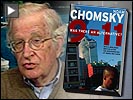
Noam Chomsky on the 9/11 Decade and the Assassination of Osama Bin Laden: Was There an Alternative?

911chomsky

Ten years ago, at a time when lawmakers from both sides of the aisle joined together to authorize endless war, Noam Chomsky’s was the leading voice to call for the United States to rethink its actions in the Middle East and across the globe. His 2001 book, simply titled “9-11,” became a surprise bestseller. The book collected a series of interviews Chomsky had given on the roots of the 9/11 attacks and his prescription for a just response. A decade later, Chomsky has just released an updated version titled “9-11: Was There an Alternative?” which refers to the U.S. assassination of Osama bin Laden and the continuity Chomsky sees between the Bush administration’s foreign policy and President Obama’s. “Right at this moment, Obama has succeeded in descending even below George W. Bush in approval in the Arab world,” says Noam Chomsky. “The policies change, but they’re hostile. We should understand where atrocities come from. They don’t come from nowhere. And if we’re serious, we should try to do something about what is the basis for them.” [includes rush transcript]

Guest:

Noam Chomsky, author and Institute Professor Emeritus at Massachusetts Institute of Technology, where he taught for more than 50 years. He is author of dozens of books. An updated edition of his book 9-11 has just been published, called 9-11: Was There an Alternative?

Rush Transcript

This transcript is available free of charge. However, donations help us provide closed captioning for the deaf and hard of hearing on our TV broadcast. Thank you for your generous contribution.
Donate – $25, $50, $100, More…


Related Links

AMY GOODMAN: As we continue to mark the decade since the September 11th attacks in the United States, today we spend the hour with MIT professor, world-renowned political dissident, linguist and author, Noam Chomsky.

In the months after 9/11, as the Bush administration attacked Afghanistan and geared up for the invasion of Iraq, Noam Chomsky released a small book that provided the definitive counter-narrative to the jingoism of the time. The book was called simply 9-11, a collected series of interviews Chomsky had given on the roots of the 9/11 attacks and his prescription for a just response. At a time when lawmakers from both sides of the aisle joined together to authorize endless war, Chomsky’s was the leading voice to call for a look in the mirror, for a rethinking of U.S. actions in the Middle East and across the globe. 9-11 went on to become a surprise bestseller.

Ten years later, Professor Chomsky has just released an updated version. It’s called 9-11: Was There an Alternative? “Was there an alternative?” refers to the U.S. assassination of Osama bin Laden and the continuity Chomsky sees between the Bush administration’s foreign policy and President Obama’s.

Today, we’ll speak with Noam Chomsky about the decade since 9/11, at a time when the U.S. is at war in several areas, at home in continued economic turmoil. Noam Chomsky has just returned from Iceland and Norway. He’s joining us from Boston, Massachussetts. And I’m joined here in New York for this interview by Democracy Now! producer Aaron Maté, who covered the thwarted Gaza-bound aid flotilla in Greece.

Welcome, Aaron, joining me in this interview. It’s good to have you with us.

AARON MATÉ: Thanks, Amy.

AMY GOODMAN: And thanks so much, Noam Chomsky, for being with us so soon after you’ve come back from your trip. Noam, why don’t we begin with this new book? You wrote 9-11 10 years ago, what become the definitive counter-narrative at the time. What did you feel was important to understand then, and now, with Was There an Alternative?

NOAM CHOMSKY: Well, as you mentioned, it wasn’t really a book, it was a collection of interviews, the ones that we were able to get transcripts for. Some of them we couldn’t.

There were a number of things that I thought had to be pointed out. By now, I think they’re hardly even controversial. But one was that the claim that the U.S. was being attacked because, as the president put it, they hate our freedoms was completely untenable. They hated our policy. In fact, it would be more accurate to say we hate their freedoms. There’s plenty of documentation about that, going back to the 1950s. Shortly after the president’s speech, the Pentagon had a study of this, and they concluded, yes, it’s not that they hate our freedoms, it’s they hate our policies.

And as I say, evidence about that is enormous, back to the ’50s. So, for example, in 1958, President Eisenhower, in internal documents long since released, asked his—raised the question with his staff about why there’s a campaign of hatred against us in the Arab world. He said, not from the governments, but from the people. And the National Security Council, major planning body, had just released a study on this in which they said that they concluded that there’s a perception in the Arab world that the United States supports harsh, oppressive dictatorships and that the U.S. blocks democracy and development and that we do it because we want to keep control over their energy resources. And it went on to say that this is fairly accurate, and that’s pretty much what we should be doing, as long as the populations are kept quiet.

And so it goes on. I won’t run through the details, but so it goes on until the present. In fact, right at this moment, Obama has succeeded in descending even below George W. Bush in approval in the Arab world. It’s minuscule, few percent. And it’s the policies, same—the policies change, but they’re hostile. So, one thing is, we should understand where atrocities come from. They don’t come from nowhere. And if we’re serious, we should try to do something about what is the basis for them.

That’s been—the other issue, which was important, or I think we have a lot more evidence about it now, is that there probably were much more constructive alternatives. The attack, the attack on the—the 9/11 attack was pretty harshly criticized in the—throughout the Muslim world, but particularly in the jihadi movement—you know, fatwas from leading clerics, harsh condemnation. It would have been—it’s very likely that it would have been possible, then, to split the jihadi movement, to isolate al-Qaeda, to move to apprehend the suspects—and, of course, in our system of justice, theoretically, people are suspects unless they’re—until they’re sentenced—so, to apprehend the suspects, treat it as a criminal action, try to make use of the fact that there were—that there was tremendous antagonism to this even among the jihadi movement, and move on to a much more constructive relationship with the general Muslim-Arab world.

Well, that path wasn’t taken. The path that was taken was to lash out of violently, first in Afghanistan, then in Iraq. That simply was kind of following Osama bin Laden’s playbook. Actually, that was pointed out pretty quickly by people like Michael Scheuer, the—he didn’t identify himself then, has since—the CIA—head of the CIA task force that was tracking bin Laden. He ended up concluding the United States is bin Laden’s best ally. We’re helping—his goal was to mobilize the Muslim world around the fear that the United States was attacking Islam, was carrying out a crusade, they have to defend themselves. And we helped. The invasion of Iraq, particularly, gave a big shot in the arm to the jihadi extremists. It was predicted by U.S. and British intelligence agencies—that’s been released since—that the attack on Iraq would increase terror, and it did, by a factor of seven the first year, according to RAND Corporation quasi-governmental statistics.

Well, that’s what happens when you lash out violently without seeking to understand the nature of what’s happening and pursuing the options for diplomatic, peaceful, negotiated settlements, and treating crimes as crimes. When there’s a crime, you try to identify the likely perpetrators, apprehend them, bring them to—bring them to a fair trial. I mean, that—it’s very likely that that could have been done at the times. We don’t know. There were tentative offers from the Taliban to allow a trial of bin Laden. It was not pursued. It was—the U.S. just dismissed it: “We don’t talk to you.” Well, could that have succeeded? We can only speculate.

It truly could have been done on May 2nd, when U.S. commandos, Navy SEALs, apprehended bin Laden—defenseless, was with his wife, no arms—apprehended him and assassinated him, then dumped his body at sea. That’s kind of an action which is just bound to increase speculation, cynicism, doubt—quite different from what in fact should have been done. Actually, one of the leading British legal specialists, civil libertarian, who incidentally approved of the action, nevertheless pointed out that the way it was carried out was criminal and dangerous in its implications. He compared it to the treatment of the far more horrendous war criminals after the Second World War. He pointed out that the British government wanted to just kill the Nazi leaders, but the U.S. government, or Truman, insisted that they be tried. They followed. And, in fact, then came the Nuremberg trials, which, you know, had their flaws, but at least did bring out in public the nature of the crimes. They also led to a quite an important conclusion by the chief prosecutor, U.S. chief prosecutor, Justice Robert Jackson. He informed the tribunal, in rather eloquent words, that, as he put it, we were handing these defendants a “poisoned chalice,” and if we ever sip from it, if we ever commit such crimes as aggression, one of the major crimes, then we must suffer the same punishment, or else, essentially, the trial is a farce. And that’s a choice we’ve had to make since. Not the right answer, in my opinion.

AMY GOODMAN: We’re talking to Noam Chomsky, Professor Emeritus at MIT. He has a new book out, 10 years after his book 9-11. It is called 9-11: Was There an Alternative?, with a new essay written after the assassination of Osama bin Laden. We’ll come back to this discussion in a minute.

[break]

AMY GOODMAN: Our guest for the hour is MIT professor Noam Chomsky. His latest book is called 9-11: Was There an Alternative? That last question, “Was there an alternative?,” referring to the assassination of Osama bin Laden. Aaron?

AARON MATÉ: Well, Noam, you mentioned the changes in discourse between 10 years ago and today. And actually, this issue of the reasons behind 9/11 came up last night at the Republican presidential debate. Congress Member Ron Paul of Texas drew boos from the crowd and a rebuke from other candidates on the podium when he criticized U.S. foreign policy in discussing the roots of 9/11.

REP. RON PAUL: We’re under great threat because we occupy so many countries. We’re in 130 countries. We have 900 bases around the world. We’re going broke. The purpose of al-Qaeda was to attack us, invite us over there, where they can target us. And they have been doing it. They have more attacks against us and the American interests per month than occurred in all the years before 9/11. But we’re there, occupying their land. And if we think that we can do that and not have retaliation, we’re kidding ourselves. We have to be honest with ourselves. What would we do if another country, say China, did to us what we do to all those countries over there?

So, this whole idea that the whole Muslim world is responsible for this and they’re attacking us because we’re free and prosperous, that is just not true. Osama bin Laden and al-Qaeda have been explicit. They have been explicit, and they wrote and said that we attacked—we attacked America because you had bases on our holy land in Saudi Arabia, you do not give Palestinians a fair treatment, and you have been bombing—I didn’t say that, I’m trying to get you to understand what the motive was behind the bombing. At the same time, we had been bombing and killing hundreds of thousands of Iraqis for 10 years. Would you be annoyed? If you’re not annoyed, then there’s some problem.

AARON MATÉ: That was Republican Congress Member Ron Paul of Texas speaking last night at the Republican presidential debate. Noam Chomsky, your response?

NOAM CHOMSKY: I think what he said is completely uncontroversial. You can read it in government documents. You can find it in polls. Maybe people don’t like to hear it, but, as I mentioned before, it goes back to the 1950s. Actually, right after 9/11, the Wall Street Journal, to its credit, did a study of privileged Muslims, sometimes called “monied Muslims,” people in the Muslim world who are deeply embedded in the U.S. global project—lawyers, directors of multinational corporations and so on, not the general population. And it was very much like what Eisenhower had—was concerned about, and the National Security Council, in the 1950s. There was a lot of antagonism to—a lot of antagonism to U.S. policy in the region, partly support of dictators blocking democracy and development, just as the National Security Council concluded in 1958.

Also, by then, by 2001, there were much more specific things: very much a lot of anger about the U.S. backing for the way—Israeli occupation of the Occupied Territories, settlements, the bitter oppression of the Palestinians, and also, something that isn’t discussed much here but meant a lot there—and remember, these are privileged Muslims, leaders of—those who kind of carry out, implement the general U.S. economic and social policies in the region. The other thing, besides the Israeli—support of Israeli crimes, was the sanctions against Iraq. This was 2001, remember. The sanctions against Iraq were brutal and destructive. They killed hundreds of thousands of people. Both of the international diplomats who administered the Oil-for-Food program, distinguished international diplomats—Denis Halliday, Hans von Sponeck, in sequence—both of them resigned in protest because they regarded the sanctions as genocidal. They were carrying out a kind of a mass slaughter of Iraqis. They were strengthening Saddam Hussein. They were compelling the population to rely on him just for survival. And these were major crimes of the 1990s. And privileged Muslims, monied Muslims, in the Saudi Arabia, elsewhere, were bitterly opposed to this, not because they hate our freedoms, because they don’t like murderous and brutal policies.

04 How Goldman Sachs Created the Food Crisis

How Goldman Sachs Created the Food Crisis

Don’t blame American appetites, rising oil prices, or genetically modified crops for rising food prices. Wall Street’s at fault for the spiraling cost of food.

BY FREDERICK KAUFMAN | APRIL 27, 2011

Demand and supply certainly matter. But there’s another reason why food across the world has become so expensive: Wall Street greed.

It took the brilliant minds of Goldman Sachs to realize the simple truth that nothing is more valuable than our daily bread. And where there’s value, there’s money to be made. In 1991, Goldman bankers, led by their prescient president Gary Cohn, came up with a new kind of investment product, a derivative that tracked 24 raw materials, from precious metals and energy to coffee, cocoa, cattle, corn, hogs, soy, and wheat. They weighted the investment value of each element, blended and commingled the parts into sums, then reduced what had been a complicated collection of real things into a mathematical formula that could be expressed as a single manifestation, to be known henceforth as the Goldman Sachs Commodity Index (GSCI).

For just under a decade, the GSCI remained a relatively static investment vehicle, as bankers remained more interested in risk and collateralized debt than in anything that could be literally sowed or reaped. Then, in 1999, the Commodities Futures Trading Commission deregulated futures markets. All of a sudden, bankers could take as large a position in grains as they liked, an opportunity that had, since the Great Depression, only been available to those who actually had something to do with the production of our food.

Change was coming to the great grain exchanges of Chicago, Minneapolis, and Kansas City — which for 150 years had helped to moderate the peaks and valleys of global food prices. Farming may seem bucolic, but it is an inherently volatile industry, subject to the vicissitudes of weather, disease, and disaster. The grain futures trading system pioneered after the American Civil War by the founders of Archer Daniels Midland, General Mills, and Pillsbury helped to establish America as a financial juggernaut to rival and eventually surpass Europe. The grain markets also insulated American farmers and millers from the inherent risks of their profession. The basic idea was the “forward contract,” an agreement between sellers and buyers of wheat for a reasonable bushel price — even before that bushel had been grown. Not only did a grain “future” help to keep the price of a loaf of bread at the bakery — or later, the supermarket — stable, but the market allowed farmers to hedge against lean times, and to invest in their farms and businesses. The result: Over the course of the 20th century, the real price of wheat decreased (despite a hiccup or two, particularly during the 1970s inflationary spiral), spurring the development of American agribusiness. After World War II, the United States was routinely producing a grain surplus, which became an essential element of its Cold War political, economic, and humanitarian strategies — not to mention the fact that American grain fed millions of hungry people across the world.

Futures markets traditionally included two kinds of players. On one side were the farmers, the millers, and the warehousemen, market players who have a real, physical stake in wheat. This group not only includes corn growers in Iowa or wheat farmers in Nebraska, but major multinational corporations like Pizza Hut, Kraft, Nestlé, Sara Lee, Tyson Foods, and McDonald’s — whose New York Stock Exchange shares rise and fall on their ability to bring food to peoples’ car windows, doorsteps, and supermarket shelves at competitive prices. These market participants are called “bona fide” hedgers, because they actually need to buy and sell cereals.

On the other side is the speculator. The speculator neither produces nor consumes corn or soy or wheat, and wouldn’t have a place to put the 20 tons of cereal he might buy at any given moment if ever it were delivered. Speculators make money through traditional market behavior, the arbitrage of buying low and selling high. And the physical stakeholders in grain futures have as a general rule welcomed traditional speculators to their market, for their endless stream of buy and sell orders gives the market its liquidity and provides bona fide hedgers a way to manage risk by allowing them to sell and buy just as they pleased.

But Goldman’s index perverted the symmetry of this system. The structure of the GSCI paid no heed to the centuries-old buy-sell/sell-buy patterns. This newfangled derivative product was “long only,” which meant the product was constructed to buy commodities, and only buy. At the bottom of this “long-only” strategy lay an intent to transform an investment in commodities (previously the purview of specialists) into something that looked a great deal like an investment in a stock — the kind of asset class wherein anyone could park their money and let it accrue for decades (along the lines of General Electric or Apple). Once the commodity market had been made to look more like the stock market, bankers could expect new influxes of ready cash. But the long-only strategy possessed a flaw, at least for those of us who eat. The GSCI did not include a mechanism to sell or “short” a commodity.

This imbalance undermined the innate structure of the commodities markets, requiring bankers to buy and keep buying — no matter what the price. Every time the due date of a long–only commodity index futures contract neared, bankers were required to “roll” their multi-billion dollar backlog of buy orders over into the next futures contract, two or three months down the line. And since the deflationary impact of shorting a position simply wasn’t part of the GSCI, professional grain traders could make a killing by anticipating the market fluctuations these “rolls” would inevitably cause. “I make a living off the dumb money,” commodity trader Emil van Essen told Businessweek last year. Commodity traders employed by the banks that had created the commodity index funds in the first place rode the tides of profit.

Bankers recognized a good system when they saw it, and dozens of speculative non-physical hedgers followed Goldman’s lead and joined the commodities index game, including Barclays, Deutsche Bank, Pimco, JP Morgan Chase, AIG, Bear Stearns, and Lehman Brothers, to name but a few purveyors of commodity index funds. The scene had been set for food inflation that would eventually catch unawares some of the largest milling, processing, and retailing corporations in the United States, and send shockwaves throughout the world.

The money tells the story. Since the bursting of the tech bubble in 2000, there has been a 50–fold increase in dollars invested in commodity index funds. To put the phenomenon in real terms: In 2003, the commodities futures market still totaled a sleepy $13 billion. But when the global financial crisis sent investors running scared in early 2008, and as dollars, pounds, and euros evaded investor confidence, commodities — including food — seemed like the last, best place for hedge, pension, and sovereign wealth funds to park their cash. “You had people who had no clue what commodities were all about suddenly buying commodities,” an analyst from the United States Department of Agriculture told me. In the first 55 days of 2008, speculators poured $55 billion into commodity markets, and by July, $318 billion was roiling the markets. Food inflation has remained steady since.

The money flowed, and the bankers were ready with a sparkling new casino of food derivatives. Spearheaded by oil and gas prices (the dominant commodities of the index funds) the new investment products ignited the markets of all the other indexed commodities, which led to a problem familiar to those versed in the history of tulips, dot–coms, and cheap real estate: a food bubble. Hard red spring wheat, which usually trades in the $4 to $6 dollar range per 60-pound bushel, broke all previous records as the futures contract climbed into the teens and kept on going until it topped $25. And so, from 2005 to 2008, the worldwide price of food rose 80 percent — and has kept rising. “It’s unprecedented how much investment capital we’ve seen in commodity markets,” Kendell Keith, president of the National Grain and Feed Association, told me. “There’s no question there’s been speculation.” In a recently published briefing note, Olivier De Schutter, the U.N. Special Rapporteur on the Right to Food, concluded that in 2008 “a significant portion of the price spike was due to the emergence of a speculative bubble.”

What was happening to the grain markets was not the result of “speculation” in the traditional sense of buying low and selling high. Today, along with the cumulative index, the Standard & Poors GSCI provides 219 distinct index “tickers,” so investors can boot up their Bloomberg system and bet on everything from palladium to soybean oil, biofuels to feeder cattle. But the boom in new speculative opportunities in global grain, edible oil, and livestock markets has created a vicious cycle. The more the price of food commodities increases, the more money pours into the sector, and the higher prices rise. Indeed, from 2003 to 2008, the volume of index fund speculation increased by 1,900 percent. “What we are experiencing is a demand shock coming from a new category of participant in the commodities futures markets,” hedge fund Michael Masters testified before Congress in the midst of the 2008 food crisis.

The result of Wall Street’s venture into grain and feed and livestock has been a shock to the global food production and delivery system. Not only does the world’s food supply have to contend with constricted supply and increased demand for real grain, but investment bankers have engineered an artificial upward pull on the price of grain futures. The result: Imaginary wheat dominates the price of real wheat, as speculators (traditionally one-fifth of the market) now outnumber bona-fide hedgers four-to-one.

Today, bankers and traders sit at the top of the food chain — the carnivores of the system, devouring everyone and everything below. Near the bottom toils the farmer. For him, the rising price of grain should have been a windfall, but speculation has also created spikes in everything the farmer must buy to grow his grain — from seed to fertilizer to diesel fuel. At the very bottom lies the consumer. The average American, who spends roughly 8 to 12 percent of her weekly paycheck on food, did not immediately feel the crunch of rising costs. But for the roughly 2-billion people across the world who spend more than 50 percent of their income on food, the effects have been staggering: 250 million people joined the ranks of the hungry in 2008, bringing the total of the world’s “food insecure” to a peak of 1 billion — a number never seen before.

What’s the solution? The last time I visited the Minneapolis Grain Exchange, I asked a handful of wheat brokers what would happen if the U.S. government simply outlawed long–only trading in food commodities for investment banks. Their reaction: laughter. One phone call to a bona-fide hedger like Cargill or Archer Daniels Midland and one secret swap of assets, and a bank’s stake in the futures market is indistinguishable from that of an international wheat buyer. What if the government outlawed all long-only derivative products, I asked? Once again, laughter. Problem solved with another phone call, this time to a trading office in London or Hong Kong; the new food derivative markets have reached supranational proportions, beyond the reach of sovereign law.

Volatility in the food markets has also trashed what might have been a great opportunity for global cooperation. The higher the cost of corn, soy, rice, and wheat, the more the grain producing-nations of the world should cooperate in order to ensure that panicked (and generally poorer) grain-importing nations do not spark ever more dramatic contagions of food inflation and political upheaval. Instead, nervous countries have responded instead with me-first policies, from export bans to grain hoarding to neo-mercantilist land grabs in Africa. And efforts by concerned activists or international agencies to curb grain speculation have gone nowhere. All the while, the index funds continue to prosper, the bankers pocket the profits, and the world’s poor teeter on the brink of starvation.

04 The Role of Writing

http://fyw.umn.edu/assets/pdf/2010SWG.pdf

The Role of Writing
Learning to write is a life-long task: one that begins in childhood, is enhanced by formal education,
and is further refined though an individual’s personal, social, and professional experiences. At the
University, writing is how scholars – from undergraduate students to faculty researchers – explore
ideas, conduct research, and communicate learning. Writing and learning are inseparable, which
is why the teaching of writing is a responsibility shared by all departments at the University of
Minnesota.

Writing at the University is guided by the following principles:
Effective writing requires practice. A primary goal of the writing requirements at the
University is to offer ongoing writing practice, so you will have the opportunity to develop
your writing skills.
• Effective writers are able to write for a variety of audiences. They understand that
effective writing depends on context – who is writing what to whom, in what settings, and
for what purposes. For this reason, you will write in many different kinds of courses, to
audiences ranging from your peers to senior scholars and scientists.
• Effective writers are also able to produce a range of different kinds of writing. The
nature of the writing done in University courses varies considerably: you will be writing
in multiple disciplines, and in multiple genres (lab reports, essays, summaries, personal
reflections, creative writing, and so forth). As your education progresses, you will work
more and more within a specific discipline with its own writing conventions.
• Because no one course can meet all these goals, the collective goal of ALL writing at
the University is to prepare students to communicate effectively in a variety of
situations both within and beyond the University. In your personal, professional, and
civic life, you will need to be flexible to adapt to changing circumstances and needs. The
skills involved in effective writing apply to a great deal more than “simply writing”: they
are the means to professional development, to critical thinking, and to intellectually active
participation in the world.This guide is designed to help you develop as a writer by outlining techniques, strategies, and
suggestions for making the most of your writing experience at the University.

http://bailiwick.lib.uiowa.edu/journalism/cite.html

Organizations References & Tools Cyberjournalism Media Law Gender, Race & Ethnicity News
J-Schools & Teacing Journals & Magazines Listservs Searching Citing E-Texts J-Jobs
Journalism Resources - Compiled & edited by Karla Tonella, University of Iowa

Guide to Citation Style Guides

A Brief Citation Guide for Internet Sources in History and the Humanities
Melvin E. Page wrote this quick guide to the Chicago & Turabian citation protocols for electronic sources.
APA-Style Documentation
“A Guide for Writing Research Papers based on Styles Recommended by The American Psychological Association” is written by Charles Darling, Professor of English, Capital Community-Technical College. This hypertext manual covers most reference types including electronic sources.
APA: “Electronic Reference Formats Recommended by the American Psychological Association”
This well organized set of pages is on the American Psychology Association’s own web site.
Citing Electronic Documentation – Chicago Style, APA & MLA
University of Minnesota – Online Writing Center’s Mark D. Stewart wrote this guide based on the 1993 edition of The Chicago Style Guide. Click on the in-text citations to see how each source is written in the references list.
Citing Cyberspace – James D. Lester
One of the few online citation guides that covers the Chicago Style and the CBE (Council of Biology Editors) Numbering Style.
Citing Lexis/Nexis
Short but handy guide using the MLA and APA Style conventions.
Citing Records in the National Archives of the United States
“National Archives and Records Administration (NARA) offers the following guidelines …[that] cover citations to textual records, microform records, nontextual archives (i.e., photographic records, posters, motion pictures, tape recordings, cartographic records, and architectural drawings), electronic records, and online references.”
Citing Sources
This Duke University Library guide gives examples of various citations for APA, Chicago, MLA and Turabian styles.
Footnoting Electronic Sources in the Chicago Style
Part of the Longman English Online Citation Guides “Citing Cyberspace” by James D. Lester covers MLA and APA styles but is one of the very few to also deal with Chicago Style and CBE Number style (Council of Biology Editors).
Intellectual Property in the Information Age: A Classroom Guide to Copyright
“If It’s On the WWW, It’s Published!” Janice Walker, better known for her expertise in citation guides, shows her grasp of copyright issues on the web too. This hypertext article is, unlike many copyright articles, very readable and very web savvy.
Introduction to Basic Legal Citation (1997-98 ed.)
by Peter W. Martin (Cornell Law School) [“This citation primer is based on the Sixteenth Edition of the “Bluebook” known as the authoritative reference work on “legal citation.”
J. Walker’s Home Page, Georgia Southern University
The reigning authority on electronic citation has provided many of her papers and guides here. My personal favorite is her impressive Online Citation Guide written for the Longman English site. She also has the best guide to finding and evaluating Internet sources here.
MLA Style – Modern Language Association of America
Straight from the horses mouth, “these guidelines . . . are the only ones available on the Intenet that are authorized” by the MLA.
Online! Citation Styles
A chapter from the book Online! A Reference Guide to Using Internet Sources by Andrew Harnack and Eugene Kleppinger (Bedford/St.Martins). Separate pages devoted to MLA, APA, Chicago, CBE styles for many different electronic sources.
Sarah Byrd Askew Library – Citing Electronic Resources
Based on Li & Crane’s book (1993 edition). Some may find the table organization of this APA style guide easy to use.
Uncle Sam – Brief Guide to Citing Government Publications
Guidelines by the Government Publications Department, Regional Depository Library, The University of Memphis that provide “examples of the most common examples of government document citations. These examples are based on the Chicago/Turabian standard bibliographic style and not reference-list form. You may need to modify the citation to conform to the manual/form you are required to use.”

04 HAROLD BLOOM: “Seguiré leyendo mientras me quede un soplo de vida”

ENTREVISTA: HAROLD BLOOM Crítico literario

“Seguiré leyendo mientras me quede un soplo de vida”

EDUARDO LAGO 04/09/2011

Luz de agosto, la misma que hace 11 años, cuando lo entrevisté por primera vez, en verano de 2000. La casa, el jardín, las ventanas selladas, todo tiene el mismo aspecto. Entonces Harold Bloom era un hombre de 70 años, pletórico de energía, con bastantes kilos de más. Hoy me recibe un anciano enflaquecido que se apoya fatigosamente en un grueso bastón negro. Todo en la casa sirve de soporte a torres de libros, que se amontonan en los sofás, las sillas, los alféizares de las ventanas, en el suelo. Bloom dice haber superado ciertos problemas de salud, que califica de catástrofes. Constantemente bebe agua de una especie de biberón de plástico que recuerda la retorta de un alquimista. Es el crítico literario más importante de nuestro tiempo, por ser el único que ha sabido hacer llegar su portentosa sabiduría al lector normal, sin renunciar un ápice a la exigencia de calidad que es el distintivo de la gran literatura. Autor de más de 40 obras e innumerables estudios y artículos, Harold Bloom (Nueva York, 1930), que ocupa la Cátedra Sterling de Literatura de la Universidad de Yale desde hace más de medio siglo, acaba de añadir a su importante nómina de publicaciones un nuevo título: La anatomía de la influencia. En él vuelve sobre su más importante aportación al campo de los estudios literarios, el concepto de influencia. Se trata de una noción de considerable complejidad técnica, que Harold Bloom convierte aquí en el eje de un recorrido apasionante por las lecturas en que ha invertido toda su vida o, para decirlo parafraseando el título de su obra más emblemática, El canon occidental, un paseo por las mejores obras literarias de la historia. Simplificándolo al máximo, la influencia poética es un mecanismo que explica el proceso histórico de creación literaria, que Bloom caracteriza como una batalla formidable que los grandes creadores literarios de cada era se ven obligados a entablar con sus precursores, a fin de liberarse de la agónica influencia que ejercen sobre ellos los gigantes que los antecedieron. Alejándose del tecnicismo inherente a tan complejo proceso, Bloom desplaza el énfasis del libro a un terreno más humano y accesible, acercándolo a la realidad del día a día, como subraya el subtítulo que ha elegido para su obra: La literatura como forma de vida.

-La anatomía de la influencia es mi summa literaria, mi legado como crítico. El testimonio final de una vida dedicada a los libros. El verdadero asunto es la pasión por la literatura. Para mí, leer es la única manera de dar sentido a la vida. En el libro tiendo un puente a los millones de lectores auténticos de todo el mundo, lectores anónimos que contra viento y marea, pese a que corren tiempos terribles para la verdadera literatura, se niegan a renunciar a ella.

-¿Es su canto del cisne?

–En el sentido de que seguramente ya no tendré ocasión de escribir ninguna obra de la misma envergadura.

En lugar de hacer preguntas, sugiero leer en voz alta breves fragmentos, invitándole a iluminarlos con sus comentarios. Bloom acepta. “Gertrude Stein observó en una ocasión”, leo, “que uno escribe para sí mismo y para los desconocidos, lo cual yo traduzco como hablar conmigo mismo, que es lo que nos enseña a hacer la gran poesía, y hablar con los lectores disidentes, aquellos que buscan instintivamente en solitario la literatura de calidad, desdeñando a los devoradores de J. K. Rowling y Stephen King, que llevan a sus seguidores al suicidio intelectual, haciendo que se despeñen en el océano gris de Internet”.

“Hoy día se ha producido un abandono de toda exigencia estética y cognitiva que son las señas de identidad de la gran literatura. La literatura imaginativa, tal y como la cultivaban Shakespeare, Cervantes, Dante y Montaigne, ha cedido ante la basura abominable de best sellers como los que acaba de citar y cualesquiera sean sus equivalentes en España y el resto de los países del mundo. ¿Qué se puede hacer ante una situación así? Llevo años luchando contra ello, pero sé que es una batalla perdida”.

Leo la siguiente frase: “Todos tememos la soledad, la locura y la muerte. Whitman, Leopardi o Hart Crane no nos curarán de esos espantos, y sin embargo esos poetas nos traen el fuego y la luz”.

“Comentar eso es decir por qué leemos, por qué vivimos. Supongo que lo esencial es la alusión al fuego y la luz, manifestaciones elementales de la fuerza vital. En realidad, todo se reduce a la emoción y al deseo, a la palabra, el dabar de la Biblia hebrea, el logos de los griegos, o dicho de otro modo, el amor por cuanto vive”.

Dentro de unos días regresa a la universidad, a impartir clases. La enseñanza, junto con la lectura y la escritura crítica, son sus grandes pasiones: “Será mi 56º año consecutivo como profesor de Yale. Si algo tengo claro es que jamás voy a retirarme. Jamás dejaré de enseñar ni de escribir”. Bloom comenta que en estos momentos está escribiendo tres libros: un estudio de cinco figuras clave de la literatura norteamericana, un novelista y cuatro poetas (Herman Melville, Emily Dickinson, Wallace Stevens, Walt Whitman y Hart Crane). “Los otros dos libros se apartan radicalmente de lo que he hecho siempre: de una parte, unas memorias literarias que espero concluir antes de morir y, más novedoso aún en alguien como yo, una obra de teatro sobre Walt Whitman”.

-¿Se sabe de memoria mucha poesía? ¿Le gusta recitarla?

-Toda, toda la poesía que hay bajo el sol. Esta mañana me desperté recitando la estrofa final del Diálogo entre el yo y el alma, de William Butler Yeats:

“Me contenta seguir hasta su fuente / todo evento en acción o pensamiento. / ¡Medirlo todo; perdonármelo todo! / Cuando así me libero del arrepentimiento / fluye tanta dulzura en nuestro pecho / que debemos reír y debemos cantar, / pues todo nos bendice, y es bendecido también / todo cuanto miramos”.

Bloom acerca a la boca el biberón de agua. El gesto trasluce la extraña cercanía entre la ancianidad y la infancia.

-¿Recuerda a Harold Bloom cuando era un niño de 5 o 6 años?

-Lo recuerdo muy bien. Era un niño muy solitario, el menor de cinco hermanos, tres niñas y dos niños. Me refugiaba en un rincón del piso, en el Bronx, y me pasaba el día leyendo.

-¿Puede evocar algunas de las lecturas más importantes de aquellos años?

-Ingentes cantidades de poesía, en yiddish, y luego, cuando aprendí a leer inglés por mi cuenta, con 6 años, traducciones de las sagas nórdicas. Pero quizás el libro que más me afectó fue Moby Dick, con 11 años. Me hizo experimentar una angustia y un horror metafísicos que solo había sentido con Shakespeare.

Llega la hora de hacerse la foto, ritual al que Harold Bloom se somete con júbilo casi infantil. Elige cuidadosamente una gorra de los New York Yankees, de los que se declara fervoroso fan. Es conocido su empeño por hacer ejercicio durante las entrevistas. En este caso, se limita a subir y bajar las escaleras de madera que dan al jardín trasero de la casa. “Pregunte lo que quiera”, dice. Aprovecho la ocasión para pedirle que se pronuncie sobre la gran novela norteamericana de nuestro tiempo. “Los grandes novelistas americanos vivos”, responde con resolución, “son Philip Roth, Don DeLillo, Cormac McCarthy y el misterioso Thomas Pynchon, probablemente el mejor de todos ellos”.

Tras decir esto, Harold Bloom da por terminada la entrevista, manifestando encontrarse muy cansado, y nos acompaña hasta la puerta. Inopinadamente, el fotógrafo le espeta: “Profesor Bloom, ¿le viene a la memoria un retrato memorable de un rostro hecho con palabras?”. “El espejo de mano, de Edgar Allan Poe, un texto terrible”, responde.

Al llegar a Nueva York, busco el poema, que es, en efecto pavoroso, solo que no lo escribió Poe, sino Walt Whitman, y consiste en una descripción escalofriante del cuerpo repugnante de un anciano. El desliz revela qué es lo que Bloom ve al asomarse al espejo: la muerte misma, que él mantiene a raya azogue en mano. Unos minutos antes, en el curso de la conversación, evocaba un verso de su amigo Mark Strand que dice: “El espejo no es nada sin ti”.

Harold Bloom cierra la puerta tras de sí, dejándonos con la sensación de que al irnos no se queda solo en la casa. Lo acompañan voces, ecos, versos y frases que necesita recitar: “Decía Valéry que los poemas no se acaban, sino que se abandonan. Tampoco es posible escaparse del laberinto de la influencia. Una vez que se llega a su centro, eres tú quien empieza a ser leído con más fuerza de la que te ha sido conferida para adentrarte en la imaginación de otros. El laberinto es la vida misma. No puedo poner punto final a este libro, porque tengo intención de seguir leyendo mientras me quede un soplo de vida”.

La caída del Imperio Americano

La conversación con Bloom duró varias horas, que no resulta posible resumir aquí. Uno de los momentos más intensos fue su evocación de dos obras maestras del siglo XVIII inglés, para él sendos modelos de la prosa ensayística. Una es El cuento de la barrica, una farsa del gran maestro de la sátira y la ironía, Jonathan Swift, que Bloom afirma haber leído 120 veces y saberse de memoria. La otra es el sexto volumen de la Historia del declive y la caída del Imperio Romano, de Edward Gibbon. “Lo lamento, pero no me queda más remedio que denunciar a los Estados Unidos. El libro de Gibbon es un texto profético, que encierra un diagnóstico perfectamente aplicable a lo está ocurriendo hoy en mi país. Se podría titular Declive y caída del Imperio Americano.

Bastaría con cambiar unos cuantos nombres. Nuestros emperadores más recientes, salvo Obama, que es una víctima impotente de las circunstancias, como el resto de los ciudadanos, están cometiendo los mismos errores que cometieron los últimos emperadores romanos. Bush padre e hijo actuaron haciendo gala de un estilo que parece calcado del de los últimos emperadores romanos, emprendiendo guerras irresponsables abocadas a la derrota y la catástrofe incluso en la misma zona geográfica, en áreas que en parte corresponden a lo que es hoy Irak. Y lo mismo vale para Afganistán y Somalia”.

Para Bloom, la lectura de Gibbon debiera ser obligatoria en su país. “Gibbon atribuye la caída de Roma al alza de la fe cristiana y la adopción oficial del cristianismo por parte del Imperio. Hoy día Europa, al margen de espectáculos como la reciente visita del Papa a España, es una sociedad casi enteramente secular. La única nación del hemisferio occidental que no se ha emancipado de la fe cristiana son los Estados Unidos, lo cual nos lleva directamente al argumento de Gibbon. Estados Unidos está viviendo un momento histórico terrible, con fenómenos como el llamado Tea Party, que no es ni más ni menos que un partido fascista. Resulta inconcebible que en 2011 un oligarca como Rick Perry, que niega la evolución y el cambio climático, pueda ser nominado por el Partido Republicano como candidato presidencial, pero hay muchas posibilidades de que sea así. El momento actual guarda un parecido alarmante con el que vivió Alemania cuando los nazis accedieron al poder en los años treinta”.

04 Speculating with Lives

LA verdadera cara del capitalismo.
SPIEGEL ONLINE

09/01/2011 01:18 PM

Speculating with Lives

How Global Investors Make Money Out of Hunger

By Horand Knaup, Michaela Schiessl and Anne Seith

In recent years, the financial markets have discovered the huge opportunities presented by agricultural commodities. The consequences are devastating, as speculators drive up food prices and plunge millions of people into poverty. But investors care little about the effects of their deals in the real world.

The room in which the world’s food is distributed looks everything but appetizing. Bits of paper and disposable cups litter the trading floor at the Chicago Board of Trade (CBOT). Sweaty men in bright yellow, blue or red jackets walk around, seemingly oblivious of the debris beneath their feet, waving their hands, shouting and scrapping over futures contracts for soybeans, pork bellies or wheat.

Here, in the trading room of the world’s largest commodity futures exchange, decisions are made about the prices of food — and, by extension, the fates of millions of people. Those decisions affect both hunger on the planet and the wealth of individual investors.

For Alan Knuckman, there is hardly a nicer place than the CBOT trading floor. “This is capitalism in its purest form,” the commodities expert raves. “This is where millionaires are made.” The 42-year-old’s face shines with a boyish glow — perhaps because he has never stopped playing.

Knuckman arrived here 27 years ago, and quickly advanced from his first job as a runner in the trading room to a trader. He worked for brokerage firms, soon established his own firm and is now an analyst with Agora Financials, a consulting firm specializing in commodities investments. He also writes a newsletter that offers investment tips. “I trade in anything you can get in and out of quickly,” he says candidly. “I’m here to make money.”

‘I Believe in the Market’

How he makes money doesn’t make any difference to Knuckman. He draws no distinctions among commodities like petroleum, silver or food products. “I don’t believe in politics,” he says. “I believe in the market, and the market is always right.”

How does he feel about exploding food prices? For Knuckman, they are purely a reflection of supply and demand. And speculators? They’re good for the market, because they predict developments early on. Is there excessive speculation? “I don’t see it.”

It’s a surprising comment. Never before has so much cash flowed into financial transactions involving agricultural commodities. In the last quarter of 2010 alone, the amount of money invested in these commodities tripled compared with the previous quarter. There has been a lot of money in the market since the countries of the world tried to overcome the financial crisis with massive economic stimulus programs and bailout packages.

Agricultural commodities attract investors who are no more interested in grain than they were previously in dot-com companies or subprime mortgages. They range from giant pension funds to small private investors searching for new, safer investment options.

Satisfying the Demand

The large index and agriculture funds now being offered by the banks seem to have come along just at the right time to satisfy this demand. All of a sudden, the world’s food supplies have become a tradable commodity, as easy to handle as stocks.

The downside is that food prices are rising in parallel to the ravenous demand for agricultural securities. In March, the Food and Agriculture Organization of the United Nations (FAO) reported new record high prices, which even surpassed the prices during the last major food crisis in 2008. According to the FAO’s Food Price Index, overall food costs rose by 39 percent within one year. Grain prices went up by 71 percent, as did prices for cooking oil and fat. The index had reached 234 points in July, only four points below its all-time high in February.

“The age of cheap food is over,” predicts Knuckman, noting that this can’t be such a bad thing for US citizens. “Most Americans eat too much, anyway.”

For his fellow Americans, who spend 13 percent of their disposable income on food, the price hike may be an annoyance. But for the world’s poor, who are forced to spend 70 percent of their meager budgets on food, it’s life-threatening.

Since last June alone, higher food prices have driven another 44 million people below the poverty line, reports the World Bank. These are people who must survive on less than $1.25 (€0.87) a day. More than a billion people are starving worldwide. The current famine in the Horn of Africa is not only the result of drought, civil war and corrupt officials, but is also caused by prohibitively high food prices.

‘Side Effects’

Knuckman refers to the fact that the poorest of the poor can no longer pay for their food as “undesirable side effects of the market.” Halima Abubakar, a 25-year-old Kenyan woman, is experiencing these supposed side effects at first hand.

She is sitting in her corrugated metal hut in Kibera, Nairobi’s biggest slum, wondering what to put on the table this evening for her husband and their two children. Until now, the Abubakars were among the higher earners in Kibera. The family managed to feed itself adequately with the monthly salary of €150 that Halima’s husband earns as a prison guard.

But that has suddenly become difficult. The price of corn meal, the most important food staple in Kenya, is now at a record high after increasing by more than 100 percent in only five months. Potato prices went up by a third, milk is also more expensive, and so are vegetables.

Abubakar doesn’t know why this is the case. She only knows that she suddenly has to pay close attention to how she spends the family’s meager daily food budget of about 300 shillings (€2.30). Her first step was to switch to a cheaper brand of corn meal. It doesn’t taste of much, but at least it fills one’s stomach. She sometimes goes without her own lunch so that her children can have enough to eat.

List of Possible Reasons

“More poor people are suffering and more people could become poor because of high and volatile food prices,” World Bank President Robert Zoellick said in April, describing the brutal effects of price increases on consumers in developing countries. The problem has many experts deeply concerned. The probable reasons for the price explosions are cited again and again at meetings and conferences. They include:

  • Climate change, which leads to droughts, floods and storm, and thus to crop failures;
  • The cultivation of biofuels, which takes valuable farmland out of food production;
  • The global population, which is growing too fast for agricultural production to keep up;
  • The emerging economies China and India, whose citizens are consuming greater quantities of higher quality food;
  • The rising price of oil, which makes it more expensive to produce and ship food products;
  • The rise in meat consumption, which means that more grain is needed for animal feed;
  • Decades of neglecting agriculture, especially in hunger-prone regions.

All of these factors sound logical and plausible, and some undoubtedly contribute to the tense food situation. Yet they are not responsible for the excessive price hikes.

Olivier de Schutter, the United Nations special rapporteur on the right to food, is one of the few who is trying to set the record straight. The production of biofuel and other “supply shocks” — such as crop failures and export bans — were “relatively minor catalysts,” he wrote recently. “But they set off a giant speculative bubble in a strained and desperate global financial environment.” He identifies the true culprits as major investors who, as the financial markets have dried up, have invested heavily in the commodities trade, expanding it beyond all proportion. According to de Schutter, excessive speculation is the primary cause of the price increases. Indeed, closer inspection reveals that the reasons cited to date for the price hikes on food products are somewhat dubious.

Every Bubble Needs a Story

Of course, plant-based fuels are increasingly competing with food production, but until now they only made up 6 percent of the global grain harvest. According to the World Bank, biofuels play a much smaller role in price increases than generally assumed. Besides, in June the US Congress voted against further subsidies for biofuel production, a vote that is seen as the beginning of a phase-out.The same holds true for the new demand for meat in emerging economies. Although meat consumption and, along with it, the demand for feed grain is rising, the Washington-based International Food Policy Research Institute (IFPRI) states that countries like China, India and Indonesia can satisfy their additional demand without significantly increasing meat imports. “We find no evidence that alleged stronger demand by emerging economies had any effect on world prices,” a World Bank report concludes.

And climate change? It undoubtedly leads to declines in production. Inventories are shrinking. And yet more food is still being produced than consumed.

It is likely, however, that the hysteria over the supposed food emergency is part of a clever investment strategy. After all, every financial bubble needs a story. In the case of the dot-com bubble, it was the narrative of a “New Economy” that seemed to invalidate the traditional economic rules, not to mention common sense. In the case of the US mortgage bubble, it was the myth of home ownership as a supposedly rock-solid investment. And the story, in the case of the food bubble, is the impending shortage of a product everyone needs: food.

The fact that bread and butter are mutating into an object of speculation for Wall Street has much to do with a fundamental shift in the way the food system works, one which the United Nations Conference on Trade and Development (UNCTAD) describes in a recently published study: the metamorphosis of the food market into a financial market.

Distorted Prices

UNCTAD chief economist Heiner Flassbeck, a former senior official in the German Finance Ministry under then Finance Minister Oskar Lafontaine, has long been concerned about speculation. The walls of his Geneva office, with its view of Lake Geneva, are covered with diagrams, while his latest book on the role of speculators sits on the table.

After the 2008 financial crash, Flassbeck began monitoring changes in the prices of currencies, commodities, government bonds and stocks more closely. When he found that the graphs were noticeably similar, Flassbeck assembled a team to study the phenomenon.

The result of the team’s efforts bears the innocuous title: “Price Formation in Financialized Commodity Markets: The Role of Information.” But the contents are explosive. The UNCTAD experts conclude that the commodities market isn’t functioning properly, or at least not the way a market is supposed to function in economic models, where prices are shaped by supply and demand. But the activities of financial participants, according to the study, “drive commodity prices away from levels justified by market fundamentals.”

This leads to massively distorted prices, which are not influenced by real factors but by the expectation that economic developments will improve or worsen.

Most investors involved in the commodities business today have little understanding of the actual products. “Market participants also make trading decisions based on factors that are totally unrelated to the respective commodity, such as portfolio considerations, or they may be following a trend,” the UNCTAD report concludes, describing the dangerous herd mentality of investors. According to the report, such behavior has nothing to do with objective pricing.

Gambling with the World’s Food

But how did the situation arise that hedge funds and investment banks can now influence the costs of bread in Tunisia, corn meal in Kenya and corn in Mexico? What happened to allow large pension funds and small investors to gamble with the world’s food supply? And how did the markets in Chicago, New York and London come to play such a decisive role in determining how many people must go without food?

The fault lies with a significant change in the market that remained virtually unnoticed for several years. The world of high finance made a number of adjustments that turned mankind’s staple foods into an object of speculation.

The trade in food commodities was long controlled by the traditional forces of supply and demand. Farmers grew the food that distributors and retailers sold as food products.

A publicly traded futures market developed in the interim. To hedge against price fluctuations, producers sold their harvests in advance at a fixed price, which was usually below the current or spot price. The products were delivered on the maturity date of the futures contract. If the current market price was lower than the futures price, the farmer benefited, and if it was higher, the holder of the futures contract benefited. The sole purpose of these futures transactions was to enable farmers and food processors to hedge their risks. Futures dealers supplied the market with cash, and consumers had access to products at all times.

The players permitted to participate in this market were, for the most part, directly involved in the agricultural industry: farmers, grain processors, warehouse owners, food multinationals. Banks played only a minor role. It was a credit industry of sorts, and it worked well as such. The market remained relatively stable for decades — until it was discovered by the financial industry.

Change in Regulations

But in order for the financial industry to tap this new business area, market access had to first be expanded. It was strictly regulated, and for good reason. The finance industry’s lobbyists got to work, and succeeded in 1999, when the US Commodities Futures Trading Commission substantially deregulated the futures markets. Now banks were permitted to hold large positions in commodities securities.

In 2004, the US Securities and Exchange Commission (SEC) expanded the banks’ scope for action when it approved a petition by the investment banks Lehman Brothers, Morgan Stanley, Bear Stearns and JP Morgan to relax equity capital rules. From then on, the financial professionals were able to trade with 40 times as much capital as they held in collateral. Even more play money flowed into the market.

But bets on individual commodities are highly risky, which initially deterred many investors. The banks needed a marketing idea, and Goldman Sachs had one, namely to bundle products together — an idea that seems suspiciously familiar in the wake of the subprime crisis. Index funds were created that contained a wide range of commodities futures, from oil to wheat. This spreads the risk and enables the funds to obtain a high credit rating, thereby heightening the appeal of the construct for major investors.

The trick is that speculators never convert the futures into real goods. The fund companies sell the contracts, which run for about 70 days, shortly before their maturity dates and use the fresh cash to invest in new futures. The system operates like a perpetual motion machine, with investors never coming into contact with the real market prices.

That’s precisely the point, say those who question whether speculators are responsible for rising commodity prices. They argue that the laws of supply and demand remain in force on the real, or spot, market, thereby bringing everything into equilibrium. In their view, whatever happens in the futures markets is irrelevant.

‘Vicious Cycle’

This is a fallacy. In reality, futures prices do affect real market prices, as Maximo Torero, director of the IFPRI’s Markets, Trade, and Institutions Division has learned. After taking a close look at the markets for corn, soybeans and wheat, he found that, in most cases, real prices followed futures prices. The anticipated future began changing the present.

Another factor is that rising futures prices encourage those who actually do own real goods to hoard their reserves, fueling prices even more.

In this manner, the financial industry’s involvement has thrown the once predictable food market completely out of balance. “The boom in new speculative opportunities in global grain, edible oil, and livestock markets has created a vicious cycle,” wrote Frederick Kaufman in an April 2011 article for Foreign Policy titled “How Goldman Sachs Created the Food Crisis.” His conclusion is equally clear: “The more the price of food commodities increases, the more money pours into the sector, and the higher prices rise.”

In fact, the volume of index fund speculation increased by a dizzying 2,300 percent between 2003 and 2008 alone. According to the FAO, today only 2 percent of commodity futures contracts result in the delivery of real goods. Before that happens, 98 percent of contracts are sold by investors who are interested in turning a quick profit — and who are certainly not interested in getting their hands on 1,000 pork bellies.

Number of Speculators Will Continue to Grow

The players include companies like Goldman Sachs. In 2009, the US investment bank earned more than $5 billion in commodities speculation — more than a third of its net earnings.”What we are experiencing is a demand shock coming from a new category of participant in the commodities futures markets,” hedge fund manager Michael Masters conceded in testimony before a US Senate committee addressing the food crisis in 2008.

As long as the market is not regulated, the number of speculators making money at the expense of hungry people will continue to grow, fears UNCTAD economist Flassbeck. The consequences would be devastating. According to the World Bank, an increase of only about 10 percent in worldwide food prices results in another 10 million people slipping below the poverty line. Even though there is enough food, many die of hunger simply because they can no longer afford to pay for it.

“To restore the proper functioning of commodity markets, swift political action is required on a global scale,” the UNCTAD study concludes. It calls for increasing transparency in commodities markets and tightening regulations on market participants. The experts believe that it would be helpful for governments to introduce their own commodity reserves, which would enable them to inject these reserves into the market to contain sudden price spikes. They also suggest that the introduction of a transactions tax “could generally slow down financial market activities” and curb speculation.

Dying Quietly

For a time, it seemed as if such proposals stood a chance of being addressed by politicians. The images of protesting North Africans struck fear into the hearts of the powerful. There was talk of “hunger uprisings.” But that idea too can now be relegated to the realm of myth.

“One could also call them oil uprisings,” says Bettina Engels, an expert in peace and conflict studies at the Otto Suhr Institute of Political Science in Berlin. “The struggle is all about political participation and the redistribution of wealth,” she adds. The fact that the middle class, and not the poorest of the poor, has been taking to the streets in Tunis, Cairo and Tripoli, reinforces her argument.

“Hungry people have other things to do than demonstrate,” says Ralf Südhoff, head of the Berlin office of the United Nations’ World Food Programme. Most, according to Südhoff, are small farmers, people who die quietly and inconspicuously in rural areas.

Still, the subject of food prices has gradually made its way up the political agenda. Even the free-market liberal Guido Westerwelle, Germany’s foreign minister and the former leader of the Free Democratic Party, is now sharply criticizing “irresponsible speculation” in food products. “Between 2006 and 2009, millions of men, women and children suffered from hunger, because the sale of dubious financial products caused food prices to explode,” Westerwelle said during an event at the German Foreign Ministry in May.

Taming the Market

French President Nicolas Sarkozy says that it is in the “nature of a market” to be regulated, or else it would be a “jungle.” Sarkozy, who is chairing both the G-8 (the group of the leading industrialized countries) and the G-20 (the community of the 20 major industrialized and emerging economies) this year, has made the problem a major focus of his presidency.

The subject of rising food prices was also at the center of the conference of G-20 agriculture ministers in Paris on June 22-23. The French president energetically argued for tighter controls on agricultural markets, saying: “An unregulated market is not a market, but simply a lottery in which fortune favors the most cynical.”

But the politicians only managed to agree on the introduction of a global Agriculture Market Information System, which will allow governments to share data on commodities. It is intended to make it easier to react more quickly to price increases in wheat, corn, rice and soybeans in the future.

But there is still no concrete regulation of financial transactions involving agricultural products. There is too much resistance to the idea, especially in the United States and Great Britain, which are concerned about the potential impact on the health of their financial markets.

Shifting to Over-the-Counter Trading

Brussels, at least, now intends to revise its guidelines in relation to trading in commodities and commodity derivatives. Lawmakers there want to make such trading more transparent, so that everyone knows who is doing what. They are also considering imposing position limits on speculative contracts, which individual traders would not be permitted to exceed for a given product.

The EU is unlikely to reap much praise for the initiative. While there are no legal restrictions on positions in the commodities trade on European futures markets, such limits have long been the standard in the United States. US regulators are currently discussing the imposition of limits for other commodities, like milk, cotton, coffee and cocoa.

But even then, banks, companies and hedge funds will likely shift their business to the over-the-counter market, conducting their trades directly with one another, without middlemen and well removed from any supervision whatsoever. Already only a fraction of the worldwide trade in derivatives is conducted on the official exchanges.

In light of this dangerously uncontrolled growth, it seems only reasonable to strictly regulate the business. Plans to do so are even in the works in the United States, and yet lobbyists for the financial industry have consistently managed to stall legislation.

Even as politicians have been hesitant to address the question of feeding the world, the business community has been eager to get in on the game.

Looking for Opportunities

In early May, hundreds of attendees crowded into the Waldorf Astoria Hotel in New York to learn about the latest agricultural investment opportunities at the third Global AgInvesting conference. Bankers, brokers, producers, traders, asset managers and large investors were there, as were representatives of the Dallas Police and Fire Pension System and the chief investment officers of elite institutions like New York’s Columbia University and George Washington University in Washington, DC.

They all wanted to know how best to use rising food prices to turn a profit. Is it better to invest in farmland in the United States, or perhaps Brazil? Is land for biofuel production cheaper in Africa or South America? And how quickly can investors get out of these investments, if necessary?

Financial investors have little interest in the effects of their investments on the countries involved, or in the social and environmental consequences. The organizers of the AgInvesting conference prudently scheduled a presentation on responsible investing in agriculture at the tail end of the event — when most attendees were already on their way back to the airport.

Critics refer to investors who buy up agricultural land in other countries as “land robbers.” Former FAO Director-General Jacques Diouf berated them as “neo-colonialists.” But those being chided in this manner are unaware of any culpability. They see their investment as beneficial, arguing that they are helping to feed the rapidly growing global population.

Land Grabs

Although the world population is not growing as fast as it did in the last 40 years, during which it almost doubled, the projected 30 percent increase in population by the year 2050 means that more than 9 billion people will have to be fed.

Under these circumstances, the land grabs did not look like such a bad idea at first. Even the World Bank initially advocated investments in underdeveloped countries, hoping that everyone would benefit once the infrastructure had been developed and jobs had been created.

But the idea of combining the greed of investors with the fight against hunger as a mutually beneficial business venture has failed miserably.

A conference at the University of Sussex and a study by the World Bank both came up with conclusions that are almost entirely devastating. Researchers describe corrupt elites who have sold off the land of farmers deprived of their rights; job promises that are not being kept; irrigation systems that deprive local residents of water; deforestation, destroyed habitats and monocultures contaminated with pesticides; and forced displacement. According to the World Bank, some 80 million hectares of land have fallen into the hands of foreign investors in the last few years.

‘It’s the Government’s Responsibility to Feed People’

The problem is particularly glaring in Ethiopia, a country whose name is associated with starvation for many people. Even though 5.7 million Ethiopians are dependent on international food aid, the government sells or leases large tracts of fertile land to foreign investors. They, in turn, export most of the food they produce to other countries.Since 2007, the Ethiopian government has approved 815 foreign-funded agricultural projects. Saudi firms, multinational agricultural companies and British pension funds act as investors. Some 3.6 million hectares of land are up for grabs, much of it in the Gambela region, the proposed site of a national park. Now virgin forest is being cleared to produce food for other countries. Fifty kilometers (31 miles) outside the capital Addis Ababa, Jittu Horticulture, a subsidiary of a Spanish agricultural group, produces 180,000 kilograms (396,000 pounds) of vegetables a week. The produce is exported to the Middle East, supplying multinational oil companies and five-star hotels in Dubai, Qatar, Bahrain and Saudi Arabia.

“We bring foreign currency into the country, enabling the government to buy wheat for the hungry,” Dutch manager Jans Brins told the Berlin daily newspaper Tagesspiegel. “It’s the government’s responsibility to feed people who are unable to buy anything for themselves.”

Investing in the Wrong Things

That is precisely the problem: There is enough food, but it’s unaffordable for many people. Investors do not believe it is their responsibility to produce affordable food. Their job is to turn a lot of money into even more money. The British hedge fund Emergent Asset Management, for example, expects a 25 percent return on harvest profits and increases in the cost of farmland.

This much profit is normally unattainable with fallow land far from roads and water. Investors are usually drawn to developed areas with fertile soil, where they pursue intensive agricultural methods that tend to exacerbate rather than solve the problem of feeding the world in the long term.

As a result, the harm inflicted on the undernourished people of the world by investors and speculators is not limited to price increases. “It isn’t just that the wrong people are investing; they are also investing in the wrong things,” says Angelika Hilbeck of the Swiss Federal Institute of Technology Zurich.

Hilbeck, an agricultural ecologist, is one of the authors of the UN’s International Assessment of Agricultural Knowledge, Science and Technology for Development. In this unique project, hundreds of scientists commissioned by the World Bank and the UN brought together their knowledge about the future of agriculture and its role in reducing hunger and poverty. The report, published in 2009, was a devastating indictment of industrial agriculture, which, as the study concludes, is responsible in large part for climate change, species extinction, poisoning of the environment, water shortages, disease and poverty.

Calls for Change

Given the threat posed by climate change, the authors call for a radical departure from agricultural mass production, as well as an end to large-scale monocultures and the massive use of pesticides. They argue that this type of agriculture contaminates water and dries up the soil, and that the export-oriented agricultural industry destroys markets in developing countries.

According to the UN assessment, what is needed is a reorientation toward a system of agriculture driven by small farmers who grow their crops at the local level, using both sustainable and environmentally compatible methods. The authors argue that through investment, these farmers must be given access to seeds, infrastructure, knowledge and markets — and thus the opportunity to feed themselves and others. In their view, this is the only way to preserve the natural basis of feeding human beings and fight world hunger.

But the recommendations have fallen on deaf ears. Government incentives for investment in sustainable agriculture are still rare today. “For far too long, governments have placed the interests of corporations and powerful elites ahead of the needs of the 7 billion people who produce and consume food,” says Marita Wiggerthale, an agricultural expert with the development organization Oxfam.

But the dawning of a new food age with an environmental and sustainable orientation, as well as more equitable distribution, remains a distant hope. Economies and politicians continue to emphasize a production model with side effects that are largely responsible for the current crisis in agriculture: intensive industrial farming.

Part of the Problem

There is little sign of the trend reversing itself. Today, the portfolios of established commodity funds represent all the key players in agribusiness. For example, Deutsche Bank’s DWS Global Agribusiness Fund and the Allianz RCM Global Resources Fund (which uses the advertising slogan “Promoting Yield Opportunities”) invest in such agriculture multinationals as ADM and Bunge, fertilizer makers like the Potash Corporation and Mosaic, seed producers like Monsanto and Syngenta, and major retailers like Tesco, Safeway and Tyson Foods.

In the future, anyone who believes his financial adviser’s claims that an investment in such funds helps secure the global food supply should at least be clear about one thing: Such financial investments are part of the problem, not the solution.

Translated from the German by Christopher Sultan

© SPIEGEL ONLINE 2011
All Rights Reserved
Reproduction only allowed with the permission of SPIEGELnet GmbH

04 Eric Schmidt, chairman of Google, condemns British education system

Eric Schmidt, chairman of Google, condemns British education system
Schmidt criticises division between science and arts and says UK ‘should look back to glory days of Victorian era’

James Robinson
guardian.co.uk, Friday 26 August 2011 20.00 BST
The chairman of Google has delivered a devastating critique of the UK’s education system and said the country had failed to capitalise on its record of innovation in science and engineering.

Delivering the annual MacTaggart lecture in Edinburgh, Eric Schmidt criticised “a drift to the humanities” and attacked the emergence of two educational camps, each of which “denigrate the other. To use what I’m told is the local vernacular, you’re either a luvvy or a boffin,” he said.

Schmidt also hit out at Lord Sugar, the Labour peer and star of the hit BBC programme The Apprentice, who recently claimed on the show that “engineers are no good at business”.

Schmidt told the MediaGuardian Edinburgh international TV festival: “Over the past century, the UK has stopped nurturing its polymaths. You need to bring art and science back together.”

The technology veteran, who joined Google a decade ago to help founders Larry Page and Sergey Brin build the company, said Britain should look to the “glory days” of the Victorian era for reminders of how the two disciplines can work together.

“It was a time when the same people wrote poetry and built bridges,” he said. “Lewis Carroll didn’t just write one of the classic fairytales of all time. He was also a mathematics tutor at Oxford. James Clerk Maxwell was described by Einstein as among the best physicists since Newton – but was also a published poet.”

Schmidt’s comments echoed sentiments expressed by Steve Jobs, the chief executive of Apple, who revealed this week that he was stepping down. “The Macintosh turned out so well because the people working on it were musicians, artists, poets and historians – who also happened to be excellent computer scientists,” Jobs once told the New York Times.

Schmidt paid tribute to Britain’s record of innovation, saying the UK had “invented computers in both concept and practice” before highlighting that the world’s first office computer “was built in 1951 by the Lyons chain of teashops”.

However, he said the UK had failed to build industry-leading positions or successfully transfer ideas from the drawing board to the boardroom.

“The UK is the home of so many media-related inventions. You invented photography. You invented TV,” he said. “Yet today, none of the world’s leading exponents in these fields are from the UK.” He added: “Thank you for your innovation, thank you for your brilliant ideas. You’re not taking advantage of them on a global scale.”

He said British startups tended to sell out to overseas companies once they had reached a certain size, and that this trend needed to be reversed. “The UK does a great job of backing small firms and cottage industries, but there’s little point getting a thousand seeds to sprout if they are then left to wither or transplanted overseas. UK businesses need championing to help them grow into global powerhouses, without having to sell out to foreign-owned companies. If you don’t address this, then the UK will continue to be where inventions are born, but not bred for long-term success.”

Schmidt said the country that invented the computer was “throwing away your great computer heritage” by failing to teach programming in schools. “I was flabbergasted to learn that today computer science isn’t even taught as standard in UK schools,” he said. “Your IT curriculum focuses on teaching how to use software, but gives no insight into how it’s made.”

Barack Obama announced in June that the US would train an extra 10,000 engineers a year. “I hope that others will follow suit – the world needs more engineers. I saw the other day that on The Apprentice Alan Sugar said engineers are no good at business,” he said.

“If the UK’s creative businesses want to thrive in the digital future, you need people who understand all facets of it integrated from the very beginning. Take a lead from the Victorians and ignore Lord Sugar: bring engineers into your company at all levels, including the top.”

Schmidt also announced that Google TV, which allows users to search the internet on their TV sets, would be launched in Europe early next year, with the UK “among the top priorities”. The product is already available in America, although sales have been disappointing.

Schmidt said Google TV did not threaten broadcasters and would enable them to experiment with new formats online. He defended the company’s contribution to the TV industry, pointing out that it had invested billions of dollars in IT infrastructure that media companies use.

04 El amigo indeseable: Ezra Pound

CRÍTICA: PENSAMIENTO

El amigo indeseable

JUSTO NAVARRO 20/08/2011

Ezra Pound escribió Guía de la kultura como un mapa de carreteras trazado a partir de su propio viaje personal

Fue Guía de la kultura un proyecto de Ezra Pound que la editorial londinense Faber & Faber, donde trabajaba su amigo T. S. Eliot, publicó en 1938, en la época fervorosamente fascista de Pound, americano en Italia y fanático de Mussolini, aunque muy americano en su mentalidad: Ezra Pound sólo creía en lo concreto. Disconforme y desobediente ante las ideas recibidas, como querían Emerson y Thoreau, se plegó, sin embargo, a la publicidad mussoliniana con devoción de enamorado, lo que no le impidió considerar en su Guía la Constitución de los Estados Unidos “el documento de Estado más grande escrito hasta ahora”. La Constitución transformaba el pensamiento en vida, y Pound, en su incómodo vademécum cultural, distinguía dos clases de ideas: ideas en el vacío, “juguetes intelectuales”, e ideas para poner en práctica, normas de conducta. Su Guía quería ser útil, mapa de carreteras de la kultura trazado a partir de su viaje personal. No le servía la palabra cultura, maldita por el mal uso, referible, en todo caso, a los vacuos “juguetes intelectuales”.

Ezra Pound visita en 1967 la tumba de James Joyce, en Ginebra.

Ezra Pound visita en 1967 la tumba de James Joyce, en Ginebra.- ULSTEIN-TAPPE

¿Habla sin conexión ni orden? Pound no es que pierda el hilo, sino que coge otro: “Necesito más de un hilo para la trama”

Escribía “para personas que no pudieron permitirse una educación universitaria” y “para jóvenes, universitarios o no, que quisieran saber más a los 50 años de lo que yo sé”, y juzgaba una infamia “una educación que en 1938 no prepare al estudiante para la vida entre 1940 y 1960”. Razonablemente pensaba que el verdadero conocimiento no es un catálogo muerto, sino que parte de la comprensión de las cosas y “entra poco a poco (…) siempre pertinente, vinculado a la seguridad, la nutrición o el placer”, respirado, disfrutado, vivido. Y, como prueba, Pound recordaba, escribiendo su Guía en marzo de 1937, el Museo del Prado sala por sala y pared por pared, tal como lo vio treinta años antes el entonces joven poeta.

Guía de la kultura es un autorretrato de Pound, que exhibe sus entusiasmos maniáticos mientras perora sobre historia, economía, arte, literatura, antropología, música y filosofía. “Semiacadémico antifilológico”, lo llamó sin piedad Franco Contini. Siendo un ejemplar típico de la cultura vanguardista de Occidente, Oriente fue su fijación, China, porque Confucio ofrece un modo de vivir, de tratar con la naturaleza y con los seres humanos: “Humanidad es amar a los seres humanos. Conocimiento es conocer a los seres humanos”. Entendió que la filosofía occidental, aislada de la vida y de la sabiduría, a partir del siglo XVII había dejado de guiar el pensamiento general: “Después de la época de Leibniz el filósofo profesional fue tan sólo un tipo demasiado perezoso para trabajar en un laboratorio”.

¿Habla sin conexión ni orden? Eso lo pensaría un lector con prisas, avisa Pound. ¿Es incoherente? No es que pierda el hilo, sino que coge otro: “Necesito más de un hilo para la trama”. Y recuerda, sin citar el nombre del ilustre protagonista de la anécdota, lo que le dijo Mussolini en un palacio romano el 30 de enero de 1933, cuando Pound le expresaba su deseo de ordenar sus teorías económicas: “¿Para qué quiere poner el poeta sus ideas en orden?”. Guía de la kultura respeta el desorden de una charla de sobremesa entre amigos. Hay momentos en que Pound resulta un comensal insoportable, con su relampagueante sucesión de citas (“no soy el autor de muchas de mis afirmaciones… No hay sentido de la propiedad en la mayoría de mis afirmaciones”) y su ocasional energumenismo tabernario, de periódico barato, de locutor radiofónico chillón y adulador de Mussolini y los suyos: Culture será Kulchur, Aristóteles se convierte en Arry Stotl, Shakespeare es Bill Shxpeare, Gorgias practica el dadaísmo. Pero lo perdurablemente admirable de este Pound es su voluntad de comprometerse: “Haré declaraciones que pocas personas se pueden permitir porque pondrían en peligro sus ingresos o su prestigio en sus mundos profesionales, y sólo están al alcance de un escritor por libre: ‘Dada mi libertad, puede que sea un tonto al usarla, pero sería un canalla si no lo hiciera”.

Guía de la kultura. Ezra Pound. Traducción de Luis Núñez Díaz. Presentación de Nicolás González Varela. Capitán Spring Libros. Madrid, 2011. 368 páginas. 19 euros.

04 Compromiso con la verdad: George Orwell

FERNANDO SAVATER OPINIÓN

Compromiso con la verdad

FERNANDO SAVATER 20/08/2011

George Orwell eligió lo más difícil: no escribió para su clientela y contra los adversarios, sino contra las certidumbres indebidas de su propia clientela política. Tres de los títulos más importantes del escritor inician la reedición de toda su obra en España

En memoria de Jorge Semprún

“Para escribir en un lenguaje claro y vigoroso hay que pensar sin miedo, y si se piensa sin miedo no se puede ser políticamente ortodoxo”

George Orwell quiso ser “un escritor político, dando el mismo peso a cada una de estas dos palabras”. El placer de causar placer, es decir, la vocación de escribir, no anularía en él el interés político: la defensa de la justicia y la libertad. Pero aún menos se doblegaría a la manipulación política de la escritura: “El lenguaje político -y con variaciones esto es verdad en todos los partidos políticos, de los conservadores a los anarquistas- está diseñado para hacer que las mentiras suenen verdaderas y el asesinato parezca respetable, y para dar apariencia de solidez a lo que es puro viento”. Luchar contra la tergiversación y la máscara es la primera tarea del escritor político. Su credo empieza por el mandamiento que prohíbe mentir, aún antes del que prohíbe matar.

Por supuesto, la ficción no es una mentira -siempre que se presente sin ambigüedades como tal- sino otra vía de aproximación a la verdad amordazada: pero en cambio la oscuridad del estilo, apreciada por los estetas y por las mentes confusas que elogian en cuanto no entienden, ya es un comienzo de engaño. La precisión y la inteligibilidad tienen un componente técnico (que Orwell analiza en La política y el lenguaje inglés) pero sobre todo son una decisión moral: “La gran enemiga del lenguaje claro es la insinceridad”. También hace falta tener un ánimo poco sobrecogido, que no retroceda ante los anatemas de los guardianes de la ortodoxia ni ante la desaprobación hostil de los voceros de la heterodoxia: “Para escribir en un lenguaje claro y vigoroso hay que pensar sin miedo, y si se piensa sin miedo no se puede ser políticamente ortodoxo”. Por supuesto, eso lleva a enfrentarse tanto con los partidarios a ultranza de lo establecido como con los ordenancistas de la subversión. Desde el frustrado viaje a Siracusa de Platón, la peor dolencia gremial de los intelectuales es no considerar poder legítimo más que el que parece instaurar las ideas que ellos comparten. Los demás son advenedizos o usurpadores. De aquí una gran dificultad para hacer digerir la democracia a quienes debieran argumentar en su defensa.

El escritor George Orwell visto por Loredano.

George Orwell (Motihari, India, 1903-Londres, 1950) visto por Loredano.-

George Orwell (como Chesterton, como cualquiera que no asume la mentalidad reptiliana del “amigo-enemigo” en el plano social) aceptó la paradoja y se autodenominó “anarquista conservador” o si se prefiere la versión de Jean-Claude Michéa, “anarquista tory”. Esto implica saber que “en todas las sociedades, la gente común debe vivir en cierto grado contra el orden existente”. Pero también que las personas normales no aspiran al Reino de los Cielos ni a la perfección semejante a él sobre la tierra, sino a mejorar su condición de forma gradual y eficiente. Existe en la mayoría de las personas -y ésta es quizá la única concesión de Orwell a la peligrosa tentación de la utopía- una forma de common decency, una decencia común y corriente que consiste, según la glosa de Bruce Begout, en la facultad instintiva de percibir el bien y el mal, frente a cualquier forma de deducción trascendental a partir de un principio. Es lo que hace que, más allá de izquierdas y derechas, existan buenas personas en los dos campos o a caballo entre ambos. En cuanto prevalecen, el mundo mejora… Por cierto, siguiendo esta vena de benevolencia utopista, Orwell descubrió cuando estuvo en Cataluña durante la Guerra Civil que los españoles tenemos una dosis de decencia innata, tonificada por un anarquismo omnipresente, más alta de lo normal y gracias a lo cual nos salvaremos de los peores males…

Es bien sabido que Orwell combatió el totalitarismo, tanto nazi como bolchevique, pero su compromiso político no fue meramente negativo ni maximalista. Por supuesto, apoyaba la democracia pese a sus imperfecciones y se revolvía contra quienes decían que era “más o menos lo mismo” o “igual de mala” que los regímenes totalitarios: según él, una estupidez tan grande como decir que tener sólo media barra de pan es lo mismo que no tener nada que comer. Consideraba que el capitalismo liberal en la forma que él conoció era insostenible, además de injusto, por lo que siempre apoyó el socialismo, cuyo proyecto constituía a sus ojos la combinación de la justicia con la libertad. Y ello pese a que quienes se autoproclaman socialistas no sean siempre precisamente dechados de virtud política: “Rechazar el socialismo porque muchos socialistas son individualmente lamentables sería tan absurdo como negarse a viajar en un tren cuando a uno le cae mal el revisor”. Pensaba que la mayoría de las escuelas privadas de Inglaterra merecían ser suprimidas, porque sólo eran negocios rentables “gracias a la extendida idea de que hay algo malo en ser educados por la autoridad pública”. Se oponía a los nacionalismos en cuanto tienen de beligerante, disgregador y ficticio (para cualquier extranjero, por ejemplo, un inglés es indiscernible de un escocés… ¡y hasta de un irlandés!) y defendía el patriotismo democrático, reclamando que se uniera de nuevo a la inteligencia que hoy le volvía la espalda. Se escandalizaba porque “Inglaterra fuese quizá el único gran país cuyos intelectuales están avergonzados de su propia nacionalidad”. Algo le podríamos contar hoy de lo que ocurre en otros lugares…

Orwell eligió lo más difícil: no escribió para su clientela y contra los adversarios, sino contra las certidumbres indebidas de su propia clientela política. No tuvo complejos ante la realidad, sino que aspiró a hacer más compleja nuestra consideración de lo real. Es algo que la pereza maniquea nunca perdona: siempre proclama que se siente “decepcionada” por el maestro que prefiere moverse con la verdad en vez de permanecer cómodamente repantingado en el calor de establo de las certidumbres ortodoxas e inamovibles. Esa decepción proclamada por los rígidos le parecía a Orwell indicación fiable de estar en el buen camino: “En un escritor de hoy puede ser mala señal no estar bajo sospecha por tendencias reaccionarias, así como hace veinte años era mala señal no estar bajo sospecha por simpatías comunistas”. Esta toma de postura atrajo sobre él no sólo los malentendidos, quizá inevitables, sino también la calumnia. Estalinistas de esos que han olvidado que lo son le acusaron (a final de los años noventa del pasado siglo) de haber facilitado una lista de intelectuales comunistas a los servicios secretos ingleses. La realidad, nada tenebrosa, es que a título privado ayudó a una amiga que trabajaba en el Ministerio de Asuntos Exteriores buscando intelectuales capaces de contrarrestar la propaganda comunista en la guerra fría, señalándole a quienes por ser sectarios o imbéciles le parecían inadecuados para la tarea. Los mismos que se pasan la vida denunciando agentes al servicio de la CIA o fascistas encubiertos no se lo perdonaron… ni se lo perdonan. Yo mismo tuve que defenderle no hace muchos años de esa calumnia en las páginas de este diario.

La actividad literaria de Orwell fue muy variada: novelista, desde luego, pero también perspicaz crítico literario, analista político y social, así como cronista de la guerra civil española y de la vida cotidiana de trabajadores y marginados en la Europa de la primera mitad del siglo XX. Incluso puede considerársele sin exageración pionero de lo que luego se llamó “nuevo periodismo”, con crónicas ensayísticas tan inolvidables como Matar a un elefante, evocación de su estancia en la India. Sin embargo, al valorar la actualidad de su obra, conviene no olvidar que estuvo muy apegada a la circunstancia histórica que vivió. Sus dos relatos de ficción más logrados, 1984 y Rebelión en la granja, se han convertido por mérito propio en mitos perdurablemente sugestivos de las amenazas de esclavitud espiritual y material que caracterizaron el lado siniestro de la pasada centuria. Como otros mitos, se han salido de lo literario para llegar a ser arquetipos que se acomodan a nuevas salsas políticas y más recientes inquietudes. Pero lo cierto es que ya hemos rebasado en más de un cuarto de siglo la fecha en la que Orwell situó su distópico futuro. Y su estupendo ensayo El león y el unicornio revela desde la primera frase el momento en que fue concebido: “Mientras escribo, seres humanos altamente civilizados vuelan sobre mi cabeza, tratando de matarme”. De modo que no se le pueden pedir análisis sobre nuestros problemas actuales ni menos soluciones pertinentes a ellos. Lo que sigue vigente de Orwell es sobre todo su actitud de apego a la verdad, conciencia de lo colectivo y carencia de pose estetizante. No hay autor más alejado de la posmodernidad que él…

Frente a quienes le han denostado, otros tratan de beatificarle, lo que sin duda también habría rechazado. A propósito de Gandhi (a quien admiraba y detestaba a partes iguales) escribió: “A todos los santos deberíamos juzgarles culpables hasta que demuestren su inocencia”. Por su parte él tuvo la inocencia más limpia y menos discutible, la del coraje. Aunque conoció los horrores de la guerra nunca fue pacifista (el pacifismo le parecía una curiosidad psicológica, no un movimiento político) y hubiera preferido la muerte en combate a ese otro destino sobrevalorado, la muerte llamada natural “que significa, casi por definición, algo lento, nauseabundo y atroz”. George Orwell murió de tuberculosis en 1950, a los cuarenta y siete años.

Nuevas reediciones

Homenaje a Cataluña

Traducción de M. Temprano García Debate. Barcelona, 2011

280 páginas. 21,90 euros (electrónico: 14,99)

La hija del clérigo

Traducción de M. Temprano García Lumen. Barcelona, 2011

368 páginas. 21,90 euros (electrónico: 14,99)

Los días de Birmania

Traducción de Manuel Piñón García Debolsillo. Barcelona, 2011

328 páginas. 9,95 páginas (electrónico: 7,49)

03 REPORTAJE: LIBROS / Poesía Galaxia Shakespeare

REPORTAJE: LIBROS / Poesía

Galaxia Shakespeare

ÁNGEL RUPÉREZ 20/08/2011

En 1609 apareció en Londres un volumen de poemas que contenía 150 sonetos y un largo poema titulado Lamento de un amante. Su autor era el afamado dramaturgo y empresario teatral -además de ocasional actor- William Shakespeare, del que tan poco sabemos. Su destinatario externo era un tal W. H., fuente de interminables conjeturas, pero más importantes son los destinatarios internos de los poemas, un bello joven al comienzo, más tarde sustituido por una enigmática dama. En los dos casos, la obsesión temática de los sonetos es la belleza caduca, el amor frágil y el Tiempo todopoderoso, y cómo vencer a este último monstruo. Solo hay realmente dos métodos: uno, la procreación y legación así al procreado de la belleza caduca del progenitor; dos, la poesía misma, capaz de inmortalizar al elegido por el trabajo inspirado -nunca un regalo- del artista.

Fragmento de un grabado del siglo XVI de Georg Braun y Frans Hogenberg.

Fragmento de un grabado del siglo XVI de Georg Braun y Frans Hogenberg.- BIBLIOTECA NACIONAL

Cada cierto tiempo, alguien vuelve a traducir estos sonetos y eso es lo que acaba de hacer R. Gutiérrez en la editorial Visor, que ya tenía en su catálogo los 40 sonetos traducidos por Mújica Laínez in illo tempore. Se trata de una versión métrica y rimada, con el alejandrino como soporte, que revela fidelidad y también seducción rítmica, suficientemente atractiva como para no ceder ante los posibles reproches que formas de traducir como esta -y como todas- puedan plantear.

La traducción métrica y rimada es una de las puestas históricamente en práctica por los traductores de estos sonetos (recordemos García Calvo y más recientemente Pérez Prieto o Ehrenhaus), junto con estas otras tres: trasladar solo el metro, prescindiendo de la rima (Mújica Laínez y más recientemente Law Palacín); prescindir de la rima y de patrones métricos fijos y oscilar entre unos y otros, con cierta libertad (JRJiménez, yo mismo, Gómez Gil) y -actitud prácticamente extinguida- traducir en prosa los pentámetros yámbicos del original, como hizo el gran y venerable Astrana Marín.

Los que se atienen a la métrica rimada deben encajar en sus moldes todas las peculiaridades del original, sacrificando lo necesario para alcanzar ese objetivo, haciendo a veces cabriolas ingeniosas para lograr las rimas, a veces asombrosas y otras veces no tanto (el ridículo acecha). Los que prescinden de todo ese aparato lo tienen en apariencia más fácil pero algo les obliga a dar por perdida esa batalla -¡han leído tantos versos de mala muerte perfectamente medidos y rimados!- y a buscar su verdad en los entresijos de la experiencia y la fuerza de las expresiones e imágenes. Sacrifican el decasílabo con acentos en las sílabas pares del original, sí, pero ¿garantiza el remedo métrico, solo por el hecho de serlo, un verso convincente en español?

Creo que la cuestión de fondo radica en que las soluciones, de un tipo u otro, sean capaces de persuadir al lector de tal modo que, aun a sabiendas de que es una traducción, llegue a parecer el resultado final un poema generado en y por sí mismo, con la naturalidad de las obras auténticas y con el respeto a una experiencia ajena que llega a resultar propia de quien traduce. Puro y duro ideal, sin duda, pero las buenas traducciones se acercan a ese sueño, que no es otro que el sueño de la desaparición de las barreras entre las lenguas.

Ahora bien -oh dura realidad-, si la camisa de fuerza métrica retuerce gravemente la expresividad y el sentido del original, malo, por mucho endecasílabo o alejandrino que valgan. Si el traductor más libre carece de empaque para buscar soluciones imaginativas, convincentes y viables enu lengua -persuasivas, como origi snadas en ella- y encima no tiene el más mínimo sentido del ritmo -hay otros ritmos, hay otras músicas-, igualmente malo. Por tanto, lo ideal sería ser capaz de las dos cosas al tiempo: conseguir gran sonido y gran y fiel sentido, ya fuera en moldes más ceñidos o en moldes más libres, pero de tal modo que el lector pudiera decir: Shakespeare está aquí e incluso -¡asombro!- la tradición poética española está aquí pues, si el traductor es bueno, puede hacer oír en su versión ecos entrecruzados de los poetas españoles en los que ha mamado, sin que ello suponga atentado alguno contra el original.

Sea lo que sea, aviso que los más recientes intentos publicados merecen realmente la pena, por más que sean tan distintos entre sí: J. R. Jiménez persigue el sentido y se deja llevar por él, porque cree en él, porque probablemente en él pesaban las vacuidades métricas modernistas, en las que él fue un virtuoso, y tal vez porque hubiera leído a Goethe: poesía es lo que queda después de haber prescindido de la métrica y de la rima. Law Palacín traduce en endecasílabos sin rima con buen tino mientras que Ehrenhaus tiene a su favor que traduce además Lamento de una amante, con la misma técnica que los sonetos -endecasílabos rimados-, fiel al espíritu barroco en su apretado y casi conceptista fraseo; Pérez Prieto es un virtuoso que hasta llega a asombrar y Gutiérrez aplasta a todos los demás con su aparato erudito al final, con apuestas interpretativas interesantes y hasta inquietantes: ¿le preocupaba tanto a Shakespeare el semen, principio de la fecundación?

Sonetos de Shakespeare. Traducción de Ramón Gutiérrez Izquierdo. Visor. Madrid, 2011. 736 páginas. 24 euros. Sonetos. Edición bilingüe. Christian Law Palacín. Bartleby. 2009. 168 páginas. 16 euros. Sonetos y Lamento de una amante. Traducción de Andrés Ehrenhaus. Galaxia Gutenberg. Barcelona. 2009. 400 páginas. 23 euros.Sonetos. Edición bilingüe. Pedro Pérez Prieto. Nivola. Madrid. 2008. 352 páginas. 14,90 euros. . Música de otros. Traducciones y paráfrasis. Juan Ramón Jiménez. Galaxia Gutenberg. Barcelona. 2006. 640 páginas. 25 euros.

03 The Indecisive President: Obama’s Weakness Is a Problem for the Global Economy

SPIEGEL ONLINE

08/09/2011 12:49 PM

The Indecisive President

Obama’s Weakness Is a Problem for the Global Economy

By Gregor Peter Schmitz in Washington

Barack Obama is under fire for his lack of leadership.

Zoom
AP

Barack Obama is under fire for his lack of leadership.

A new financial crisis has gripped the US, Asia and Europe, but Barack Obama can only respond with catchphrases. The United States will remain a “triple-A country,” the US president insisted Monday, as stock markets crashed. The most powerful man in the world seems strangely paralyzed.

America’s president, as the political scientist Richard Neustadt once noted, may be the most powerful man in the world, but he has only one real power: the power of persuasion.

That’s why US presidents are so keen to get in front of the TV cameras and address the nation from what Americans refer to as the “presidential pulpit.” Barack Obama was back at the pulpit on Monday afternoon, as the world’s stock exchanges plummeted. “No matter what some agency may say, we’ve always been and always will be a triple-A country,” asserted the president. It had taken Obama three days to make a statement on Standard & Poor’s decision to strip the United States of its top credit rating.

But Obama convinced no one. Even while the president was speaking, the Dow fell below 11,000 for the first time in nine months. This is certainly a problem for Obama, but more than that, it is a problem for America.

Do Americans Still Trust Their President?

The debates about debt ceilings, trillion-dollar austerity packages and budgetary tricks are highly technical, and only financial experts really understand them. But in the end it all comes down to some very simple questions. Do Americans still trust their political system and their president? More importantly, do they still have confidence in America’s greatness?

The debt-ceiling compromise that Congress reached last week was intended to restore this confidence. But it didn’t really satisfy anyone, and its impact has faded quickly.

Now Obama wants to take another stab at the issue. On Monday, he announced that, following the shock downgrade, he wants to hold new negotiations on debt reduction, “as soon as Congress gets back.” The president said he intends to present his own proposals “over the coming weeks.”

But does he really have that much time, given the global shock waves on the markets? Shouldn’t Obama take action right away? And shouldn’t he seem a bit more decisive?

“The most powerful man in the world seems strangely powerless, and irresolute, as larger forces bring down the country and his presidency,” writes influential Washington Post columnist Dana Milbank. Many American observers are asking what happened to Obama’s leadership, which was already lacking during negotiations in Congress on the US debt ceiling. Those talks only achieved something when the leaders of both parties in Congress reached an agreement — not because Obama laid down the law.

Calls for Obama to Lead

The calls for more leadership from the president are getting louder. And they are coming from the left, right and center of the political spectrum.

John McCain, the former Republican presidential candidate, mocked Obama for “leading from behind.” In a SPIEGEL interview, legendary civil rights activist Jesse Jackson also criticized the president for not showing more of a backbone. “The Republicans feel they can keep pushing and he will keep giving,” he said. “They have not seen a stiff resistance on his part.”

In an opinion piece for the New York Times, the influential psychology professor Drew Westen asked what happened to Obama’s passion. Unlike, say, Franklin D. Roosevelt, one of the fathers of the US welfare state, Obama is failing to argue for his political values with his heart and soul, Westen writes.

Meanwhile, the respected Harvard economist Kenneth Rogoff has criticized Obama’s concessions in the debt-ceiling wrangle. “He was holding all the cards and he was still stared down by the Tea Party,” Rogoff told SPIEGEL in an interview. “He should have said: ‘I do not negotiate with terrorists. If you want to bring down financial markets, it will be on your head. I am going to behave normally and responsibly.’ Instead, he got gamed into making giant concessions, and this has weakened the presidency.”

A Problem for the World

The debate is transforming Obama’s problem into one for the entire US. “Can America still lead?” asks Washington Post columnist E.J. Dionne Jr.. Millions of people around the world had hoped in vain that Obama “would restore the United States to a position of responsible global leadership,” Dionne writes. “America’s friends overseas know that the debt crisis was instigated by Obama’s opponents. Yet they worry now about how strong Obama is, whether he will draw lines and if he can seize back the initiative.”

Indeed, the rest of the world is displaying its uncertainty in a relatively open manner. Christine Lagarde, the new head of the International Monetary Fund, has warned that the fundamental belief in America’s economic strength could be permanently undermined. Others can’t resist showing schadenfreude. In a strongly worded editorial, Xinhua, China’s state-run news agency, advised American leaders to show “some sense of global responsibility.” Russian Prime Minister Vladimir Putin went even further, publicly accusing the US of “living like parasites off the global economy.”

But that kind of schadenfreude is strangely shortsighted. Because it is precisely now, in the middle of a serious crisis, that the planet needs a determined voice in Washington — a city which is still in many ways the world capital.

Weak leadership could cost Obama the next election. But it is not just a problem for the US president. Neither is it just a problem for America. Obama’s weakness is a problem for the entire global economy.

© SPIEGEL ONLINE 2011
All Rights Reserved
Reproduction only allowed with the permission of SPIEGELnet GmbH

03 Kurt Vonnegut library offers pupils free copies of banned book

guardian.co.uk home

Kurt Vonnegut library offers pupils free copies of banned book

‘Decide for yourself,’ says director Julia Whitehead, responding to school ban by giving away 150 copies of Slaughterhouse-Five

    Kurt Vonnegut

    Freedom of teach … the Kurt Vonnegut Memorial Library has responded defiantly to a Missouri school’s banning of Slaughterhouse-Five. Photograph: Buzz Orr/AP

    “To hell with the censors!” said Kurt Vonnegut. “Give me knowledge or give me death!” Now the late author’s memorial library is acting on his words, giving 150 copies of his seminal novel Slaughterhouse-Five away for free to students at the Missouri school that banned it late last month.

    The Kurt Vonnegut Memorial Library is asking interested pupils at Republic High School in Missouri to drop it an email requesting a free copy of Slaughterhouse-Five after an anonymous donor provided it with 150 copies of the book. “We think it’s important for everyone to have their First Amendment rights. We’re not telling you to like the book … we just want you to read it and decide for yourself,” said Julia Whitehead, the library’s executive director, in a note on its website entitled “stop the madness”.

    Last month the school’s board voted to ban Slaughterhouse-Five and Sarah Ockler‘s young adult novel Twenty Boy Summer from its curriculum and library following a Missouri professor’s complaints about their content. In a column for the local paper, Wesley Scroggins wrote that Slaughterhouse-Five “contains so much profane language, it would make a sailor blush with shame. The ‘f word’ is plastered on almost every other page. The content ranges from naked men and women in cages together so that others can watch them having sex to God telling people that they better not mess with his loser, bum of a son, named Jesus Christ.”

    In a statement to the Huffington Post, Whitehead said that it was “shocking and unfortunate that those young adults and citizens would not be considered mature enough to handle the important topics raised by Kurt Vonnegut, a decorated war veteran”.

    “Everyone can learn something from his book,” she said. “All of these students will be eligible to vote, and some may be protecting our country through military service in the next year or two.”

  • guardian.co.uk © Guardian News and Media Limited 2011

03 When Knowledge Isn’t Written, Does It Still Count?


August 7, 2011

When Knowledge Isn’t Written, Does It Still Count?

By

HAIFA, Israel

“MAKING fun of Wikipedia is so 2007,” a French journalist said recently to Sue Gardner, the executive director of the foundation that runs the Wikipedia project.

And so Ms. Gardner, in turn, told an auditorium full of Wikipedia contributors and supporters on Thursday in Haifa, Israel, the host city for the seventh annual Wikimania conference, where meetings and presentations focus on the world’s most used, and perhaps least understood, online reference work.

Once routinely questioned about its reliability — what do you mean, anyone can edit it? — the site is now used every month by upwards of 400 million people worldwide. But with influence and respect come responsibility, and lately Wikipedia has been criticized from without and within for reflecting a Western, male-dominated mindset similar to the perspective behind the encyclopedias it has replaced.

Seeing Wikipedia as The Man, in so many words, is so 2011.

And that’s a problem for an encyclopedia that wants to grow. Some critics of Wikipedia believe that the whole Western tradition of footnotes and sourced articles needs to be rethought if Wikipedia is going to continue to gather converts beyond its current borders. And that, in turn, invites an entirely new debate about what constitutes knowledge in different parts of the world and how a Western institution like Wikipedia can capitalize on it.

Achal Prabhala, an adviser to Ms. Gardner’s Wikimedia Foundation who lives and writes in Bangalore, India, has made perhaps the most trenchant criticism in a video project, “People are Knowledge,” that he presented in Haifa (along with its clunky subtitle, “Exploring alternative methods of citation for Wikipedia”).

The film, which was made largely with a $20,000 grant from the Wikimedia Foundation, spends time showing what has been lost to Wikipedia because of stickling rules of citation and verification. If Wikipedia purports to collect the “sum of all human knowledge,” in the words of one of its founders, Jimmy Wales, that, by definition, means more than printed knowledge, Mr. Prabhala said.

In the case of dabba kali, a children’s game played in the Kerala state of India, there was a Wikipedia article in the local language, Malayalam, that included photos, a drawing and a detailed description of the rules, but no sources to back up what was written. Other than, of course, the 40 million people who played it as children.

There is no doubt, he said, that the article would have been deleted from English Wikipedia if it didn’t have any sources to cite. Those are the rules of the game, and those are the rules he would like to change, or at least bend, or, if all else fails, work around.

“There is this desire to grow Wikipedia in parts of the world,” he said, adding that “if we don’t have a more generous and expansive citation policy, the current one will prove to be a massive roadblock that you literally can’t get past. There is a very finite amount of citable material, which means a very finite number of articles, and there will be no more.”

Mr. Prabhala, 38, who grew up in India and then attended American universities, has been an activist on issues of intellectual property, starting with the efforts in South Africa to free up drugs that treat H.I.V. In the film, he gives other examples of subjects — an alcohol produced in a village, Ga-Sabotlane, in Limpopo, South Africa, and a popular hopscotch-type children’s game, tshere-tshere — beyond print documentation and therefore beyond Wikipedia’s true-and-tried method.

There are whole cultures, he said, that have little to no printed material to cite as proof about the way life is lived.

“Publishing is a system of power and I mean that in a completely pleasant, accepting sense,” he said mischievously. “But it leaves out people.”

But Mr. Prabhala offers a solution: he and the video’s directors, Priya Sen and Zen Marie, spoke with people in African and Indian villages either in person or over the phone and had them describe basic activities. These recordings were then uploaded and linked to the article as sources, and suddenly an article that seems like it could be a personal riff looks a bit more academic.

For example, in his interview with a South African villager who explained how to make the alcoholic drink, morula, she repeatedly says that it is best if she demonstrates the process. When the fruit is ready, said the villager, Philipine Moremi, according to the project’s transcript of her phone conversation, “we pry them open. We are going to show you how it is done. Once they are peeled, we seal them to ferment and then we drink.” The idea of treating personal testimony as a source for Wikipedia is still controversial, and reflects the concerns that dominated the encyclopedia project six years ago, when arguably its very existence was threatened.

After a series of hoaxes, culminating in a Wikipedia article in 2005 that maligned the newspaper editor John Seigenthaler for no discernible reason other than because a Wikipedia contributor could, the site tried to ensure that every statement could be traced to a source.

Then there is the rule “no original research,” which was meant to say that Wikipedia doesn’t care if you are writing about the subway station you visit every day, find someone who has written reliably on the color of the walls there.

“The natural thing is getting more and more accurate, locking down articles, raising the bar on sources,” said Andrew Lih, an associate professor of journalism at the University of Southern California, who was an early contributor to Wikipedia and has written a history of its rise. “Isn’t it great we have so many texts online?”

But what works for the most developed societies, he said, won’t necessarily work for others. “Lots of knowledge is not Googleable,” he said, “and is not in a digital form.”

Mr. Lih said that he could see the Wikipedia project suddenly becoming energized by the process of documenting cultural practices around the world, or down the street.

Perhaps Mr. Prabhala’s most challenging argument is that by being text-focused, and being locked into the Encyclopedia Britannica model, Wikipedia risks being behind the times.

An 18-year-old is comfortable using “objects of trust that have been created on the Internet,” he said, and “Wikipedia isn’t taking advantage of that.” And, he added, “it is quite possible that for the 18-year-old of today that Wikipedia looks like his father’s project. Or the kind of thing his father might be interested in.”

Ouch.

http://www.nytimes.com/2011/08/08/business/media/a-push-to-redefine-knowledge-at-wikipedia.html?ref=noamcohen